
Choosing between IPS, TN, and VA panels ultimately depends on your specific needs and usage scenarios. IPS panels are best for color accuracy and viewing angles, TN panels excel in response times for gaming, while VA panels offer deeper blacks and contrast ratios for media consumption. In this article, we will explore the key features of each panel type to help you make an informed decision. Whether you’re a gamer, a creative professional, or someone who enjoys binge-watching series on your couch, understanding these technologies will guide you to the right choice for your setup.
Understanding Panel Technologies

To make an informed decision about which panel technology to choose, it’s essential to understand how each works and what benefits it brings to the table.
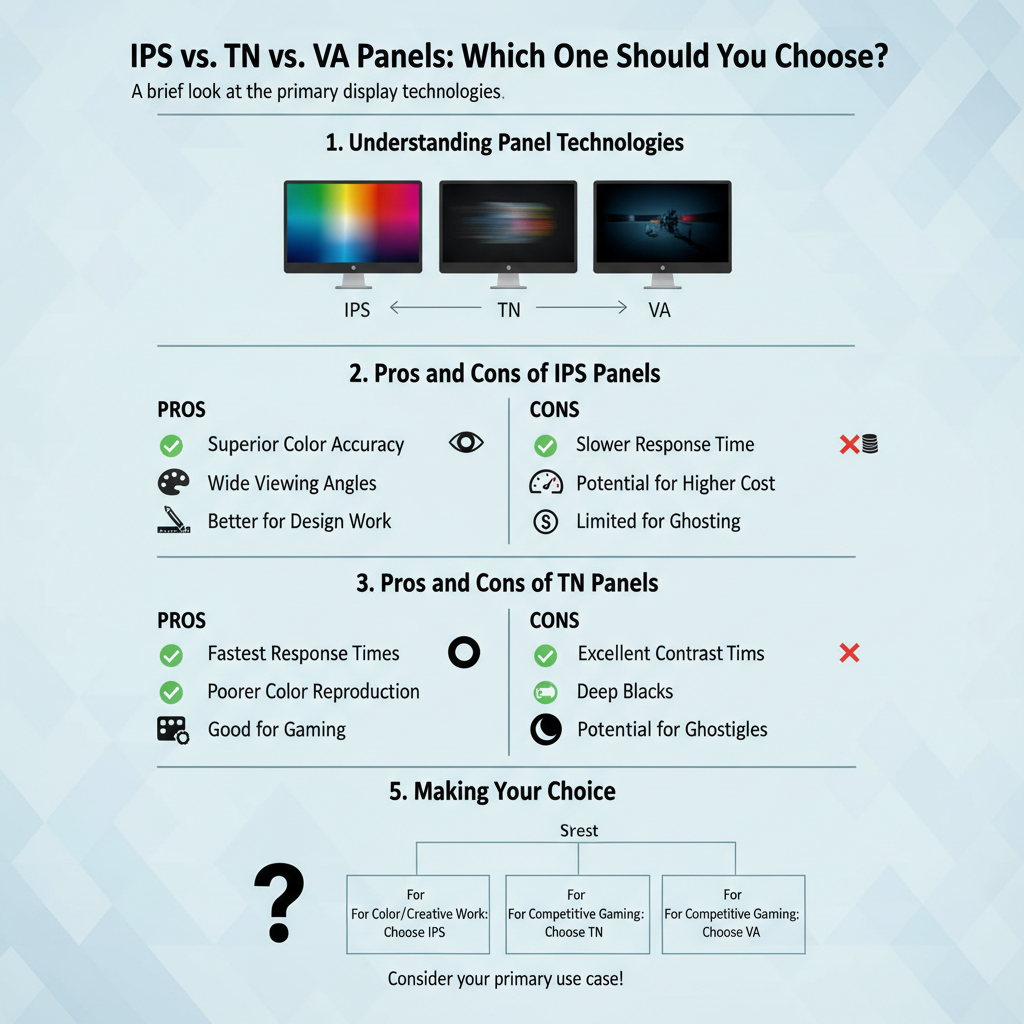
– IPS (In-Plane Switching): This technology is renowned for its vibrant color reproduction and wide viewing angles. IPS panels utilize a different liquid crystal alignment compared to other types, which allows them to display colors more accurately and consistently, regardless of your viewing position. This makes them the go-to choice for professionals involved in graphic design, photography, and even video editing, where true-to-life colors are paramount.
– TN (Twisted Nematic): TN panels have been around for a while and are known for their high refresh rates and rapid response times, making them highly sought after in the gaming community. The technology behind TN panels allows for quick pixel switching, minimizing motion blur during fast-paced gaming. While they may not match IPS panels in color fidelity, their affordability and speed have made them a staple for competitive gamers.
– VA (Vertical Alignment): VA panels occupy a middle ground between IPS and TN technologies. They are celebrated for their exceptional contrast ratios and the ability to produce deeper blacks, which enhances the viewing experience for movies and games. VA panels can deliver stunning visuals, particularly in darker environments, making them an ideal choice for those who prioritize immersive media consumption.
Pros and Cons of IPS Panels

When considering IPS panels, it’s essential to weigh both their advantages and disadvantages.
– Pros:
– Superior Color Reproduction: IPS panels can display a wider color gamut, making them perfect for graphic designers and photographers who rely on accurate color representation.
– Excellent Viewing Angles: Unlike TN panels, IPS displays maintain color consistency and brightness even when viewed from sharp angles, allowing multiple people to enjoy the screen without distortion.
– Consistent Brightness Levels: They generally provide a uniform brightness across the screen, which is vital for professional work.
– Cons:
– Generally More Expensive: IPS panels typically come with a higher price tag than TN panels, which might be a consideration for budget-conscious buyers.
– Slower Response Times: While technology is improving, IPS panels can still lag behind TN panels in response times, which may not be ideal for competitive gaming scenarios where every millisecond counts.
Pros and Cons of TN Panels
TN panels have their own set of strengths and weaknesses that can significantly influence your choice.
– Pros:
– High Refresh Rates and Quick Response Times: TN panels often reach refresh rates of 144Hz or higher, making them ideal for competitive gaming where fast reactions are critical.
– Typically More Affordable: They are usually the most budget-friendly option, making them accessible for gamers and everyday users alike.
– Cons:
– Limited Color Accuracy: TN panels cannot match the color reproduction of IPS panels, meaning they may not be suitable for professional design work or color-critical applications.
– Narrower Viewing Angles: The color and brightness shift dramatically when viewed from the side, which can detract from the viewing experience if you’re not directly in front of the screen.
Pros and Cons of VA Panels
VA panels bring their unique features to the table, striking a balance between IPS and TN technologies.
– Pros:
– Exceptional Contrast Ratios: VA panels can deliver some of the best contrast ratios on the market, often exceeding 3000:1, which makes them great for watching movies and enjoying gaming in darker settings.
– Deep Blacks: This technology excels at displaying true blacks, enhancing the overall visual experience and providing a more immersive feel.
– Cons:
– Slower Response Times: VA panels typically have slower response times than TN panels, which can lead to motion blur in fast-paced gaming scenarios.
– Price Variability: While often priced in the mid-range, the cost can vary widely based on features, meaning it’s important to shop around for the best value.
Use Cases for Each Panel Type
Choosing the right panel type often comes down to your primary use case. Here’s a breakdown:
– IPS: If you’re a professional graphic designer, photographer, or video editor, investing in an IPS panel is wise. The color accuracy and consistent performance of these panels will ensure your work is represented as intended. Even casual users who enjoy vibrant colors for media consumption will appreciate the benefits of an IPS display.
– TN: Gamers who thrive on competition and need the quickest response times should favor TN panels. Their high refresh rates and low input lag make them perfect for fast-paced gaming where every frame counts. If you play first-person shooters or competitive online games, a TN panel can give you the edge you need.
– VA: If you primarily watch movies or enjoy gaming in a darker room, VA panels are an excellent choice. Their impressive contrast ratios and ability to display rich visuals make them perfect for media consumption, offering a more cinematic experience. Casual gamers will also benefit from the vibrant images and deep blacks that VA panels provide.
Pricing and Availability
When it comes to purchasing a monitor, understanding pricing and availability is crucial.
– IPS Panels: These usually range from mid to high price points, reflecting their advanced technology and features. You can find models starting around $200 and going up to $1,000 or more for premium options. Be on the lookout for sales and discounts, especially during key shopping seasons.
– TN Panels: The most budget-friendly option, TN panels can be found for as little as $150. They offer great value for gamers looking for performance without breaking the bank, making them a popular choice among entry-level monitors.
– VA Panels: Priced in the mid-range, VA panels typically cost between $200 and $500. The price can vary based on size, resolution, and additional features like HDR capability. Take the time to compare different models to find the one that fits your needs and budget.
Making the Right Choice
Ultimately, the right panel technology for you will depend on your primary use case, budget, and personal preferences. Consider what you primarily use your monitor for—gaming, professional work, or media consumption. Reflect on how important color accuracy, response time, and contrast are to your experience.
It’s also wise to evaluate your budget; while investing in a quality monitor can enhance your experience, it’s essential to find a panel type that meets your needs without overspending. Take the time to read reviews and perhaps test out different models in-store if possible. The right choice will not only improve your daily tasks but also make your leisure time that much more enjoyable.
Choosing the right panel technology—IPS, TN, or VA—depends on your specific requirements and preferences. By understanding the strengths and weaknesses of each panel type, you can select the best option for your needs, whether you’re gaming, creating content, or enjoying films. Take the time to weigh your options, and you’ll ensure you make a choice that enhances your overall experience.
Frequently Asked Questions
What are the main differences between IPS, TN, and VA panels?
IPS (In-Plane Switching), TN (Twisted Nematic), and VA (Vertical Alignment) are three types of LCD panel technologies, each with unique characteristics. IPS panels are known for their superior color accuracy and wide viewing angles, making them ideal for graphic design and photo editing. TN panels, while offering faster response times and lower costs, struggle with color reproduction and viewing angles, making them more suitable for gaming. VA panels excel in contrast ratios and provide deeper blacks, making them great for multimedia consumption but may have slower response times compared to IPS and TN.
Which panel type is best for gaming: IPS, TN, or VA?
For gaming, TN panels are often considered the best choice due to their fast response times and high refresh rates, which can lead to smoother gameplay and reduced motion blur. However, IPS panels have gained popularity among gamers as well, thanks to improvements in response times and their stunning color accuracy and wide viewing angles, which enhance the overall gaming experience. VA panels can also be a good option for gamers who prioritize immersive visuals, but they may not perform as well in fast-paced competitive gaming scenarios due to slower response times.
How do I choose the right panel type for graphic design work?
For graphic design work, IPS panels are the preferred choice due to their exceptional color accuracy and consistency. These panels offer a broader color gamut and better viewing angles, which is crucial when working with detailed images or color-critical designs. When selecting an IPS monitor, look for one with factory calibration and high color fidelity to ensure your work translates well across different devices and media.
Why are VA panels known for better contrast ratios?
VA panels are known for their superior contrast ratios because of their unique liquid crystal alignment, which allows them to block more light when displaying dark images. This characteristic results in deeper blacks and brighter whites, providing a more immersive viewing experience, especially in dark environments. The enhanced contrast makes VA panels particularly appealing for watching movies and playing video games with rich visuals.
What should I consider when buying a monitor with IPS, TN, or VA panels?
When buying a monitor, consider factors such as your primary use (gaming, design, or general use), budget, and specific features like response time, refresh rate, and color accuracy. For gaming, prioritize refresh rates and response times, while for design work, focus on color accuracy and viewing angles. Additionally, assess the physical size and resolution of the monitor to ensure it meets your workspace and visual needs, as each panel type offers different strengths that cater to various user preferences.
References
- Display device
- https://www.tomshardware.com/reviews/ips-vs-va-vs-tn-panel,5801.html
- https://www.digitaltrends.com/computing/ips-vs-va-vs-tn-panels/
- https://www.techradar.com/news/ips-vs-tn-vs-va-which-is-the-best-panel-type-for-you
- https://www.howtogeek.com/702912/what-is-the-difference-between-ips-tn-and-va-panel-types/
- https://www.extremetech.com/computing/305359-ips-vs-va-vs-tn-panel-types-explained
- https://www.cnet.com/tech/computing/ips-vs-tn-vs-va-panel-types-explained/
- https://www.pcgamer.com/ips-vs-va-vs-tn-panel-types-explained/