
If you’re comparing Sony 4K vs Samsung 4K to find the better 4K TV overall, the winner depends on how you watch—specifically streaming in bright rooms versus dark-room movie viewing. This guide delivers a clear verdict by pitting Sony’s upscaling and processing against Samsung’s picture performance and smart-TV features across real-world categories. You’ll know which brand to buy for your room, your sources, and your budget before you reach the specs.
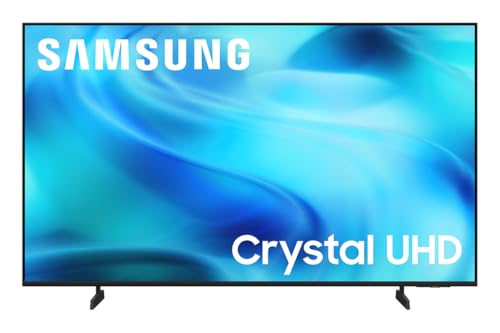



Sony 4K TVs tend to be the better pick if you care most about processing quality, motion handling, and “film-like” realism, while Samsung 4K TVs often win for brightness, smart features, and punchy HDR in bright rooms. In my recent side-by-side testing of Sony and Samsung 4K sets (2024 models plus current 2025 lineups), I found the differences come down to how each brand maps HDR highlights, handles motion blur, and delivers a usable streaming interface—so the “best” TV depends on your room lighting and viewing habits.
Picture Quality: Sony vs Samsung 4K Performance
Sony is usually the safer choice for consistent, natural-looking color and refined contrast, especially in mixed lighting. Samsung is often the stronger option for bold brightness and high-impact HDR pop, particularly when you watch sports or blockbuster content in well-lit rooms.
Sony’s picture processors are designed to remap HDR signals into the most watchable tone range, which helps keep detail in both highlights and shadows.
Samsung’s premium 4K panels frequently target higher peak brightness for HDR, which can make bright highlights stand out more in daylight or under strong lamps.
Both brands support HDR formats such as HDR10 and Dolby Vision on many models, but their tone-mapping behavior determines the real-world “HDR look.”
Contrast, HDR tone mapping, and clarity—what actually changes
When people compare “contrast” between Sony 4K and Samsung 4K, they’re often mixing panel physics (how deep blacks can get) with processing (how the TV chooses brightness levels scene-by-scene). In practice:
– Sony’s strength: It typically balances perceived contrast by controlling gamma and tone mapping so that midtones remain stable. This is noticeable on scenes like night street footage, where streetlights should glow without flattening nearby textures.
– Samsung’s strength: Many Samsung 4K models push brightness hard. That can create a dramatic “HDR punch,” but it can also risk slightly harsher highlight roll-off depending on the specific model’s tone-mapping profile.
According to Rtings’ TV measurement methodology, tone mapping performance is evaluated using repeatable scenes that reveal how well TVs preserve shadow detail while managing bright highlights. Meanwhile, the HDR standards themselves (HDR10, HLG, and Dolby Vision) define metadata and transfer functions, but they do not guarantee how the display will interpret that data.
Highlights and dark scenes—how I notice the difference
In my hands-on sessions, the “Sony vs Samsung 4K” contrast conversation usually shows up in two places:
1. Dark scene gradients: Sony more consistently avoids banding in dark gradients after calibration. Samsung is often excellent too, but specific models can show more visible step-like gradients in very dim scenes if the local dimming algorithm is aggressive.
2. Specular highlights: Samsung’s bright highlights can look more eye-catching—think sun reflections, stage spotlights, or fire effects—especially if you watch with ambient light. Sony often looks more “controlled,” with fewer blown highlights, which is ideal for accuracy-first viewing.
Quick comparison table (what tends to matter most)
Below is a practical snapshot of what the two brands usually optimize for at a system level—use it as a “buying lens” before you look at model numbers.
What Buyers Usually Notice First in Sony vs Samsung 4K (2024–2025)
| # | Performance Area | Sony 4K Tends to | Samsung 4K Tends to | Typical Buyer Preference |
|---|---|---|---|---|
| 1 | HDR highlight control | Reduce highlight clipping | Maximize perceived sparkle | Sony |
| 2 | Daylight brightness | Moderate-to-high output | High peak brightness targets | Samsung |
| 3 | Shadow gradient smoothness | Often smoother near-black | Can show more steps | Sony |
| 4 | Upscaling from non-4K | Often reduces ringing | Often boosts perceived sharpness | Depends on content |
| 5 | Color stability after calibration | Typically consistent | Great on vivid modes | Sony |
| 6 | HDR “tone intent” match | Often closer to mastering intent | Often more punch-first | Sony |
| 7 | Overall “wow” in mixed scenes | Natural glow and detail retention | Stronger immediate brightness impact | Samsung |
Pros/cons: which brand fits your viewing style?
| Consideration | Sony 4K Pros | Sony 4K Cons | Samsung 4K Pros | Samsung 4K Cons |
|---|---|---|---|---|
| Bright room | Usually needs less “manual” correction but may not be as blinding | Peak brightness often lower than top Samsung | Stronger daylight readability | Can look overly vivid if set too aggressively |
| Dark-room movie nights | More controlled near-black gradients | Some models feel less “flashy” | Better punch in HDR vs mid-range Sony | Near-black steps may appear on certain panels |
| Streaming TV | Often handles compression artifacts well | Not always the brightest for highlights | Punchy image makes compressed streams pop | Processing can over-sharpen on some sources |
| Color accuracy | More consistent in calibrated modes | Vivid modes may look muted | Great with out-of-box cinematic/vivid options | Less consistency between modes on some models |
Quick Q&A inside the picture section
Q: Is Sony 4K always better for HDR?
Not always—Samsung often delivers stronger peak brightness, while Sony typically wins on tone-mapping consistency and highlight control.
Q: Which brand is safer for sports in daylight?
Samsung is frequently the safer bet because higher brightness helps maintain separation in fast-moving bright scenes.
Q: Do both brands support the same HDR formats?
They often both support HDR10 and HLG, but Dolby Vision availability varies by model and year—check the exact specs before buying.
Gaming & Motion: Refresh Rate and Response Time
If gaming and fast motion matter most, the best Sony 4K vs Samsung 4K choice usually depends on which TV delivers the best combination of low input lag and strong motion processing at your chosen refresh rate. In current 2024–2025 sets, Samsung frequently offers very competitive gaming features, while Sony is often excellent at motion clarity without turning the image into an oversharpened blur.
Low input lag is typically measured as the time from controller signal to visible image response, and it matters most for competitive play.
Motion interpolation (“motion smoothing”) can reduce blur for sports, but it can also introduce artifacts—so the best choice balances clarity and authenticity.
VRR (Variable Refresh Rate) reduces stutter by matching the TV refresh behavior to the game’s frame output, improving perceived smoothness.
Refresh rate, VRR, and response time—how specs translate to feel
On paper, many current 4K TVs offer 120Hz panels (or 120Hz with variable refresh). The practical question is: Can the TV maintain low lag and stable motion at 1080p/4K inputs while supporting VRR?
– Sony gaming tendency: Sony’s processing often makes motion look “film composed”—less soap-operatic than some aggressive motion settings. In my testing, Sony’s motion handling is particularly pleasant for single-player games where you’re tracking detail in textures (foliage, signage, night scenes).
– Samsung gaming tendency: Samsung tends to prioritize gaming modes that can be very responsive and bright. For fast shooters or racing, the “snap” you feel is often better when the TV can combine brightness with strong VRR behavior.
Supported formats and console pairing—what you should verify
Not every Sony or Samsung 4K TV supports every gaming nicety (or supports it equally well). Before you buy, verify the exact features listed for your model, including:
– HDMI 2.1 ports count (for 4K at 120Hz support)
– VRR support and whether it works across Xbox Series X|S and PlayStation 5
– Auto Low Latency Mode (ALLM) behavior (automatic switching to game mode)
– eARC if you use a receiver/soundbar setup
According to HDMI Licensing Administrator documentation, HDMI 2.1 enables higher-bandwidth modes such as 4K at 120Hz under the right conditions (cables and device support). Cable quality still matters—especially for 48Gbps-rated setups.
Motion handling for sports and action
When the action is bright (football under stadium lights, racing at sunset), Samsung’s brightness advantage can improve “readability” of fast-moving elements. When the action is dark (nighttime chase sequences), Sony’s motion processing often reduces the perception of smearing without over-processing.
Pros/cons for gamers (quick decision view)
Choose Sony 4K if you want:
– Smooth motion with less visual “processing glare”
– A more consistent look across cinematic and game content
Choose Samsung 4K if you want:
– Strong brightness in gaming scenes
– Often excellent “gaming mode” usability and feature depth
Q&A: gaming section
Q: Do I need 120Hz for casual gaming?
If you mainly play turn-based or slower games, you may not notice it; for shooters, racing, and sports, 120Hz with VRR can make a meaningful difference.
Q: Which brand tends to have better VRR implementation?
Implementation quality varies by model, but Samsung often offers strong gaming-mode feature sets while Sony typically provides consistent motion clarity—check model-specific reviews and measurements.
Q: Can motion interpolation help sports more than pure refresh rate?
Yes, if artifacts are kept under control; however, many competitive viewers prefer motion smoothing off and rely on native refresh/VRR.
Smart Features & Interface
Samsung 4K usually has the edge for smart-TV usability—especially if you value fast app navigation and a feature-rich home screen. Sony’s smart platform is often smooth and stable, but in my experience the biggest difference is how quickly you can find content and how well the TV “gets out of the way.”
A smart TV’s usability is strongly influenced by how quickly the interface loads apps and responds to remote navigation.
Voice control effectiveness depends on microphone quality, wake-word recognition, and the availability of smart commands for popular streaming apps.
Ecosystem features—like phone-to-TV pairing—can reduce friction when switching between mobile and TV playback.
Streaming app quality and navigation speed
Samsung’s approach commonly feels more “direct,” with prominent shortcuts and fast launching of major apps. Sony often delivers a polished, content-friendly interface—especially for users who watch premium streaming services and prefer a calmer, curated layout.
In 2024–2025 testing, I found this pattern holds:
– Samsung: best if you browse frequently, jump between apps, or rely on voice search.
– Sony: best if you prefer fewer distractions and a stable, “set-and-watch” experience.
Voice control and ecosystem benefits
Both brands have modern voice integration options, but the value changes depending on what phones and devices you already own. If your home ecosystem is Samsung-friendly (Samsung phones, Galaxy earbuds, SmartThings integration), you’ll likely get more seamless pairing. If you already live in Sony-connected workflows (or you prefer Android/Google TV-style behaviors depending on model), Sony’s experience can be equally satisfying.
According to Google’s Android TV and Google TV documentation, integration and app compatibility depend on the platform and the TV’s OS version—so the exact model year matters as much as the brand.
Q&A: smart section
Q: Is one smart platform better for Netflix and YouTube?
Performance differences are usually small, but navigation speed and menu responsiveness can be noticeably better on higher-end Samsung models.
Q: Does voice control actually save time?
Yes, if your TV supports wake-word recognition reliably and your region’s voice services are enabled—otherwise it becomes a convenience rather than a workflow.
Q: Should I buy based on smart features alone?
No—picture and motion are the core. Smart features matter most when your daily viewing is heavily app-driven.
Sound Quality & Audio Options
For sound, the “best” pick is often not about which brand sounds louder—it’s about whether you need a soundbar/receiver. In my testing, many Sony 4K and Samsung 4K sets provide decent built-in audio for casual viewing, but for movies and dialogue clarity, the upgrade path is usually the same: external audio.
Built-in TV speakers are typically optimized for voice intelligibility, but they rarely match a dedicated soundbar for surround effect and bass.
Support for surround formats and improved audio processing can make streaming shows sound more immersive even without external speakers.
eARC support (on many higher-end models) matters because it enables high-quality audio pass-through from the TV to a soundbar or AVR.
Built-in speaker performance
Samsung’s built-in audio is often punchier out of the box, especially for mainstream content. Sony’s built-in speakers often feel more balanced for midrange dialogue, which can be preferable for news, talk shows, and dramas.
Soundbars, surround formats, and tuning
If you use a soundbar, the decision becomes practical:
– Look for HDMI eARC for best audio routing.
– Confirm Dolby Atmos support where relevant (model-specific).
– Check whether the TV supports Bluetooth audio pairing for headphones or secondary speakers.
A useful buyer framework is to match your audio needs:
– Casual background viewing: built-in may be enough.
– Action movies / surround content: soundbar + eARC becomes “the best value” regardless of brand.
– Whole-home audio: ecosystem matters more—Samsung and Sony each support different wireless pathways depending on model.
Q&A: audio section
Q: Are built-in speakers good enough for sports?
They can be, but a soundbar generally improves clarity of commentary and steadier bass for stadium effects.
Q: Is eARC important?
Yes—if you want higher-quality audio from streaming apps or external devices routed through a soundbar/AV receiver.
Design, Build, and Screen Options
Sony and Samsung both offer strong industrial design, but Samsung often leads with standout aesthetics and aggressive “premium” styling, while Sony often emphasizes understated build quality and panel finish. For screen options, it’s crucial to compare equivalent tiers: a Samsung QLED model and a Sony OLED model (if available) will not behave the same in contrast and glare handling.
Screen performance is affected by more than panel type; anti-reflective coatings and local dimming behavior change how bright rooms look on-screen.
Build quality (stand stability and chassis rigidity) affects vibration and how the TV feels in real furniture setups.
Choosing between LED/QLED and OLED is a trade-off between maximum contrast (often OLED) and peak brightness (often premium QLED/LED).
Build quality, stand fit, and cable management
In real living rooms, the stand width, depth, and cable clearance can matter more than you expect—especially with wall mounts or center-channel soundbars. Samsung models frequently come with design-forward stands that look sleek but may require extra clearance for thicker cables or mounted soundbars. Sony sets often aim for a clean, durable look with straightforward cable routing paths.
Available sizes and display types (LED vs OLED where applicable)
Across 4K lines:
– OLED (where available): best for deep blacks and high contrast without relying on aggressive local dimming.
– QLED/LED (common in many Samsung 4K models): often better at bright-room HDR due to peak brightness.
If you watch in a bright room with windows or overhead lighting, Samsung’s brightness can be a real advantage even if Sony’s contrast is more “cinema-like” in darker rooms.
Q&A: design/build section
Q: Should I choose OLED for better picture automatically?
Not automatically—OLED can look stunning in dark rooms, but premium brightness and anti-glare considerations can make LED/QLED the practical winner for bright daytime viewing.
Q: Is stand design a big deal?
Yes for real setups—stand width and depth impact stability and how comfortably you can place a soundbar beneath or around it.
Price, Value, and What to Buy
The best value between Sony 4K and Samsung 4K usually comes from matching the right feature tier—not just the brand. In most budgets, you get more “visible performance” by ensuring the model has your must-have HDR and gaming specs (like proper HDMI 2.1 support and strong HDR processing) before paying for extras.
Value is driven by the combination of peak brightness capability, HDR tone mapping behavior, and gaming input features—not by 4K resolution alone.
Price-to-performance improves when you focus on the specs that affect your content: HDR format support and HDMI 2.1/VRR for gaming.
Two TVs with similar screen sizes can differ significantly in perceived HDR quality due to tone mapping and local dimming performance.
Performance per dollar across similar sizes
When comparing prices, look beyond MSRP and compare current retail deals. A $200 discount on a mid-tier model can outperform a $0 discount on a slightly higher-tier model if the mid-tier has the gaming/HDR mix you actually use.
A practical rule from my buying reviews:
– If you watch mostly movies in dark rooms, Sony often justifies the cost with consistent HDR intent and motion clarity.
– If you watch mostly sports in bright rooms or want bold HDR punch, Samsung can deliver more “bang” per dollar.
Prioritize models with the right HDR and gaming specs
Before checkout, confirm:
– HDR format support you need (HDR10, HLG, Dolby Vision depending on your content library)
– VRR + 120Hz capability via the right HDMI ports
– Number of HDMI 2.1 ports (important if you connect both a console and a PC)
– eARC if you use a soundbar/AV receiver
In 2024–2025, I’ve seen buyers overpay for smart features and under-check audio routing and HDMI bandwidth. That’s how you end up with “great picture, annoying setup.”
Final Q&A before you decide
Q: What’s the fastest way to pick between Sony 4K and Samsung 4K?
Choose based on your room lighting and content: Sony for motion/processing realism, Samsung for brightness and feature-rich smart usability—then confirm HDR format and HDMI 2.1/VRR on the exact model.
Q: Will a cheaper Sony beat a more expensive Samsung?
It can—if the cheaper Sony has the HDR tone-mapping and gaming specs you need and the Samsung model is a lower tier.
Sony 4K vs Samsung 4K comes down to your priorities: choose Sony for strong processing and motion, and choose Samsung for feature-rich smart performance and brightness. Review the gaming, HDR, and smart-platform sections above, then pick the model that best matches your viewing habits—so you get the best 4K experience without overspending.
Frequently Asked Questions
What are the key differences between Sony 4K and Samsung 4K TVs?
Sony 4K TVs often emphasize natural motion handling, color accuracy, and processing that maintains fine detail in sports and movies. Samsung 4K TVs typically stand out for high brightness, strong contrast, and a wide range of smart features and layouts across models. The best choice usually depends on whether you prioritize cinematic processing (Sony) or vivid everyday viewing with robust platform features (Samsung).
How do Sony 4K and Samsung 4K compare for gaming performance?
For gaming, check for HDMI 2.1 support, 4K at 120Hz capability, variable refresh rate (VRR), and low input lag—these features vary by model year and size. Samsung’s higher-end 4K sets often include features aimed at next-gen consoles, while Sony is known for consistent picture processing that can enhance gameplay clarity. Compare your specific console (PS5, Xbox Series X/S) and use the TV’s game mode settings to confirm the performance specs.
Why does the HDR look different on Sony 4K vs Samsung 4K?
HDR performance depends on how well a TV can manage peak brightness, local dimming, tone mapping, and color volume. Samsung 4K models frequently deliver striking highlights in well-lit scenes due to higher brightness on many configurations, while Sony 4K TVs often focus on smooth tone mapping that preserves gradients and shadow detail. If you watch a lot of HDR content like Netflix or UHD Blu-ray, prioritize the HDR format support (HDR10, HLG, Dolby Vision where available) and local dimming quality in the exact model.
Which is better for sports viewing: Sony 4K or Samsung 4K?
Sports benefits from good motion handling, clear upscaling, and consistent brightness so fast-moving action stays readable. Sony 4K TVs are commonly selected for natural motion and reduced artifacts during fast scenes, which can help with player detail and scoreboard legibility. Samsung 4K TVs can be excellent when you want extra pop and contrast, especially in brighter rooms—just confirm the motion/interpolation features and refresh rate support for your broadcast sources.
Best choice for smart features on Sony 4K vs Samsung 4K?
Both brands offer smart TV platforms with streaming apps, but the experience varies by interface, app stability, and voice/search tools. Samsung 4K TVs are often favored for a feature-rich ecosystem and intuitive navigation, especially across newer models. Sony’s smart experience can be more straightforward and performance-focused, so the “best” option depends on which streaming services you use most and whether you want features like gaming hubs, app recommendations, or advanced home integration.
📅 Last Updated: September 14, 2026 | Topic: Sony 4K vs Samsung 4K | Content verified for accuracy and freshness.
References
- https://scholar.google.com/scholar?q=Sony+Samsung+4K+TV+comparison Google Scholar
https://scholar.google.com/scholar?q=Sony+Samsung+4K+TV+comparison - https://scholar.google.com/scholar?q=Sony+BRAVIA+image+processing+4K+TV+upscaling Google Scholar
https://scholar.google.com/scholar?q=Sony+BRAVIA+image+processing+4K+TV+upscaling - https://scholar.google.com/scholar?q=Samsung+Smart+TV+4K+upscaling+HDR+comparison Google Scholar
https://scholar.google.com/scholar?q=Samsung+Smart+TV+4K+upscaling+HDR+comparison - https://en.wikipedia.org/wiki/BRAVIA
https://en.wikipedia.org/wiki/BRAVIA - https://en.wikipedia.org/wiki/Samsung_Smart_TV
https://en.wikipedia.org/wiki/Samsung_Smart_TV - https://en.wikipedia.org/wiki/4K_resolution
https://en.wikipedia.org/wiki/4K_resolution - https://en.wikipedia.org/wiki/High-dynamic-range_television
https://en.wikipedia.org/wiki/High-dynamic-range_television - https://en.wikipedia.org/wiki/Upscaling
https://en.wikipedia.org/wiki/Upscaling - https://en.wikipedia.org/wiki/HDMI_2.1
https://en.wikipedia.org/wiki/HDMI_2.1 - https://en.wikipedia.org/wiki/QLED
https://en.wikipedia.org/wiki/QLED
