
The evolution of video hosting platforms has transformed how we consume content, with YouTube and TikTok leading the way. YouTube has solidified its status as the premier destination for long-form videos, while TikTok has captured the hearts of a younger audience with its innovative approach to short, snappy content. This article will delve into the origins of these platforms, their user demographics, content creation models, features, cultural impact, and future trends, providing a comprehensive look at how they shape our digital landscape.
The Origins of YouTube and TikTok
YouTube was launched in 2005, born from the idea of creating a platform where users could upload, share, and view videos freely. It quickly became the go-to site for long-form content, attracting a diverse range of creators and viewers alike. From tutorials and vlogs to music videos and educational content, YouTube has established itself as a versatile platform that fosters creativity and community.
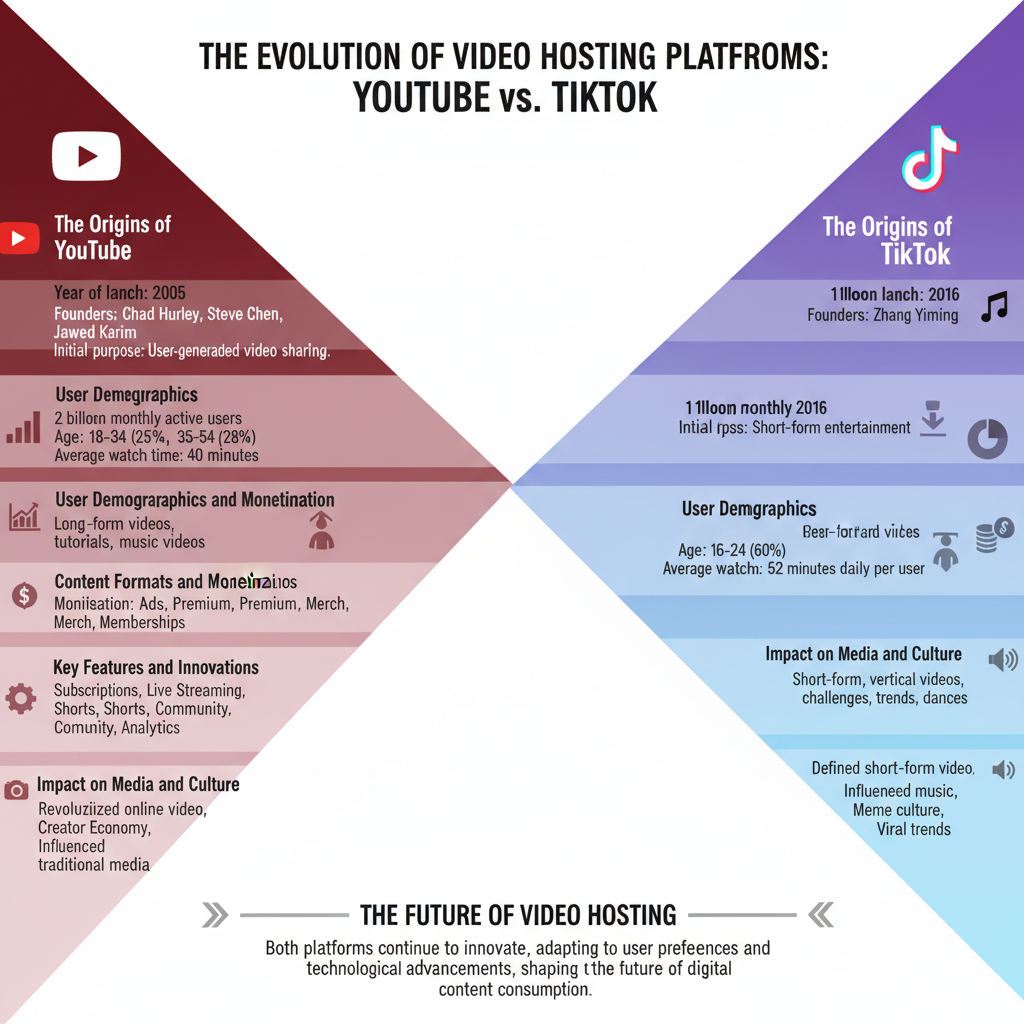
On the other hand, TikTok emerged in 2016, building upon the growing popularity of short video content. Originally launched as Douyin in China, it was rebranded for the global market as TikTok. The platform thrives on quick, digestible videos that encourage viral trends and challenges, making it particularly appealing to younger audiences. This shift towards brevity revolutionized content consumption, as users began favoring quick bursts of entertainment over lengthy viewing sessions.
User Demographics and Audience Engagement

YouTube boasts a broad demographic, attracting users of all ages. From children watching cartoon channels to adults indulging in cooking tutorials or tech reviews, the platform caters to a wide array of interests. According to recent statistics, YouTube has over 2 billion logged-in monthly users, with a substantial portion engaging with diverse content categories, making it a melting pot of ideas and creativity.
In contrast, TikTok primarily targets Gen Z and younger Millennials, with its user base largely comprising individuals aged 16 to 24. The platform thrives on trends, challenges, and interactive content, encouraging users to engage through likes, shares, and comments. TikTok’s design promotes participatory culture, where users often create videos in response to existing trends or challenges, fostering a sense of community and shared experience.
Content Creation and Monetization Models
YouTube’s monetization model is well-established and lucrative for creators, primarily relying on ad revenue generated through views. Creators can also earn money through channel memberships, merchandise shelf integrations, and Super Chats during live streams. This allows for a sustainable income for long-form content creators, incentivizing them to produce high-quality videos that resonate with their audiences.
TikTok, on the other hand, has introduced a unique monetization approach that focuses on engagement rather than sheer view counts. The TikTok Creator Fund rewards users whose videos achieve significant engagement, while brand partnerships and sponsored content have become increasingly popular. TikTok encourages creators to produce viral content that captures attention quickly, often prioritizing creativity and relatability over polished production value. For instance, many TikTok influencers have turned challenges and trends into lucrative business opportunities, showcasing their versatility in a rapidly changing digital landscape.
Platform Features and User Experience
YouTube offers a wealth of features designed to enhance the user experience. With options for creating playlists, detailed video recommendations based on viewing history, and extensive editing tools, YouTube provides creators with the resources to tailor their content effectively. The ability to comment, subscribe, and share allows users to connect with creators and engage with the community, while the platform’s algorithm helps viewers discover new content aligned with their interests.
In contrast, TikTok is centered around its algorithm-driven “For You Page,” which curates content based on user preferences and interactions. This feature has made discovery effortless, allowing users to stumble upon viral trends and engaging content quickly. The app’s editing tools, including filters, effects, and a vast library of sounds, empower creators to produce captivating videos with minimal effort. TikTok’s quick-scroll format encourages users to consume and create content rapidly, fostering a fast-paced environment that keeps audiences engaged.
Impact on Culture and Trends
YouTube has significantly influenced popular culture by serving as a platform for in-depth discussions, tutorials, and lifestyle content. Creators like PewDiePie, Jenna Marbles, and Marques Brownlee have become household names, shaping opinions and trends through their unique perspectives. The platform has also been instrumental in launching numerous careers, with many YouTubers transitioning to mainstream entertainment.
Conversely, TikTok has cultivated a fast-paced culture driven by memes, challenges, and viral trends. Users often participate in challenges like the “Renegade” dance or the “Savage Love” challenge, which spread like wildfire across the platform and even spill over into real life. TikTok’s influence is palpable, reshaping how we interact with content and each other. The platform has also become a powerful tool for social activism, allowing movements to gain traction quickly through relatable and shareable content.
Future Trends in Video Hosting
As video hosting platforms continue to evolve, both YouTube and TikTok are adapting to changing user preferences. YouTube has recognized the growing popularity of short-form content and launched YouTube Shorts as a direct response to TikTok’s success. This feature allows creators to produce quick, engaging videos that can compete with TikTok’s format, showcasing YouTube’s commitment to innovation and relevance.
Meanwhile, TikTok is not resting on its laurels. The platform is continually innovating, incorporating shopping features that enable users to purchase products directly through video content. Additionally, TikTok is exploring options for longer video formats, hinting at a strategy that could broaden its audience while maintaining its core focus on engagement and entertainment.
The evolution of video hosting platforms reveals distinct paths for YouTube and TikTok, with each influencing how we create, share, and consume video content. YouTube remains the cornerstone for long-form content, while TikTok has revolutionized quick consumption and viral engagement, particularly among younger audiences. As these platforms continue to innovate and adapt, understanding their differences and similarities will be vital for content creators and marketers alike. Staying informed and adaptable is key to leveraging these platforms to their fullest potential, ensuring success in the ever-changing world of digital content.
Frequently Asked Questions
What are the main differences between YouTube and TikTok as video hosting platforms?
YouTube is primarily designed for longer-form videos, allowing creators to upload content ranging from a few minutes to several hours. It emphasizes monetization through ads and provides a more traditional video viewing experience. In contrast, TikTok focuses on short, engaging videos, often between 15 seconds to 3 minutes, promoting viral trends and real-time engagement. This fundamental difference in video length and format influences how users interact with each platform, catering to different content consumption preferences.
How can creators effectively monetize their content on YouTube versus TikTok?
On YouTube, creators can monetize their content primarily through ad revenue, channel memberships, and Super Chats during live streams once they meet the eligibility criteria of 1,000 subscribers and 4,000 watch hours in the past 12 months. TikTok offers monetization through the TikTok Creator Fund, brand partnerships, and live stream gifts, but the earning potential can be more variable and smaller than YouTube. Creators should choose the platform that aligns with their content style and audience for optimal monetization strategies.
Why do some creators prefer TikTok over YouTube?
Many creators prefer TikTok because of its algorithm, which allows for greater organic reach and the potential for content to go viral quickly, even for new users. The platform’s emphasis on trends, challenges, and direct audience interaction fosters a dynamic community and instant feedback. Additionally, TikTok’s user interface is designed for quick consumption, making it easier for creators to produce content that resonates with younger audiences who favor fast-paced, entertaining videos.
Which platform is better for building a loyal audience: YouTube or TikTok?
Building a loyal audience can be achieved on both YouTube and TikTok, but the approach varies. YouTube is often seen as better for long-term audience engagement due to its structured content format and community features such as subscriptions and notifications. On the other hand, TikTok’s spontaneous and entertaining nature can capture attention quickly, allowing creators to build a following rapidly, especially among younger demographics. Ultimately, the best platform for audience loyalty depends on the creator’s content style and how well they connect with their target audience.
What types of content perform best on YouTube compared to TikTok?
YouTube thrives on in-depth content such as tutorials, vlogs, documentaries, and educational videos, where creators can elaborate on topics and provide comprehensive value. Conversely, TikTok excels at short, entertaining clips, including dance challenges, comedy skits, and quick tips that captivate viewers in seconds. Understanding the strengths of each platform can help creators tailor their content for maximum engagement and effectiveness, ensuring they meet audience expectations and preferences.
References
- YouTube
- TikTok
- https://www.theguardian.com/media/2020/feb/18/tiktok-vs-youtube-which-is-best
- https://www.bbc.com/news/technology-54256585
- https://www.pewresearch.org/journalism/2021/04/07/teens-social-media-2021/
- https://www.forbes.com/sites/bernardmarr/2021/06/21/the-evolution-of-social-media-from-facebook-to-tiktok/?sh=2fbb8f8d1b12
- https://www.sciencedirect.com/science/article/pii/S0747563221000081
- https://www.techrepublic.com/article/should-your-business-use-tiktok-or-youtube-for-video-marketing/
- https://www.wired.com/story/youtube-vs-tiktok/