The future of AI-powered Digital Rights Management (DRM) offers a transformative approach to protecting digital content by making systems more adaptive, efficient, and secure. With the power of artificial intelligence, we can anticipate a world where user experiences are enhanced, piracy is significantly reduced, and licensing models become more flexible and consumer-friendly. This blog post delves into how AI is set to revolutionize DRM, paving the way for a more robust digital landscape.
The Evolution of DRM Technologies

Digital Rights Management has come a long way since its inception, evolving from basic password protection and encryption techniques to more complex systems designed to safeguard intellectual property across various platforms. Traditional DRM systems often faced criticism due to their rigid structures, which frequently resulted in inconvenience for legitimate users. For instance, users might encounter restrictions when trying to access purchased content on different devices, leading to frustration and decreased customer satisfaction.
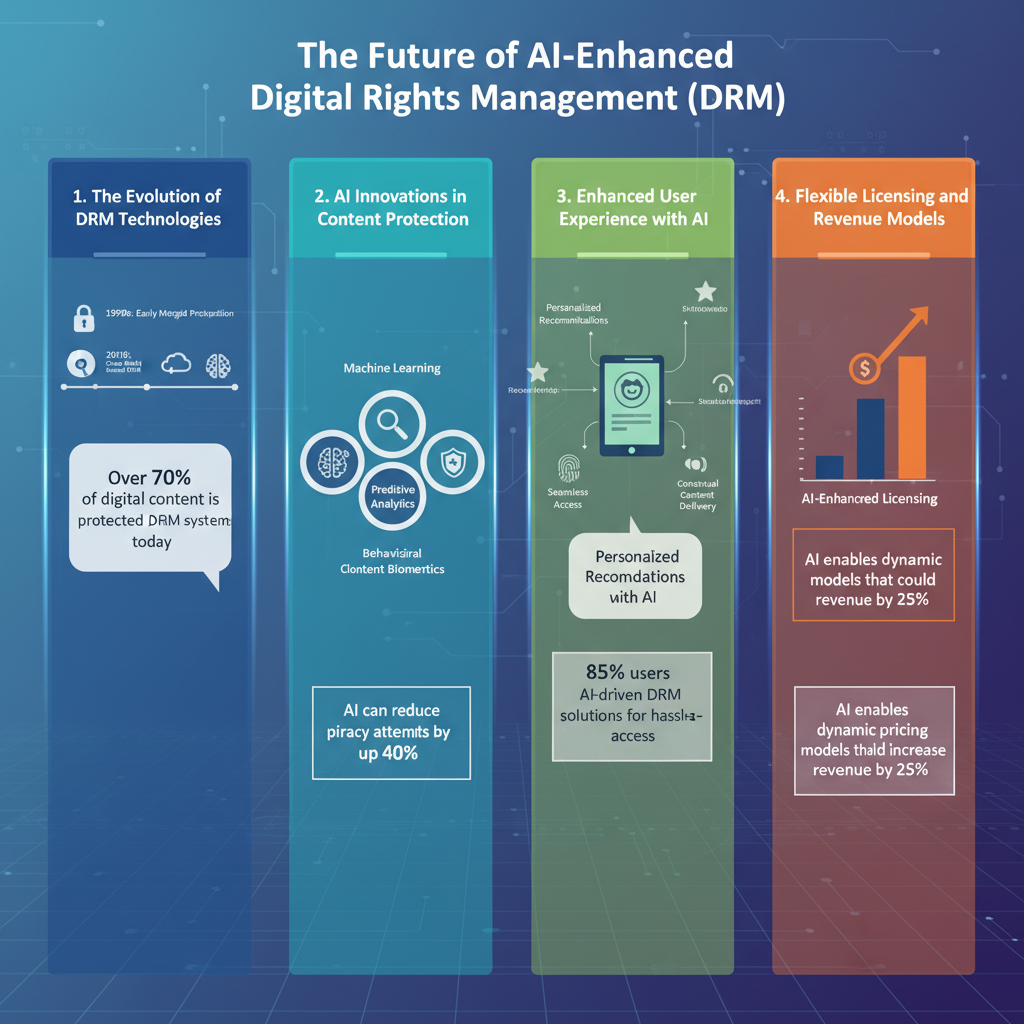
AI plays a crucial role in addressing these limitations by introducing adaptive systems that learn user behaviors and preferences. By analyzing data patterns, AI can create more nuanced DRM solutions that cater to individual needs while maintaining security. This evolution not only improves usability but also enhances the effectiveness of content protection strategies, making it harder for unauthorized use to go undetected.
AI Innovations in Content Protection

One of the most exciting advancements in AI-enhanced DRM is the use of machine learning algorithms to identify unauthorized use of digital content. These algorithms can analyze vast amounts of data in real-time, detecting anomalies that suggest piracy or illicit distribution. For example, AI can monitor streaming services to pinpoint unusual patterns of content access, flagging potential breaches before they escalate.
Predictive analytics also emerges as a powerful tool in combating piracy threats. By forecasting potential risks based on historical data and current trends, businesses can proactively implement measures to protect their content. For instance, if a particular film is projected to be a target for piracy, companies can deploy specific countermeasures, such as increasing watermarking or limiting access to certain regions, thereby mitigating threats before they materialize.
Enhanced User Experience with AI
The integration of AI in DRM not only focuses on security but also emphasizes enhancing user experience. By leveraging data analytics, companies can deliver personalized content that resonates with users based on their behavior and preferences. Imagine a streaming service that curates recommendations tailored to your viewing history, making it easier to discover new favorites while ensuring that you have access to the content you love.
However, balancing security with user accessibility is paramount. Overly stringent measures can alienate legitimate users and drive them to seek pirated alternatives. AI allows for a more nuanced approach, ensuring that security protocols are in place without compromising user convenience. For instance, AI could facilitate seamless authentication processes, such as biometric verification, streamlining access while reinforcing content protection.
Flexible Licensing and Revenue Models
AI is revolutionizing licensing and revenue models in ways that were once unimaginable. With its data-driven insights, businesses can implement dynamic pricing strategies that adjust based on demand and market conditions. For example, streaming services can offer tiered pricing that reflects user engagement levels, encouraging users to choose plans that best suit their consumption habits.
Moreover, subscription models can become more adaptable as AI analyzes user data to predict future needs. This flexibility not only enhances user satisfaction but also generates more revenue for businesses. Consider a gaming platform that tailors its subscription offerings based on peak gaming hours or trending titles, maximizing user retention and encouraging continued engagement.
Legal and Ethical Considerations
As we embrace the potential of AI in DRM, it is essential to consider the legal and ethical implications that accompany this technological shift. The automation of copyright enforcement through AI raises questions about the boundaries of intellectual property rights. While AI can enhance the efficacy of tracking unauthorized use, it also risks overreach, potentially leading to false positives that may unfairly penalize legitimate users.
Moreover, the ethical implications of increased surveillance cannot be overlooked. The data collection required to fuel AI systems raises concerns about user privacy. Striking a balance between effective content protection and respecting individual rights will be crucial. Stakeholders must engage in meaningful conversations about ethical guidelines to ensure that the integration of AI in DRM aligns with societal values.
Future Trends in AI and DRM
Looking ahead, we can anticipate several exciting trends in the realm of AI and DRM. One prediction is the continued advancement of AI technologies, such as natural language processing and computer vision, which will further enhance content protection measures. For instance, AI could analyze video content to identify copyrighted material, automating the process of monitoring and enforcing rights.
Additionally, the integration of blockchain technology with AI presents a fascinating opportunity for enhanced security. Blockchain’s decentralized nature can provide an immutable record of ownership and usage rights, while AI can analyze this data to create more transparent and efficient licensing models. This synergy could revolutionize how digital content is bought, sold, and protected, ensuring that creators receive fair compensation for their work.
The integration of AI into Digital Rights Management is set to transform how we protect and monetize digital content. By harnessing innovative technologies, the future promises a more adaptable and user-friendly DRM landscape. As content creators and distributors navigate these changes, staying informed will be essential for leveraging AI to its fullest potential. Embracing these advancements not only safeguards intellectual property but also enriches the overall user experience, paving the way for a vibrant digital ecosystem.
Frequently Asked Questions
What are the key benefits of using AI in Digital Rights Management (DRM)?
The integration of AI in Digital Rights Management (DRM) offers several benefits, including enhanced security, automation, and improved user experience. AI can analyze user behavior to identify potential piracy threats and adapt protection measures in real time. Additionally, AI-driven DRM systems can automate licensing and reporting processes, making it easier for content creators to manage their digital assets efficiently.
How does AI-powered DRM help combat piracy and unauthorized content distribution?
AI-powered DRM utilizes machine learning algorithms to detect patterns associated with piracy and unauthorized distribution. By analyzing vast amounts of data, these systems can identify suspicious activities, such as unusual access patterns or the rapid sharing of content across platforms. This proactive approach allows content owners to take immediate action to protect their intellectual property, ultimately reducing revenue loss due to piracy.
Why is the future of DRM increasingly reliant on AI technology?
The future of DRM is becoming increasingly reliant on AI technology due to the growing complexity of digital content distribution and the rising threats from piracy. Traditional DRM solutions often struggle to keep pace with technological advancements and sophisticated piracy methods. AI enhances the adaptability and effectiveness of DRM systems, allowing them to evolve and respond to new challenges in real time, ensuring that content creators can better protect their rights and revenues.
What are some challenges in implementing AI-powered DRM solutions?
Implementing AI-powered DRM solutions can present several challenges, including high costs, technical complexity, and concerns over privacy. Organizations may face significant upfront investments in technology and expertise to develop and maintain these systems. Additionally, there may be apprehensions regarding how AI tracks user behavior, potentially leading to privacy violations if not managed transparently and ethically.
Which industries are likely to benefit the most from AI-driven DRM technologies?
Industries such as entertainment, publishing, gaming, and software development are likely to benefit the most from AI-driven DRM technologies. These sectors produce high-value digital content that is particularly susceptible to piracy and unauthorized distribution. By leveraging AI, these industries can enhance their content protection strategies, optimize licensing processes, and ultimately secure their revenue streams in a competitive digital landscape.
References
- Digital rights management
- https://www.bbc.com/news/technology-58090329
- DRM | Electronic Frontier Foundation
- https://www.nytimes.com/2021/01/18/technology/digital-rights-management.html
- https://www.sciencedirect.com/science/article/pii/S0167739X21001718
- https://www.iab.org/wp-content/uploads/2021/06/IAB-DRM-Report-2021.pdf
- https://www.forbes.com/sites/bernardmarr/2020/05/25/how-ai-is-changing-digital-rights-management/
- https://www.wired.com/story/digital-rights-management-technology/