

The future of AI-generated user interfaces (UIs) for video streaming platforms is incredibly promising, as it aims to transform user interactions with content in unprecedented ways. By harnessing the power of advanced algorithms and machine learning, these platforms can deliver highly personalized and intuitive experiences tailored to each viewer’s unique preferences. As we delve into this topic, we will uncover the exciting potential of AI in UI design for streaming services and how it can enhance user engagement and satisfaction.
The Role of AI in UI Design

AI plays a pivotal role in revolutionizing UI design by analyzing user behavior patterns to create interfaces that are not just functional but also engaging. For instance, AI algorithms can track which genres users prefer, the time they spend watching different types of content, and even their viewing times. This data allows platforms to offer a customized interface that displays recommended shows, movies, or documentaries based on individual habits, making it easier for users to find what they love.
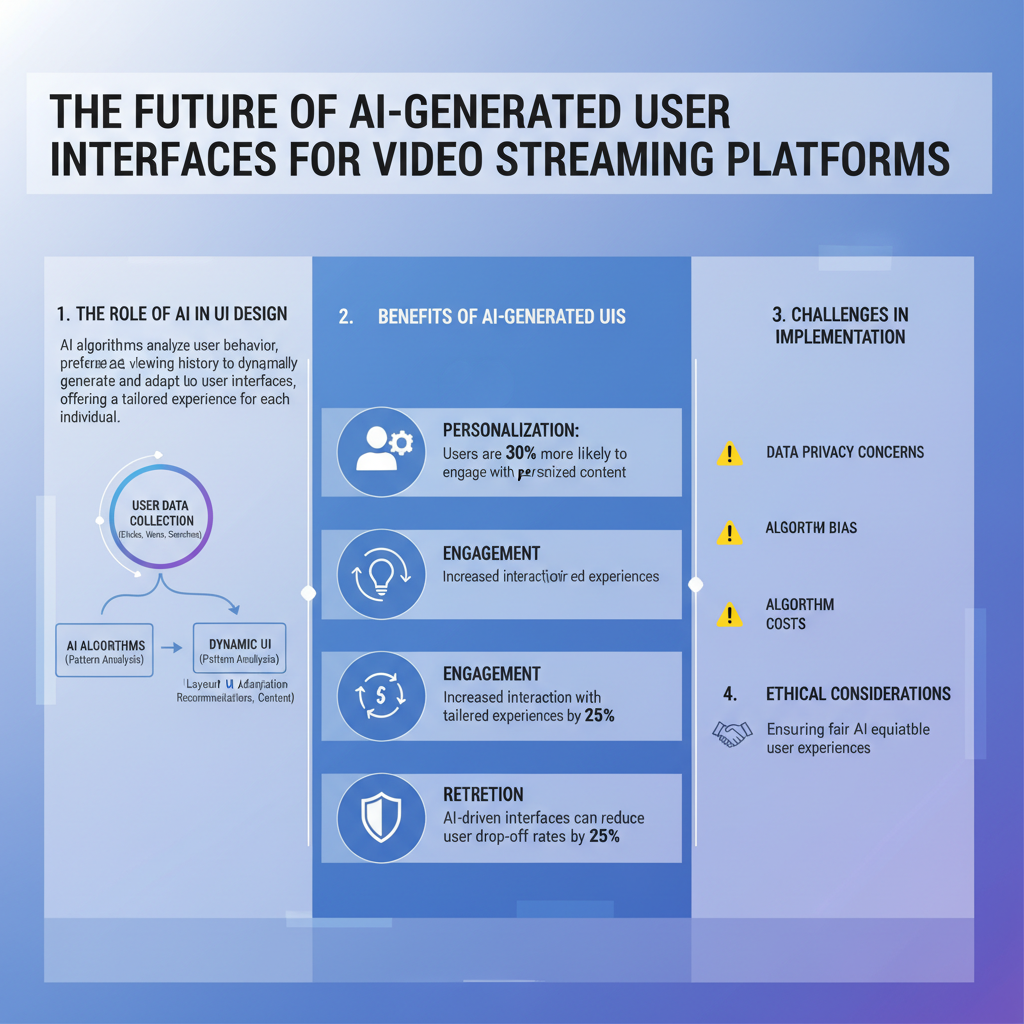
Machine learning algorithms further enhance this experience by enabling dynamic adjustments. Imagine logging into your favorite streaming service and immediately being greeted with a homepage tailored specifically to your tastes, featuring content you’re likely to enjoy based on your past viewing habits. This kind of personalized experience not only enhances user engagement but also fosters a deeper connection between the viewer and the platform, ultimately driving subscription renewals and reducing churn rates.
Benefits of AI-Generated UIs

One of the key benefits of AI-generated UIs is the significant increase in user engagement. Personalized content recommendations lead to a more satisfying viewing experience, as users are more likely to find shows and movies that resonate with them. For example, Netflix utilizes sophisticated algorithms that analyze user behavior, subsequently recommending titles that align with individual preferences. This strategy has been instrumental in keeping viewers hooked and reducing the likelihood of them switching to competitors.
Moreover, streamlined navigation is another advantage of AI-driven interfaces. These systems adapt to user interactions, meaning that if a user frequently browses a specific genre, the interface can prioritize similar content, making it readily accessible. Such adaptive navigation reduces friction and enhances satisfaction, as users can easily find what they want without unnecessary clicks or searches. The end result is a seamless experience that encourages viewers to spend more time on the platform.
Challenges in Implementation
Despite the numerous advantages, implementing AI-generated UIs comes with its set of challenges. One of the foremost concerns is data privacy. As platforms collect and analyze personal viewing data to tailor experiences, users may feel uneasy about how their information is being used. Ensuring robust data protection measures and transparent policies is crucial to maintaining user trust. Streaming services must be proactive in addressing these concerns, communicating clearly about data usage policies, and providing users with control over their privacy settings.
Another challenge lies in the complexity of integrating AI systems with existing platform architectures. Many streaming services have legacy systems that may not be fully compatible with new AI technologies. This integration can require significant investment in both time and resources, as well as a skilled workforce capable of navigating the intricacies of AI implementation. Tackling these challenges is essential for streaming platforms looking to utilize AI-generated UIs effectively.
Future Trends in AI and UI Development
As we look to the future, several exciting trends are emerging in AI and UI development for video streaming. One notable trend is the rise of voice-activated interfaces. With the increasing popularity of smart devices, viewers are beginning to expect hands-free interaction with their streaming services. Voice recognition technology can enable users to search for content or control playback with simple voice commands, making the viewing experience even more accessible.
Additionally, the integration of augmented reality (AR) and virtual reality (VR) technologies into streaming UIs is gaining traction. Imagine being able to immerse yourself in a virtual environment where you can explore different genres or interact with characters from your favorite shows! These technologies promise to create an engaging, immersive experience, allowing viewers to step beyond the traditional screen and become part of the narrative.
Case Studies of Successful AI Integration
Several leading streaming platforms have already begun to realize the benefits of AI-generated UIs. For example, Disney+ has successfully implemented AI-driven recommendations that cater to families by suggesting content based on collective viewing habits. This personalized approach has resonated well with audiences, resulting in high subscription numbers and user satisfaction.
Similarly, Amazon Prime Video utilizes machine learning algorithms to curate content for its users effectively. A/B testing and user feedback play a significant role in refining their AI-generated UI, ensuring it meets user needs and preferences. Metrics from these platforms demonstrate how AI integration has led to higher engagement rates and improved viewer retention.
The Ethical Considerations of AI in UI
While AI offers many advantages, it also raises important ethical considerations. One of the most pressing issues is the potential for bias in AI algorithms. If not carefully designed, these systems can inadvertently reinforce existing stereotypes or exclude certain groups. It is essential for platforms to address these biases by employing diverse datasets and continuously monitoring AI outputs to ensure fair and inclusive user experiences.
Transparency is another critical aspect of ethical AI use. Users should be informed about how AI-driven recommendations are generated and the data that drives these algorithms. By fostering a culture of transparency, streaming platforms can build trust with their audience, ensuring that viewers feel comfortable with the technology shaping their viewing experiences.
The evolution of AI-generated UIs for video streaming platforms holds immense promise for enhancing viewer engagement and satisfaction. By understanding its benefits, challenges, and future trends, stakeholders can better navigate this transformative landscape. If you’re interested in staying ahead in this rapidly changing environment, consider exploring the implementation of AI solutions in your streaming services. The future of video streaming is bright, and with AI at the helm, it will undoubtedly offer viewers experiences that are not only enjoyable but also profoundly personalized.
Frequently Asked Questions
What are the benefits of using AI-generated UI for video streaming platforms?
AI-generated user interfaces (UIs) for video streaming platforms offer several benefits, including personalized viewing experiences, improved content discovery, and enhanced user engagement. By leveraging machine learning algorithms, these UIs can analyze user behavior and preferences to tailor recommendations, making it easier for viewers to find content they love. Additionally, AI can streamline the design process, allowing for faster updates and optimizations based on user feedback.
How will AI-generated UI change the way we interact with video streaming services?
AI-generated UI is set to revolutionize user interactions with video streaming services by enabling more intuitive and responsive designs. As AI systems continuously learn from user interactions, they can adapt the interface to better suit individual preferences, such as adjusting layout, color schemes, and navigation options. This dynamic adaptability ensures that each user enjoys a more seamless and personalized experience, ultimately increasing satisfaction and retention rates.
Why is it important for video streaming platforms to implement AI-generated UIs?
Implementing AI-generated UIs is crucial for video streaming platforms to remain competitive in a crowded market. As viewer expectations evolve, platforms need to provide not only high-quality content but also a user-friendly experience that minimizes friction. AI can help achieve this by automating repetitive design tasks, analyzing user data for insights, and creating tailored experiences that keep subscribers engaged and reduce churn.
Which video streaming platforms are currently using AI-generated UI, and what can we learn from them?
Several prominent video streaming platforms, including Netflix, Hulu, and Amazon Prime Video, are already utilizing AI-generated UIs to enhance user experiences. For instance, Netflix employs sophisticated algorithms to recommend content based on viewing habits, while Hulu integrates adaptive layouts that change based on user preferences. Observing these platforms can provide insights into best practices for leveraging AI in UI design, such as continuous testing and improvement based on real-time user data.
What are the potential challenges of integrating AI-generated UI in video streaming platforms?
While integrating AI-generated UI offers many advantages, it also presents challenges such as data privacy concerns, the need for robust algorithms, and potential bias in recommendations. Platforms must ensure they comply with data protection regulations while also investing in developing accurate and fair AI models that enhance user experience without compromising ethical standards. Additionally, there is a risk of over-reliance on AI, which could lead to a lack of human touch in user interactions, so a balanced approach is essential.
References
- Artificial intelligence
- https://www.bbc.com/news/technology-61034280
- https://www.sciencedirect.com/science/article/pii/S1877050919310487
- https://www.theguardian.com/technology/2021/dec/03/artificial-intelligence-ui-design
- https://www.nytimes.com/2023/03/21/technology/ai-video-streaming.html
- https://www.wired.com/story/ai-video-creation-tools/
- https://www.techcrunch.com/2023/01/12/the-future-of-ai-in-video-streaming/
- https://www.nationalgeographic.org/article/how-ai-changing-video-streaming/