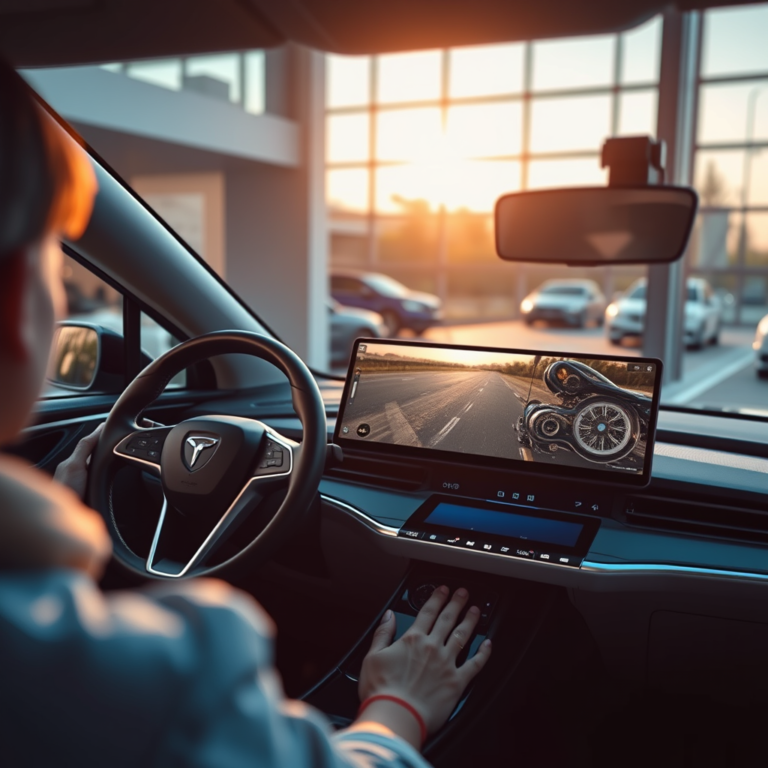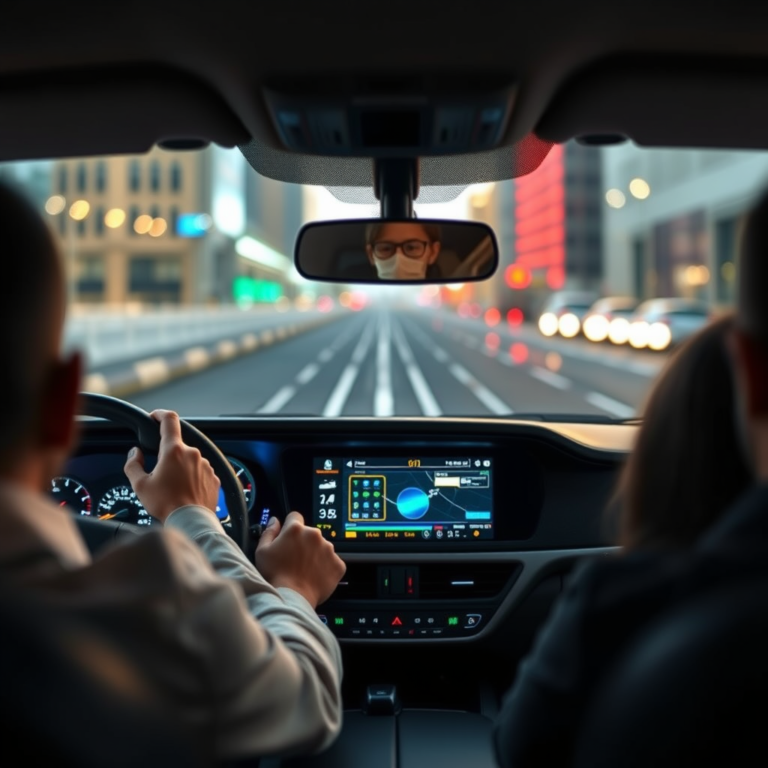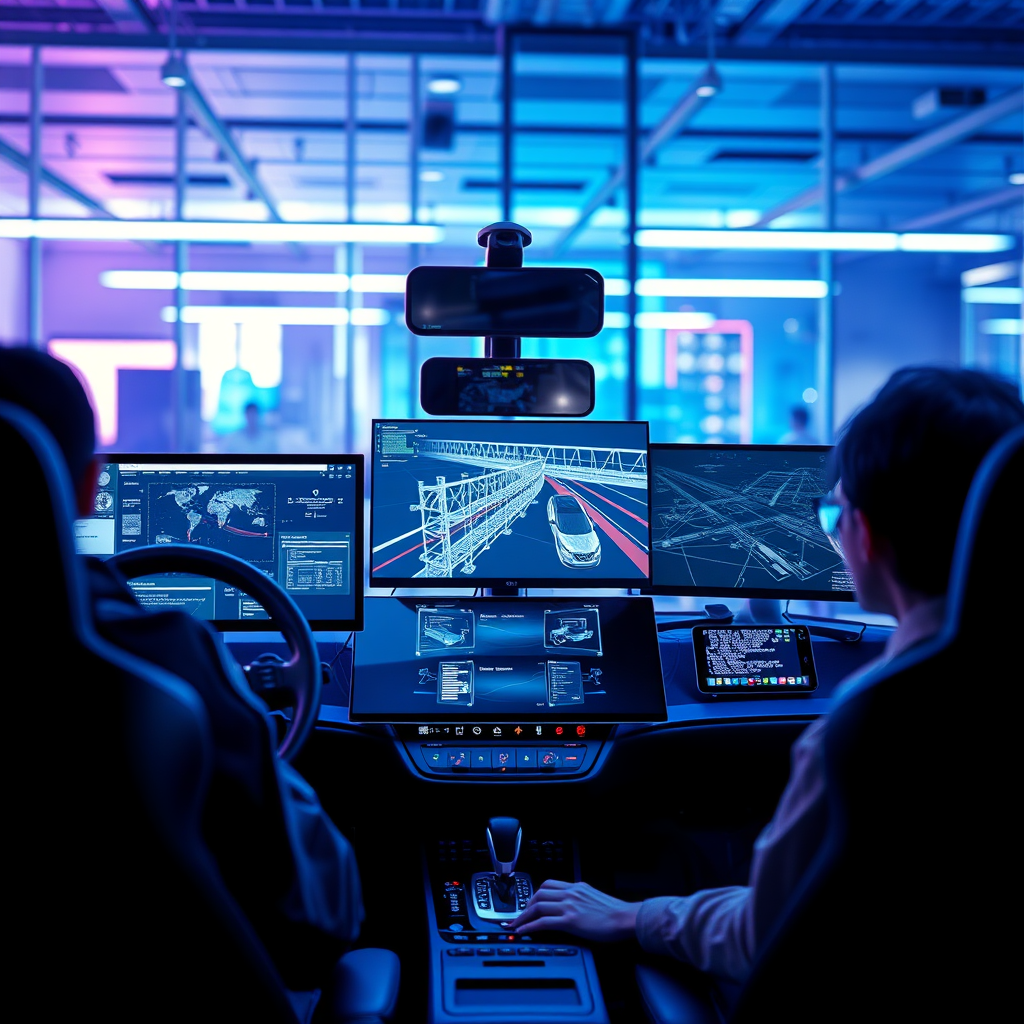

The integration of AI-powered displays significantly enhances the capabilities of autonomous driving systems. These advanced displays provide critical real-time information to both vehicles and their passengers, improving safety, navigation, and user experience. As we delve into this exciting topic, we will explore how AI-enhanced displays are transforming autonomous driving and the implications for the future of transportation.
The Role of AI in Display Technology

AI algorithms are the backbone of modern display technology in autonomous vehicles. They analyze vast amounts of data from various sensors, including cameras, LIDAR, and radar, to create a cohesive visual representation for drivers. This sophisticated processing allows for a clearer understanding of the environment around the vehicle, making it easier for both human and machine to interpret surroundings. For instance, if a car is navigating through a busy urban area, AI can synthesize data on pedestrian movement, vehicle speed, and traffic signals to present an optimized route in real-time.
Furthermore, enhanced decision-making capabilities are enabled through predictive analytics. By processing historical data and real-time inputs, these systems can anticipate traffic patterns and possible obstacles. For example, if a traffic jam is detected ahead, the AI can suggest an alternative route long before the vehicle reaches the congestion, ensuring a smoother driving experience. This predictive capability not only improves efficiency but also enhances the overall safety of autonomous vehicles.
Safety Enhancements Through AI Displays
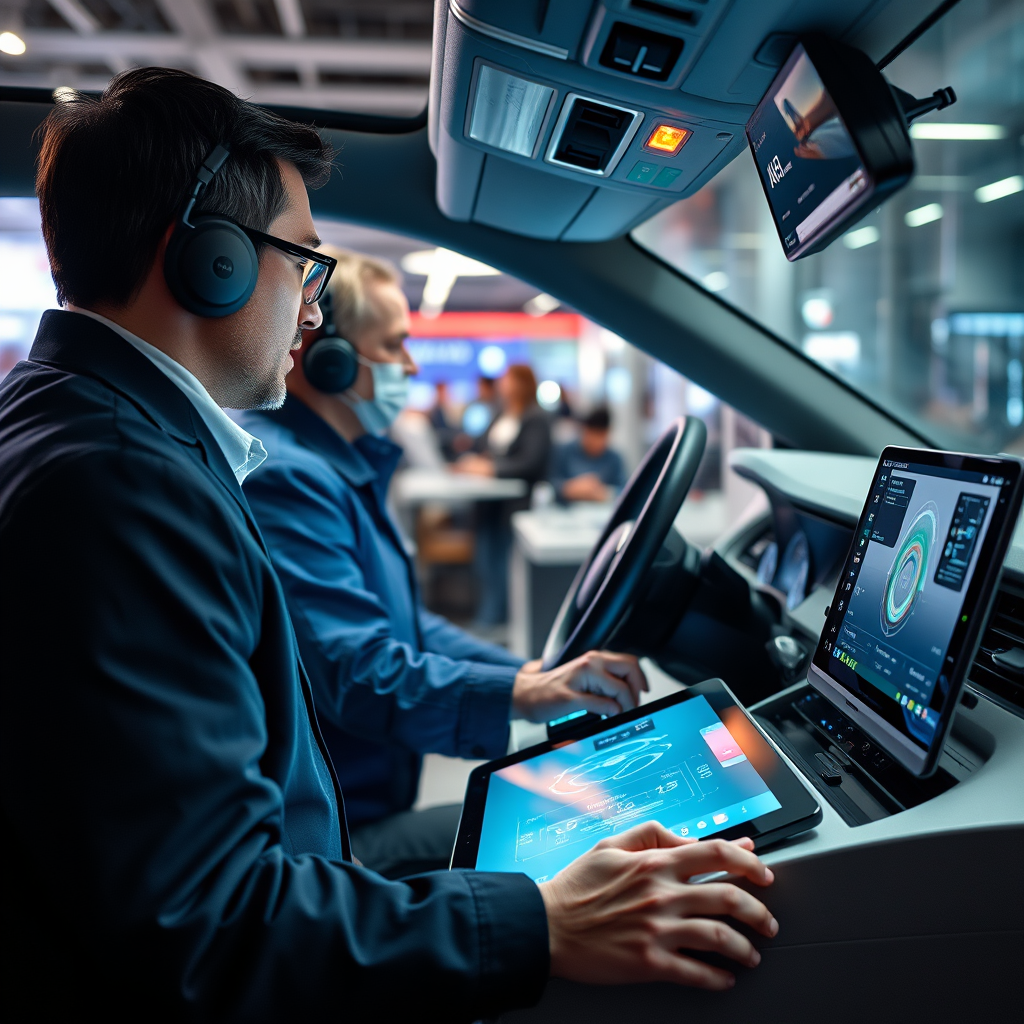
Safety is paramount in autonomous driving, and AI displays play a vital role in enhancing safety protocols. One of the most significant benefits of AI displays is their ability to instantly alert drivers to potential hazards, which can significantly reduce accident rates. For instance, if a child unexpectedly runs into the street, AI displays can quickly identify the movement and notify the vehicle’s systems, allowing for immediate braking or evasive action.
Additionally, real-time updates on vehicle surroundings help autonomous systems react more effectively. Imagine driving through a rainstorm where visibility is low; AI-enhanced displays can highlight road markings and detect nearby vehicles using advanced imaging techniques. By presenting this information clearly and promptly, the displays ensure that the autonomous system maintains situational awareness, which is crucial for avoiding collisions and ensuring passenger safety.
User Experience Improvements
The user experience in autonomous vehicles has been revolutionized by customizable interfaces powered by AI. Passengers can tailor their experience based on individual preferences and needs. For example, a family might choose a layout that emphasizes entertainment options for children, while a business professional may prioritize navigation and productivity tools. The flexibility of these interfaces creates a more engaging environment for users, making long journeys feel shorter and more enjoyable.
Moreover, intuitive designs and voice recognition technology enhance user interaction. Imagine simply saying, “Take me to the nearest coffee shop,” and the car seamlessly integrates that request into its navigation system. This level of accessibility makes the technology approachable, even for those who may not be tech-savvy. By simplifying interactions, AI displays ensure that all passengers, regardless of age or technical ability, can enjoy the benefits of autonomous driving technology.
Data Integration and Visualization
AI-powered displays excel in integrating data from multiple sources, which is essential for creating an informed driving experience. For instance, they can combine weather forecasts, traffic conditions, and even social media updates to present a comprehensive view of the journey ahead. A passenger might see a notification about road closures due to construction while also receiving a weather alert about incoming rain, all displayed in an organized format.
Advanced visualization techniques further enhance this experience. Complex data is presented in easily digestible formats, such as graphs or simplified maps, which can be understood at a glance. For example, a display might use color-coded indicators to show traffic density, allowing passengers to make informed decisions about their route. This capability not only keeps everyone informed but also empowers users to engage with their journey proactively.
Future Trends in AI-Powered Displays
As technology continues to evolve, the future of AI-powered displays in autonomous vehicles looks promising. Ongoing advancements in AI are expected to lead to even more sophisticated display options that will enhance both functionality and user experience. For instance, augmented reality (AR) overlays could provide additional context to drivers, superimposing navigation prompts directly onto the real-world view through the vehicle’s windshield. Imagine driving through a city where directional arrows are projected onto the road, guiding you effortlessly to your destination.
Another exciting development could involve personalized experiences where AI learns each passenger’s preferences over time, adapting the display settings, music choices, and even temperature controls to create a bespoke driving experience. As we embrace these innovations, the potential for AI-enhanced displays to redefine the driving experience is limitless.
Challenges and Limitations
While the future is bright, several challenges and limitations remain in ensuring the reliability and accuracy of AI-driven displays. Technical hurdles, such as the need for robust algorithms that can function in diverse environments and conditions, must be addressed. For instance, can the display accurately interpret data in heavy fog or during nighttime driving? Developing systems that can handle these scenarios is crucial for widespread adoption.
Ethical considerations also come into play, particularly regarding data privacy and user trust. As AI displays collect and analyze personal data to improve user experience, transparency becomes essential. Users must feel confident that their information is secure and that they have control over what is shared. Building trust in this technology will be vital as it becomes an integral part of our daily lives.
The evolution of AI-powered displays is set to redefine the landscape of autonomous driving. As these technologies continue to develop, they will not only enhance safety and user experience but also pave the way for a more efficient transportation system. The integration of AI into display technology promises to make our roads safer and our journeys more enjoyable. By staying informed about these advancements and embracing the future of driving, we can look forward to a more connected and intelligent transportation ecosystem.
Frequently Asked Questions
What are AI-powered displays and how do they enhance autonomous driving?
AI-powered displays are advanced visual interfaces equipped with artificial intelligence that provide real-time information to drivers and passengers in autonomous vehicles. These displays enhance the driving experience by integrating data from various sensors, offering visual cues about the vehicle’s surroundings, navigation, and potential hazards. By analyzing environmental conditions and user preferences, AI-powered displays can present critical information in an intuitive manner, significantly improving safety and user engagement in autonomous driving scenarios.
How do AI-powered displays improve safety in autonomous vehicles?
AI-powered displays improve safety in autonomous vehicles by providing timely and relevant information to both the vehicle’s software and its occupants. For instance, they can alert drivers about obstacles, changing road conditions, and other vehicles’ behaviors, allowing for quick reflexive actions. Additionally, by utilizing machine learning algorithms, these displays can predict potential dangers based on historical data and real-time analysis, making autonomous vehicles safer and more reliable.
Why is user interface design important for AI-powered displays in self-driving cars?
User interface design is critical for AI-powered displays in self-driving cars because it affects how effectively passengers and drivers interact with the vehicle’s technology. A well-designed interface minimizes cognitive load, ensuring that users can quickly understand and act on the information presented. This is particularly important in autonomous driving, where the system must clearly communicate its intentions and the surrounding environment, promoting trust and confidence in the vehicle’s capabilities.
Which features should I look for in AI-powered displays for autonomous vehicles?
When evaluating AI-powered displays for autonomous vehicles, look for features such as real-time data processing, intuitive user interfaces, high-resolution graphics, and adaptive information presentation. Additional capabilities like voice recognition and gesture control can enhance user interaction, while integration with navigation systems and environmental sensors ensures that the display provides comprehensive situational awareness. These features collectively contribute to a safer and more enjoyable autonomous driving experience.
What challenges do manufacturers face when integrating AI-powered displays into autonomous driving systems?
Manufacturers face several challenges when integrating AI-powered displays into autonomous driving systems, including ensuring data accuracy and reliability, maintaining user interface simplicity, and achieving seamless communication between various vehicle components. Additionally, there are concerns about data privacy and security, as well as the need for continuous updates to keep pace with advancements in AI technology. Overcoming these hurdles is crucial for developing robust autonomous vehicles that users can trust.
References
- Self-driving car
- https://www.nytimes.com/2021/09/27/technology/autonomous-vehicles-ai.html
- https://www.sciencedirect.com/science/article/pii/S0968090X21001037
- https://www.nhtsa.gov/equipment/autonomous-vehicles
- https://www.bbc.com/future/article/20210310-how-ai-is-changing-the-way-we-drive
- AAAI Conferences Calendar | AI Magazine
- https://www.reuters.com/technology/how-ai-could-revolutionize-self-driving-cars-2021-06-29/
- https://www.techrepublic.com/article/how-ai-is-changing-the-future-of-autonomous-vehicles/
- https://www.itu.int/en/ITU-T/focusgroups/ai4good/Pages/default.aspx
- https://www.autonomousvehicleinternational.com/news/ai-and-machine-learning.html