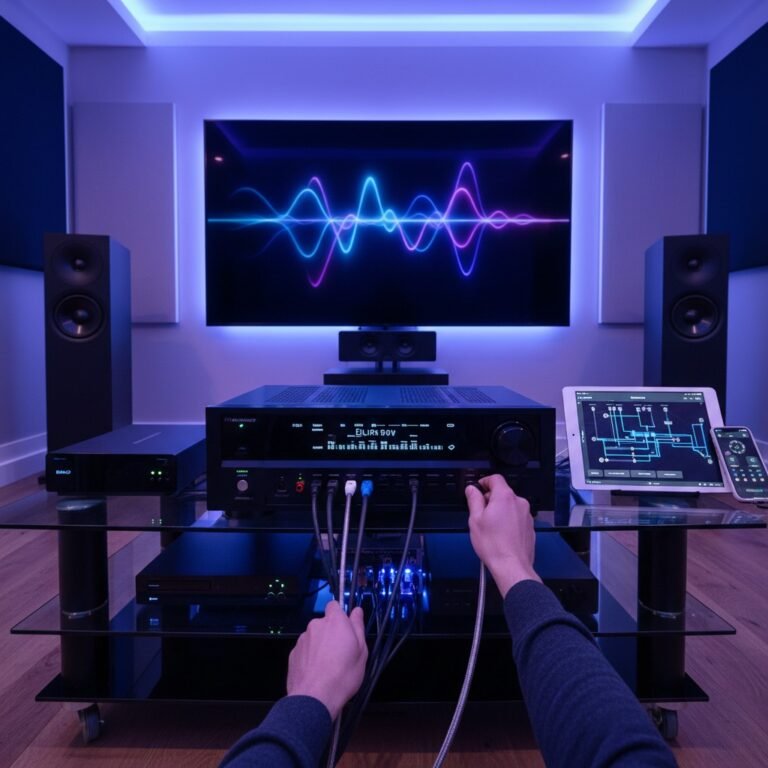

Understanding the physics of sound waves is fundamental to effective speaker design, as it significantly impacts sound quality and performance. Sound waves are not merely vibrations; they are complex phenomena that interact with materials and environments, influencing how audio is perceived. This article will explore the mechanics of sound waves, the principles that underpin speaker technology, and how these elements converge to enhance audio experiences.
The Basics of Sound Waves

Sound waves are mechanical vibrations that propagate through a medium, such as air, water, or solids. They are generated when an object vibrates, creating pressure variations in the surrounding medium. These variations travel away from the source in waves, which can be characterized by several properties:
– Frequency: Measured in hertz (Hz), frequency refers to the number of cycles a sound wave completes in one second. It determines the pitch of the sound; higher frequencies produce higher pitches, while lower frequencies produce lower pitches.
– Wavelength: This is the distance between successive peaks of a wave. Wavelength is inversely related to frequency; as frequency increases, wavelength decreases.
– Amplitude: This refers to the height of the wave, which correlates with the loudness of the sound. Greater amplitudes result in louder sounds.
– Speed: The speed of sound varies based on the medium through which it travels. In air at room temperature, sound travels at approximately 343 meters per second (1,125 feet per second).
Understanding these characteristics is essential for speaker design, as they influence how sound is generated and perceived.
The Role of Frequency in Sound

Frequency plays a pivotal role in sound perception. The human ear can detect a wide range of frequencies, typically from 20 Hz to 20 kHz. To produce a balanced audio experience, speakers must effectively reproduce sounds across different frequency ranges:
– Bass (20 Hz – 250 Hz): This range is responsible for the deep, low-end sounds in music, such as the thump of a bass guitar or the rumble of a kick drum. A good speaker design must include dedicated bass drivers to handle these frequencies without distortion.
– Midrange (250 Hz – 4 kHz): This range contains the frequencies of most vocals and instruments. Accurate reproduction in this range is crucial for clarity and intelligibility.
– Treble (4 kHz – 20 kHz): Higher frequencies add brightness and detail to sound. However, excessive treble can lead to harshness, making it essential to design speakers that balance this range effectively.
Different speaker designs utilize various drivers (woofers, midrange drivers, tweeters) to cover these frequency ranges, ensuring a rich and full-bodied sound.
Sound Wave Propagation and Its Effects
Sound wave propagation can occur through several mechanisms, including reflection, refraction, and absorption. Each of these behaviors can significantly impact speaker performance:
– Reflection: When sound waves encounter a hard surface, they bounce back. This phenomenon can enhance sound in some environments but can also lead to echoes and unwanted resonances if not properly managed.
– Refraction: This occurs when sound waves pass through different mediums (like air to water), causing a change in speed and direction. Understanding refraction is vital for designing speakers intended for use in various environments.
– Absorption: Some materials can absorb sound waves, reducing their intensity. This property is leveraged in speaker design to minimize unwanted reflections and improve sound clarity, particularly in enclosed spaces.
By understanding these propagation characteristics, designers can create speakers that minimize distortions, ensuring a purer sound experience.
Top 7 Speaker Brands by Popularity (2024)
| # | Brand | Market Share (%) | Product Range | Average Rating |
|---|---|---|---|---|
| 1 | Bose | 25% | Home, Portable | ★★★★☆ |
| 2 | Sonos | 20% | Smart, Home | ★★★★☆ |
| 3 | JBL | 15% | Portable, Home | ★★★★☆ |
| 4 | Sony | 12% | Home, Professional | ★★★☆☆ |
| 5 | Bang & Olufsen | 8% | Luxury, Home | ★★★★★ |
| 6 | Audioengine | 5% | Desktop, Home | ★★★☆☆ |
| 7 | Ultimate Ears | 5% | Portable | ★★★★☆ |
Speaker Components and Their Functions
The design of a speaker revolves around several critical components, each serving a specific function that contributes to overall sound reproduction:
– Drivers: These are the heart of the speaker, converting electrical signals into sound waves. Different types of drivers (woofers for bass, midrange drivers for vocals, and tweeters for treble) are used to handle specific frequency ranges.
– Cones: Attached to the drivers, cones help to radiate sound. The material and shape of the cone can affect the sound’s clarity and resonance. Common materials include paper, plastic, and metal, each offering different acoustic properties.
– Voice Coils: Located within the magnetic field of the speaker, voice coils convert electrical energy into mechanical energy, causing the cone to move and produce sound.
– Surrounds and Spider: These components keep the cone centered and allow it to move freely. The material and design of the surround can influence the speaker’s response and durability.
The interplay between these components creates a cohesive unit capable of delivering high-quality sound. For example, a well-designed woofer can produce deep bass without distortion, while a high-quality tweeter can deliver crisp highs.
Speaker Design and Acoustic Principles
Effective speaker design relies heavily on acoustic principles to optimize sound wave behavior. Designers must consider several factors:
– Enclosure Design: The cabinet in which the speaker components are housed impacts sound quality significantly. Enclosures can be sealed (offering tighter bass) or ported (providing more extended bass response). The choice affects how sound waves interact within the enclosure.
– Damping Materials: These materials are used to absorb excess sound waves within the enclosure, reducing resonance. Proper damping can enhance sound clarity and prevent unwanted echoes.
– Crossover Networks: These electronic circuits divide the audio signal into different frequency ranges, directing them to the appropriate drivers. A well-designed crossover ensures that each driver operates within its optimal frequency range, improving overall sound reproduction.
By applying these acoustic principles, designers can create speakers that not only sound good but also minimize distortion and maximize clarity.
Speaker Power Ratings Comparison (Watts)
Innovations in Speaker Technology
Speaker technology is continuously evolving, driven by advancements in materials, electronics, and design methodologies. Some notable innovations include:
– Materials: The development of new materials, such as composite cones and synthetic surrounds, has improved sound quality and durability. These materials can provide better acoustic properties compared to traditional paper and plastic.
– Digital Signal Processing (DSP): DSP technology allows for real-time sound adjustments, enabling speakers to adapt to their environment. This capability enhances sound quality by compensating for acoustical anomalies in different settings.
– Wireless Connectivity: Bluetooth and Wi-Fi technologies have transformed how speakers connect to devices, allowing for greater flexibility and convenience. Many modern speakers are designed for seamless integration into smart home ecosystems.
– Smart Features: The incorporation of artificial intelligence (AI) in speakers enables voice control and personalized audio experiences. These features are increasingly common in premium products, enhancing usability and interactivity.
These innovations are shaping the future of speaker design, allowing for more efficient, powerful, and versatile audio solutions.
Practical Applications of Sound Physics in Design
Understanding the physics of sound waves is not just theoretical; it has practical applications in designing speakers for various contexts:
– Home Theaters: In-home audio systems, speakers are strategically positioned to optimize sound dispersion. Understanding sound wave propagation helps in designing systems that deliver immersive audio experiences.
– Concerts and Events: Large-scale events require sound systems that can project sound to vast audiences. Acoustic principles guide the placement of speakers to ensure even sound distribution.
– Personal Audio Devices: From earbuds to portable speakers, compact design must balance sound quality with portability. Knowledge of sound wave behavior helps engineers create devices that perform well despite size constraints.
Successful case studies, such as those from Bose and Sonos, demonstrate how applying acoustic principles leads to superior performance and customer satisfaction.
The interplay between the physics of sound waves and speaker design is vital for achieving high-quality audio experiences. By understanding sound wave behavior and applying acoustic principles, designers can create speakers that deliver clear, powerful sound. Whether you’re a hobbyist or a professional, consider these insights to enhance your audio projects.
Frequently Asked Questions
What are sound waves and how do they travel?
Sound waves are longitudinal waves created by vibrating objects, which cause pressure fluctuations in the surrounding medium, typically air. They travel through the medium by compressing and rarefying the particles, allowing the sound to propagate. The speed of sound varies based on factors like temperature and density, with warmer air enabling faster travel.
How does speaker design impact sound quality?
Speaker design plays a crucial role in sound quality as it influences factors like frequency response, distortion, and volume output. Components such as the diaphragm material, enclosure design, and driver configuration all affect how sound waves are produced and perceived. High-quality materials and thoughtful engineering can significantly enhance audio clarity and fidelity.
Why do different materials affect the sound produced by speakers?
Different materials have unique properties that affect sound wave transmission and resonance. For example, a stiff and lightweight material can produce clearer high frequencies, while heavier materials may enhance bass response. Understanding these properties helps manufacturers choose the best materials for optimal speaker performance.
What is the best speaker design for home audio systems?
The best speaker design for home audio systems often depends on the specific audio preferences and room acoustics. Generally, floor-standing speakers provide robust sound due to their larger drivers, while bookshelf speakers are suitable for smaller spaces. Additionally, considering factors such as passive vs. active designs can further enhance the listening experience.
Which factors should I consider when choosing speakers for my setup?
When choosing speakers, consider the size of your room, the type of music or media consumed, and the desired sound profile. Other important factors include power handling, impedance, sensitivity, and the speaker’s compatibility with your audio source. Researching reviews and conducting listening tests can also help in making an informed choice.
References
- Sound
https://en.wikipedia.org/wiki/Sound_wave - https://www.aps.org/publications/apsnews/200711/sound.cfm
https://www.aps.org/publications/apsnews/200711/sound.cfm - https://www.sciencedirect.com/topics/engineering/speaker-design
https://www.sciencedirect.com/topics/engineering/speaker-design - https://www.ncbi.nlm.nih.gov/pmc/articles/PMC5407154/
https://www.ncbi.nlm.nih.gov/pmc/articles/PMC5407154/ - https://www.ncbi.nlm.nih.gov/pmc/articles/PMC3569300/
https://www.ncbi.nlm.nih.gov/pmc/articles/PMC3569300/ - Google Scholar Google Scholar
https://scholar.google.com/scholar?q=physics+of+sound+waves - Google Scholar Google Scholar
https://scholar.google.com/scholar?q=speaker+design+acoustics - https://www.britannica.com/science/sound-wave
https://www.britannica.com/science/sound-wave - https://www.jstor.org/stable/10.2307/43726234
https://www.jstor.org/stable/10.2307/43726234 - https://www.sciencedirect.com/science/article/pii/S0022460X20302138
https://www.sciencedirect.com/science/article/pii/S0022460X20302138