

Blockchain technology plays a crucial role in enhancing the security of video streaming services. By decentralizing data management and ensuring transparency, blockchain helps prevent piracy, protects user privacy, and enhances the overall integrity of video content. As the demand for secure and reliable video streaming grows, understanding how blockchain is transforming this landscape becomes essential for both consumers and content creators alike. In this article, we will explore the multifaceted ways blockchain is revolutionizing video streaming services.
Understanding Blockchain Technology

At its core, blockchain is a distributed ledger technology that allows data to be stored across multiple computers in a way that ensures both transparency and security. The fundamental principles of blockchain include decentralization, which removes the need for a central authority, and immutability, meaning once data is recorded, it cannot be altered or deleted without consensus. This creates a secure environment where transactions and data exchanges can occur without fear of tampering.
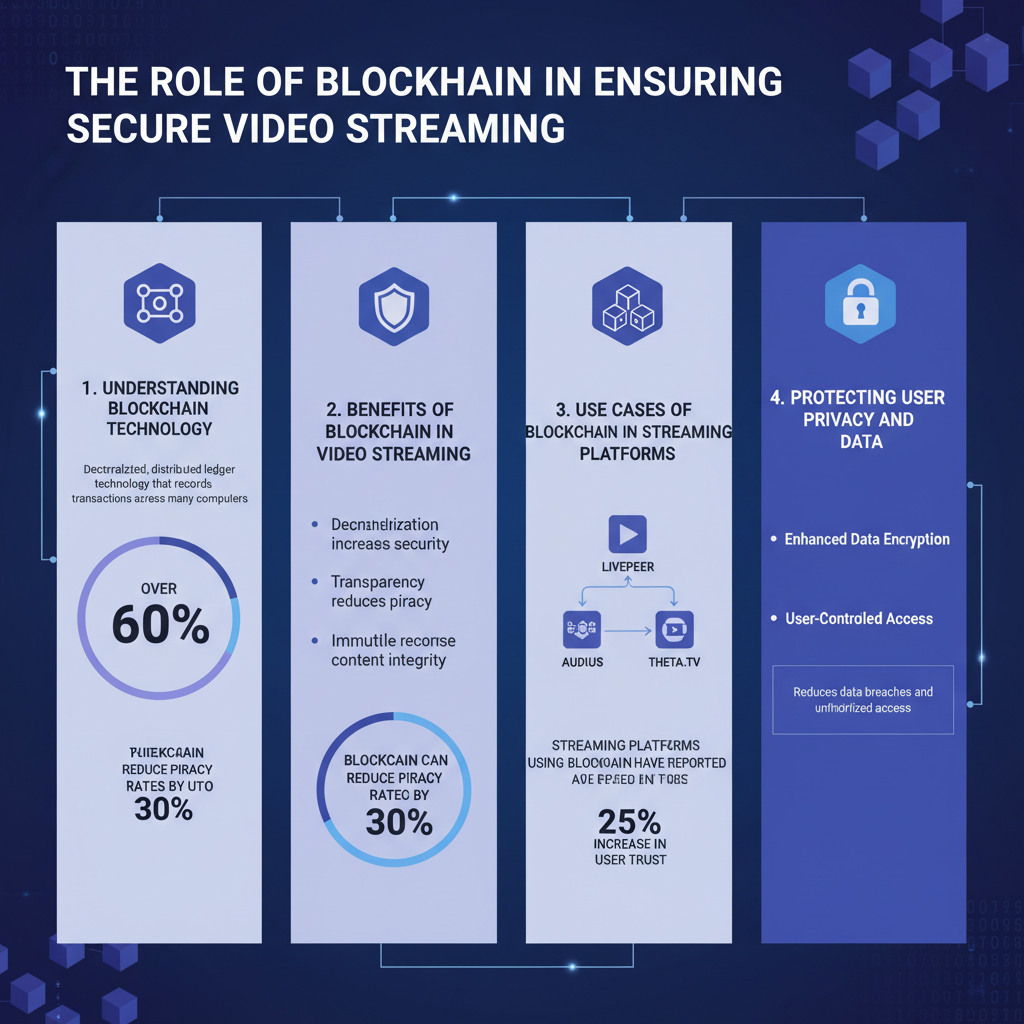
Blockchain operates through a network of nodes that communicate with one another to validate and record transactions. Each transaction is grouped into blocks, and these blocks are then linked together in a chronological chain—hence the name “blockchain.” Smart contracts, another key feature of blockchain, are self-executing contracts with the terms of the agreement directly written into code. These allow for automated processes in video streaming, such as payments to content creators when their work is viewed, which streamlines operations and enhances security.
Benefits of Blockchain in Video Streaming

One of the most significant advantages of blockchain technology in video streaming is enhanced security against hacking and unauthorized access. With a decentralized network, hacking becomes exponentially more challenging, as there is no single point of failure. This means that if one node is compromised, the integrity of the entire network remains intact. As cyberattacks become more sophisticated, the necessity for such security measures is paramount.
Additionally, blockchain improves content ownership verification, which is crucial in combating piracy and addressing copyright issues. By using blockchain, content creators can register their work on a transparent ledger, providing undeniable proof of ownership. This not only protects their intellectual property but also ensures that they are properly compensated for their work. With the ability to track and trace content usage, streaming platforms can enforce licensing agreements more effectively.
Use Cases of Blockchain in Streaming Platforms
Several innovative platforms are already leveraging blockchain technology for secure streaming. Livepeer is one such example; it is a decentralized video streaming network built on the Ethereum blockchain. By allowing users to share their excess bandwidth for video processing, Livepeer reduces costs while improving security and scalability.
Another notable platform is Theta Network, which uses blockchain to create a decentralized video delivery network, enabling content creators to earn tokens for providing high-quality streams. These examples showcase how blockchain can provide a robust, secure environment for video streaming, while also creating new monetization opportunities for creators.
Pilot projects and successful case studies further demonstrate blockchain’s effectiveness. For instance, the blockchain-based platform VeChain has experimented with using its technology for secure streaming and content distribution, showing promising results in reducing unauthorized access and ensuring content authenticity.
Protecting User Privacy and Data
In an age where data privacy is a growing concern, blockchain technology offers a compelling solution for safeguarding user information. Through encryption and pseudonymity, blockchain ensures that user data remains confidential. Unlike traditional streaming services that often collect and store personal information, blockchain allows for anonymous transactions, giving users greater control over their data.
This approach not only protects users’ privacy but also fosters trust and loyalty towards streaming services. When users know their data is secure and not being exploited, they are more likely to engage with the platform. As streaming services continue to compete for viewer loyalty, prioritizing user privacy through blockchain can be a significant differentiator.
Challenges and Limitations
Despite its many advantages, blockchain technology is not without challenges. One notable limitation is scalability, particularly in high-demand streaming environments. The current infrastructure may struggle to handle large volumes of transactions simultaneously, which could lead to delays and buffer issues during streaming. Addressing these scalability challenges is crucial for widespread adoption.
Regulatory concerns also pose a barrier to the implementation of blockchain in video streaming. As the technology evolves, so too does the need for clear legislation and standardization within the industry. Without a comprehensive regulatory framework, both service providers and users may face uncertainties regarding the legality and security of blockchain applications.
Future Trends in Blockchain-Driven Video Streaming
As we look to the future, the evolution of blockchain applications in streaming technology is expected to be significant. Emerging technologies like artificial intelligence (AI) and the Internet of Things (IoT) will likely play a crucial role in enhancing blockchain’s capabilities. For instance, AI can be used to analyze user behavior and preferences, allowing for more personalized content recommendations while maintaining user privacy through blockchain’s secure data management.
Furthermore, as the entertainment industry continues to embrace digital transformation, blockchain is poised to become an integral part of the streaming ecosystem. Predictions suggest we will see a rise in decentralized platforms that offer users more control over their viewing experience, including transparent pricing models and equitable revenue sharing for creators.
In summary, blockchain offers an array of advantages for secure video streaming, from enhancing security and protecting user privacy to combating piracy and ensuring content ownership. However, overcoming scalability and regulatory challenges is essential for the successful implementation of this technology. As the industry evolves, exploring blockchain-based streaming options and staying informed on developments in this exciting field will be beneficial for consumers and creators alike. Embracing these innovations could lead to a more secure, equitable, and user-friendly streaming experience for everyone.
Frequently Asked Questions
What is blockchain technology and how does it enhance video streaming security?
Blockchain technology is a decentralized digital ledger that records transactions across multiple computers securely and transparently. In video streaming, it enhances security by providing a tamper-proof way to store video files and metadata, ensuring that content cannot be altered or pirated. This decentralization reduces the risk of single points of failure and increases trust among users, making it difficult for malicious actors to manipulate or distribute unauthorized content.
How does blockchain prevent piracy and unauthorized access in video streaming services?
Blockchain employs cryptographic techniques to secure digital content and verify users’ identities, thus preventing piracy and unauthorized access. Each video file can be encrypted and stored on the blockchain with a unique digital signature, ensuring that only authorized users can access or share the content. Additionally, smart contracts can automate licensing agreements, ensuring that content creators are compensated fairly while protecting their intellectual property rights.
Why should streaming services consider integrating blockchain technology?
Streaming services should consider integrating blockchain technology to enhance security, streamline operations, and improve user trust. By using blockchain, services can provide transparent tracking of content usage, ensure fair compensation for creators, and reduce costs associated with licensing and distribution. Moreover, the decentralized nature of blockchain minimizes risks of data breaches, which is increasingly important as cyber threats continue to evolve.
Which blockchain platforms are best suited for video streaming applications?
Some of the best blockchain platforms for video streaming applications include Ethereum, which offers robust smart contract functionality, and Stellar, known for its fast transaction speeds. Other notable options include Livepeer, specifically designed for video streaming, and VeChain, which focuses on supply chain management and can be adapted for content distribution. Each platform has unique features that can enhance video security, scalability, and user engagement.
How can consumers benefit from blockchain in video streaming services?
Consumers benefit from blockchain in video streaming services through enhanced security, lower costs, and greater content ownership. With blockchain, viewers can enjoy a more secure streaming experience without the fear of data breaches or unauthorized access. Additionally, blockchain can reduce subscription costs by eliminating intermediaries, allowing consumers to pay directly to content creators and have more control over the content they access, including the ability to own digital assets.
References
- Blockchain
- https://www.techrepublic.com/article/how-blockchain-can-improve-video-streaming-security/
- https://www.sciencedirect.com/science/article/pii/S0167739X20301806
- https://www.forbes.com/sites/bernardmarr/2021/05/17/how-blockchain-technology-can-revolutionize-video-streaming/?sh=5d6fae5f2b3b
- https://www.bbc.com/news/technology-55106636
- https://www.nasa.gov/feature/nasa-uses-blockchain-to-secure-data
- https://www.researchgate.net/publication/334028682_Blockchain_for_Media_Security
- https://www.wired.com/story/blockchain-video-streaming/