

e-Ink displays are essential in modern devices due to their energy efficiency and ability to provide a reading experience that closely resembles printed paper. This technology significantly enhances user experience across various gadgets, from e-readers to smartwatches, while extending battery life. In this article, we will explore the benefits, applications, and advances of e-Ink technology in contemporary devices, showcasing why they are a game-changer in the digital landscape.
Understanding e-Ink Technology

e-Ink, or electronic ink, is a revolutionary display technology that utilizes microcapsules filled with charged particles to produce images and text. Each microcapsule contains black and white particles that can be manipulated by applying electrical fields, allowing for the creation of sharp, clear text and images. This unique mechanism mimics the appearance of ink on paper, resulting in a reading experience that is not only visually appealing but also significantly reduces eye strain compared to traditional backlit screens.
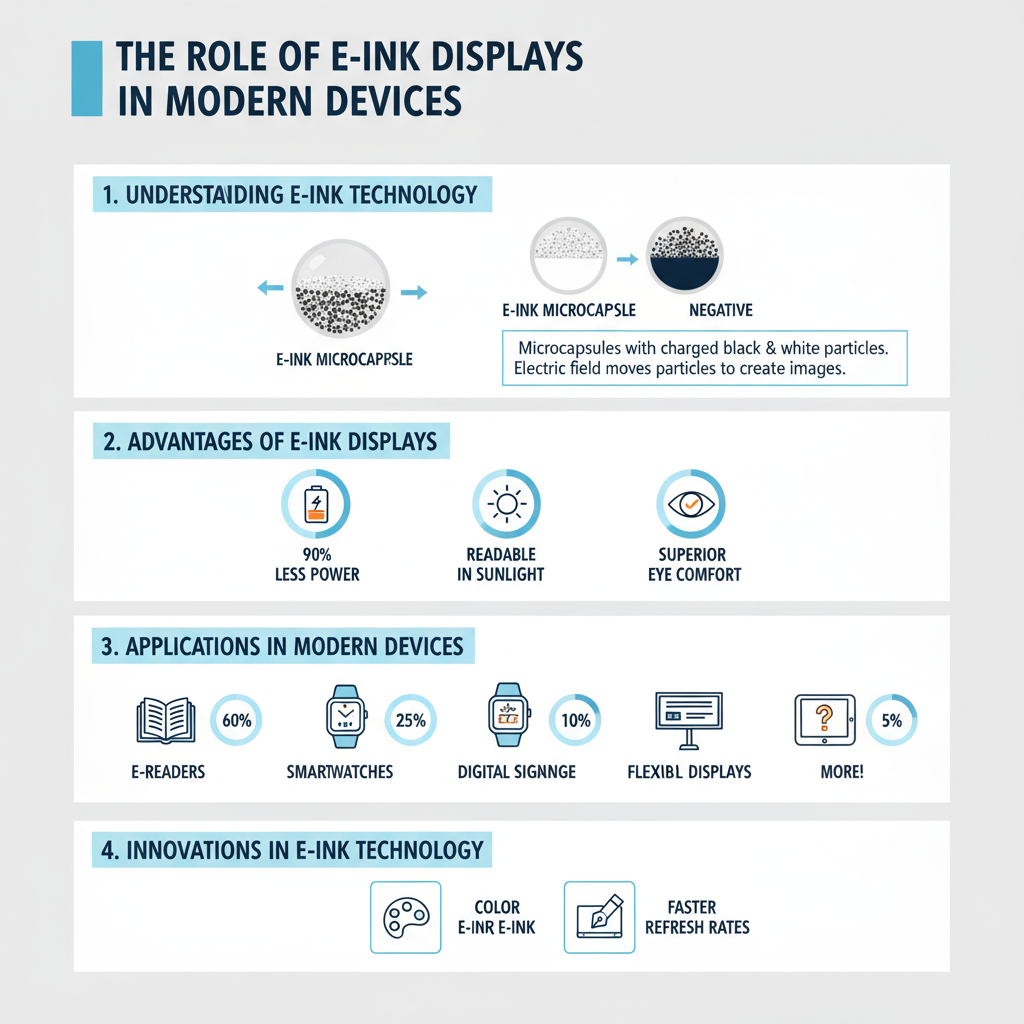
One of the standout features of e-Ink displays is their ability to maintain an image without consuming power. Unlike conventional displays that require constant power to keep images visible, e-Ink only uses energy when refreshing content. This characteristic plays a vital role in making e-Ink displays incredibly energy-efficient, which is especially important for devices designed for prolonged use, such as e-readers and smartwatches.
Advantages of e-Ink Displays

The advantages of e-Ink displays are numerous and impactful, particularly for users who prioritize usability and convenience.
– Energy Efficiency: One of the most significant benefits of e-Ink technology is its energy efficiency. e-Ink displays draw power only during the refresh process, which means they can last weeks or even months on a single charge. This feature is especially appealing for e-readers like the Amazon Kindle, where users can spend hours reading without worrying about battery life.
– Readability in Sunlight: e-Ink displays excel in bright conditions. Their reflective nature allows users to read comfortably in direct sunlight, akin to reading a printed book. This capability is a game-changer for outdoor enthusiasts, students, and anyone who enjoys reading in natural light. Traditional screens, such as those using LCD or OLED technology, often suffer from glare and reflections that can hinder readability, but e-Ink remains clear and easy to read regardless of lighting conditions.
Applications in Modern Devices
The versatility of e-Ink displays has led to their widespread adoption across various devices, enhancing functionality and user experience.
– E-readers: The quintessential application of e-Ink technology can be seen in e-readers like the Kindle and Kobo. These devices leverage e-Ink to offer a comfortable reading experience that resembles the feel of paper. Users can enjoy long reading sessions without straining their eyes, making e-readers a popular choice for avid readers.
– Wearables: Smartwatches and fitness trackers have also started incorporating e-Ink technology. For instance, the Pebble Smartwatch uses an e-Ink display to show notifications and track fitness metrics while conserving battery life. The low power consumption of e-Ink displays allows these devices to operate for extended periods without frequent recharging, making them ideal for users who value longevity and functionality.
Innovations in e-Ink Technology
The e-Ink display technology is continually evolving, leading to exciting innovations that broaden its applications and enhance user experience.
– Color e-Ink: Recent advancements have introduced color e-Ink displays, allowing for richer visual experiences. Companies like E Ink have developed color e-paper technology that can render images and graphics in full color. This breakthrough opens up new opportunities for applications in signage, advertisements, and even educational materials, where color can enhance comprehension and engagement.
– Flexible Displays: Another exciting development is the integration of e-Ink technology into flexible displays. This innovation enables manufacturers to create devices with unique designs and form factors, such as foldable e-readers or wearable tech that can conform to the user’s body. The flexibility of e-Ink displays not only allows for creative design but also enhances portability and user comfort.
Future Trends in e-Ink Usage
As technology continues to advance, the future of e-Ink displays looks promising with several emerging trends poised to shape their usage.
– Integration with IoT: The rise of the Internet of Things (IoT) presents exciting possibilities for e-Ink displays. These displays can serve as energy-efficient interfaces for connected devices, providing real-time updates on information such as weather, notifications, and more. Imagine a smart fridge with an e-Ink display that shows grocery lists or meal suggestions without consuming significant power.
– Sustainable Practices: With sustainability becoming a focal point in technology development, e-Ink’s low energy consumption aligns perfectly with eco-friendly initiatives. As consumers increasingly seek out sustainable products, devices featuring e-Ink technology may become more prevalent, as they offer a greener alternative to traditional displays.
Challenges Facing e-Ink Technology
Despite the numerous advantages, e-Ink technology does face certain challenges that could limit its widespread adoption.
– Limited Refresh Rates: One of the primary drawbacks of e-Ink displays is their slower refresh rates compared to LCD or OLED displays. This limitation can make it difficult for e-Ink to compete in applications that require rapid image changes, such as gaming or video playback. While e-Ink is perfect for static content, fast-moving visuals are still a challenge.
– Competition: The rise of high-resolution LCD and OLED displays poses a significant challenge to e-Ink technology. These alternatives offer vibrant colors, high contrast, and faster refresh rates, making them more suitable for applications like video watching and gaming. As a result, e-Ink must continue to innovate and improve to carve out its niche in the ever-competitive display market.
The rise of e-Ink displays highlights their importance in enhancing the functionality and usability of modern devices. With numerous applications and ongoing innovations, e-Ink technology is set to continue playing a pivotal role in shaping the future of portable electronics. As we embrace more sustainable and energy-efficient technologies, e-Ink displays are likely to become even more integral to our daily lives, transforming the way we interact with our devices. Whether you’re an avid reader or a tech enthusiast, exploring how e-Ink can enhance your devices is a wise choice for the future.
Frequently Asked Questions
What are e-Ink displays and how do they work?
e-Ink displays, also known as electronic ink or electrophoretic displays, are a type of screen technology that mimics the appearance of ink on paper. They work by using tiny capsules filled with black and white particles that move in response to electrical charges, creating a high-contrast image. This technology is energy-efficient and provides excellent readability in various lighting conditions, making it ideal for devices like e-readers and smartwatches.
Why are e-Ink displays preferred for e-readers over traditional LCD screens?
e-Ink displays are preferred for e-readers because they offer several advantages over traditional LCD screens. Firstly, e-Ink technology is designed to reduce eye strain by providing a paper-like reading experience that is easier on the eyes compared to backlit LCD displays. Additionally, e-Ink screens consume significantly less power, allowing for longer battery life in devices, making them more convenient for avid readers who want to enjoy uninterrupted reading sessions.
How do e-Ink displays perform in different lighting conditions?
e-Ink displays excel in various lighting conditions, particularly in bright sunlight where they outperform traditional screens. The reflective nature of e-Ink allows users to read comfortably in direct sunlight without glare, similar to reading a physical book. However, e-Ink displays can struggle in low-light environments unless they are equipped with front lighting, which illuminates the screen without compromising the reading experience.
What are the limitations of e-Ink displays compared to LCD and OLED screens?
While e-Ink displays offer unique benefits, they also have limitations when compared to LCD and OLED screens. One major drawback is their refresh rate; e-Ink screens are slower at updating images, making them unsuitable for video playback and fast-moving visuals. Additionally, e-Ink displays typically have a limited color range and lower resolution compared to LCD and OLED technologies, which provide vibrant colors and sharper images, making them more suitable for multimedia applications.
Which devices currently utilize e-Ink technology and what are their applications?
e-Ink technology is utilized in a variety of devices, primarily e-readers such as Amazon Kindle and Kobo models, which focus on providing a comfortable reading experience. Beyond e-readers, e-Ink displays are also found in smartwatches, digital price tags, electronic shelf labels, and some tablets. These applications leverage the low power consumption and visibility benefits of e-Ink, making it an effective choice for devices that prioritize readability and battery longevity.
References
- https://en.wikipedia.org/wiki/E-paper
- https://www.sciencedirect.com/science/article/pii/S0167722717312331
- Immunogenicity and Protection Against Influenza H7N3 in Mice by Modified Vaccinia Virus Ankara Ve…
- https://www.wired.com/story/e-ink-displays/
- https://www.reuters.com/article/us-technology-e-ink-idUSKBN1A02A5
- https://www.bbc.com/news/technology-37643269
- https://www.nist.gov/news-events/news/2019/07/nist-researchers-improve-e-paper-displays-using-nanosheet-technology