
Foveated rendering is a revolutionary technique in virtual reality (VR) that enhances graphical performance and visual fidelity by focusing the rendering workload where it matters most—the user’s point of attention. By leveraging the way our eyes naturally focus, foveated rendering allows VR systems to deliver stunning visuals while optimizing performance, resulting in smoother experiences and longer play sessions. In this article, we will delve into the mechanisms, benefits, and applications of foveated rendering in VR displays, shedding light on how this technology is transforming the VR landscape.
Understanding Foveated Rendering
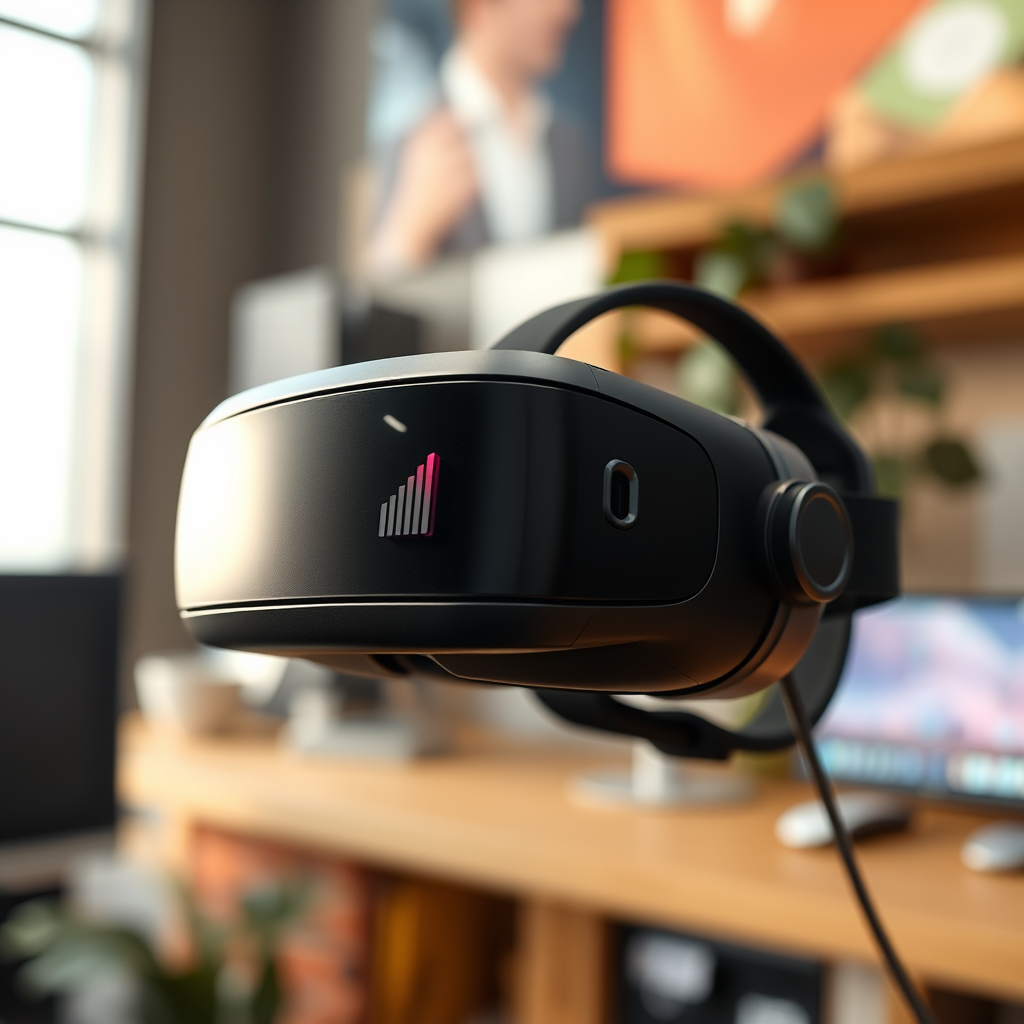
Foveated rendering capitalizes on the unique structure of the human eye, particularly the fovea, which is the small central pit in the retina responsible for sharp central vision. This area has the highest density of photoreceptors, allowing us to see fine detail when we focus on something directly. The peripheral vision, however, is less detailed and can tolerate lower fidelity without significantly impacting the overall experience.
By determining where the user is looking, VR systems can prioritize rendering in that high-clarity area while simplifying the surrounding visuals. This means that the graphics in the center of the user’s view are crisp and detailed, while the edges can be rendered with less detail, saving processing power without sacrificing the immersive experience. For instance, if you’re playing a VR game and looking at a character right in front of you, that character will be rendered in high detail, while the distant background may appear less defined, but it still contributes to the overall experience.
How Foveated Rendering Works
At the heart of foveated rendering is eye-tracking technology, which continually monitors where the user is looking. This technology can be implemented through various methods, such as using infrared cameras or sensors built into VR headsets. When a user moves their gaze, the system instantly reacts, adjusting the rendering quality in real-time to match the focus of their vision.
For example, imagine you’re exploring a virtual landscape. As you turn your head to look at a faraway mountain, the VR system detects your gaze and dynamically enhances the rendering quality of that mountain while reducing detail in areas you’re not looking at, like the sky or ground. This allows for a more fluid experience, as the system can keep up with your movements without overloading the GPU, ensuring higher frame rates and reducing latency, which are crucial for an immersive VR experience.
Benefits of Foveated Rendering
The advantages of foveated rendering are multifaceted, making it a game-changer for VR technology. One of the primary benefits is the significant reduction in the computational load on the GPU. Traditional rendering techniques require the GPU to process high-quality images across the entire display area, which can be taxing and lead to lower performance, especially in mobile VR devices with limited processing power. With foveated rendering, the GPU can allocate resources more efficiently, which means better frame rates and improved battery life for portable VR headsets.
Another critical benefit is the enhanced user experience. With sharper visuals where it matters most, users can immerse themselves in their virtual environments without the distraction of blurriness in their peripheral vision. This improvement can also help reduce motion sickness, a common issue in VR, as the brain receives clearer and more coherent visual information. For instance, in a fast-paced VR game, players can react more swiftly to on-screen action without feeling disoriented by poor graphics quality in their peripheral view.
Applications in VR Displays
Foveated rendering is making waves across various sectors, particularly in gaming, simulation training, and virtual meetings. In gaming, developers are increasingly adopting this technique to maximize visual quality while maintaining high frame rates. Popular VR titles are beginning to integrate foveated rendering, providing players with an unparalleled level of immersion and realism.
In simulation training, particularly for professions such as aviation or medicine, foveated rendering can enhance realism, allowing trainees to focus on critical elements of their environment while simplifying less important details. This can create a more effective learning experience, as users can concentrate on the tasks at hand without being overwhelmed by superfluous information.
Moreover, the potential applications extend beyond gaming and training. In education, foveated rendering can be used to create engaging virtual classrooms where students can focus on important content while allowing less critical information to be rendered in lower detail. In therapeutic settings, such as exposure therapy for phobias, foveated rendering can help create more realistic and controlled environments, making the experience more impactful for participants.
Challenges and Limitations
Despite its many advantages, foveated rendering does come with its own set of challenges and limitations. One of the primary hurdles is the implementation of accurate eye-tracking technology, which can be complex and costly. High-quality eye-tracking systems require precise calibration and can be sensitive to user movement, making them less effective if not designed correctly.
Another challenge is the potential discomfort users may experience if the rendering quality shifts too abruptly. If a user moves their gaze quickly, it can lead to noticeable changes in visual quality that may be jarring. This emphasizes the need for seamless transitions that maintain immersion without drawing attention to the rendering process itself. Developers need to carefully balance the trade-off between performance and visual quality to ensure a pleasant user experience.
Future Developments in Foveated Rendering
As the world of VR continues to evolve, ongoing research and development are focused on improving the precision of eye-tracking technology. Future advancements may incorporate machine learning algorithms to predict where a user is likely to look next, allowing for even more efficient rendering strategies. This predictive capability could further enhance the realism and fluidity of virtual experiences.
Additionally, as VR devices become more powerful and widespread, foveated rendering is likely to become a standard feature in creating lifelike and interactive environments. With the push towards more immersive experiences in gaming, education, and therapy, understanding and harnessing the power of foveated rendering will be crucial for developers and users alike.
Foveated rendering is paving the way for a new era in virtual reality, significantly enhancing performance while improving the user experience. By understanding its principles and applications, we can appreciate how this technology is revolutionizing our interaction with digital realms. For anyone keen on staying ahead in the VR landscape, keeping an eye on foveated rendering and its advancements is essential. As technology continues to progress, the potential for more engaging and realistic virtual experiences is limitless.
Frequently Asked Questions
What is foveated rendering in VR displays and how does it work?
Foveated rendering is a technique used in virtual reality (VR) that optimizes graphics rendering based on where the user’s gaze is directed. By leveraging the human eye’s natural ability to focus on a small area while the peripheral vision is less detailed, foveated rendering reduces the workload on the GPU. This is achieved by rendering high-quality images only in the area where the user is looking, while the surrounding areas are rendered at lower quality, resulting in improved performance and reduced latency.
Why is foveated rendering important for VR experiences?
Foveated rendering is crucial for enhancing VR experiences as it significantly improves performance and visual quality without demanding excessive processing power. This technique allows for higher frame rates and reduced motion sickness, which are essential for maintaining immersion in VR environments. Additionally, by lowering the graphical load, developers can allocate more resources to other aspects of the VR experience, such as complex interactions and realistic physics.
How does foveated rendering improve performance in virtual reality applications?
Foveated rendering boosts performance in VR applications by decreasing the number of pixels that need to be processed and rendered in real-time. Since only the area in focus is rendered in high detail, the graphics card can allocate its resources more efficiently, allowing for higher frame rates and smoother performance. This optimization not only enhances the user experience but also enables more complex and visually appealing environments without compromising system requirements.
Which VR headsets utilize foveated rendering technology?
Several modern VR headsets utilize foveated rendering technology to enhance performance and visual fidelity. Notable examples include the Oculus Quest 2, Valve Index, and the HTC Vive Pro. Additionally, the upcoming headsets like the PlayStation VR2 are expected to implement advanced foveated rendering techniques, further improving the overall user experience in virtual reality applications.
What are the challenges associated with implementing foveated rendering in VR?
Implementing foveated rendering in VR comes with several challenges, including the need for precise eye-tracking technology and algorithms to determine the user’s gaze direction accurately. Additionally, developers must balance the level of detail in the peripheral areas to avoid noticeable visual artifacts, which can disrupt immersion. Ensuring compatibility across various hardware and software platforms also poses a challenge, as performance can vary significantly based on the capabilities of the user’s system.
References
- Foveated rendering
- https://www.sciencedirect.com/science/article/pii/S0950036119300420
- https://www.ncbi.nlm.nih.gov/pmc/articles/PMC6888255/
- https://www.technologyreview.com/2019/03/12/243226/foveated-rendering-virtual-reality/
- https://www.microsoft.com/en-us/research/wp-content/uploads/2016/02/Foveated-Rendering-for-Virtual-Reality.pdf
- https://www.researchgate.net/publication/327078368_Foveated_rendering_techniques_for_virtual_reality
- https://www.nature.com/articles/s41598-020-65267-1