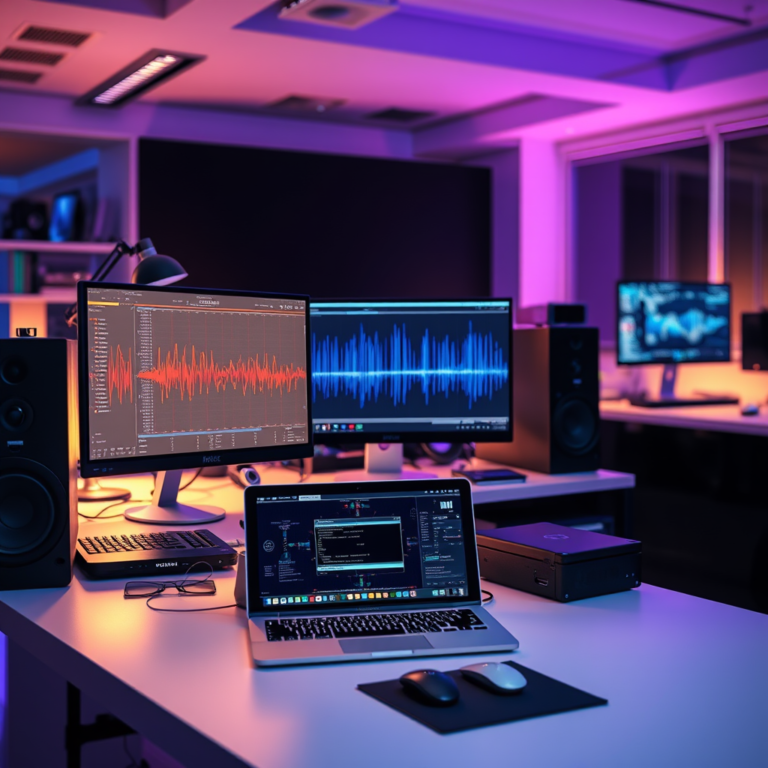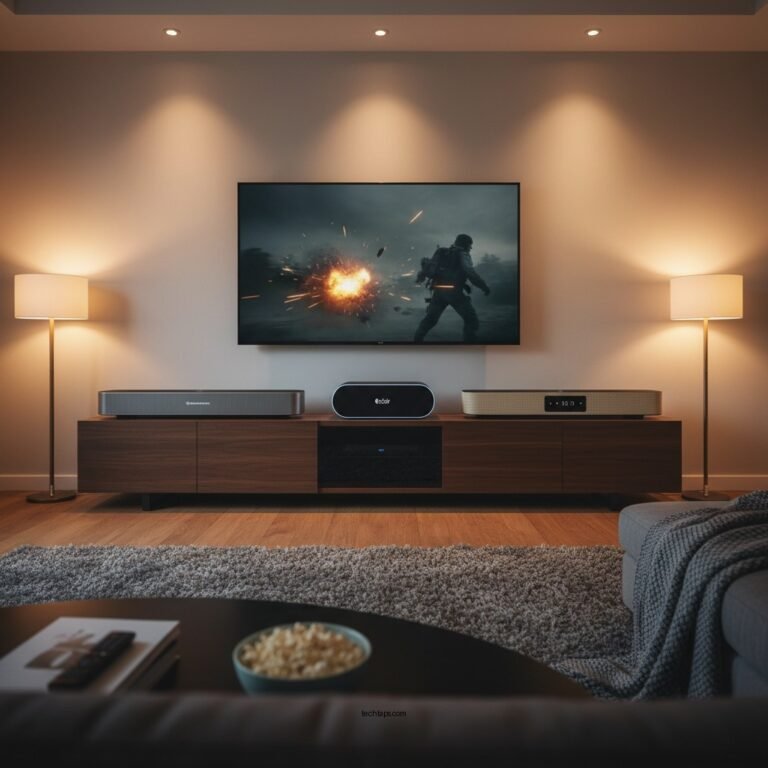

Setting up a sound system can be overwhelming, but avoiding common mistakes can make the process smoother and enhance audio quality. By paying attention to details like planning and speaker placement, you can ensure your setup delivers crystal-clear sound without the headaches. In this article, we’ll dive into the top ten mistakes to avoid during setup and provide you with insights to achieve optimal audio performance.
Inadequate Planning and Research
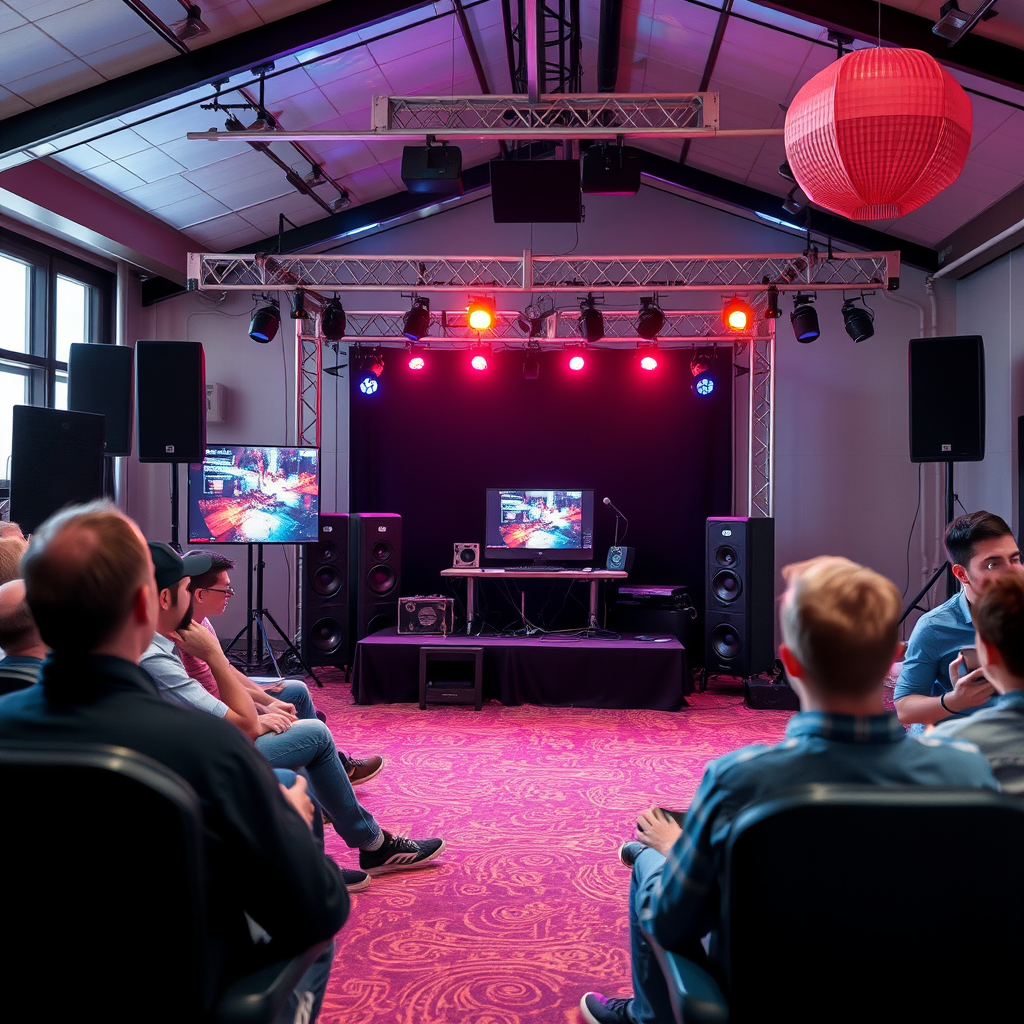
One of the most significant mistakes people make when setting up a sound system is jumping in without adequate planning and research. This often leads to subpar performance and dissatisfaction with the final product. First, it’s crucial to assess the space where you’ll be placing your sound system. Each room has unique acoustics that can dramatically affect sound quality; for example, a small room may create unwanted echoes, while a large room may cause the sound to dissipate before it reaches the listener.
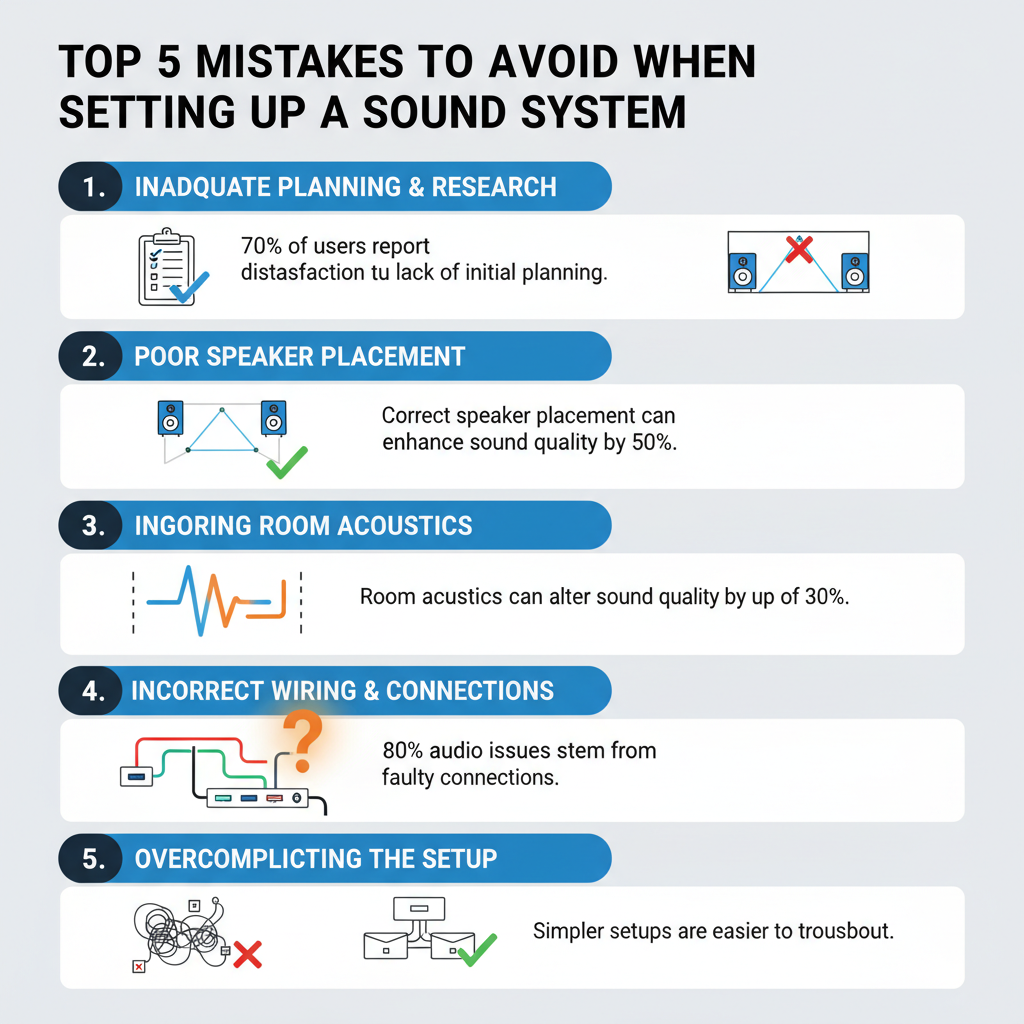
Additionally, ignoring equipment compatibility can lead to a frustrating experience. Ensure that all components work together seamlessly, from your receiver to your speakers, to avoid technical issues. It’s wise to consult product manuals or online resources to confirm that your equipment is compatible, which can save you time and money in the long run.
Poor Speaker Placement
Another common pitfall is poor speaker placement. Many individuals underestimate the importance of positioning their speakers correctly. Following optimal placement guidelines is essential; for instance, placing speakers too close to walls can result in a phenomenon known as boundary interference, which can muddy the audio and lead to unbalanced sound.
Moreover, distance plays a crucial role in sound quality. Speakers that are too far apart might create dead spots in the listening area, while those that are too close together can cause audio to overlap, leading to distortion. A good rule of thumb is to position speakers at ear level when seated and create an equilateral triangle between the speakers and the listening area. This simple adjustment can significantly enhance your sound experience.
Ignoring Room Acoustics
Room acoustics are often overlooked but have a profound impact on your sound system’s performance. Neglecting soundproofing can result in unmanaged reflections from walls, floors, and ceilings, which can muddy sound clarity. If your room has hard surfaces, consider adding sound-absorbing materials like acoustic panels or rugs to help control reflections and create a more balanced sound environment.
Furnishings also play a critical role in acoustics. For instance, plush sofas, curtains, and carpets can absorb sound and prevent echoes, while bare walls and hardwood floors can create a more echoey atmosphere. Think about how your room is furnished and consider making adjustments to optimize the acoustics for your sound system.
Incorrect Wiring and Connections
When setting up a sound system, the wiring and connections can often become a source of frustration. Using subpar cables can introduce interference and degrade audio quality. It’s essential to invest in quality cables that can handle the demands of your equipment. For instance, using high-grade speaker wire and HDMI cables can make a significant difference in the clarity and fidelity of your sound.
Additionally, failing to secure connections can lead to intermittent sound issues or complete failure. Ensure that all cables are firmly connected and check for any frayed wires or loose connectors. Regularly inspecting your wiring can help you catch potential issues before they become significant problems.
Overcomplicating the Setup
In an effort to create the ultimate sound experience, many people make the mistake of overcomplicating their setups. Adding unnecessary components can confuse users and create more points of failure. For example, integrating multiple streaming devices, equalizers, or surround sound processors can complicate the system and make it difficult to troubleshoot issues.
A straightforward system is often more effective and user-friendly. Additionally, ignoring user-friendly interfaces can lead to frustration. Choose equipment that is easy to operate and offers intuitive controls, ensuring that everyone in your household can enjoy the system without extensive training or confusion.
Skipping Calibration
Calibrating your sound system is a crucial step that shouldn’t be overlooked. Failing to adjust settings can result in unbalanced sound levels, where some speakers may be too loud while others are too quiet. Most modern receivers come with built-in calibration tools that can automatically adjust audio settings based on your room’s acoustics.
Utilizing these tools can save you time and ensure optimal performance. Additionally, consider manually fine-tuning settings like bass, treble, and surround sound options based on your listening preferences. Taking the time to calibrate your system properly can lead to a vastly improved listening experience.
Overlooking Maintenance
Once your sound system is set up, maintenance often falls by the wayside. Disregarding regular updates can leave your system vulnerable to performance issues and bugs. Many manufacturers release firmware updates that can enhance functionality, fix glitches, or introduce new features. Regularly check for updates and apply them to keep your system running smoothly.
Moreover, ignoring physical upkeep can affect sound quality and equipment longevity. Dust and dirt can accumulate over time, leading to overheating or connectivity issues. Make it a habit to clean your equipment regularly and ensure that ventilation areas are free from obstructions to maintain optimal performance.
By avoiding these top ten mistakes when setting up your sound system, you can enhance audio quality and overall performance. Take the time to plan, place your speakers thoughtfully, and maintain your equipment properly. For more tips and guidance on audio setups, be sure to explore additional resources or consult with audio professionals.
Frequently Asked Questions
What are the most common mistakes people make when setting up a sound system?
The most common mistakes include improper speaker placement, neglecting to match speaker impedance with the amplifier, and failing to calibrate audio settings. Many users also overlook the importance of room acoustics, which can dramatically affect sound quality. Additionally, using inadequate cables or equipment can lead to audio issues that detract from the overall experience.
How can I avoid making mistakes when setting up my home sound system?
To avoid mistakes, start by carefully planning your layout and speaker placement to ensure optimal sound distribution. Use quality cables and ensure they are correctly connected to avoid signal loss. Additionally, take the time to calibrate your sound settings using tools available in your receiver or sound processor, and consider consulting an expert if you’re unsure about placement or configuration.
Why is speaker placement so critical in sound system setup?
Speaker placement is essential because it directly impacts soundstage and clarity. Poor placement can lead to imbalanced audio, where some frequencies may overpower others, resulting in a muddled listening experience. Positioning speakers at ear level, avoiding corners, and ensuring they are equidistant from the primary listening position can significantly enhance audio performance and immersion.
Which equipment should I prioritize to avoid sound system setup mistakes?
Prioritize investing in quality speakers, an appropriate amplifier, and a reliable receiver. These components work together to deliver clear and powerful sound. Additionally, consider adding acoustic treatments to your room, such as sound-absorbing panels, to improve overall audio quality and minimize issues related to room acoustics.
What are the consequences of not calibrating my sound system properly?
Failing to calibrate your sound system can result in uneven sound levels, where certain frequencies may sound overly pronounced or completely absent. This lack of balance diminishes the overall listening experience, making it difficult to enjoy music, movies, or games as intended. Proper calibration ensures that your system delivers the best possible audio performance and matches the unique characteristics of your space.
References
- Sound system
- NIOSH Respirator Selection Logic 2004 | NIOSH | CDC
- Music.com.au | Music > Entertainment > Community > Culture
- HPB | 500 Internal Server Error
- https://www.thebalance.com/home-theater-sound-system-mistakes-1834312
- https://www.techhive.com/article/3227690/mistakes-to-avoid-when-setting-up-a-home-theater-sound-system.html
- https://www.rolandus.com/go/5-mistakes-when-choosing-a-sound-system/