
The quality of your video footage is heavily influenced by the type and size of the camera sensor used in your equipment. Larger sensors typically capture more light and detail, which translates to superior video quality. In this article, we will delve into various types of camera sensors, explore their distinct characteristics, and understand how they affect the overall quality of video production. Whether you’re a budding filmmaker or a seasoned vlogger, grasping the nuances of camera sensors is fundamental to enhancing your video projects.
What Are Camera Sensors?

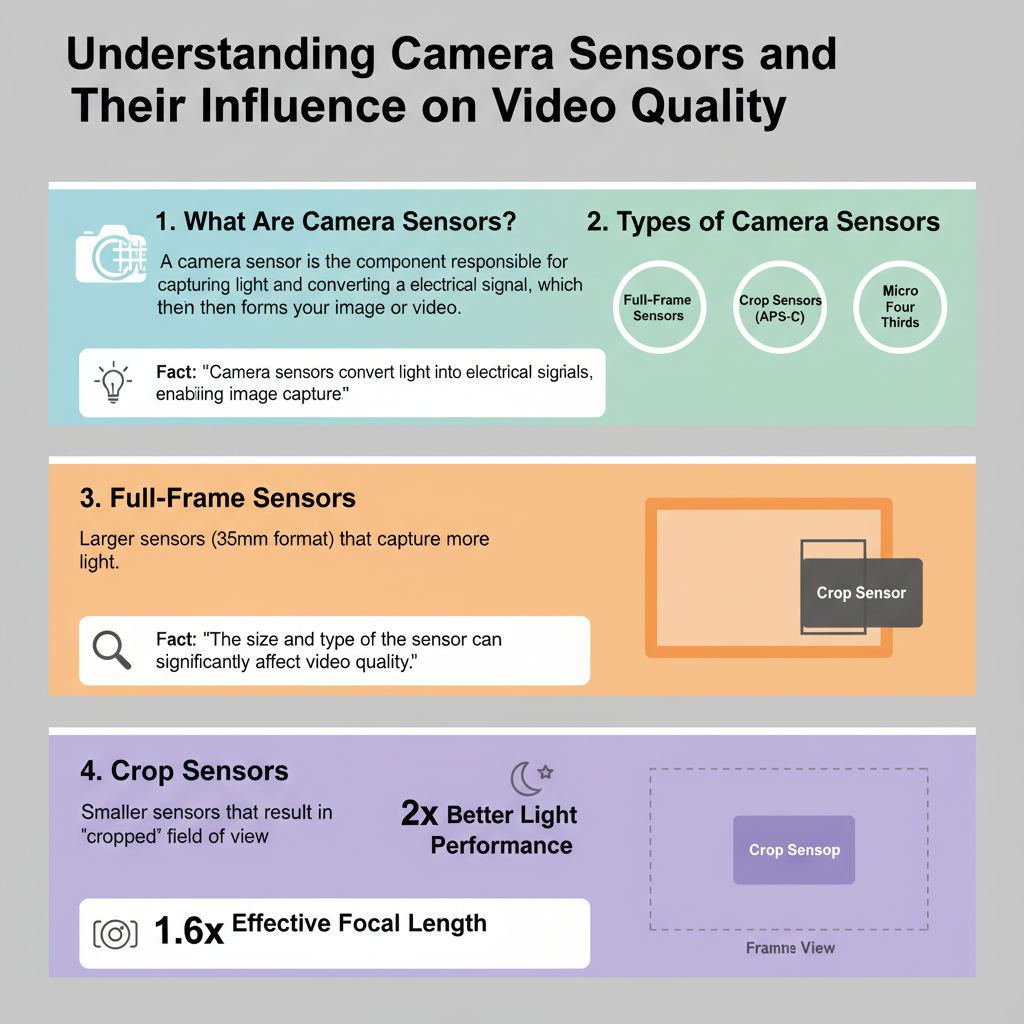
Camera sensors are the heart of digital cameras—they convert light into electrical signals, which are then processed to create images or videos. Without these sensors, capturing visuals would be impossible. The two most common types of camera sensors are CCD (Charge-Coupled Device) and CMOS (Complementary Metal-Oxide-Semiconductor). CCD sensors were once the gold standard for video quality, offering excellent light sensitivity and image quality. However, CMOS sensors have surged in popularity due to their lower power consumption, faster readout speeds, and decreasing costs, making them the preferred choice for most modern cameras. Each sensor type has its unique strengths and weaknesses, but understanding their functionalities can help you choose the right one for your video production needs.
Types of Camera Sensors
Full-Frame Sensors
Full-frame sensors are equivalent in size to a 35mm film frame and are commonly found in high-end professional cameras. These sensors excel in low-light conditions due to their larger surface area, which allows them to capture more light. This results in stunning image quality with less noise and more detail, making full-frame sensors ideal for cinematic filmmaking. For example, the Canon EOS R5 and Sony A7S III are both renowned for their exceptional full-frame sensors, allowing filmmakers to achieve beautiful bokeh and depth of field effects that enhance storytelling.
Crop Sensors
In contrast, crop sensors, also known as APS-C sensors, are smaller and often used in consumer-level cameras. This smaller size can affect the field of view and image quality, particularly in low-light situations. However, crop sensors can be advantageous for certain filming styles, as they provide a greater depth of field and can be more budget-friendly. Cameras like the Canon EOS 90D and Nikon D5600 utilize crop sensors, making them popular choices for amateur filmmakers and vloggers looking to create quality content without breaking the bank.
Sensor Size and Its Impact on Video Quality
The size of the camera sensor plays a pivotal role in determining video quality. Larger sensors, like full-frame ones, capture more light, which significantly reduces noise and enhances detail, especially in low-light environments. For instance, if you’re shooting a nighttime scene, a full-frame sensor will produce cleaner images with more visible details compared to a crop sensor. Additionally, sensor size affects the field of view; a full-frame sensor will provide a wider angle, allowing for more creative framing options. Conversely, crop sensors can lead to a narrower field of view, which may require you to adjust your shooting distance or use different lenses to achieve the desired composition.
Dynamic Range and Color Depth
Dynamic range is another crucial factor in video quality that refers to a sensor’s ability to capture details in both the shadows and highlights of an image. A sensor with a wider dynamic range can handle extreme lighting conditions better, preserving details that would otherwise be lost in bright highlights or dark shadows. This is particularly important for filmmakers who want to capture the full spectrum of a scene without losing important visual elements.
Color depth, on the other hand, determines how many colors a sensor can capture. Higher color depth allows for more accurate color representation, which is essential for color grading in post-production. For example, a professional camera with a 10-bit color depth can capture over a billion colors, providing filmmakers with the versatility to manipulate hues and tones during editing. Cameras like the Blackmagic Pocket Cinema Camera 6K are known for their impressive dynamic range and color depth, making them ideal for serious filmmakers looking to create visually stunning content.
Frame Rate and Resolution Considerations
When it comes to video production, the sensor’s capability to handle different frame rates is vital for achieving smooth motion and clarity. Higher frame rates, such as 60fps or 120fps, are ideal for capturing fast-moving subjects without motion blur, which is particularly beneficial for sports or action videos. However, not all sensors are created equal; some may struggle to maintain quality at higher frame rates, leading to potential noise issues.
Resolution is another important factor, especially with the rise of 4K and even 8K video. Higher resolutions demand better sensors that can maintain quality without introducing noise or artifacts. For instance, a camera with a 4K resolution and a high-quality sensor, like the Sony A7 III, can deliver crisp, clear footage that stands out in today’s competitive video landscape. Understanding these specifications is crucial for filmmakers who want to produce high-quality content that meets industry standards.
Choosing the Right Camera Sensor for Your Needs
Selecting the right camera sensor largely depends on your primary use case. Are you vlogging, producing cinematic films, or live streaming? Each of these applications has different requirements that can heavily influence your choice of sensor. For instance, if you’re focused on vlogging, a crop sensor camera might suffice due to its portability and cost-effectiveness. However, if you are pursuing cinematic filmmaking, investing in a full-frame sensor camera will provide you with superior image quality and flexibility.
It’s also important to balance sensor size, type, and features against your budget and specific needs. Researching cameras that fit your criteria and reading user reviews can provide valuable insights. Don’t forget to consider the lenses and accessories you might need, as these can also affect your overall video quality.
The choice of camera sensor plays a crucial role in determining video quality, from clarity and color accuracy to performance in various lighting conditions. When selecting equipment for your video projects, understanding these factors will help you make informed decisions that enhance your production outcomes. By grasping the characteristics of different sensors and their impact on video quality, you can elevate your storytelling and create captivating visual content that resonates with your audience.
Frequently Asked Questions
What are the different types of camera sensors and how do they affect video quality?
Camera sensors primarily fall into two categories: CCD (Charge-Coupled Device) and CMOS (Complementary Metal-Oxide-Semiconductor). CCD sensors are known for their high-quality image output with low noise levels, making them ideal for professional video production. In contrast, CMOS sensors are commonly used in consumer cameras due to their lower power consumption and faster processing capabilities, but they can exhibit noise in low-light conditions. The choice of sensor type significantly impacts video quality, especially in varying lighting situations.
How does sensor size influence video performance?
The size of a camera sensor plays a critical role in determining video performance. Larger sensors, such as full-frame or Super 35mm, capture more light, resulting in better low-light performance and a greater dynamic range. This leads to video footage that is richer in detail and color accuracy. Conversely, smaller sensors, like Micro Four Thirds, may struggle in low-light environments but can still produce high-quality videos, especially in well-lit conditions. Understanding sensor size helps videographers choose the right camera for their specific filming needs.
Why is the megapixel count important in camera sensors for video?
While megapixels are often emphasized in photography, they play a different role in video quality. A higher megapixel count in a camera sensor allows for higher resolution video output, such as 4K or 8K. However, it is crucial to note that video quality also depends on other factors like bit rate, compression, and sensor technology. Thus, while a higher megapixel count can contribute to sharper images, it’s not the sole determinant of overall video quality.
What features should I look for in a camera sensor for videography?
When selecting a camera sensor for videography, consider features such as dynamic range, low-light performance, and color accuracy. A sensor with a high dynamic range allows for more detail in shadows and highlights, enhancing the overall quality of your footage. Additionally, features like in-body stabilization and high frame rate capabilities can also significantly improve video quality and provide more versatility for creative shots.
Which camera sensor brands are known for producing the best video quality?
Several brands are highly regarded for their camera sensors’ video quality. Sony is recognized for its advanced CMOS technology, often used in professional cinema cameras, providing excellent low-light performance and dynamic range. Canon is celebrated for its color science and has a strong following among videographers for its pleasing skin tones. Panasonic is also notable, especially with its Micro Four Thirds sensors, which offer great versatility for video production. Understanding these brand strengths can help you make an informed decision based on your video requirements.
References
- Image sensor
- https://www.nature.com/articles/s41598-018-21316-5
- https://www.sciencedirect.com/science/article/pii/S0031312519300543
- https://www.bbc.com/future/article/20200721-how-camera-sensors-work
- Learn Photography & Explore Our Articles | Nikon
- https://photographylife.com/understanding-camera-sensors