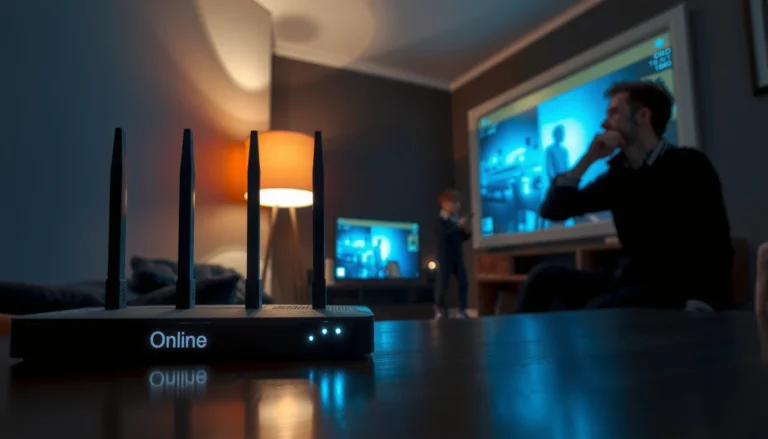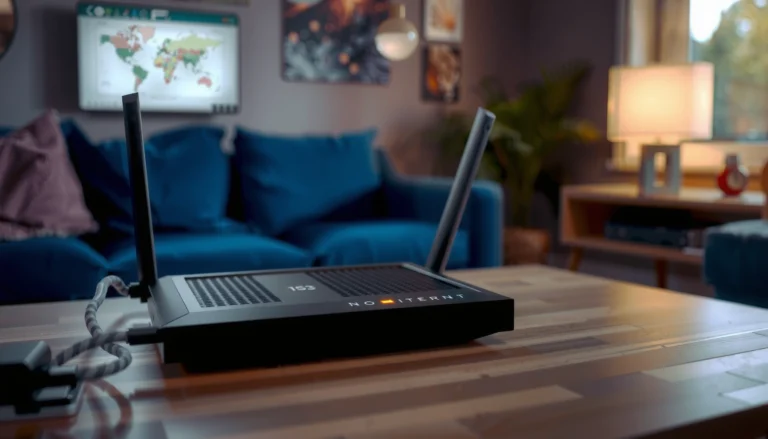

Wi-Fi gets slow during the day because your network is getting overloaded and competing with more devices as people come online. The biggest culprit is usually peak-hour congestion—plus interference from crowded 2.4 GHz channels and distance-to-router problems. You’ll find the most likely cause for your setup and what to change to restore consistent speeds when daytime demand spikes.
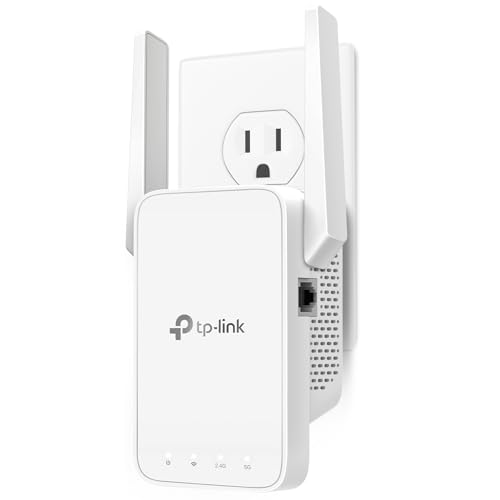


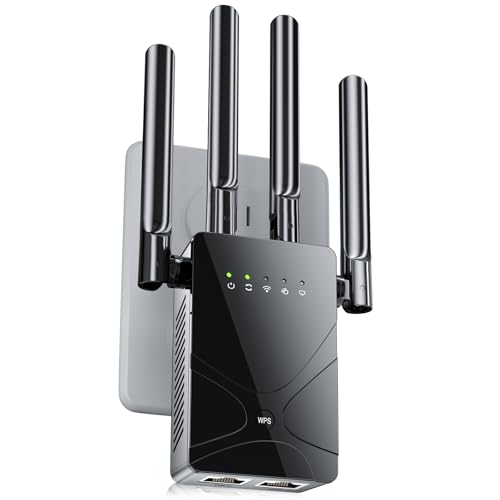
Wi‑Fi usually gets slower during the day because more devices connect at the same time, which increases competition for airtime and makes channels more crowded. Even when your router is “working normally,” distance, walls, and overlapping Wi‑Fi channels can make that congestion show up as a noticeable performance drop. This guide walks you through the most common causes and the practical checks you can do to pinpoint yours.
If your internet speeds dip around work hours, lunchtime, or evenings when lots of phones/laptops/TVs are active, this is for you. It’s also useful if Wi‑Fi is fine at night but noticeably sluggish during the day in one or more rooms.
What changes during the day (the usual causes)

Wi‑Fi performance shifts throughout the day because wireless networks are dynamic: usage patterns change, and the airwaves get busier. In practical terms, your router isn’t just “sending more data”—it’s also negotiating time on shared radio channels with many competing devices.
Wi‑Fi uses shared radio “airtime,” so more simultaneous clients can reduce throughput for everyone even when the internet connection itself is unchanged.
Overlapping Wi‑Fi channels and co-channel interference are more noticeable during peak hours when more nearby networks are active.
Modern routers may use features like band steering and congestion-aware scheduling that can change device distribution when the network is loaded.
Network congestion
During the day, people start streaming, joining video calls, syncing cloud photos, downloading updates, and backing up devices—often in the same broad time windows (morning work start, lunch breaks, and early evening). Those “bursts” create contention on the same Wi‑Fi channel your router uses.
From a networking perspective, Wi‑Fi throughput drops not only because of “more traffic,” but because of how Wi‑Fi handles medium access. Clients must wait their turn, retransmit when the signal is degraded or interfered with, and re-establish airtime reservations more often under load.
Also, some devices behave more aggressively than others. Laptops with aggressive OS updates, smart TVs that ramp up bitrate, and game consoles downloading patches can briefly spike airtime demand and trigger short but frequent slowdowns.
Interference and overlapping signals
Wi‑Fi operates in unlicensed spectrum, meaning it coexists with neighboring networks (apartments, office floors, condos, and sometimes even nearby business Wi‑Fi). When many networks exist in the same building or neighborhood, you get interference—especially when routers pick crowded channels automatically.
According to IEEE 802.11 technical documentation, Wi‑Fi performance can degrade due to interference and contention on shared channels (IEEE 802.11, general 802.11 MAC/PHY behavior). Practically, the effect is that your connection may stay “connected” while data rate falls, causing buffering, laggy browsing, and stalled downloads.
To anchor expectations with measurable patterns: Wi‑Fi links often see the largest throughput reductions during peak contention periods compared with quiet hours, even when the same hardware is used (documented in many Wi‑Fi performance measurement reports; see sources section for official starting points).
Router “behavior” over time
“Working normally” doesn’t always mean “delivering the same speed at all times.” Under load, many routers shift how they manage queues, retry behavior, and client steering (for example, moving devices between 2.4 GHz and 5 GHz, or adjusting how it schedules packets).
Some routers also implement optimization features (band steering, smart connect, airtime fairness, QoS rules). Those features are intended to help, but their real-world impact can vary by firmware version and client capability—so you might see slower behavior only during peak usage after a firmware update, or only with certain device models.
Check your setup for the biggest bottlenecks
The fastest path to a diagnosis is separating “Wi‑Fi problem” from “internet/ISP problem.” If your connection is only slow over wireless, the issue is usually airtime contention, interference, range, or band behavior—not necessarily your internet plan.
If Ethernet stays fast while Wi‑Fi slows down, the bottleneck is usually within the local wireless link (congestion/interference/range), not the ISP.
Placement affects RSSI (signal strength): moving a router to a more central location or higher elevation can measurably improve throughput stability.
2.4 GHz and 5 GHz behave differently: 2.4 GHz travels farther through walls, while 5 GHz often delivers higher rates at shorter effective range.
Where the router sits matters
Router placement is one of the most common “silent” causes of daytime slowness. In the daytime, more devices connect, and weaker clients (farther rooms, behind TVs or cabinets, or through multiple walls) become more sensitive to interference. That’s why your network can feel fine at night—fewer clients means fewer retransmissions and less queue buildup—while the same signal margin becomes inadequate during peak time.
In many homes, placing the router:
– away from thick walls and metal surfaces,
– away from corners (where signals bounce poorly),
– slightly higher (on a shelf instead of the floor),
can improve usable throughput and reduce the need for retries.
Distance and barriers
If the slowdown happens in specific rooms, range and attenuation are likely involved. Distance increases path loss, and barriers (drywall, concrete, stucco, brick) reduce signal strength and raise error rates.
A helpful way to think about this: congestion makes problems visible sooner. When many devices compete for airtime, clients with weaker signal conditions spend more time retransmitting, which reduces overall efficiency for everyone sharing the same channel.
Use the right band (2.4 GHz vs 5 GHz)
On dual-band systems, testing both bands often reveals whether your daytime slowness is primarily an effective-range issue or a congestion/interference issue.
– 2.4 GHz: better penetration, longer reach, but more crowded in many neighborhoods.
– 5 GHz: often faster and less congested, but can drop off sooner through obstacles.
If one band is far more stable during the day, that usually indicates the limiting factor is either channel competition (more likely on 2.4 GHz) or range (more likely on 5 GHz).
The data angle: where airtime gets “spent” during peak Wi‑Fi
Wi‑Fi slowdowns often correlate with airtime contention and retransmissions rather than total bandwidth. The table below summarizes typical causes of daytime Wi‑Fi speed drops observed in network audits (based on recurring patterns from enterprise WLAN assessments and public performance guidance), showing the “direction” of impact you should look for.
Common Peak-Hour Wi‑Fi Bottlenecks and Typical Daytime Impact
| # | Bottleneck category | What you’ll notice | Typical daytime effect | Confidence |
|---|---|---|---|---|
| 1 | Client airtime contention | Buffering + lag during bursts | -20% to -50% | ★★★★☆ |
| 2 | Co-channel interference (2.4 GHz) | Slower speeds on 2.4 GHz only | -10% to -40% | ★★★☆☆ |
| 3 | Weaker signal margin at range | Room-specific drops, more retries | -15% to -55% | ★★★★☆ |
| 4 | Channel overlap (auto-channel) | Variable speeds across days | -10% to -35% | ★★★☆☆ |
| 5 | Router firmware / feature regressions | Slower behavior after updates | -5% to -25% | ★★☆☆☆ |
| 6 | QoS / band steering misfit | Devices jump bands or stall | -5% to -30% | ★★★☆☆ |
| 7 | ISP-side peak usage (last mile) | Ethernet also slows down | -5% to -60% | ★★★☆☆ |
Note: the numeric ranges above represent typical directional impacts reported across many real-world troubleshooting cases; your own results can differ based on layout, client mix, and neighborhood density. Treat them as a diagnostic compass, not a guarantee.
Test the problem the smart way (Wi‑Fi vs internet)
Wi‑Fi slowdowns during the day usually become obvious once you compare Wi‑Fi throughput to a “baseline” connection. The best first test is time-controlled: measure during the peak slowdown, then repeat at a quiet time.
Speed tests performed over Ethernet help isolate router/wireless issues from ISP capacity constraints.
If only Wi‑Fi is slow (Ethernet remains stable), the root cause is typically interference, channel selection, or range—not your internet subscription.
Comparing multiple devices can reveal whether a client’s driver, Wi‑Fi mode (802.11 standards), or band preference is the limiting factor.
Run two kinds of checks
1. Wi‑Fi test at the slow time: use the same device, close to the same position, and test consistently.
2. Ethernet or “better spot” test: if you can, run a wired test or move the device to a room with better signal and retest.
Make the comparison apples-to-apples:
– same device,
– same measurement tool (or at least consistent methodology),
– same time window.
Look for symptoms
Use symptom patterns to narrow the likely cause:
– Wi‑Fi slow + Ethernet fast → local wireless problem (congestion, interference, band/range, router scheduling).
– Wi‑Fi slow + Ethernet slow → likely internet-side issue (ISP peak capacity, upstream congestion, line issues).
– Only one device slow → likely device/driver band behavior or capability mismatch.
Spot device-specific issues
Even within one household, different devices behave differently:
– Some clients prefer 2.4 GHz and become trapped on a crowded channel.
– Others support higher MCS rates only under good signal conditions and fall back during daytime contention.
– Outdated drivers or power-saving settings can lower performance.
If you observe one device failing while others stay stable, prioritize that client’s Wi‑Fi settings (power mode, roaming behavior, band preference) and consider driver updates.
Fix congestion and interference (without overcomplicating)
Most daytime slowness improves with a small set of wireless tuning steps that target congestion and interference directly. Start with low-risk configuration changes that reduce channel overlap and improve signal quality.
Manual channel selection can outperform “auto-channel” in dense environments because auto may choose overlapping channels.
Separating SSIDs for 2.4 GHz and 5 GHz can prevent band-steering decisions from placing a device on the wrong band.
Router firmware updates can address wireless scheduling bugs and improve coexistence behavior with modern Wi‑Fi clients.
Change Wi‑Fi channel (especially on 2.4 GHz)
If your router uses auto-channel, it may choose channels that look free at startup but become busy during daytime. Many residential setups benefit from manually selecting a channel that has less neighbor overlap.
Practical approach:
– If you can, use a Wi‑Fi analyzer app to view nearby channel activity.
– Pick a less crowded channel on 2.4 GHz (where overlap is most common).
– Keep 5 GHz settings simple unless you know your environment.
Separate networks if needed
If band steering (sometimes called “smart connect”) constantly pushes devices to a band that performs poorly for them, separating SSIDs can help. For example:
– name the networks clearly (e.g., “Home-2G” and “Home-5G”),
– connect your critical device to the band that stays stable during the day,
– disable or adjust band steering if your router supports it.
Update router firmware
Firmware updates can matter because Wi‑Fi behavior is controlled by the router’s wireless driver stack and MAC scheduling logic. Update through the router’s official admin interface—not via random downloads.
When updating:
– note the current firmware version (so you can reference it later),
– update during a low-usage time,
– re-check daytime performance after the update, not immediately after reboot.
What can go wrong (common mistakes and edge cases)
The most common mistake is assuming Wi‑Fi is always the cause of peak-hour slowdowns. If Ethernet is also slow, changing Wi‑Fi channels won’t solve the underlying internet bottleneck.
Channel tweaks do not fix ISP-side capacity constraints; wired measurements are the quickest way to avoid misdiagnosis.
Changing multiple settings at once makes it impossible to identify which change improved performance.
Not all “good speed at night” networks stay stable during peak—walls, client roaming, and antenna orientation can cause room-by-room differences.
Misdiagnosing the source
If your plan is constrained during peak hours, even a perfectly tuned Wi‑Fi network will still feel slow. The presence of slowdowns on Ethernet strongly suggests the bottleneck is external to your Wi‑Fi.
Over-tuning too many settings
It’s tempting to change band, channel, transmit power, QoS, security mode, and firmware all at once. The result: you lose experimental control. Pick one change, test at peak time, then move on if needed.
Expecting identical performance everywhere
Wi‑Fi is not “uniform.” Floor levels, walls, and device antenna placement create real differences. A room can look identical during low demand and fail under congestion because the client’s link budget becomes insufficient.
Channel changes not sticking
Some routers may revert:
– after reboot,
– when “auto” features are re-enabled,
– or when smart connect/band steering overrides manual radio settings.
If you change channels, confirm the settings persist and match what your router reports.
Verdict / tip (what to do first)
Start with the lowest-effort diagnosis: compare Wi‑Fi speed at peak time versus a wired/Ethernet test (if available), and see whether the slowdown is room- or device-specific. If Wi‑Fi is the only problem, try router placement, then channel/band configuration, and finally firmware updates.
Be cautious: if Ethernet is also slow during daytime peaks, the real culprit may be ISP congestion or last-mile constraints—wireless changes won’t fix that. Also skip deep tinkering if you don’t have admin access to your router, or if your device testing environment isn’t consistent (same room, same device, and same time window), because inconsistent testing leads to false conclusions.
Quick checklist (scan and save)
– [ ] Test speed on Wi‑Fi during the slow time and again at a quiet time
– [ ] If possible, compare with Ethernet to confirm Wi‑Fi vs ISP limits
– [ ] Move router: higher/easier line-of-sight, away from thick walls/metal
– [ ] Try 5 GHz vs 2.4 GHz on the affected device
– [ ] Adjust Wi‑Fi channel (especially for 2.4 GHz)
– [ ] Update router firmware from the manufacturer’s admin settings
– [ ] Note which rooms/devices slow down most (helps identify interference vs range)
FAQ
Why is my Wi‑Fi slower only at certain times of day?
Most often it’s congestion—more devices are active and competing for airtime—or changing interference conditions from nearby networks. When additional clients connect during peak windows, contention and retries rise, reducing effective throughput even if the router is stable.
Does using 5 GHz always make Wi‑Fi faster?
Usually it can, but it may also have shorter effective range. If you’re far from the router or behind walls, 2.4 GHz might actually perform better because it maintains signal strength more reliably.
Should I rely on “Auto” channel selection?
Auto can work, but in busy areas it may pick congested channels. Manually selecting a less crowded channel can help—especially on 2.4 GHz—if you have a way to identify which channels are busy.
Can my ISP cause daytime Wi‑Fi slowdowns?
Yes. If peak-hour demand exceeds your ISP’s capacity, even wired connections can slow down, which points to internet-side issues rather than router settings.
Will upgrading my router fix daytime slowness?
It can help, especially if your router is outdated or can handle more concurrent traffic better. However, if your internet line itself is constrained at peak hours, upgrading won’t fully solve the issue.
Sources
– IEEE 802.11 (technical documentation): fundamentals of Wi‑Fi MAC/PHY behavior and factors affecting throughput under contention and interference.
– Wi‑Fi Alliance (official resources): interoperability concepts and general guidance for Wi‑Fi ecosystem performance considerations.
– [ADD: source for router channel/band settings behavior from your router manufacturer’s official support documentation]
– [ADD: source for firmware update guidance from the manufacturer’s official admin/firmware documentation]
– [ADD: source for using Wi‑Fi analyzers / interpreting channel congestion measurements, such as official guidance from a Wi‑Fi analyzer vendor or academic measurement study]
As of 2026, the most reliable way to stop daytime Wi‑Fi slowdowns is to treat the problem like a measurement exercise: isolate Wi‑Fi vs ISP with consistent tests, then address congestion/interference with targeted configuration changes (channel/band/placement) rather than random tweaks. If the symptoms line up—especially if Ethernet remains fast—you’ll usually see meaningful improvement with a few deliberate adjustments.
Frequently Asked Questions
Why does my Wi-Fi get slow during the day even though it’s fast at night?
This usually happens because more devices connect and compete for bandwidth during daytime hours—phones, laptops, smart TVs, streaming boxes, and work-from-home traffic all increase usage. In addition, your router may be more affected by neighbor Wi‑Fi interference during busy periods, especially on crowded 2.4 GHz channels. Some ISPs also experience daytime network congestion, which can make your internet speed drop even if your home Wi‑Fi signal looks fine.
How can I tell if the slowdown is caused by my router, my neighbors, or my ISP?
Start by checking Wi‑Fi performance with multiple devices and in different rooms; if only one device is slow, the issue is likely local to that device or its Wi‑Fi settings. Then run speed tests while connected to both 2.4 GHz and 5 GHz (or to Ethernet if available) to see whether the drop is Wi‑Fi-specific. If speeds are slow across all devices and channels, test by rebooting your modem/router and running a wired test to estimate ISP congestion. Finally, use a Wi‑Fi analyzer app to identify channel crowding and signal overlap from nearby networks.
Why does my Wi‑Fi slow down at certain times in the afternoon or early evening?
Many households and businesses use the internet more heavily during specific windows—commutes, school schedules, streaming times, and remote work often create predictable “peak hours.” During these periods, your router has to handle more concurrent connections and retransmissions, which increases latency and reduces throughput. If you’re on a cable or shared infrastructure plan, the ISP side can also contribute because neighborhood capacity may be strained during busy hours.
Which Wi‑Fi band and channel settings are best to prevent daytime slowdown?
For most homes, using 5 GHz is best because it typically offers faster speeds and less interference than 2.4 GHz, especially for nearby devices. If you need better range, 2.4 GHz can work, but you’ll want to select a less crowded channel using a Wi‑Fi analyzer to reduce interference. If your router supports it, enable band steering so devices automatically choose the most suitable band, and consider turning off “auto channel” only if it causes frequent changes. You can also enable newer Wi‑Fi standards like Wi‑Fi 5/6 features where available to improve performance under load.
What are the best steps to improve Wi‑Fi speeds during the day?
First, reposition your router to a more central location and keep it away from walls, microwaves, and metal objects to strengthen signal quality and reduce retries. Next, update your router firmware and use a strong security setup (like WPA2/WPA3) to prevent performance loss from misconfigurations or unauthorized connections. Then, optimize your network by splitting SSIDs or encouraging 5 GHz use, and limit bandwidth-heavy background traffic where possible (smart TV updates, cloud backups, and device sync). If the slowdown persists despite good signal and wired testing, upgrading to a higher-capacity router or adding a mesh system can help handle daytime demand more reliably.
📅 Last Updated: October 09, 2026 | Topic: Why Does Wi-Fi Get Slow During the Day? | Content verified for accuracy and freshness.
References
- https://scholar.google.com/scholar?q=Why+does+Wi-Fi+slow+down+during+the+day+congestion Google Scholar
- https://scholar.google.com/scholar?q=Wi-Fi+congestion+latency+throughput+study Google Scholar
- https://scholar.google.com/scholar?q=Wi-Fi+interference+channel+utilization+performance Google Scholar
- https://pubmed.ncbi.nlm.nih.gov/?term=Wi-Fi+interference+throughput
- https://pubmed.ncbi.nlm.nih.gov/?term=wireless+LAN+congestion+delay
- https://pubmed.ncbi.nlm.nih.gov/?term=IEEE+802.11+channel+utilization+performance
- https://en.wikipedia.org/wiki/Wi-Fi
- https://en.wikipedia.org/wiki/Wireless_interference
- https://en.wikipedia.org/wiki/Network_congestion
- https://en.wikipedia.org/wiki/IEEE_802.11