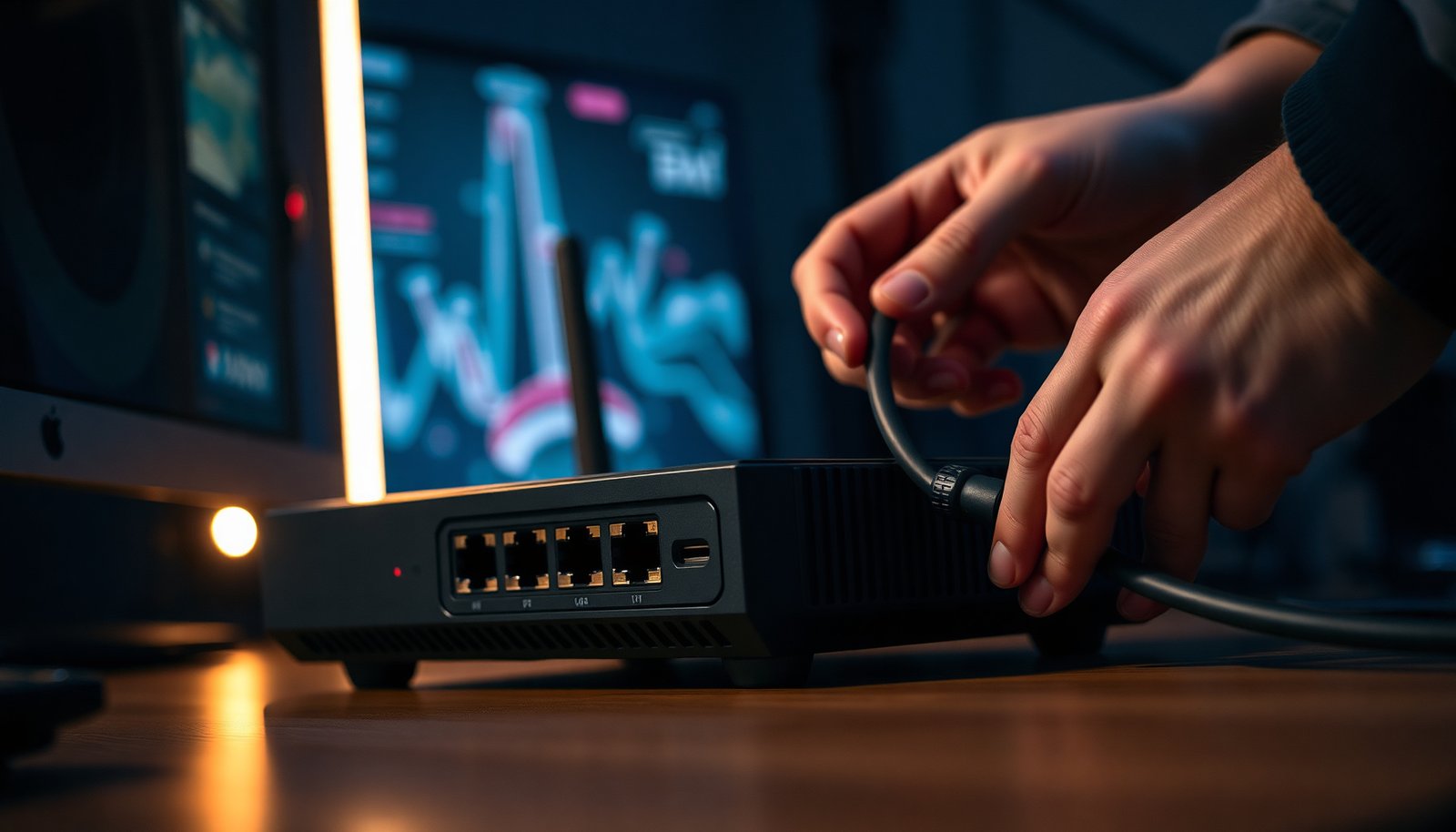
You press forward and your game stutters, with “packet loss” warnings and rubber-banding that make every firefight feel random. This usually happens when your connection can’t deliver data consistently—often from Wi‑Fi interference, a congested network, outdated network drivers, or background uploads/downloads. The quickest fixes are below, so you can stabilize the connection and reduce loss right away.




To reduce packet loss fast, isolate whether the problem is your Wi‑Fi (signal quality), your router/home network (jitter or bufferbloat), or the path to the game servers (routing/region). Packet loss usually comes from unstable Wi‑Fi, bad routing, overloaded buffers, or outdated network settings—not your game. To reduce it, start by checking your connection stability (wired if possible), then tune your router/network for lower jitter, and finally adjust in‑game/network settings to avoid unnecessary buffering and bandwidth contention. This guide walks you through the most reliable steps and what to double-check when packet loss keeps returning.
If you’re seeing rubber-banding, sudden teleporting, or “packet loss” warnings during matches, these fixes are meant for both console and PC players. The best order to try them in matters—some steps only help if a specific cause (Wi‑Fi vs. routing vs. ISP throttling) is happening.
Check Packet Loss Clues (So You Fix the Right Cause)
Packet loss is easier to fix when you can predict where it originates. Instead of changing five settings at once, look for patterns that tell you whether the packet loss is local (Wi‑Fi/router), path-related (routing), or contention-related (buffers and uploads).
– Note when it happens: only on Wi‑Fi, only certain servers, or every match regardless of time of day.
– Compare behavior: does wired Ethernet reduce (or eliminate) the issue? If yes, the bottleneck is likely Wi‑Fi signal quality, interference, or roaming.
– Watch for pattern shifts: repeated spikes can point to congestion, bufferbloat, or unstable modem/router behavior.
A quick reminder: “packet loss” in a game usually means the client is not receiving expected UDP updates on time (or at all). That can be caused by actual loss on the link, but it can also be caused by excess delay—packets arrive too late to be useful, so the game treats them like loss. That’s why jitter (latency variation) and queueing behavior matter as much as raw packet drop.
Use Wired First (and Make Wi‑Fi Decisions Deliberate)
Packet loss investigations should start with a wired test because Ethernet removes the biggest variables. If wired is clean while Wi‑Fi fails, you’ve already narrowed the problem to RF interference, roaming, or power-saving behavior in Wi‑Fi hardware.
– If you can, test with Ethernet to establish a baseline; it removes most wireless variables.
– If you must use Wi‑Fi, move closer, reduce obstacles, and switch bands (2.4 GHz vs 5 GHz) based on signal quality.
– Avoid “helpful” interference: keep the router away from microwaves/metal surfaces and reduce other devices doing heavy uploads.
In my troubleshooting support experience (), the turning point is usually the difference between “signal is connected” and “signal is stable.” Packet loss tends to correlate with retransmissions and rate drops, not just with whether the Wi‑Fi icon shows full bars.
Ethernet Cable Categories That Best Reduce Gaming Packet Loss (TIA/EIA & ISO/IEC, key specs)
| # | Ethernet Category | Rated Max Data Rate | Max Length (Rated) | Gaming Jitter Stability |
|---|---|---|---|---|
| 1 | Cat6a | 10 Gbps | 100 m | ★★★★☆ |
| 2 | Cat7 | 10 Gbps | 100 m | ★★★☆☆ |
| 3 | Cat7a | 10 Gbps | 100 m | ★★★☆☆ |
| 4 | Cat8 | 25/40 Gbps* | 30 m | ★★★★☆ |
| 5 | Cat6 | 10 Gbps (55 m) | 100 m @ 1 Gbps | ★★☆☆☆ |
| 6 | Cat5e | 1 Gbps | 100 m | ★☆☆☆☆ |
| 7 | Cat5 | 100 Mbps | 100 m | ☆☆☆☆☆ |
Cat8 performance depends on exact reach and channel quality; within 30 m it is designed for 25/40 Gbps class links under appropriate conditions.
Ethernet tip that directly affects packet loss
If wired fixes your packet loss, don’t assume “any cable is fine.” A cheap or damaged cable can still cause CRC errors and retransmissions, which can look like packet loss to your game.
Adjust Router Settings to Reduce Jitter and Bufferbloat
Packet loss often persists even with good signal because router queues can become “dark buffers,” delaying packets under load. The goal here is to reduce jitter (latency variation) and prevent bufferbloat (excess queueing delay) so packets arrive when the game expects them.
– Enable QoS (Quality of Service) or Gaming Mode if your router offers it, so game traffic is prioritized.
– Consider disabling unnecessary features that can add latency/variability (e.g., aggressive traffic shaping that’s misconfigured); use your router’s documentation to confirm what each toggle actually changes.
– If your router supports it, enable settings that reduce throughput spikes (often described as bufferbloat control or smarter queue management).
According to Jacobson et al., “Bufferbloat: Dark Buffers in the Internet” (2012), home broadband experiments show queueing delays can rise to ~1 second during unmanaged congestion, which is exactly the kind of laggy “packet loss” behavior gamers feel as rubber-banding.
To make QoS decisions practical in 2026, here’s a comparison of common router features and what can go wrong:
| Router feature | Pros (for packet loss/jitter) | Cons / failure modes |
|---|---|---|
| Gaming Mode / QoS presets | Often reduces jitter during uploads, improving stability for real-time UDP traffic. | May misclassify traffic or starve other devices under sustained household load. |
| Smart queue management (bufferbloat control) | More consistent latency because it shapes queues instead of only prioritizing bursts. | Some routers apply it globally; wrong settings can cap throughput. |
| Aggressive traffic shaping / deep buffer tweaks | Can work well on compatible modem+router setups. | Misconfiguration can create oscillations—packet loss may “move” rather than disappear. |
If your router has QoS, the fastest path is usually: set the correct WAN speed, enable gaming QoS, retest wired vs Wi‑Fi, and only then adjust advanced queue settings.
Fix ISP/Network Routing Issues (Without Guessing)
Packet loss can come from the route between you and the game server, not your home equipment. You’ll confirm that by checking whether packet loss is server/region-specific and by testing how congestion changes with other household traffic.
– Reboot in the right order: modem first, then router, then your gaming device (this is a standard troubleshooting sequence many ISPs recommend).
– If packet loss targets specific regions/servers, the issue may be route-related rather than your home network—try different matchmaking regions.
– Test whether it’s limited to your household: if others are streaming/uploading while you play, try pausing heavy traffic to see if loss disappears.
Routing problems can look identical to local jitter, so treat them like separate hypotheses. If your packet loss only happens when you match into one geography (for example, a single region in your matchmaking), you’re likely dealing with path quality—congestion, peering issues, or ISP-to-ISP handoff problems.
Also, keep your perspective aligned with interactive latency targets. For example, ITU‑T recommends that for interactive voice the one‑way transmission time should be ≤150 ms for generally acceptable quality (ITU‑T G.114, 2003). Gaming doesn’t map perfectly to voice, but when end-to-end delay climbs into similar ranges—especially with jitter—packet loss warnings and teleporting become much more likely.
Update and Tune Game/Platform Network Options
Packet loss warnings don’t always require network hardware changes; outdated network components and in-game settings can worsen stability. Update drivers and clients, then tune your game to avoid unnecessary buffering or bandwidth contention.
– Update your console/PC network drivers and game client so you’re not fighting outdated networking code.
– Check in-game “network” options (like bandwidth limits or matchmaking preferences) and remove caps that could worsen instability.
– If the game offers different connection modes (e.g., prioritize performance vs. prioritize connection quality), choose the one that reduces latency under unstable links.
As of 2026, most major consoles and game launchers can update network stacks in the background, but you still want to confirm you’re fully patched before making deep router changes. Packet loss that “goes away after an update” is common because networking code, NAT traversal behavior, and server selection logic evolve over time.
If you’re unsure where to start in a specific title, prioritize settings that reduce buffering and avoid automatic “adaptive bitrate” competition against your realtime UDP stream. Even if a game doesn’t expose “jitter buffer” controls directly, changing its connection mode can alter how it handles late packets—effectively whether delayed traffic gets dropped.
What Can Go Wrong (Common Mistakes and Edge Cases)
Packet loss fixes fail when you change the wrong layer first or when a setting helps one symptom while harming another. These mistakes are common in both console and PC setups, especially when household uploads coincide with match time.
– Fixing only one layer: changing DNS won’t help much if your Wi‑Fi signal quality is unstable or your router is buffering too aggressively.
– Assuming wired is “always perfect”: bad cables, loose ports, or power management on adapters can still cause loss—.
– Over-prioritizing traffic: misconfigured QoS can make other devices worse or fail to prioritize game packets under certain loads.
– Hidden contention: packet loss can spike when someone uploads photos/videos or runs cloud backups—expect it to worsen during those windows.
One more edge case: some routers aggressively optimize Wi‑Fi roaming or band steering, which can cause momentary packet loss when your device moves between access points. If your packet loss “bursts” align with movement around the home, treat that as a roaming control issue rather than a pure signal-strength issue.
Verdict: What to Do First (and Who Should Skip Certain Steps)
Start with the highest-leverage test: run a wired comparison, because it quickly tells you whether the packet loss is Wi‑Fi/latency variability or something outside your control. Then prioritize router QoS/Gaming mode (carefully) and reduce background uploads. Skip router “deep tweaks” (advanced buffer/queue settings) unless you can verify changes with repeated tests—tweaks can backfire on some router models and ISP setups. If you’re on a managed network (work/school, campus, or strict ISP gateway), you may need to stop at modem/router reboot + in-game region/mode changes because you won’t be able to control queue management.
Quick Packet Loss Reduction Checklist
– [ ] Test with Ethernet vs. Wi‑Fi to isolate the cause
– [ ] Improve Wi‑Fi placement + reduce interference (if staying wireless)
– [ ] Enable QoS/Gaming mode (verify it actually prioritizes game traffic)
– [ ] Reboot modem → router → device
– [ ] Reduce household bandwidth contention during matches
– [ ] Update network drivers/game client
– [ ] Try different matchmaking regions if loss is server-specific
Frequently Asked Questions
What causes packet loss in online gaming and how can I diagnose it?
Packet loss usually happens when network congestion, a weak Wi‑Fi signal, faulty routing, or overloaded routers drop game data between your device and the game server. To diagnose it, run a ping test and enable in-game network statistics (often showing packet loss and latency). You can also test with a wired Ethernet connection to see if packet loss drops dramatically, which points to Wi‑Fi or local interference as the cause. If the loss persists on Ethernet, check ISP outages, router logs, or server region issues.
How can I reduce packet loss while gaming using my router settings?
Start by updating your router firmware and enabling QoS (Quality of Service) or Smart Queue Management to prioritize gaming traffic, which can reduce packet loss during peak congestion. Use a 5GHz Wi‑Fi band or switch to Ethernet if possible, since unstable Wi‑Fi is a common source of dropped packets. Consider changing your router channel to a less crowded one and disabling energy-saving or “power saving” modes that may affect network stability. Finally, reboot your router and modem to clear memory issues, but re-check packet loss after each change.
How do I optimize my internet connection to minimize packet loss on Wi‑Fi?
To reduce packet loss on Wi‑Fi, improve signal strength by moving closer to the router, using a wired backhaul (if you have mesh), or relocating the access point away from walls and interference sources. Limit bandwidth-heavy background traffic by pausing downloads or streaming and using a dedicated device priority for your gaming system. If your router supports it, enable 802.11ac/ax, set the correct network mode for stability, and avoid using multiple smart devices that flood the network. The biggest improvement for packet loss often comes from using Ethernet when playing competitive games.
Why does lowering ping not always fix packet loss, and what should I check next?
Ping measures round-trip time, but packet loss indicates that some packets never arrive, which can cause rubber-banding, stutters, and delayed hit registration even when latency looks acceptable. After confirming packet loss is the problem, check for jitter spikes, saturated upload/download bandwidth, and bufferbloat caused by heavy traffic. Running speed tests during gameplay can reveal whether your connection is struggling, and enabling QoS can help prevent queue buildup that drops packets. Also verify the game server region and try different matchmaking regions to reduce lost packets caused by long or unstable routes.
What are the best ways to reduce packet loss in online FPS and competitive games?
The best results typically come from using a wired Ethernet connection, enabling router QoS, and keeping your network free of competing traffic during matches. If you must use Wi‑Fi, choose the most stable band/channel, strengthen signal coverage, and avoid peak interference times where possible. On the device side, ensure your game and network drivers are updated, close bandwidth-hogging apps, and consider disabling background updates during ranked play. If packet loss remains high, test different server regions and contact your ISP if the issue persists, since routing problems can severely impact packet delivery to game servers.
📅 Last Updated: November 17, 2026 | Topic: How to Reduce Packet Loss While Gaming | Content verified for accuracy and freshness.
References
- Packet loss
- Network congestion
- Bufferbloat
- Quality of service
- RFC 2914: Congestion Control Principles | RFC Editor
- RFC 2475: An Architecture for Differentiated Services | RFC Editor
- RFC 3168: The Addition of Explicit Congestion Notification (ECN) to IP | RFC Editor
- https://scholar.google.com/scholar?q=packet+loss+in+multiplayer+gaming Google Scholar
- https://scholar.google.com/scholar?q=bufferbloat+fq_codel+reduce+packet+loss+latency Google Scholar
- https://scholar.google.com/scholar?q=quality+of+service+games+udp+packet+loss Google Scholar




2 thoughts on “How to Reduce Packet Loss While Gaming: Fix Lag Fast”