
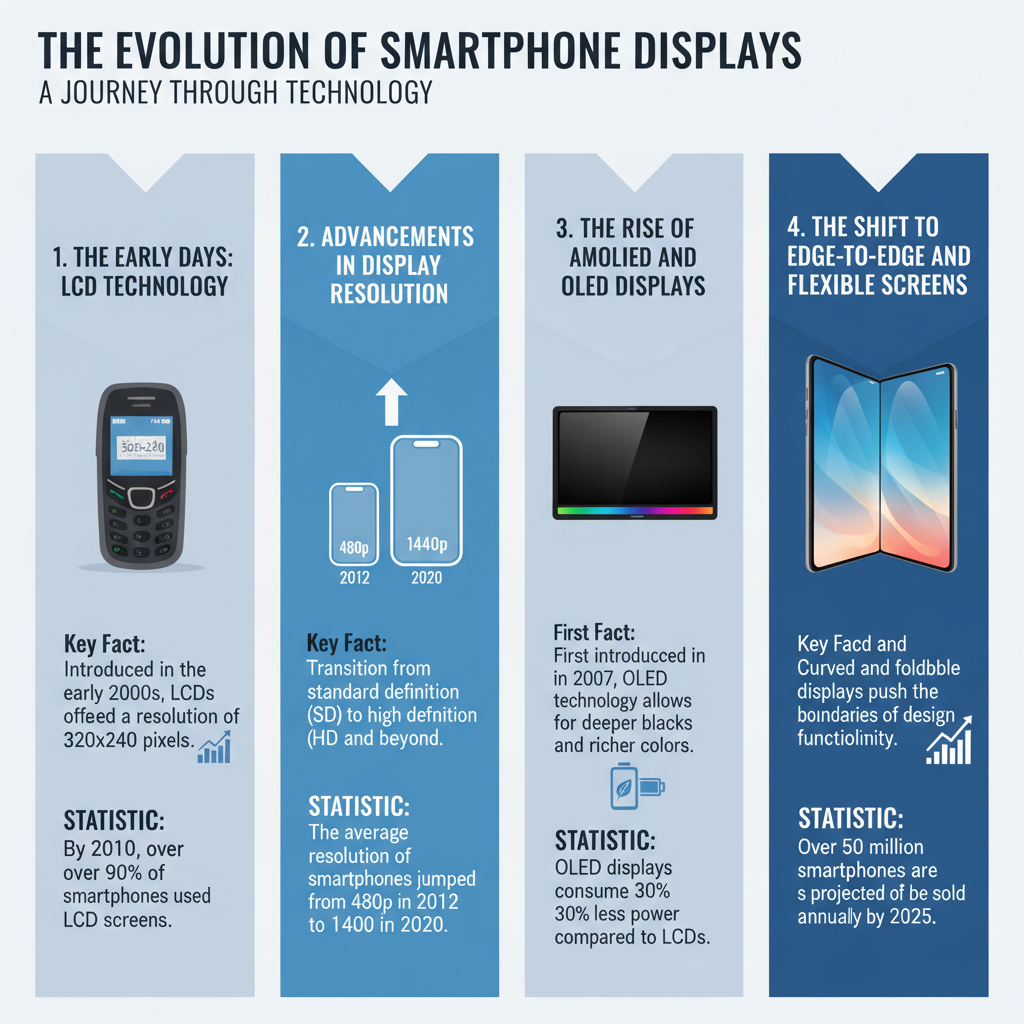
Smartphone displays have transformed dramatically over the years, evolving from simple LCD screens to cutting-edge OLED technology that delivers stunning colors and enhanced energy efficiency. This evolution has not only improved the visual appeal of smartphones but has also enriched the user experience, allowing us to engage more fully with our devices. In this article, we’ll delve into the key milestones in the evolution of smartphone displays, exploring how each advancement has played a crucial role in reshaping the way we interact with our smartphones.
The Early Days: LCD Technology
The journey of smartphone displays began with Liquid Crystal Display (LCD) technology, which made its debut in early mobile phones and smartphones. LCDs were revolutionary for their time, offering a significant upgrade over previous display technologies like monochrome screens. However, they had their limitations. Color reproduction was often muted, and viewing angles were restricted, meaning that images could appear washed out or distorted when viewed from the side. For example, early smartphones like the original iPhone used a basic LCD that, while groundbreaking, struggled to deliver the vibrant colors and contrast we now take for granted.
As a result, users often found themselves squinting at screens or struggling to see content in bright sunlight. The introduction of backlit LCDs improved visibility somewhat, but the technology still lagged behind in terms of color depth and response time compared to what was to come.
Advancements in Display Resolution

As technology progressed, the demand for better image clarity and detail surged. This led to a significant shift in display resolution, moving from standard resolutions like QVGA (320×240) and VGA (640×480) to High Definition (HD) and Full HD (720p and 1080p). These advancements dramatically enhanced the viewing experience, allowing for sharper images, clearer text, and more vibrant colors.
For instance, the HTC One, released in 2013, boasted a Full HD display that truly showcased the benefits of higher resolution. Users could enjoy movies, games, and photos with unprecedented clarity, making smartphones a central hub for multimedia consumption. This leap in resolution turned smartphones into mini entertainment devices, paving the way for more immersive experiences.
The Rise of AMOLED and OLED Displays
With the advent of Active-Matrix Organic Light Emitting Diode (AMOLED) and OLED technology, smartphone displays took a giant leap forward. Unlike LCDs, OLED screens function by emitting light individually from each pixel. This allows for true blacks and stunning contrast ratios, as pixels can be turned off completely. The Samsung Galaxy S series, which was one of the first to adopt AMOLED technology, showcased vibrant colors and deep blacks that left LCD displays in the dust.
The benefits of OLED technology go beyond just beautiful visuals; they also enhance power efficiency. Since black pixels are turned off, OLED displays consume significantly less power when displaying darker images, extending battery life. This technology has revolutionized not only how we view content but also how long we can enjoy it without reaching for a charger.
The Shift to Edge-to-Edge Displays
As consumer preferences evolved, smartphone manufacturers began to embrace bezel-less designs, leading to the emergence of edge-to-edge displays. This design trend not only maximized screen size but also enhanced the overall aesthetic of smartphones. Devices like the iPhone X and the Samsung Galaxy S8 popularized this movement, creating a more immersive experience for users.
An edge-to-edge display allows for larger screens within the same form factor, making it easier to engage with games, videos, and apps. For instance, watching a movie on a device with minimal bezels feels more like being in a theater, drawing users deeper into their content. This shift has transformed the way we consume media, making smartphones the go-to devices for entertainment.
High Refresh Rates and Their Importance
Another significant advancement in smartphone displays has been the transition from the standard 60Hz refresh rate to higher rates like 90Hz, 120Hz, and even beyond. A higher refresh rate means that the screen can update more frequently, leading to smoother animations and transitions. This is particularly beneficial for gaming and scrolling through content, as the experience feels much more fluid.
Flagship devices such as the OnePlus 8 Pro and the iPhone 13 Pro have embraced these higher refresh rates, providing gamers and power users with an edge in responsiveness and visual fluidity. The difference is especially notable in fast-paced games, where every millisecond counts. Users can enjoy a more engaging and responsive experience, making their interactions with their devices feel more natural and enjoyable.
The Advent of Foldable Displays
In recent years, foldable smartphone technology has emerged as a game-changer in the industry. Devices like the Samsung Galaxy Z Fold and the Huawei Mate X have introduced flexible displays that can be folded and unfolded, offering users the best of both worlds: a compact phone that transforms into a tablet-sized screen when needed.
The benefits of foldable displays are significant. They provide larger screen real estate without increasing the overall size of the device, allowing for enhanced multitasking and productivity. Imagine being able to run multiple apps side by side on a spacious screen while still having the convenience of a pocket-sized device when you’re on the go. This innovation is pushing the boundaries of what we expect from our smartphones and is exciting for the future of mobile technology.
Display Durability: Gorilla Glass and Beyond
As our reliance on smartphones has grown, so too has the need for durable displays. The introduction of stronger glass technologies, such as Corning’s Gorilla Glass, has been instrumental in preventing scratches and cracks. These advancements have significantly improved the durability of smartphone screens, addressing a common concern among users who often fear dropping their devices.
For example, the latest iterations of Gorilla Glass provide enhanced resistance to drops and impacts, which is crucial in everyday usage. As smartphones become more central to our lives, having a resilient display contributes to the longevity of the device and provides peace of mind for users.
Smartphone displays have seen remarkable changes since their inception, from the basic LCDs of the past to the innovative OLED and foldable screens of today. Each advancement has significantly enhanced user experience, allowing for richer visuals and more interactive features. To keep up with these advancements, it’s essential to stay informed about the latest trends and technologies in smartphone displays. Explore your options and discover how these innovations can enhance your daily digital interactions.
Frequently Asked Questions
What are the major milestones in the evolution of smartphone displays?
The evolution of smartphone displays has seen several significant milestones, starting with the introduction of LCD technology in the early 2000s, which provided better color reproduction than previous displays. The advent of OLED screens in the late 2000s improved contrast ratios and energy efficiency. More recently, advancements like AMOLED technology and high refresh rate displays (90Hz and above) have enhanced user experience by providing smoother visuals and deeper blacks, making smartphones more appealing for gaming and multimedia consumption.
How has display resolution improved in smartphones over the years?
Display resolution in smartphones has dramatically improved from early models that featured resolutions as low as 320×240 pixels to today’s flagship devices boasting resolutions of 1440×3200 pixels or higher. This increase in pixel density, often referred to as “Retina” quality, allows for sharper images and more detailed graphics, providing a more enjoyable viewing experience for users. Consumers now benefit from technologies like 4K and HDR, which enhance color accuracy and vibrancy, making media consumption a visually stunning experience.
Why are OLED and AMOLED displays preferred over traditional LCD screens?
OLED and AMOLED displays are preferred over traditional LCD screens due to their ability to produce richer colors and deeper blacks, as each pixel emits its own light, allowing for true black when pixels are turned off. Additionally, these technologies are more energy-efficient, especially when displaying dark themes, as they consume less power compared to LCDs. The thinner profile of OLED displays also enables sleeker device designs, making them popular in high-end smartphones.
What are the best smartphone display technologies available today?
The best smartphone display technologies available today include AMOLED, Super AMOLED, and Liquid Retina. AMOLED displays are known for their vibrant colors and deep blacks, while Super AMOLED integrates touch sensors directly into the display layer, reducing thickness and improving responsiveness. Liquid Retina, found in devices like the iPhone, combines LCD technology with advanced color accuracy and wide viewing angles, making it ideal for users who prioritize color fidelity and brightness.
Which factors should I consider when choosing a smartphone display?
When choosing a smartphone display, consider factors such as display type (AMOLED vs. LCD), resolution (higher resolution for sharper images), size (comfort in handling and viewing), and refresh rate (higher rates for smoother scrolling and gaming). Additionally, look for features like HDR support for better color and contrast, and Corning Gorilla Glass protection for durability. Understanding these elements can help you select a smartphone that best suits your usage needs and preferences.
References
- https://en.wikipedia.org/wiki/Smartphone_display
- https://www.bbc.com/news/technology-56437486
- https://www.techradar.com/news/a-brief-history-of-smartphone-displays
- https://www.sciencedirect.com/topics/computer-science/smartphone-display
- https://www.theverge.com/2021/6/24/22546919/smartphone-display-evolution-technology-history
- https://www.wired.com/story/smartphone-display-evolution/
- https://www.cnet.com/news/the-evolution-of-smartphone-displays-from-hd-to-4k/