
To improve power efficiency, display manufacturers are adopting innovative technologies and design strategies that significantly reduce energy consumption without compromising performance. By leveraging advancements in display technologies, eco-friendly manufacturing processes, and smart energy management features, these manufacturers are paving the way for a more sustainable future. This article explores the key methods used by manufacturers to optimize power usage and enhance the sustainability of display technologies.
Advances in Display Technology

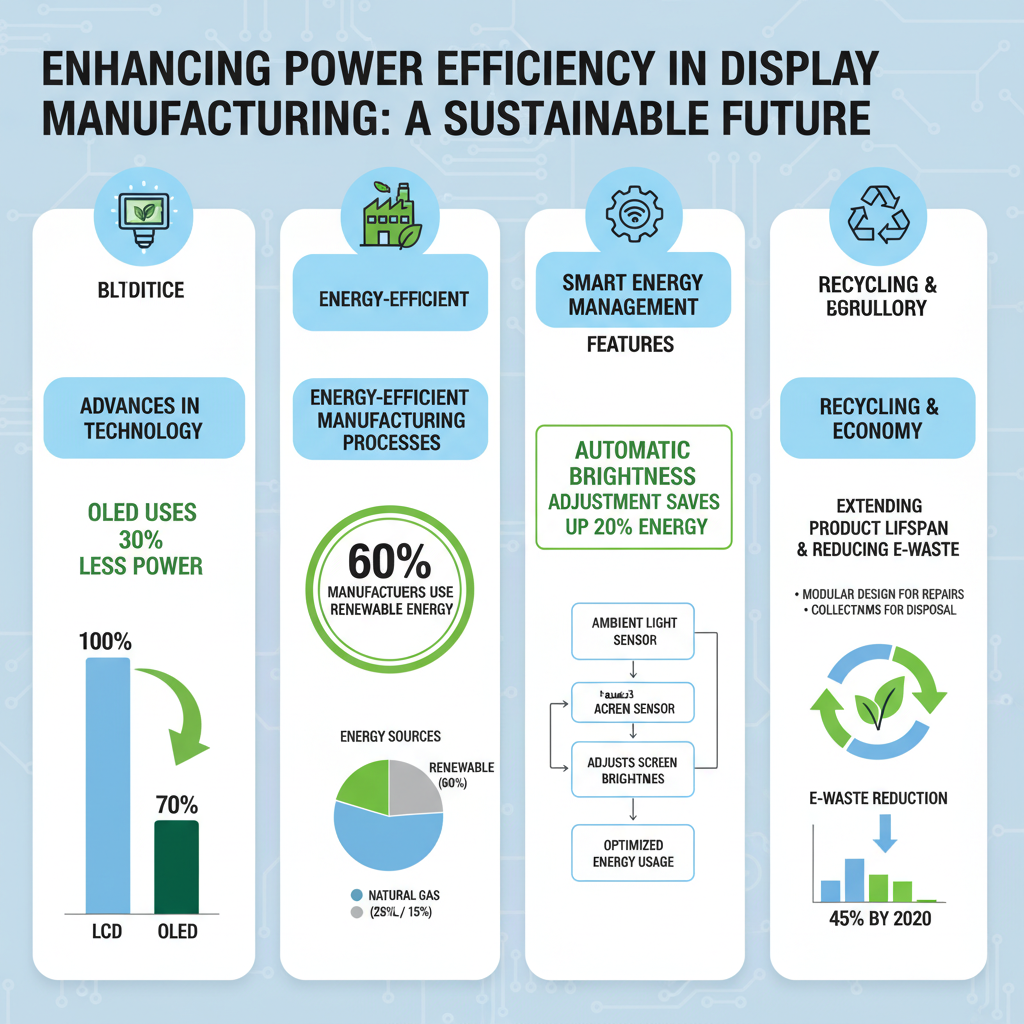
One of the most significant shifts in display technology has been the development of OLED (Organic Light Emitting Diode) and microLED technologies. These technologies are designed to consume less power compared to traditional LCD displays. OLED displays work by emitting light individually from each pixel, which means that darker images require less energy since those pixels are turned off completely. For instance, when viewing a black screen, an OLED display uses virtually no power, in contrast to LCDs that require backlighting at all times.
Similarly, microLED technology takes energy efficiency a step further. It offers higher brightness levels while maintaining lower energy consumption rates. MicroLEDs are made up of tiny, self-emitting LEDs that can be turned on and off independently, allowing for exceptional contrast and reduced energy usage, especially in brightly lit environments.
Another vital aspect is the implementation of adaptive brightness controls. These controls automatically adjust the display’s brightness based on ambient light conditions. For instance, in a dimly lit room, the display will dim, conserving energy and providing a comfortable viewing experience. This not only enhances power efficiency but also prolongs the lifespan of the display.
Energy-Efficient Manufacturing Processes

The journey toward power efficiency begins long before a display reaches the consumer’s hands. Energy-efficient manufacturing processes play a crucial role in reducing the overall environmental impact of display technologies. Manufacturers are increasingly turning to eco-friendly materials, which not only require less energy during production but also have a lower carbon footprint.
For example, many companies are now using recycled plastics and sustainable metals in their display frames. This not only minimizes the energy needed to source raw materials but also promotes a circular economy where materials are reused.
Furthermore, the adoption of lean manufacturing techniques is helping to minimize waste and energy usage. By streamlining operations and reducing excess, manufacturers can significantly cut down on energy consumption. Techniques such as just-in-time production and continuous improvement practices enable teams to focus on efficiency, leading to a lower environmental impact throughout the manufacturing process.
Smart Energy Management Features
As technology evolves, so does the capability to incorporate smart energy management features into displays. Many modern displays are equipped with smart sensors that optimize energy consumption based on user patterns. For example, if the sensor detects that no one is in the room, it can automatically reduce brightness or switch to a power-saving mode.
Additionally, features like sleep mode and automatic shutoff are becoming standard in new display models. These features ensure that energy is not wasted when the display is idle. For instance, a television might automatically enter sleep mode after a specified period of inactivity, significantly reducing power usage during those moments.
Manufacturers are also integrating software solutions that allow users to monitor and control energy usage. By providing data on how much power is being consumed, consumers can make more informed decisions about their usage patterns and adopt habits that further enhance energy efficiency.
Designing for Longevity
Creating durable displays with longer lifespans is another crucial strategy for enhancing power efficiency. When displays are designed to last longer, it reduces the frequency of replacements, ultimately saving energy in production and transportation.
For example, some manufacturers are using high-performance glass and robust materials that can withstand everyday wear and tear, significantly reducing the need for repairs and replacements. This not only conserves energy but also helps minimize electronic waste, which is a growing concern in our environmentally conscious society.
Moreover, manufacturers are focusing on modular designs that allow for easy upgrades and repairs. This means that rather than replacing the entire display, specific components can be updated, extending the overall lifespan of the device and further contributing to energy efficiency.
Sustainability Initiatives
Sustainability is a cornerstone of modern manufacturing practices, and display manufacturers are no exception. Many companies are committing to recycling programs for end-of-life products, ensuring that materials are reclaimed and reused rather than ending up in landfills. For example, Samsung has implemented a take-back program where consumers can return old devices for proper recycling.
Additionally, collaboration with energy efficiency organizations is helping to improve overall industry standards. Partnerships with entities such as ENERGY STAR and the International Energy Agency (IEA) foster innovation and encourage manufacturers to adopt best practices in energy efficiency, leading to a more sustainable industry.
These initiatives not only benefit the environment but also enhance brand loyalty among consumers who prioritize sustainability in their purchasing decisions.
Consumer Education and Engagement
Finally, consumer education and engagement play a pivotal role in enhancing power efficiency. Manufacturers are increasingly providing information on energy-saving settings and features, making it easier for consumers to adopt energy-efficient practices. For instance, many new displays come with user-friendly interfaces that guide consumers through eco-friendly settings.
Labels and certifications, such as ENERGY STAR ratings, are also crucial in helping consumers identify energy-efficient options. By promoting these certifications, manufacturers encourage consumers to make informed choices that support energy efficiency.
Moreover, engaging consumers through campaigns about the importance of energy conservation can further amplify these efforts. Simple tips, such as adjusting brightness settings or utilizing sleep modes, can significantly impact overall energy consumption.
By understanding these methods, consumers can make informed decisions and manufacturers can continue to innovate, leading to a more energy-efficient future in display technology.
Advancements in display technology and sustainable practices are essential for improving power efficiency in the industry. As consumers become more environmentally conscious, it’s crucial to stay informed about the latest developments and make choices that support energy efficiency. By embracing these innovations and practices, both manufacturers and consumers can contribute to a greener future.
Frequently Asked Questions
What are the key technologies display manufacturers use to improve power efficiency?
Display manufacturers employ several key technologies to enhance power efficiency, including LED backlighting, OLED (Organic Light Emitting Diode) panels, and advanced power management systems. LED backlighting reduces energy consumption compared to traditional LCDs, while OLED panels consume less power by lighting only the necessary pixels. Additionally, manufacturers implement adaptive brightness controls and energy-saving modes that adjust display settings based on ambient light, further optimizing energy usage.
How do display manufacturers measure and report power efficiency?
Display manufacturers typically measure power efficiency using metrics such as power consumption in watts, energy efficiency ratings (like Energy Star), and brightness per watt ratios. These metrics provide a standardized way to assess energy usage while maintaining optimal display performance. Furthermore, many manufacturers publish these specifications in their product documentation, enabling consumers to compare power efficiency across different models and brands.
Why is power efficiency important for display manufacturers and consumers?
Power efficiency is crucial for both display manufacturers and consumers for multiple reasons. For manufacturers, improving power efficiency can lead to reduced production costs and compliance with environmental regulations, enhancing their market competitiveness. For consumers, energy-efficient displays not only lower electricity bills but also contribute to a reduced carbon footprint, making them a more sustainable choice in today’s eco-conscious market.
What are the best practices for consumers to choose energy-efficient displays?
To choose energy-efficient displays, consumers should look for products with high Energy Star ratings, as these models have undergone testing to ensure they meet strict energy efficiency guidelines. Additionally, opting for displays with LED or OLED technology can significantly reduce energy consumption. It’s also beneficial to consider screen size; larger screens typically consume more power, so selecting an appropriately sized display for the intended use can lead to better energy savings.
Which display technologies offer the best power efficiency for gaming purposes?
For gaming purposes, OLED technology is often regarded as the best option for power efficiency due to its ability to turn off individual pixels, resulting in deeper blacks and vibrant colors without excessive power consumption. Additionally, newer gaming monitors with variable refresh rates (VRR) and adaptive sync technology can optimize energy use during gaming sessions by reducing power draw during less demanding scenes. Manufacturers are also focusing on enhancing the energy efficiency of LED-based displays, making them a viable option for gamers seeking a balance between performance and power consumption.
References
- https://en.wikipedia.org/wiki/Display_device_power_consumption
- https://www.energy.gov/eere/ssl/energy-efficient-displays
- https://www.sciencedirect.com/science/article/abs/pii/S0306261919311095
- https://www.nrel.gov/docs/fy16osti/65336.pdf
- https://www.theguardian.com/technology/2020/mar/06/energy-efficient-displays-help-reduce-carbon-footprint
- https://www.researchgate.net/publication/331015112_Optimization_of_Power_Consumption_in_LCD_Manufacturing
- https://www.nist.gov/news-events/news/2020/06/new-nist-guidelines-help-improve-energy-efficiency-displays
- https://www.osti.gov/servlets/purl/1558386