The resurgence of modular smartphones is more than just a trend; it’s a movement towards personalization and sustainability in mobile technology. These devices, designed with interchangeable parts, allow users to upgrade or replace components according to their needs, which reflects a growing consumer desire for more environmentally friendly and user-centric technology. In this article, you’ll discover what modular smartphones are, the reasons behind their return, and what this means for the future of mobile devices.




Understanding Modular Smartphones

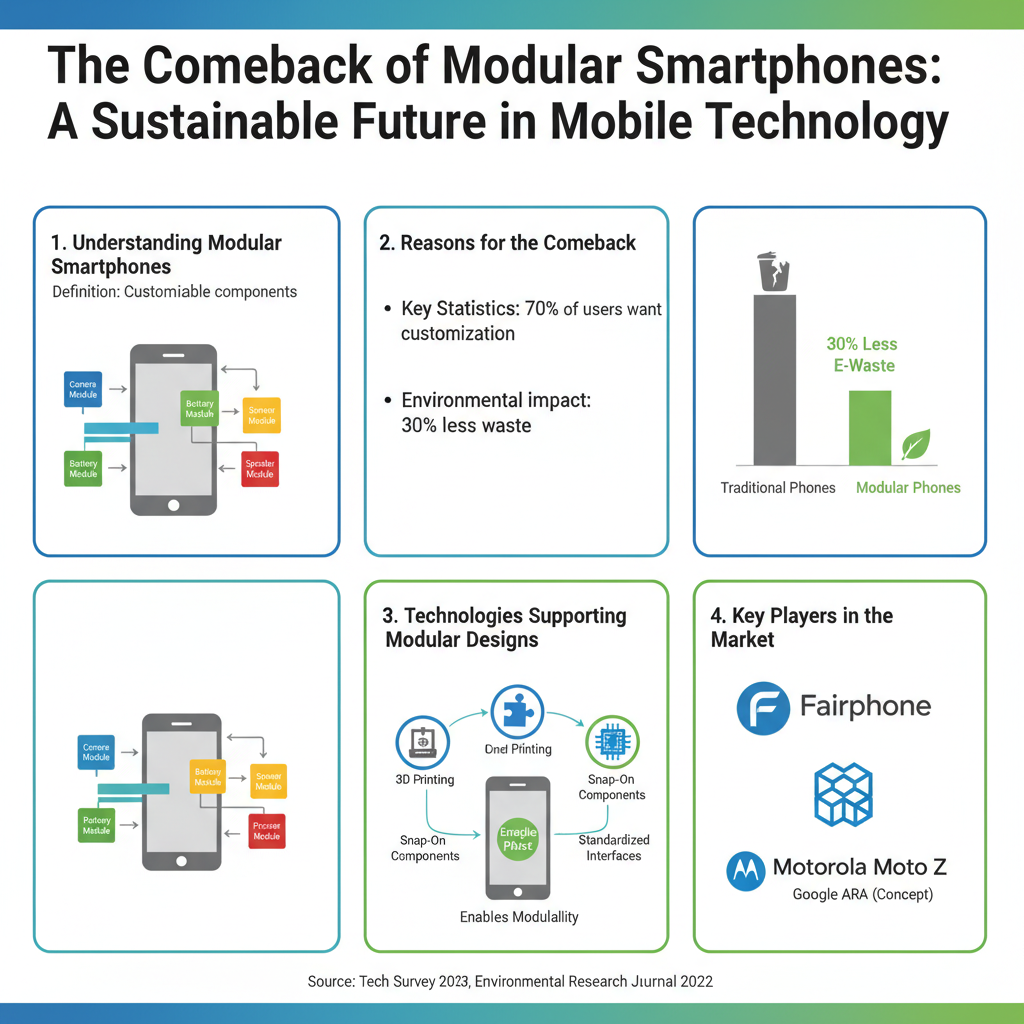
At their core, modular smartphones are devices crafted with interchangeable parts, which means users can easily upgrade or replace components like cameras, batteries, and even processors. This modular design allows for a highly customizable experience, enabling users to tailor their smartphones to their specific preferences and requirements. Imagine being able to swap out a low-quality camera for a high-resolution one or upgrading your battery without having to buy an entirely new phone—modular smartphones make this a reality.
Historically, modular smartphones gained traction through initiatives like Phonebloks and Google’s ambitious Project Ara. These pioneering projects aimed to disrupt the smartphone market by introducing a device that could be personalized at a fundamental level. However, despite their innovative design, they faced considerable challenges in terms of scalability, production costs, and market acceptance, which ultimately stalled their widespread adoption. Still, the idea lingered in the minds of tech enthusiasts, and recent developments indicate a revival of interest.
Reasons for the Comeback

One of the most compelling reasons behind the resurgence of modular smartphones is the increasing focus on sustainability. As global awareness of electronic waste (e-waste) rises, consumers are seeking technology that minimizes environmental impact. Traditional smartphones often end up in landfills after a few years due to non-replaceable parts and rapid obsolescence. Modular smartphones, on the other hand, allow users to replace only the components that need upgrading or repair, significantly extending the device’s lifespan and reducing waste.
Customization is another driving force behind the comeback of modular smartphones. Today’s users crave personalization, and the ability to modify their devices to fit specific needs is incredibly appealing. Whether it’s enhancing camera capabilities for photography enthusiasts or prioritizing battery life for heavy users, modular smartphones offer flexibility that traditional models simply can’t match. This shift towards user-centric design reflects a broader trend in the tech industry, where the focus is increasingly on meeting individual consumer preferences.
Technologies Supporting Modular Designs
Advancements in technology are playing a crucial role in making modular smartphones more practical and appealing. One of the key developments is the improvement in connectivity solutions. Magnetic connectors and wireless interfaces are becoming more sophisticated, allowing components to be easily swapped without the need for cumbersome wiring or complex installation processes. This seamless integration enhances the overall user experience and simplifies the upgrading process.
In addition, there is a growing movement towards standardized components in the modular smartphone space. Companies are working diligently to establish universal standards for modular parts, which would enhance compatibility across various devices and manufacturers. This standardization not only simplifies the consumer experience but also encourages competition and innovation among manufacturers, ultimately leading to higher quality products and more appealing features for users.
Key Players in the Market
Several brands are leading the charge in the modular smartphone market, each with its unique approach to modularity. Fairphone, for instance, emphasizes sustainability by offering ethically sourced materials and promoting fair labor practices. Their devices allow users to easily replace broken screens or batteries, giving consumers confidence in the longevity of their investment.
Motorola has also embraced modularity with its Moto Mods, which are accessory modules that can enhance the functionality of their smartphones. From improved audio systems to advanced camera capabilities, these attachments provide users with the opportunity to customize their devices according to their preferences. Additionally, new startups are emerging, bringing innovative concepts and fresh ideas to the modular smartphone landscape.
Consumer Reception and Market Impact
The reception of modular smartphones by consumers has been largely positive, particularly among early adopters. Many users appreciate the fun and creativity that comes with customizing their devices. For example, a photography enthusiast can upgrade their camera module to capture stunning images, while someone focused on gaming can enhance performance with a better processor module. Furthermore, the potential cost savings over time—avoiding the need to purchase a new phone every couple of years—adds to the appeal.
Market analysts predict that as technology continues to improve and awareness of the benefits of modular phones grows, these devices could capture a larger share of the smartphone market. This shift could challenge traditional smartphone manufacturers to rethink their strategies, potentially leading to more sustainable and customizable options in the future.
Challenges Ahead
Despite the promising outlook for modular smartphones, several challenges remain. One significant hurdle is consumer education. Many potential users are still unfamiliar with the concept of modular smartphones and the benefits they offer. Effective marketing strategies will be essential to inform consumers and showcase the advantages of modular designs compared to traditional smartphones.
Additionally, competition from traditional smartphones with increasingly advanced features poses a formidable challenge for modular devices. As companies continue to push the boundaries of technology, modular smartphones must consistently innovate to keep pace and demonstrate their unique value proposition.
The interest in modular smartphones indicates a shift towards personalization and sustainability in technology. As the market evolves, consumers are encouraged to explore these innovative options and consider how they can benefit from a modular approach to their mobile devices. With the right education and awareness, modular smartphones have the potential to redefine the mobile technology landscape for years to come.
Frequently Asked Questions
What are modular smartphones and how do they work?
Modular smartphones are devices designed with interchangeable components, allowing users to upgrade or replace specific parts, such as the camera, battery, or processor, without needing to purchase an entirely new phone. This innovative design promotes sustainability by reducing electronic waste and extends the lifespan of the device. Brands like Fairphone and the recently revived Motorola Moto Z series highlight the growing interest in this customizable technology.
Why are modular smartphones making a comeback in 2023?
The resurgence of modular smartphones in 2023 can be attributed to rising consumer demand for sustainability and the desire for personalized technology. As environmental concerns grow, users are increasingly looking for devices that can be easily repaired and upgraded rather than discarded. Additionally, advancements in technology and design have made modular components more efficient and user-friendly, further enticing consumers to consider this option.
Which modular smartphones are currently available on the market?
As of 2023, several modular smartphones have gained traction, including the Fairphone 4, known for its ethical sourcing and repairability, and the Motorola Moto Z series, which offers a range of snap-on accessories for enhanced functionality. Additionally, brands like Shiftphone and PuzzlePhone are also entering the market, catering to users who prioritize customization and sustainability. It’s essential to research each model’s features to find one that meets your specific needs.
How can modular smartphones contribute to reducing electronic waste?
Modular smartphones can significantly reduce electronic waste by allowing users to replace only the faulty or outdated components instead of discarding the entire device. This approach not only conserves resources by minimizing the demand for new materials but also encourages users to keep their devices longer, thereby decreasing the overall number of smartphones that end up in landfills. By promoting a circular economy, modular smartphones are an eco-friendly choice for tech-savvy consumers.
What are the benefits and drawbacks of using a modular smartphone?
The primary benefits of modular smartphones include their customizable nature, ease of repair, and potential for longer device lifespans, which can save users money in the long run. However, drawbacks may include limited availability of components, potential compatibility issues, and sometimes a higher initial purchase price compared to traditional smartphones. Users should weigh these factors carefully to determine if a modular smartphone aligns with their lifestyle and technology preferences.
References
- Modular smartphone
- https://www.theguardian.com/technology/2023/jan/10/modular-smartphones-future-repairability-sustainability
- https://www.bbc.com/news/technology-64721458
- https://www.sciencedirect.com/science/article/pii/S0167739X21000234
- https://www.wired.com/story/modular-smartphones-comeback/
- https://www.nytimes.com/2023/02/15/technology/modular-smartphones.html