

The future of daily tasks is shifting as AR glasses begin to replace smartphones. These innovative devices allow users to perform everyday activities like messaging, navigation, and scheduling without the need for a traditional phone. With their hands-free operation and immersive features, AR glasses provide a glimpse into a future where technology integrates seamlessly into our daily lives. In this article, we’ll explore how AR glasses are changing the way we interact with technology and what benefits they offer over smartphones.
The Rise of AR Glasses
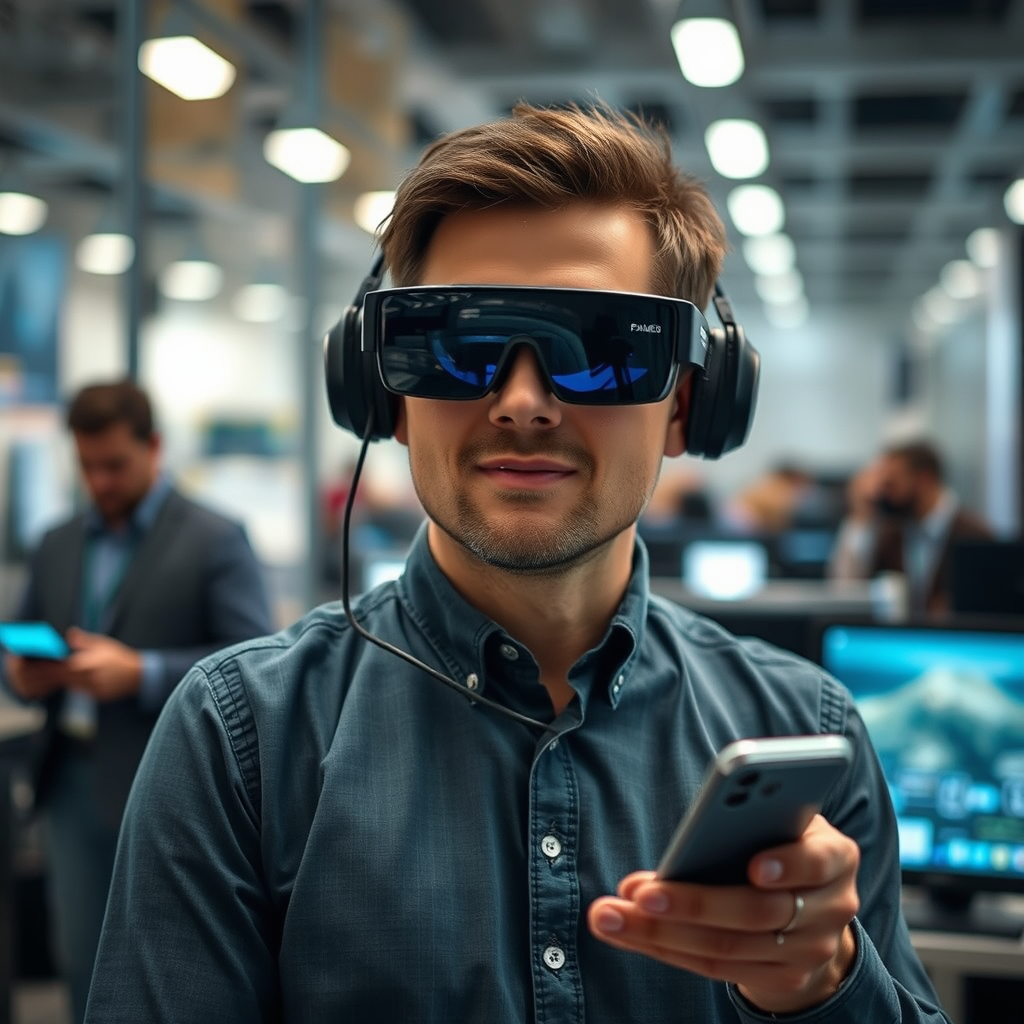
AR glasses are becoming more accessible due to advancements in technology. Unlike the bulky prototypes of the past, today’s AR glasses are lightweight, stylish, and packed with powerful features, making them a viable option for everyday use. Companies like Google, Apple, and Microsoft are heavily investing in AR development, pushing the boundaries of what’s possible. Google’s AR glasses, for example, have evolved significantly since their initial release, integrating features that cater to everyday needs. Apple’s rumored AR headset is expected to revolutionize user interaction, focusing on a seamless experience that blends digital information with the real world. As these tech giants continue to innovate, AR glasses are becoming a staple in the tech landscape, capturing the interest of consumers and businesses alike.
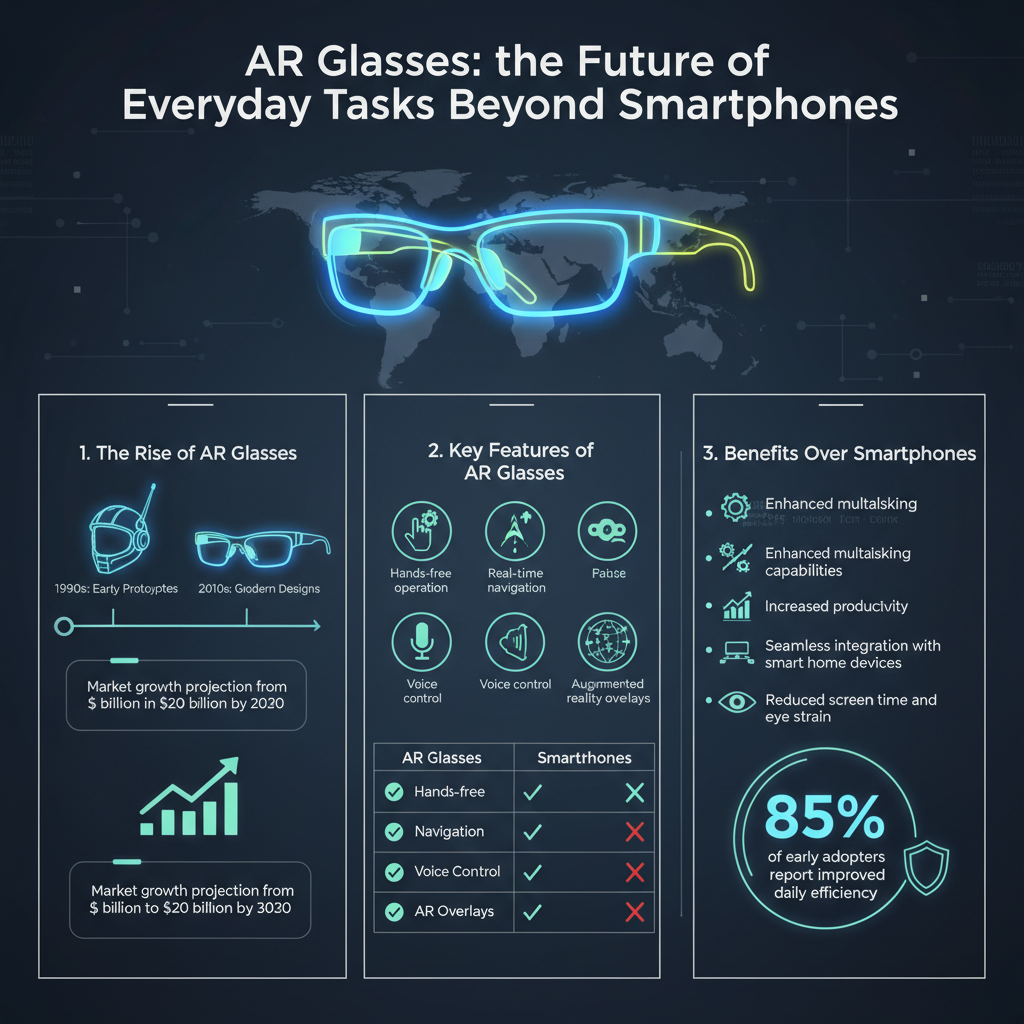
Key Features of AR Glasses
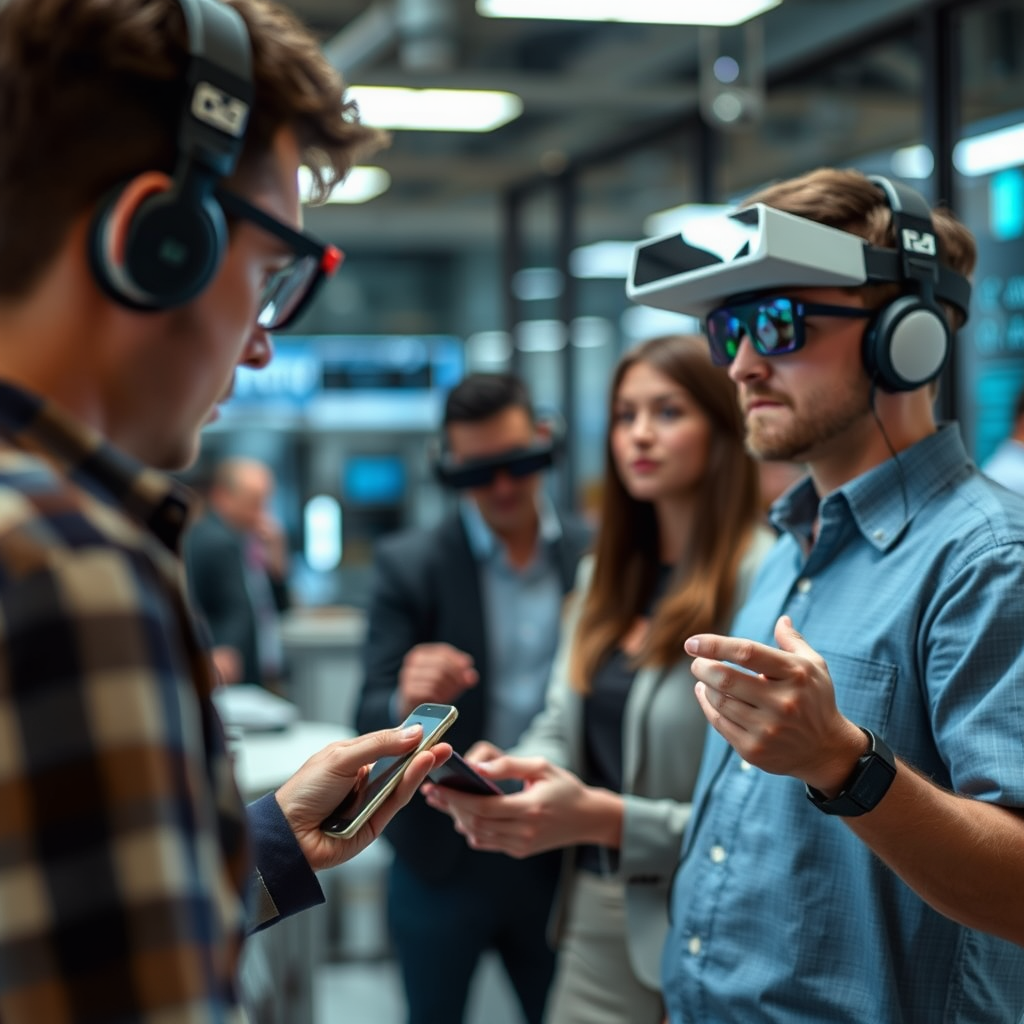
One of the standout features of AR glasses is their hands-free operation, which enhances convenience for multitasking. Imagine cooking dinner while following a recipe displayed right in front of you, or attending a meeting while viewing notes and presentations without needing to juggle a smartphone or laptop. This hands-free functionality allows users to remain engaged with their surroundings while accessing crucial information.
Moreover, integrated applications provide real-time information and notifications. For instance, AR glasses can display navigation prompts as you walk or cycle, enabling you to stay aware of your surroundings while still getting to your destination. Notifications for messages, calls, and calendar events can appear in your line of sight, ensuring you never miss an important update. This seamless integration into daily life provides a level of convenience that smartphones simply cannot match.
Benefits Over Smartphones
AR glasses offer an enhanced user experience with immersive augmented reality features that transform how we interact with the world. Unlike the flat screens of smartphones, AR glasses overlay digital information onto the real world, creating a richer context for activities. For example, you can visualize 3D models while working on a design project or see live translations when interacting with someone who speaks a different language.
Another significant benefit is the reduced reliance on physical devices, leading to a more streamlined lifestyle. With AR glasses, you can access essential functions without pulling out a smartphone or laptop. This not only saves time but also allows for greater focus on the task at hand. Think of how often we get distracted by notifications or apps on our smartphones; AR glasses can help mitigate those distractions by keeping you engaged in your environment while still connected to what’s important.
Practical Applications for Daily Tasks
The practical applications of AR glasses for daily tasks are vast and varied. One of the most exciting uses is navigation assistance. Imagine walking through a new city with turn-by-turn directions displayed directly in your field of vision. No more fumbling with a smartphone or missing your next turn because you were too focused on your screen. AR navigation can make exploring unfamiliar places a more enjoyable and stress-free experience.
Additionally, AR glasses offer quick access to messages and calls without the need to pull out your phone. You can view notifications, reply to messages using voice commands, or even take calls directly through the glasses. This capability not only saves time but also allows you to stay connected while remaining engaged with the world around you. For busy professionals, this could mean a more efficient workflow, as they can manage communications without being tethered to their devices.
Challenges and Considerations
Despite the exciting potential of AR glasses, there are challenges and considerations that need to be addressed. Privacy concerns regarding data collection and user surveillance are at the forefront of discussions about AR technology. With cameras and sensors integrated into these devices, there’s a legitimate worry about how personal data is collected and used. Ensuring that users feel safe and secure while using AR glasses will be crucial for widespread adoption.
Additionally, current limitations in battery life and technology adaptation pose challenges. Many AR glasses currently on the market have relatively short battery lives, raising concerns about usability throughout the day. Furthermore, as with any new technology, there is a learning curve for users who may be accustomed to traditional smartphones. Overcoming these barriers will be essential for making AR glasses a staple in everyday life.
The Future of AR Glasses in Everyday Life
Looking ahead, the future of AR glasses in everyday life is promising. Predictions suggest wider adoption across various sectors, including education and healthcare. In classrooms, AR glasses could transform learning by providing interactive experiences that engage students in ways traditional methods cannot. In healthcare, doctors may use AR to visualize patient data or overlay critical information during surgeries, enhancing precision and outcomes.
As technology continues to evolve, we can expect ongoing improvements in functionality and user interface. Enhanced battery life, better display quality, and more intuitive controls will make AR glasses even more appealing. Moreover, as developers create more applications tailored for AR experiences, we may find ourselves relying on these devices for a growing array of tasks.
The shift toward AR glasses is poised to redefine how we handle daily tasks, offering a glimpse into a future where our reliance on smartphones may diminish. As you consider integrating AR technology into your life, stay informed about the latest developments and think about how these devices can enhance your daily routine. With their hands-free capabilities and immersive experiences, AR glasses are not just a trend; they are the next step in our technological evolution, paving the way for a more connected and efficient future.
Frequently Asked Questions
What are the main advantages of using AR glasses instead of smartphones for daily tasks?
AR glasses offer hands-free operation, allowing users to interact with digital information seamlessly in their field of vision. This can enhance productivity by enabling multitasking, as users can receive notifications, navigate, or access applications without needing to look down at a smartphone. Additionally, AR glasses can provide immersive experiences, blending real-world environments with digital overlays, which is particularly beneficial for tasks like navigation, education, and remote work.
How do AR glasses improve productivity compared to traditional smartphones?
AR glasses can significantly boost productivity by providing real-time information without interrupting the user’s workflow. For example, while cooking, users can receive recipe instructions projected directly into their line of sight, eliminating the need to check a smartphone. Furthermore, AR glasses can facilitate virtual meetings or collaborations, allowing users to interact with 3D models or share information visually, which can lead to more efficient communication and task execution.
Why might AR glasses be a better choice for certain industries over smartphones?
In industries such as healthcare, construction, and manufacturing, AR glasses provide specific advantages that smartphones cannot match. For instance, surgeons can access patient data or 3D anatomical models hands-free while performing complex procedures, enhancing precision and safety. Similarly, workers in construction can visualize blueprints and overlay them onto physical structures, minimizing errors and improving efficiency. This capability to integrate digital tools directly into the work environment makes AR glasses a compelling choice for professionals in these fields.
What are the best AR glasses currently available that can replace smartphones for daily tasks?
Some of the best AR glasses available include Microsoft HoloLens 2, which offers advanced spatial mapping and hand-tracking capabilities, making it ideal for professional applications. Another popular option is Google Glass Enterprise Edition 2, designed for business use with features like voice commands and access to essential apps. For a consumer-friendly option, the Vuzix Blade provides a sleek design and integrates well with smartphones for notifications and basic tasks. Each of these devices has unique features that cater to different user needs, making them suitable replacements for smartphones.
Which daily tasks can AR glasses effectively handle that smartphones struggle with?
AR glasses excel at tasks that require continuous interaction with the environment or hands-free operation, such as navigation, where users can receive turn-by-turn directions without looking down at a device. They are also useful for industrial applications like assembly line work, where workers need both hands free to perform tasks while accessing information. Additionally, AR glasses can enhance learning and training experiences by providing immersive simulations that engage users in ways that static smartphone screens cannot, making them a valuable tool for education and skill development.
References
- Augmented reality
- https://www.bbc.com/news/technology-61920216
- https://www.sciencedirect.com/science/article/pii/S1361372319302151
- https://www.forbes.com/sites/bernardmarr/2022/05/02/how-ar-glasses-could-replace-smartphones/
- https://www.nytimes.com/2021/09/29/technology/apple-ar-glasses.html
- https://www.wired.com/story/what-ar-glasses-mean-for-the-future-of-technology/
- https://www.theguardian.com/technology/2022/mar/15/ar-glasses-smartphones-apple-google
- https://www.techcrunch.com/2021/11/17/how-ar-glasses-could-change-everything/