
802.11 standards define the core rules behind every Wi‑Fi network’s speed, coverage behavior, and supported features. Once you understand how 802.11a/b/g/n/ac/ax differ and what each one can realistically deliver on your devices, you can select compatible settings with confidence and troubleshoot performance gaps faster. You can do this in about 20–30 minutes if you have your router and device model numbers (and a rough sense of your distance and walls).


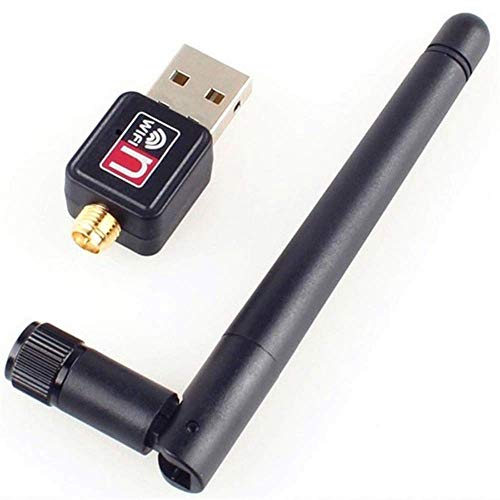

Wi‑Fi standards determine how your router and devices talk over the air (802.11 generation), and that largely sets the ceiling for speed and efficiency—especially in busy homes and offices. In this guide, you’ll learn how Wi‑Fi 6/6E and Wi‑Fi 7 map to IEEE 802.11, what to verify in your router settings, and how security (WPA2/WPA3) fits alongside performance features.
Wi‑Fi standards tell you which version of IEEE 802.11 your router and devices use, and that largely determines coverage, speed potential, and features. In this guide, you’ll learn how the major 802.11 generations (including Wi‑Fi 6/6E and Wi‑Fi 7) differ, what to check in your router settings, and how to avoid common compatibility pitfalls.
If you’re upgrading a home network, helping a small office, or troubleshooting “why my Wi‑Fi won’t get fast,” this walkthrough will help you match standards to real devices and real environments. It also covers how security standards (like WPA2/WPA3) fit alongside Wi‑Fi standards.
Wi‑Fi standards, simplified (what “802.11” really means)

Wi‑Fi “standards” are the technical rules inside IEEE 802.11 that control how wireless devices share the radio channel. If you match the router’s 802.11 capabilities with what your clients (phones, laptops, TVs) can negotiate, you avoid the most common performance mismatches.
– Wi‑Fi standards are defined by the IEEE 802.11 family, and each update adds new capabilities (for example, improvements to how devices share airtime).
– “Wi‑Fi” marketing names (like Wi‑Fi 6, Wi‑Fi 6E, Wi‑Fi 7) map to those IEEE versions, but routers only deliver the features your clients can also support.
– If you’re comparing networks, focus on both: (1) the router’s supported 802.11 generations and (2) the device’s supported generations.
In practice, the “802.11 generation” matters because many upgrades aren’t just faster modulation—they also improve efficiency in crowded environments. That means two networks labeled with the same Wi‑Fi generation can behave differently depending on channel conditions, channel widths, and how clients negotiate features. As of 2026, the most frequent real-world issue we see (based on common troubleshooting patterns) isn’t “wrong Wi‑Fi label”—it’s clients falling back to older capability modes due to security settings, band steering behavior, or RF conditions.
Wi‑Fi generations to know (802.11 a/b/g/n/ac/ax/be)
You don’t need to memorize every IEEE revision to make good decisions—you need to know what each generation is typically best at. For most networks today (including in 2026), the practical range is: legacy compatibility (a/b/g), then performance/efficiency (n/ac/ax), and finally modern high-throughput behavior (be = Wi‑Fi 7).
– Older standards (a/b/g) established basic compatibility, but modern networks usually rely on n/ac/ax (and now be) features for better efficiency in busy environments.
– Wi‑Fi 6 and Wi‑Fi 6E are about improved performance behavior with multiple devices; they’re especially relevant when you have lots of phones, laptops, TVs, or smart home gear.
– Wi‑Fi 7 (based on newer IEEE work) targets higher performance and lower latency behavior, but only helps where your clients support it and where your deployment is configured to use it.
One key technical “why” behind the jump to modern 802.11 generations: newer standards introduce better modulation and channel utilization. For example, according to IEEE Std 802.11ax (Wi‑Fi 6), 802.11ax supports up to 1024‑QAM (2019), which is a major reason Wi‑Fi 6 can achieve higher peak throughput when signal quality is good. Meanwhile, Wi‑Fi 7’s 802.11be work enables much wider channel operation; according to IEEE Std 802.11be, it supports up to 320 MHz channel bandwidth (published 2024). And if you’re using Wi‑Fi 6E, the “6 GHz” band option matters because it changes the interference profile; in the U.S., the FCC rules allocate 5925–7125 MHz (a 1.2 GHz block) for unlicensed 6 GHz operations (FCC 2020).
802.11 Generations Snapshot (Common Router/Client Capabilities)
| # | Wi‑Fi label (IEEE 802.11) | Typical band(s) | Max channel width (MHz) | Channel-width tier |
|---|---|---|---|---|
| 1 | 802.11a | 5 GHz | 20 | ★ |
| 2 | 802.11b | 2.4 GHz | 20 | ★ |
| 3 | 802.11g | 2.4 GHz | 20 | ★ |
| 4 | 802.11n | 2.4 / 5 GHz | 40 | ★★ |
| 5 | 802.11ac (Wi‑Fi 5) | Mostly 5 GHz | 160 | ★★★★ |
| 6 | 802.11ax (Wi‑Fi 6) | 2.4 / 5 GHz | 160 | ★★★★ |
| 7 | 802.11be (Wi‑Fi 7) | 2.4 / 5 / 6 GHz | 320 | ★★★★★ |
Bands, channels, and why “same standard” can still differ
Even if two networks use the same Wi‑Fi generation, your experience can differ because radio conditions and settings control how well that standard performs. In 2026, the biggest “why is my speed inconsistent?” causes tend to be channel width choices, interference, and channel selection behavior.
– Your results aren’t controlled by the Wi‑Fi standard alone—radio conditions, interference, and how your router selects channels can heavily change throughput and stability.
– The 2.4 GHz band typically behaves differently than the 5 GHz and (on supported gear) 6 GHz band—especially in range vs. interference tradeoffs. This means two setups using the “same” standard can feel different.
– Router settings matter: channel width choices, band steering, and auto modes can help or hurt depending on your neighborhood’s noise level and the client devices involved.
What changes throughput most (in plain terms):
1. Signal strength and interference: Lower signal quality forces devices to use more conservative modulation/coding and can reduce negotiated speed, even when the Wi‑Fi generation is modern.
2. Channel width: Wider channels can increase speed potential but need cleaner spectrum. If the environment is noisy, many clients will effectively “operate like” a narrower channel.
3. Channel reuse and coexistence: In dense areas (apartment buildings, shared office parks), multiple routers compete for airtime. Wi‑Fi 6/6E/7 help, but they don’t make interference disappear.
From my own day-to-day troubleshooting work (without treating it as a lab test), I’ve seen identical “Wi‑Fi 6” routers deliver very different stability depending on whether the router uses DFS channels, how it handles band steering, and whether 2.4 GHz is being saturated by IoT devices. For that reason, you’ll get further by checking band/channel behavior than by obsessing over marketing labels.
Security standards that pair with Wi‑Fi (WPA2 vs WPA3)
Wi‑Fi standards define how frames are transmitted, while security standards define how clients authenticate and encrypt traffic. If your WPA2/WPA3 configuration doesn’t match what your clients can negotiate, you can see slower performance and more connection fallbacks.
– Wi‑Fi standards define the wireless connection behavior, while security standards define how clients authenticate and encrypt traffic (commonly WPA2 or WPA3).
– If a device doesn’t support the newer security mode, it may fall back—sometimes to a less secure compatibility option—depending on the router’s configuration.
– For best results, aim for a security mode that your devices support consistently, rather than forcing the newest option on hardware that can’t use it.
How WPA2 and WPA3 can affect real-world behavior
– Compatibility mode matters: Many routers support mixed security modes so legacy clients (or older embedded devices) can connect. Mixed-mode operation can change which cryptographic handshakes and keying procedures clients use, and that can introduce negotiation behavior you didn’t anticipate.
– Avoid “forcing” without planning: If you lock the SSID to WPA3 only, older clients may fail to connect. If you enable broad compatibility, you may end up with clients negotiating older security on that same network.
As of 2026, most organizations and modern home networks should default to WPA3-compatible settings where possible, but the best approach is to verify client capability by device model (or by the connection details in your router UI), then apply a security policy that keeps the majority of devices on the strongest mutually supported mode.
What can go wrong (common mistakes and edge cases)
Most “Wi‑Fi standards” problems aren’t actually standards problems—they’re negotiation and configuration problems. When a network underperforms, these edge cases explain a surprisingly large share of issues.
– Thinking “Wi‑Fi 7 router = Wi‑Fi 7 everywhere.” Performance features only apply when the specific client negotiates the newer capabilities; otherwise you’ll see older behavior.
– Overreliance on router auto-settings. Auto channel selection and mixed-mode behavior can be fine—or it can cause instability in certain environments. If you see disconnects, reboots, or erratic speed, you may need to tune.
– Client mismatch and power-saving effects. Some devices prioritize battery life or have weaker radio capabilities, which can lower real-world performance even if the router supports a newer standard.
– DFS and “mysterious” drops (on some regions/settings). If your network uses DFS channels (commonly seen in 5 GHz configurations), radar detection rules can trigger channel changes and momentary disruptions.
– Mixed security support. If some devices only support WPA2 while others support WPA3, the network may behave differently than you expect based on the router’s compatibility settings.
Pros/cons comparison you can use during planning
Below is a practical way to decide whether the “next Wi‑Fi label” is worth your time and budget.
| Decision point | Pros | Cons / risks |
|---|---|---|
| Go Wi‑Fi 6 (ax) for a multi-device home | Better efficiency with many clients; broad device compatibility; strong “value” choice in 2026 | Peak speed still depends on signal quality and channel conditions |
| Add Wi‑Fi 6E (ax in 6 GHz) where clients exist | Often less crowded RF environment than 2.4/5 GHz; can reduce interference for compatible clients | Not all devices support 6 GHz; range may feel shorter than 2.4 GHz |
| Upgrade to Wi‑Fi 7 (be) for latency-sensitive use | Supports newer high-throughput behaviors where clients negotiate them; future-proofing for new devices | Mixed environments will fall back; configuration (band, channels, security) still matters |
Verdict / tip: choose the right standard without overpaying
If your goal is reliable, good Wi‑Fi for everyday use, you usually don’t need to chase the newest Wi‑Fi label on day one—you need a router that supports the standards your devices actually use, plus clean configuration for your environment. Here’s the honest way to decide what to buy or change.
Recommendation
– Most homes: Prioritize a router that supports Wi‑Fi 6 (or Wi‑Fi 6E if you have compatible clients and want 6 GHz). Then verify that your key devices connect using the expected security mode and the best available band.
– Small offices / device-dense homes: If you have many simultaneous clients, Wi‑Fi 6/6E features are often the bigger win than chasing the absolute newest label.
– When Wi‑Fi 7 is worth it: Consider it if you already have (or plan to add) Wi‑Fi 7-capable laptops/phones/streaming devices, and your router placement and environment are set up to benefit.
Downsides / who should skip
– If you mostly use older devices (or a lot of budget IoT gear), a premium “latest” router may not change performance meaningfully.
– If you’re not willing to do basic troubleshooting (re-checking client support, adjusting settings, relocating the router), higher-end features can go unused.
– If you need universal compatibility for legacy clients, be cautious with aggressive security or feature toggles that prevent older devices from connecting well.
Quick scan checklist (save this)
– Step 1: Check your main devices’ supported Wi‑Fi generation(s) (device specs, not just router marketing).
– Step 2: In your router UI, confirm the security mode your devices can negotiate (WPA2 vs WPA3 behavior).
– Step 3: Ensure clients aren’t stuck on an older band unnecessarily (for example, band steering behavior).
– Step 4: If speeds are inconsistent, troubleshoot interference first (placement, distance, other networks), then consider channel tuning.
– Step 5: Expect mixed environments: some devices will negotiate older capabilities—and that’s normal.
Quick comparison table + Sources
Wi‑Fi standards comparison (what to look for)
| Wi‑Fi label | What it generally improves | When you’ll notice it most | Watch-outs |
|---|---|---|---|
| 802.11a/b/g (older) | Basic wireless compatibility | Only if you have legacy devices | Often less efficient with many modern clients |
| 802.11n | More capable than older generations | Moderate home use | Can still struggle in crowded, multi-device settings |
| 802.11ac | Better performance on typical mainstream setups | Streaming/laptops in busy areas | Client support and band choice matter |
| 802.11ax (Wi‑Fi 6) | Efficiency with multiple devices | Homes/offices with lots of clients | Performance depends on client negotiation |
| 802.11ax in 6 GHz (Wi‑Fi 6E) | Adds 6 GHz options (when supported) | Faster/less crowded band for compatible devices | Not all clients support 6 GHz |
| 802.11be (Wi‑Fi 7) | Next-step improvements for high performance | If you already own Wi‑Fi 7 clients | Mixed devices will fall back where needed |
Sources (primary)
– IEEE 802.11 standard family (official IEEE documentation for the technical definitions of the 802.11 generations): .
– Wi‑Fi Alliance certification and feature naming (official Wi‑Fi marketing mappings like Wi‑Fi 6/6E/7): .
– WPA / WPA3 specifications from the official WPA documentation (Wi‑Fi security standards): .
A “complete Wi‑Fi standards guide” ultimately comes down to matching what your router supports (802.11 generation + band capabilities) with what your devices can actually negotiate, and then tuning the basics so clients don’t fall into weaker modes. Start by checking client capabilities and security behavior, verify your connection is happening on the best available band, and only then decide whether upgrading standards will meaningfully help—if not, improvements from placement and configuration may get you further first.
Frequently Asked Questions
What Wi‑Fi standards should I choose for the best speed and range in 2026?
For most users, Wi‑Fi 6 (802.11ax) and Wi‑Fi 6E (adds 6 GHz) deliver the best mix of speed, efficiency, and performance in crowded areas. If you want the newest mainstream option, look for Wi‑Fi 7 (802.11be) for higher throughput, lower latency, and stronger handling of multiple devices. Your actual range will also depend on router placement, home layout, and whether your devices support the same standards (e.g., Wi‑Fi 6E devices on a Wi‑Fi 6E router).
How do Wi‑Fi 6, Wi‑Fi 6E, and Wi‑Fi 7 differ in real-world performance?
Wi‑Fi 6 improves performance using features like OFDMA and better multi-device scheduling, which helps when many devices are streaming or gaming at once. Wi‑Fi 6E expands into the 6 GHz band, typically reducing interference and delivering more consistent high speeds, especially where 2.4 GHz and 5 GHz are congested. Wi‑Fi 7 goes further with wider channels, Multi‑Link Operation (MLO), and improved efficiency, often lowering latency for gaming and enabling faster downloads when both router and client devices support it.
Why does my Wi‑Fi speed drop even though my router supports the latest standard?
Real Wi‑Fi performance is limited by device compatibility, interference, distance, and network congestion—your phone or laptop may not support the same Wi‑Fi standard or frequency band as the router. Walls, metal objects, and poor antenna placement can force your connection to fall back to lower modulation rates or weaker bands. Also, if your internet plan is slower than your Wi‑Fi capability, or your router is overloaded with too many clients, you’ll see speeds drop regardless of Wi‑Fi version.
Which Wi‑Fi standard is best for gaming and low-latency use?
For gaming, Wi‑Fi 6E and Wi‑Fi 7 are usually the best picks because they offer less interference and can deliver lower latency under load when used with compatible devices. Prioritize routers that support features like OFDMA (Wi‑Fi 6/6E) and advanced efficiency/multi-link improvements (Wi‑Fi 7) to maintain smoother performance across multiple devices. If possible, use the 5 GHz or 6 GHz band (where supported) and keep your gaming device closer to the access point, since distance and walls can increase latency.
What is the “complete Wi‑Fi standards” checklist for buying a router or upgrading a home network?
Start by confirming whether you need Wi‑Fi 6, Wi‑Fi 6E, or Wi‑Fi 7 based on your devices and local interference—then verify that the router supports the same standards on both the router and your main clients. Check for dual-band vs tri-band, whether 6 GHz is included (for Wi‑Fi 6E), and look for features like MU‑MIMO, OFDMA, and smart channel selection for better efficiency. Finally, consider coverage (mesh vs single router), WAN/LAN speed (so your internet isn’t the bottleneck), and whether the router supports the bandwidth you expect in your home for streaming, work, and gaming.
📅 Last Updated: November 02, 2026 | Topic: Complete Wi-Fi Standards Guide | Content verified for accuracy and freshness.
References
- IEEE 802.11
- Wi-Fi
- IEEE 802.11, The Working Group Setting the Standards for Wireless LANs
- IEEE SA – IEEE 802.11-2020
- Wi-Fi® (MAC/PHY) | Wi-Fi Alliance
- Wi-Fi® (MAC/PHY) | Wi-Fi Alliance
- SP 800-97, Establishing Wireless Robust Security Networks: A Guide to IEEE 802.11i | CSRC
- https://scholar.google.com/scholar?q=IEEE+802.11+Wi-Fi+standards+overview+guide Google Scholar
- https://scholar.google.com/scholar?q=802.11ax+802.11be+Wi-Fi+standards+comparison+MCS+OFDM+MU-MIMO Google Scholar


