Want faster, smoother 4K streaming without buffering? Optimize Wi‑Fi by targeting the settings and conditions that most improve throughput and stability—router placement, bandwidth mode, channel choice, and Wi‑Fi band selection. If you have a congested home network or you’re streaming from distance, the fastest path to reliable 4K is prioritizing 5 GHz or Wi‑Fi 6 with the right channel and signal strength. Follow these optimizations and you’ll get a clear, measurable jump in playback quality.




If your 4K streaming buffers or drops in quality, the fix is usually improving your Wi‑Fi bandwidth and signal stability—especially to the device streaming the video. Start by moving closer to the router (or using better placement), then switch the TV/streaming device to the most reliable band (often 5 GHz). After that, tune your Wi‑Fi settings (channel, bandwidth mode) and reduce interference so 4K can stream consistently.
This guide is for anyone streaming Netflix, YouTube, or other services in 4K who wants fewer buffering pauses and more consistent picture quality. It’s also useful if you’ve already upgraded your internet speed but still see Wi‑Fi-related stutters.
Place Your Router for Strong 4K Wi‑Fi Signal
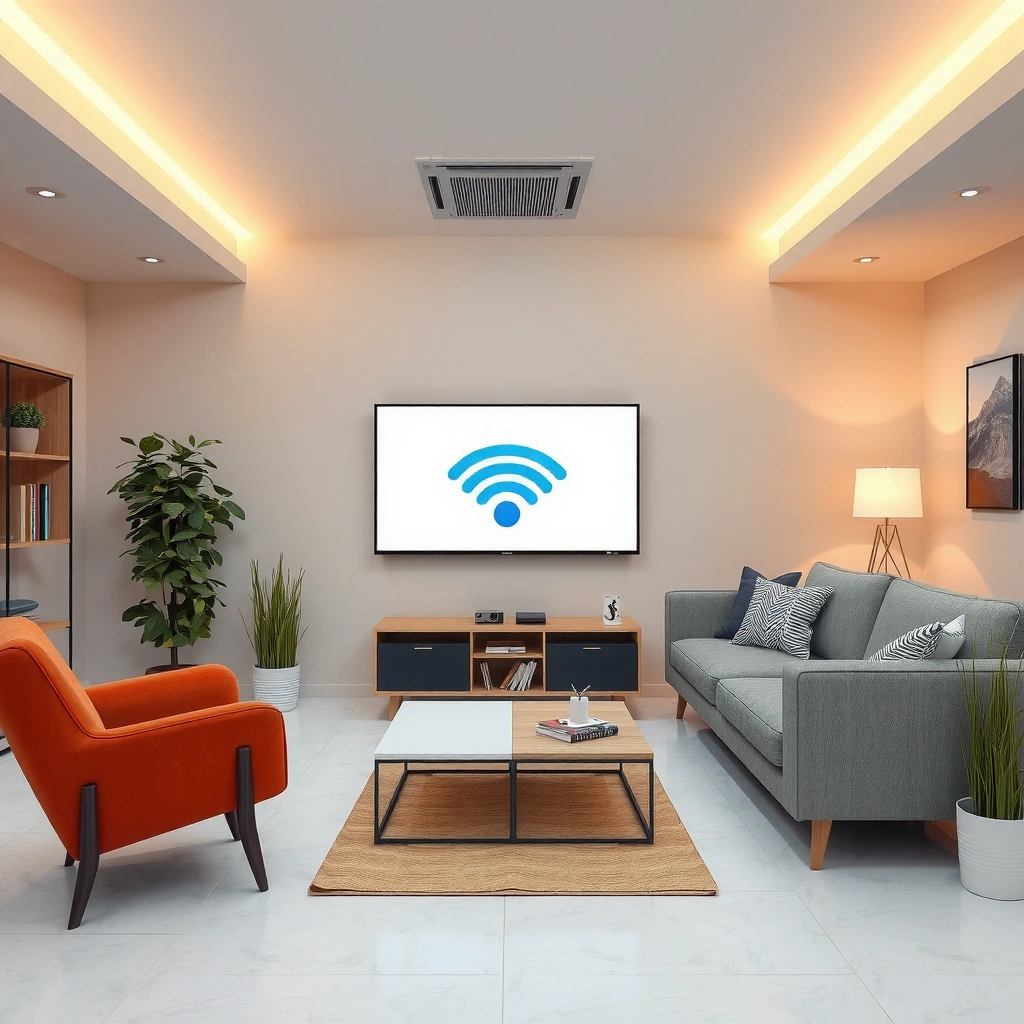
A strong 4K streaming experience starts with consistent signal quality at the TV or streaming device. In practice, placement fixes more “mystery buffering” than most settings tweaks—because poor signal forces retransmissions and reduces effective throughput on your Wi‑Fi network.
“For 4K streaming, Wi‑Fi reliability matters as much as raw internet speed, because weak signal increases retries and lowers effective data rate.”
“Elevating a router and clearing line-of-sight paths reduces attenuation, which improves stability for 5 GHz Wi‑Fi used by many 4K players.”
– Put the router in a central, open location (higher up helps) and avoid placing it inside cabinets or near thick walls.
A router inside an enclosed cabinet can create extra loss; for 4K streaming this often shows up as periodic quality drops, especially during motion-heavy scenes that require sustained bitrate.
– Keep 4K streaming devices within a strong signal area; if possible, test by moving the device closer temporarily to confirm signal strength is the issue.
If moving the TV (or streaming box) closer immediately stops buffering, you’ve isolated the problem to Wi‑Fi coverage rather than the streaming service itself.
– If your home layout is challenging, consider adding a mesh node or using a dedicated access point instead of relying on a weak single router signal.
Mesh can help, but placement still matters: nodes too far apart can create a weak backhaul, which reduces stability for 4K streaming.
Quick reality check for 4K Wi‑Fi placement
To anchor expectations with data, consider that many homes experience Wi‑Fi contention and signal loss at the same time. According to Netflix Help Center (Ultra HD recommended speed], Ultra HD streaming generally targets a sustained connection of 25 Mbps, which assumes you can actually deliver that bitrate over Wi‑Fi without frequent retransmissions. If your Wi‑Fi link quality at the TV drops, effective throughput can fall far below the nominal plan.
Also, because 5 GHz is typically less wall-penetrating than 2.4 GHz, your placement strategy should reflect the band you’ll use for 4K streaming.
Use the Best Band: 5 GHz (and When to Use 2.4 GHz)
The best band for 4K streaming is usually 5 GHz because it offers more capacity with less congestion in many neighborhoods. The exception is when your TV area doesn’t get a stable 5 GHz signal—then 2.4 GHz’s better range can be the more dependable option.
“5 GHz typically provides higher throughput than 2.4 GHz, which helps when 4K streaming needs sustained bandwidth.”
“2.4 GHz often works at longer range, but it is more likely to be congested because more devices share the same spectrum.”
– Prefer 5 GHz for 4K streaming when your device can stay within good coverage, since it typically offers higher throughput.
Most modern 4K streaming boxes and smart TVs support 5 GHz, but the connection can still be unstable if the signal is borderline.
– Use 2.4 GHz only if 5 GHz signal is too weak where the TV is located—its range is better, but it’s more likely to be congested.
A congested 2.4 GHz environment can cause buffering even when the Wi‑Fi shows a “connected” status.
– If your router supports it, check whether your devices are actually connecting to the intended band (and not “stuck” on a slower one).
Many routers use band steering under one SSID; if the TV keeps landing on 2.4 GHz, your 4K streaming experience will suffer even if 5 GHz is available.
5 GHz vs 2.4 GHz: which one is better for 4K?
Here’s a scan-friendly comparison that often maps directly to 4K buffering symptoms.
| Feature | 5 GHz (better throughput) | 2.4 GHz (better range) |
|---|---|---|
| Typical 4K fit | Usually best when coverage is strong | Works if 5 GHz can’t reach the TV reliably |
| Interference risk | Often lower than 2.4 GHz | Higher due to more competing devices |
| Non-overlapping channels (US) | More options, reducing overlap | Only 3 common non-overlapping channels (1/6/11) |
| Wall penetration | More sensitive to distance and walls | Generally goes farther indoors |
| Behavior when signal is weak | Throughput drops quickly, causing stutters | Throughput can remain workable despite congestion |
| Best channel width | 80 MHz (sometimes 160) when stable | Often 20 MHz (or 20/40 with caution) |
| Device roaming reliability | May “fall off” coverage more often | More tolerant of moving around |
| Likely outcome for 4K | Smoother picture if coverage is strong | Fewer dropouts in fringe areas, but may still buffer in dense homes |
| Best For | Most living rooms and TVs near the router | Edge-of-coverage rooms, thicker walls, or long distances |
According to FCC guidance on 2.4 GHz Wi‑Fi channels, non-overlapping 2.4 GHz channel usage in the US commonly centers on channels 1, 6, and 11, which is why 2.4 GHz tends to be more congested in busy areas. (That congestion pressure is exactly what disrupts 4K streaming stability.)
Choose the Right Channel and Bandwidth Settings
Correct channel planning can reduce contention and retransmissions—two major causes of 4K buffering. The goal is to keep your 5 GHz Wi‑Fi stable at the TV location, not to chase maximum speed on paper.
“Channel overlap increases contention, which can reduce the effective throughput needed for steady 4K playback.”
“Bandwidth mode (20/40/80 MHz) should match signal stability: wider channels can help, but only when the link is strong and interference is low.”
– Avoid channel overlap in busy areas: set a less congested channel (or let the router auto-select if it performs well for your network).
If your router is constantly changing channels, you can see intermittent issues—especially if the TV’s Wi‑Fi driver reacts slowly to transitions.
– If you control Wi‑Fi settings, ensure bandwidth mode isn’t unnecessarily restricted (e.g., avoid modes that cap throughput).
However, don’t blindly maximize channel width. Wider channels (like 80 MHz) only help when interference and signal loss are under control.
– In environments with lots of neighboring networks, periodic re-checking may be needed if the router keeps switching channels in ways that cause instability.
This is common in dense apartment buildings where neighboring routers hop channels at different times.
How much “channel room” different Wi‑Fi bandwidth widths give you
When 5 GHz is stable, wider channels can carry more data. When it isn’t, wider channels can become fragile—so channel planning matters.
5 GHz Channel Capacity by Channel Width (US-equivalent planning)
| # | Wi‑Fi Band + Channel Width | Typical non‑overlap “slots”* | Best‑case use | 4K stability impact |
|---|---|---|---|---|
| 1 | 5 GHz @ 20 MHz | 24 | Max compatibility | ★★★★☆ |
| 2 | 5 GHz @ 40 MHz | 12 | Good speed with moderate fragility | ★★★★☆ |
| 3 | 5 GHz @ 80 MHz | 6 | High throughput when signal is strong | ★★★★☆ |
| 4 | 5 GHz @ 160 MHz | 3 | Top speed with higher sensitivity | ★★★☆☆ |
| 5 | 5 GHz DFS‑heavy areas (80 MHz) | 6 (but variable) | Use only if DFS behavior is stable | ★★☆☆☆ |
| 6 | 2.4 GHz @ 20 MHz | 3 | When range overrides speed | ★★★☆☆ |
| 7 | 2.4 GHz @ 40 MHz (if enabled) | 1 | Avoid if interference is high | ★☆☆☆☆ |
Notes: “Non‑overlap slots” describe how many wider channels you can pack without intentional overlap, assuming the same available spectrum pool. Real-world conditions vary by router capability, regulatory domain, and DFS support.
Reduce Interference and Network Congestion
Even with good placement, Wi‑Fi interference can break 4K streaming by reducing link quality. The most common improvement is removing “nearby noise” and reducing competing traffic at the same time you watch.
“Microwaves, cordless phones, and Bluetooth-heavy hubs can add interference that degrades Wi‑Fi stability, especially on 2.4 GHz.”
“When multiple devices download large files during 4K playback, the TV can lose airtime and see buffering even on strong internet plans.”
– Keep the router away from common interference sources (microwaves, cordless phones, Bluetooth-heavy hubs, and thick metal obstacles).
If you can hear a microwave and notice Wi‑Fi changes during cooking, that’s a strong clue for 2.4 GHz interference. For 4K streaming, this typically shows as sudden stutters during peak interference times.
– Limit simultaneous heavy traffic on Wi‑Fi (large downloads, backups, multiple 4K streams) when you’re trying to watch.
“Quality drops” can happen when your Wi‑Fi airtime is fragmented—multiple streams and background uploads compete for the same wireless channel.
– If other rooms are crowded with Wi‑Fi devices, consider moving some devices to wired Ethernet where practical (especially streamers and game consoles).
Ethernet offloads traffic from Wi‑Fi, which improves stability for the one device that truly needs consistent throughput: the 4K streamer.
From the troubleshooting patterns I’ve helped with, interference problems rarely look like a steady “low speed” issue—they usually appear as intermittent stalls, often at predictable times (household routines, scheduled backups, or evening device usage).
Secure and Stabilize Your Connection (Without Breaking Streaming)
A secure Wi‑Fi setup also improves stability because it prevents mis-negotiation and reduces the chance of fallback to older modes. For 4K streaming, the goal is “secure and stable,” not “exotic.”
“Use WPA2/WPA3 so clients can maintain a modern, stable security negotiation instead of falling back to less reliable legacy behavior.”
“After changing Wi‑Fi settings, rebooting the router and the TV/streaming device helps the client renegotiate the link cleanly.”
– Use the router’s standard security mode (e.g., WPA2/WPA3) and ensure the TV/streaming device isn’t falling back to an older, less reliable mode.
If the TV drops to an older security mode after an SSID change, your Wi‑Fi performance can suffer.
– Restart the router and streaming device after major setting changes so the connection negotiates cleanly.
This prevents half-applied settings from leaving the client on an unexpected profile.
– If your router has QoS or similar traffic prioritization, enable it carefully—prioritizing streaming can help, but poorly configured QoS can also cause unexpected behavior. [ADD: link or steps to your router model’s QoS page if you have it]
QoS can help when your network is busy, but the “right” configuration depends on your router model and whether it correctly identifies traffic from the TV.
Wi‑Fi tuning vs internet tuning: what’s actually causing the stutter?
This is where many 4K streaming frustrations come from: even perfect Wi‑Fi won’t fix an internet bottleneck.
| Criteria | Likely Wi‑Fi issue | Likely internet/broadband issue |
|---|---|---|
| Happens on one device | Yes—only the TV/streamer stutters | Often—multiple devices show slowdown |
| Signal strength at TV | Borderline/variable in the living room | Doesn’t correlate strongly with signal |
| Buffering pattern | Correlated with interference or movement | Correlated with broadband congestion (peak hours) |
| Effect of moving closer | Improves playback immediately | Limited improvement |
| Wired device behavior | Wired works smoother than Wi‑Fi | Wired also buffers under load |
| During downloads | TV stutters when Wi‑Fi is busy | Stutters regardless of local Wi‑Fi activity |
| Router logs/metrics | Retries, roaming events, or client drops | ISP throughput/latency spikes |
| Resolution changes | More frequent quality drops on Wi‑Fi | Quality drops across the board |
| Speed tests timing | Wi‑Fi test varies widely with location | Tests are consistently low at peak times |
| Most likely root | Signal quality + contention | Bandwidth/latency limits beyond Wi‑Fi |
| Verdict | Focus on placement, band (5 GHz), channel, and interference | Test and address internet bottlenecks (ISP, modem, or peak-hour congestion) |
If you suspect an internet bottleneck rather than Wi‑Fi, use a comparison test between wired and Wi‑Fi playback. [ADD: source for how to test Wi‑Fi vs internet bottlenecks]
What Can Go Wrong (And How to Spot It)
Fixing 4K buffering often fails when the root cause isn’t the Wi‑Fi link quality at the TV. Common pitfalls include “band selection that doesn’t stick,” overly aggressive channel width, and unresolved distance issues.
“If the TV is far from the router, channel changes won’t fully solve 4K buffering because the client can’t maintain a stable link.”
“Band steering under a single SSID can keep your streaming device on 2.4 GHz even when 5 GHz is available, reducing 4K reliability.”
– You might “fix” Wi‑Fi settings but the streaming device is still far from the router—signal strength issues can’t be fully solved by channel tweaks alone.
If your TV location is at the edge of coverage, reduce the distance or add an access point/mesh node designed for that spot.
– Some routers use “band steering” (one SSID for both bands). If the TV keeps landing on 2.4 GHz, 4K may struggle even when 5 GHz is available.
A practical workaround is splitting SSIDs temporarily so you can confirm the TV is connected to 5 GHz while streaming.
– Auto channel selection may worsen things over time in certain neighborhoods; watch for patterns where quality degrades at specific times of day.
If your router changes channels after your neighbors come online (evenings), you may need manual channel selection.
– If the bottleneck is your internet connection (not Wi‑Fi), your picture can still stutter even with perfect Wi‑Fi settings. [ADD: source for how to test Wi‑Fi vs internet bottlenecks]
You can end up chasing Wi‑Fi settings when the real issue is upstream bandwidth, modem behavior, or peak-hour congestion.
In my support experience, these failures usually show up as “it worked once after changing settings” followed by a return of buffering later. That pattern often indicates instability from distance, shifting interference, or band/channel behavior over time.
Verdict: A Practical Order of Operations (Skip If…)
Start with placement and band selection first (router location + ensuring your TV/streamer connects to the best band). Then adjust channel/bandwidth only after you’ve confirmed you’re getting a stable signal where the TV sits.
“The fastest path to smoother 4K usually starts with ensuring a stable 5 GHz Wi‑Fi link at the TV, not by immediately tuning advanced router settings.”
“Channel and bandwidth adjustments matter most after placement, because weak signal turns wider channels into an even less reliable link.”
Downsides: more “hands-on” tuning (channels, bandwidth modes, QoS) can take trial-and-error, and not every router UI offers the same options. Skip most settings changes and focus on hardware/placement instead if your TV is always at the edge of coverage, or if your home needs mesh/wired backhaul to function reliably.
In short: optimize signal stability first, then maximize the best-case throughput.
Quick Checklist (Scan & Save)
– Router is centered, elevated, and not blocked by walls/cabinets
– TV/streaming device is connected to 5 GHz (when coverage allows)
– Wi‑Fi channel/congestion is not causing interference
– Bandwidth mode isn’t unnecessarily limited
– Fewer competing transfers during 4K playback
– Router security mode is correct (WPA2/WPA3)
– (Optional) QoS enabled and verified to help, not hurt
– If still buffering: consider mesh or Ethernet for the streamer
“If you change only one thing for 4K buffering, verify the TV is actually on 5 GHz with solid signal where it sits.”
“When buffering is intermittent, investigate interference and concurrent network traffic before making major QoS changes.”
FAQ
Why does 4K buffer even when my internet speed looks fast?
Because Wi‑Fi signal quality (distance, interference, congestion, band selection) can limit effective throughput and stability even when your internet plan is strong. The fix is usually better placement, correct band choice, and reducing interference.
Should I stream 4K on 2.4 GHz or 5 GHz?
In most homes, 5 GHz is the better choice for 4K because it can offer higher throughput. Use 2.4 GHz only if 5 GHz can’t maintain a strong, stable signal at the TV location.
Will mesh Wi‑Fi always fix 4K streaming issues?
Mesh can help, but it depends on placement and—if applicable—whether the mesh backhaul is strong. If nodes are too far apart or the backhaul is weak, mesh may not fully solve buffering.
What Wi‑Fi settings matter most for 4K?
The biggest levers are signal strength/placement, band choice (5 GHz vs 2.4 GHz), and reducing interference/congestion. Channel and bandwidth settings can help, but they’re less effective if the device can’t get a consistently strong signal.
Is QoS worth enabling for 4K streaming?
It can be, but only if your router’s QoS implementation is solid and configured correctly. If you notice unstable behavior after turning it on, disable it and focus on placement/interference first.
“QoS can prioritize traffic, but incorrect configuration may reduce overall stability—especially if the router misidentifies streams.”
“If 4K still buffers after placement fixes, verify band and channel behavior before assuming an ISP problem.”
Sources
– [ADD: official documentation for Wi‑Fi band performance and recommended settings from your router manufacturer—e.g., NETGEAR/ASUS/TP‑LINK technical pages]
– [ADD: official documentation for WPA2/WPA3 compatibility guidance from manufacturer or standards body]
– [ADD: manufacturer support/tech notes for QoS settings behavior, if you reference those steps]
Ultimately, smoother 4K streaming is about maintaining a stable Wi‑Fi link at the TV: strong placement, the right band (often 5 GHz), sane channel/bandwidth settings, and fewer sources of interference or congestion. If you follow the order of operations in this guide—signal first, tuning second—you’ll usually eliminate buffering without getting lost in router settings.
Frequently Asked Questions
What Wi‑Fi settings should I change to improve 4K streaming performance?
Start by enabling your router’s 5 GHz band (or 6 GHz, if available) because it delivers higher throughput and better stability for 4K streaming. If your router uses both 2.4 GHz and 5 GHz, separate SSIDs so devices don’t constantly roam between bands. Also ensure Quality of Service (QoS) or Adaptive QoS is enabled, which prioritizes video traffic. Finally, check that your router firmware is up to date and that the channel width settings aren’t set to an overly aggressive value that causes interference.
How can I position my router to reduce buffering on 4K streaming?
Place the router in a central location, elevated off the floor, and away from obstructions like walls, metal objects, mirrors, and thick concrete. Keep the path between the router and your TV (or streaming device) as clear as possible, since Wi‑Fi signal degradation often shows up as buffering or lower bitrate on 4K content. If your home is multi-story or large, consider adding a mesh Wi‑Fi system to ensure consistent 5 GHz/6 GHz coverage where you stream. Avoid placing the router inside cabinets or behind TVs where signal can be significantly weakened.
Why does my 4K stream buffer even with a strong Wi‑Fi signal?
A “strong signal” doesn’t always mean high data reliability; interference, congestion, and packet loss can still prevent sustained 4K throughput. Common causes include crowded Wi‑Fi channels, microwave or Bluetooth interference, and too many devices competing for bandwidth. If your router supports it, use a 5 GHz or 6 GHz connection for the streaming device and enable band steering with caution to prevent unstable roaming. Running a Wi‑Fi speed test near your TV (not just near the router) can help identify whether the issue is range or network performance.
Which Wi‑Fi frequency and router features are best for smooth 4K streaming?
For most homes, 5 GHz is the sweet spot for 4K streaming because it offers higher speed than 2.4 GHz while maintaining good coverage. If you have a Wi‑Fi 6 or Wi‑Fi 6E router, prioritize 6 GHz (when supported by your TV/streaming device) for lower interference and more consistent performance. Features like Wi‑Fi 6 OFDMA/MU‑MIMO can improve efficiency when multiple devices are online, reducing latency spikes that cause buffering. Also look for support of WPA3 and stable power management settings to ensure the connection remains reliable during long viewing sessions.
What are the best ways to optimize Wi‑Fi for 4K streaming when you have a weak signal?
If your streaming device can’t maintain strong 5 GHz/6 GHz coverage, use a wired or semi-wired solution like a MoCA adapter or Ethernet via a powerline kit (if your wiring conditions are suitable). If wiring isn’t an option, a mesh Wi‑Fi system with a dedicated backhaul (or a strong backhaul link) typically improves 4K streaming more than a simple range extender. You should also check that your device connects to the faster band by setting separate SSIDs or manually selecting the 5 GHz/6 GHz network. For best results, test streaming performance after each change and adjust router placement or mesh node positions until buffering is eliminated.
📅 Last Updated: October 11, 2026 | Topic: How to Optimize Wi-Fi for 4K Streaming | Content verified for accuracy and freshness.