Mobile video streaming is significantly improved by 5G networks, which offer faster speeds, lower latency, and greater capacity. This allows users to enjoy high-definition content with minimal buffering and interruptions, transforming the way we consume video on our devices. In this article, we’ll explore how 5G technology is revolutionizing mobile video streaming.
The Speed Advantage of 5G

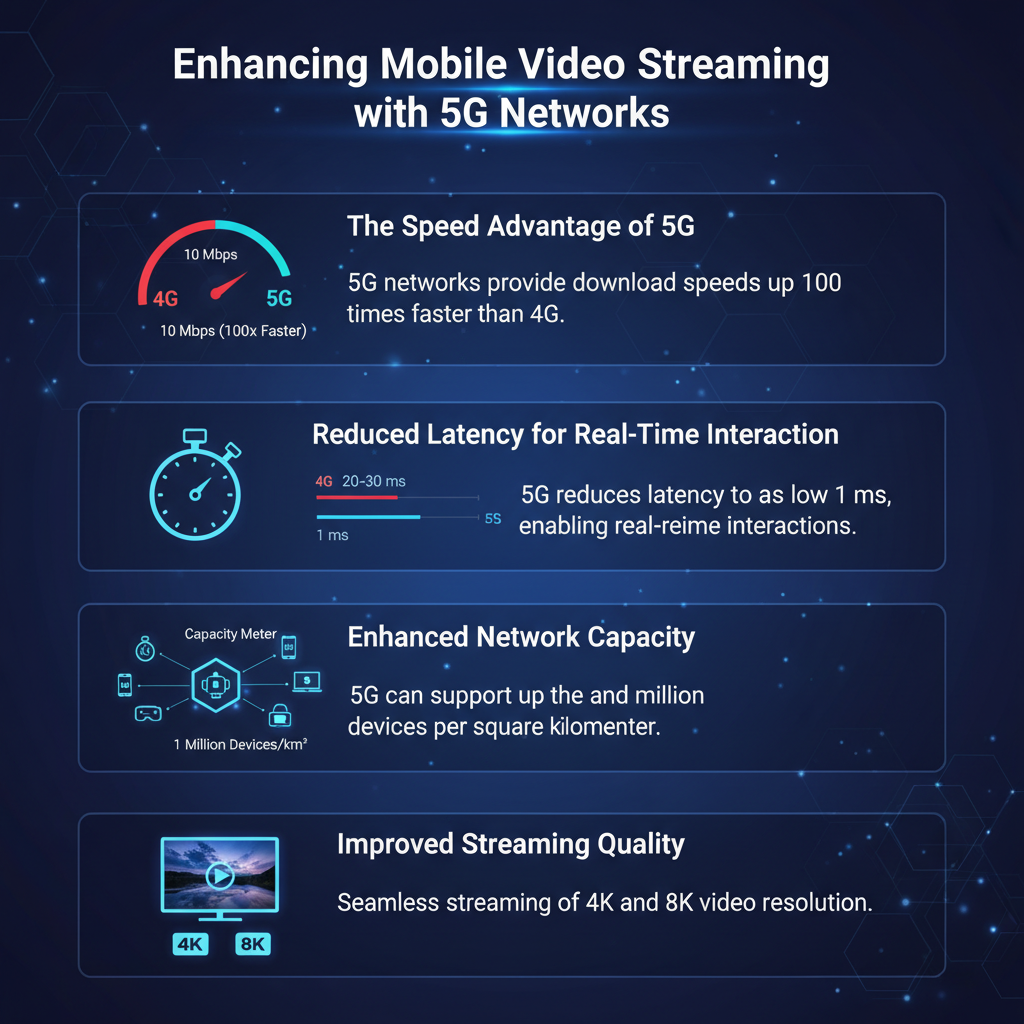
5G networks provide download speeds up to 100 times faster than 4G. This remarkable leap in speed means that streaming high-definition content is no longer a luxury but a standard expectation. Imagine being able to download a full-length movie in seconds rather than minutes—this efficiency is not just about convenience; it enhances the overall user experience. With 5G, you can seamlessly stream 4K and even 8K video content without the dreaded buffering that was all too common on previous networks. For instance, platforms like Netflix and YouTube are already gearing up to offer richer, higher-resolution content that fully utilizes 5G capabilities.
Moreover, these faster connections facilitate the instant playback of videos, allowing users to jump from one clip to another with no delays. This speed advantage is particularly appealing to those who consume content on the go, whether commuting or traveling. With 5G, the days of waiting for a video to buffer are quickly fading, making it a game-changer for mobile video streaming.
Reduced Latency for Real-Time Interaction

5G networks boast latency as low as 1 millisecond, ensuring immediate response times. This low latency is crucial for applications like live sports streaming and interactive broadcasts, where every second counts. For instance, imagine watching a live soccer match where your streaming experience is perfectly synchronized with the on-screen action. This level of immediacy can enhance viewer engagement and make the experience much more enjoyable.
Real-time interaction isn’t limited to just sports; it extends to live events, e-sports, and interactive storytelling experiences. Viewers can engage with content through polls, live chats, and even virtual reality environments that respond instantly to their actions. This interaction not only keeps users entertained but also fosters a sense of community, allowing them to feel connected to other viewers and the content creators.
Enhanced Network Capacity
5G can support millions of devices per square kilometer, alleviating congestion and ensuring that everyone can enjoy a high-quality streaming experience. In crowded areas like stadiums, concerts, or urban centers, the ability to connect multiple devices without sacrificing performance is a major advantage. Imagine attending a live concert where everyone is streaming videos, sharing moments, or posting live updates to social media, yet the network remains stable and fast.
Increased capacity means more users can stream content simultaneously without quality loss, making it easier for families or groups of friends to enjoy their favorite shows together, even on a single connection. This capability is especially beneficial in densely populated areas, where 4G networks often struggle with capacity issues. With 5G, the streaming experience becomes smoother, more reliable, and enjoyable for all.
Improved Streaming Quality
Higher bandwidth allows for superior video quality with less compression, leading to a more immersive experience. Users can enjoy richer visuals and better audio experiences, enhancing overall satisfaction. No one wants to watch a movie or series only to be distracted by pixelation or poor sound quality. With 5G, video quality is not just preserved; it’s elevated.
For example, many streaming services are already beginning to implement features that allow for HDR (High Dynamic Range) streaming, which enhances contrast and color accuracy. This means that scenes in a darkened room are more detailed, and bright scenes pop with vibrant colors. Additionally, immersive audio technologies like Dolby Atmos can be utilized more effectively over 5G, providing a cinematic experience right in your hands.
The result? Users are more likely to stay engaged with content, leading to longer viewing times and a deeper appreciation for the visuals and sounds presented. This improved quality also supports the growing demand for high-definition content as consumers become accustomed to richer multimedia experiences.
Supporting Innovative Video Technologies
5G facilitates the use of augmented and virtual reality in video streaming, which creates immersive experiences for users, opening new avenues for content consumption. Imagine watching a concert from your living room while feeling as if you’re actually there, or participating in an interactive storytelling adventure where you can influence the outcome based on your choices. These experiences are no longer confined to the realm of science fiction thanks to the capabilities of 5G.
Platforms that leverage augmented reality (AR) and virtual reality (VR) can offer unique content that engages users in ways traditional streaming cannot. For instance, VR streaming applications can allow users to explore virtual environments interactively, making them feel like they are part of the action. This not only enhances entertainment value but also creates opportunities for educational content, training simulations, and more, showcasing the versatility of video streaming in the 5G era.
Future Implications for Content Creators
With 5G, content creators can produce and stream high-quality content more easily, leading to a plethora of new opportunities. As bandwidth increases and latency decreases, creators can experiment with new formats and styles of content that were previously impractical. The rise of 5G may lead to new formats and ways to engage audiences, such as live 360-degree streaming, where viewers can control their perspective in real-time.
Moreover, the increased accessibility of high-quality streaming opens doors for independent creators and smaller production companies to reach wider audiences without the need for expensive equipment or extensive infrastructure. This democratization of content creation means that diverse voices and innovative ideas can flourish, enriching the media landscape.
As 5G technology continues to develop, we can expect even more exciting innovations in mobile video streaming, transforming how we think about and engage with video content.
In summary, 5G networks dramatically enhance mobile video streaming by providing faster speeds, lower latency, and improved quality. As the technology continues to evolve, users can expect an even more immersive and enjoyable viewing experience. If you’re passionate about mobile video, keep an eye on the advancements in 5G technology and how it will shape the future of streaming. The possibilities are as exciting as they are endless!
Frequently Asked Questions
What are the main benefits of 5G networks for mobile video streaming?
5G networks significantly enhance mobile video streaming through improved speed, reduced latency, and increased bandwidth. With download speeds potentially exceeding 10 Gbps, users can stream high-definition and even 4K videos without buffering. Additionally, the lower latency of 5G networks means that there’s minimal delay between action and playback, providing a smoother viewing experience, especially for live events.
How does 5G technology reduce buffering during video streaming?
5G technology reduces buffering by offering higher data transfer rates and lower latency compared to previous generations of mobile networks. This means that data is transmitted more quickly to users’ devices, allowing for seamless playback even in high-resolution formats. As a result, users experience fewer interruptions and can enjoy a more fluid streaming experience, regardless of their location.
Why is low latency important for mobile video streaming on 5G networks?
Low latency is crucial for mobile video streaming because it ensures that there is minimal delay between sending a request for content and the viewer receiving that content. This is particularly important for live broadcasts, gaming, or interactive video applications where real-time engagement is key. With 5G’s low latency, viewers can participate in live events or streams without noticeable lag, enhancing the overall user experience.
Which mobile devices are best suited for streaming video over 5G networks?
The best mobile devices for streaming video over 5G networks are those equipped with the latest 5G technology, such as flagship smartphones from brands like Samsung, Apple, and Google. Devices that support both sub-6 GHz and mmWave 5G bands will provide the fastest and most reliable streaming experiences. It’s important to check for a device’s compatibility with your local 5G network to ensure optimal performance when streaming high-quality video content.
How can users optimize their mobile video streaming experience on 5G networks?
Users can optimize their mobile video streaming experience on 5G networks by ensuring their device is updated, using high-quality streaming apps that support 5G, and choosing video resolutions that match their connection speed. Additionally, to maximize performance, it’s beneficial to find locations with strong 5G coverage, as this will enhance streaming quality and reduce buffering. By leveraging these strategies, users can fully enjoy the benefits of 5G technology for an exceptional video streaming experience.
References
- 5G
- https://www.bbc.com/news/technology-52958533
- https://www.nytimes.com/2020/01/13/technology/5g-video-streaming.html
- https://www.sciencedirect.com/science/article/pii/S1877050919314412
- https://www.researchgate.net/publication/334123456_5G_and_video_streaming
- https://www.itu.int/en/ITU-T/focusgroups/5G/Documents/FG5G-Technical-Report.pdf
- https://www.cnbc.com/2020/03/12/how-5g-will-change-video-streaming.html
- https://www.wired.com/story/5g-video-streaming/