

Dynamic AR storytelling experiences are revolutionized by AI through personalized narratives and interactive elements that engage users on a deeper level. By integrating artificial intelligence into augmented reality, developers can create immersive experiences that adapt to individual preferences and behaviors, resulting in a more engaging storytelling format. This article explores how AI enables immersive storytelling in augmented reality, providing insights into its applications and future potential.
The Role of AI in Augmented Reality

AI plays a pivotal role in enhancing augmented reality by harnessing the power of data analysis and machine learning. AI algorithms can sift through vast amounts of user data, including preferences, past interactions, and even emotional responses, to tailor experiences that feel uniquely personal. This customization is crucial in maintaining user interest and ensuring that the content resonates on a personal level.
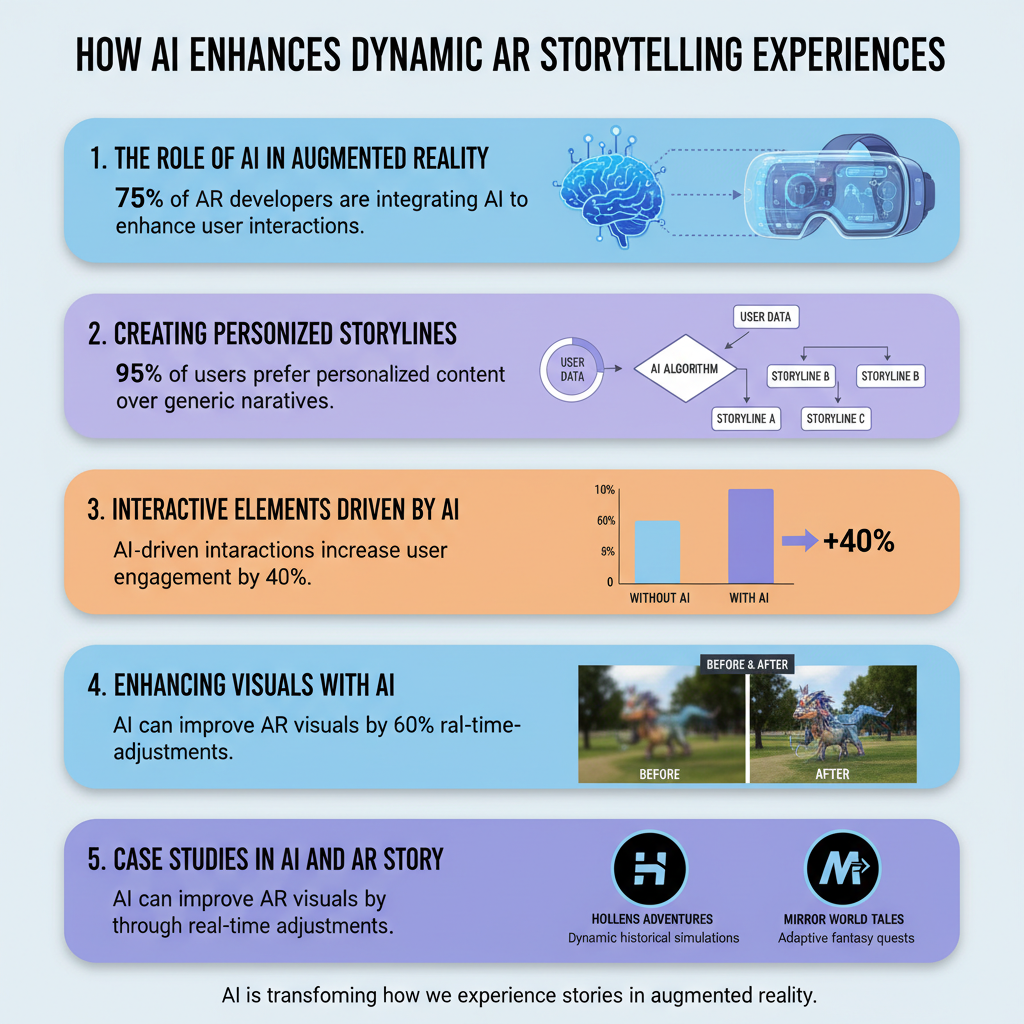
Moreover, machine learning enhances the responsiveness of AR environments by allowing them to learn from user interactions over time. For instance, if a user spends more time on certain types of story elements or interacts with specific characters, the AR application can adapt its content accordingly. This responsiveness fosters a more dynamic storytelling experience, making users feel like they are co-creators in the narrative, rather than passive observers.
Creating Personalized Storylines

Personalization is at the heart of dynamic AR storytelling, and AI is the engine that drives it. By analyzing user preferences and behaviors, AI can curate narratives that align with individual tastes. For example, a user who frequently chooses adventurous content may find themselves immersed in a thrilling storyline, while someone who enjoys romance could be presented with love-centered narratives. This level of personalization ensures that users are not just consuming content; they are actively engaged in a story that feels tailor-made for them.
Dynamic adjustments in story progression are also vital for maintaining user engagement. AI can analyze real-time data to tweak the storyline based on user choices and interactions. For example, if a user decides to take a particular path in a story, AI can modify the subsequent events to reflect those choices, creating a more interactive and engaging experience. This seamless integration of user input into the narrative not only enhances immersion but also encourages users to explore multiple storylines, increasing overall satisfaction and engagement.
Interactive Elements Driven by AI
One of the most exciting aspects of AI in augmented reality is its ability to facilitate real-time interactions. In traditional storytelling, the narrative often follows a linear path, but AR storytelling—enhanced by AI—allows users to influence story outcomes through their choices. Imagine being in an AR environment where your decisions lead to different endings, or where characters respond in real-time to your actions. This interactivity transforms passive viewing into active participation, making the storytelling experience much more compelling.
AI algorithms can analyze user input and adjust the AR environment accordingly. For instance, if a user decides to interact with a specific object or character, AI can create unique dialogues or alter the storyline based on that interaction. This not only enhances user engagement but also encourages exploration and experimentation, as users feel empowered to shape the narrative.
Enhancing Visuals with AI
The visuals in augmented reality play a crucial role in storytelling, and AI is making significant strides in this area. AI-generated graphics can elevate the quality of AR visuals, ensuring they are lifelike and captivating. For instance, AI can create realistic character animations and environments that respond to user interactions, making the experience feel more immersive.
Moreover, real-time image processing powered by AI can enhance the clarity and depth of AR visuals. This technology can adapt the graphical output based on the lighting conditions of the user’s environment or the distance between the user and the virtual elements. Such enhancements create a seamless blend of the real and virtual worlds, drawing users deeper into the narrative and making it feel more tangible.
Case Studies in AI and AR Storytelling
Several successful applications of AI and AR storytelling have emerged, particularly in industries like gaming and education. In the gaming sector, titles like “Pokemon GO” use AI to create engaging narratives that evolve based on user interactions with the environment and other players. The game’s immersive experience is a testament to how AI can enhance storytelling through interactive gameplay and dynamic content.
In education, AR applications like “Google Expeditions” allow students to explore historical sites and scientific phenomena through immersive storytelling. AI analyzes student engagement and adapts the educational content to meet diverse learning styles. Feedback from users has shown that these applications not only enhance learning but also foster a deeper emotional connection to the material, proving the effectiveness of AI in AR storytelling.
Future Trends in AI and AR Integration
Looking ahead, the integration of AI and AR is poised for significant evolution. As technology advances, we can expect more sophisticated AI algorithms that offer deeper personalization and interactivity. For instance, future AR applications may leverage natural language processing to allow users to converse with characters in a more human-like manner, enriching the storytelling experience even further.
However, with these advancements come potential challenges and ethical considerations. As AI collects and analyzes user data, concerns about privacy and data security arise. Developers must navigate these issues carefully to foster trust and ensure that users feel safe while engaging with AR experiences.
Best Practices for Implementing AI in AR
For developers looking to integrate AI effectively into AR storytelling, several best practices can help guide the process. First and foremost, understanding user experience design is crucial. Developers should prioritize creating intuitive interfaces and seamless interactions that enhance storytelling without overwhelming the user.
Additionally, continuous testing and feedback collection are vital. By engaging with users and gathering feedback on their experiences, developers can identify areas for improvement and ensure that the content remains relevant and engaging. Lastly, embracing collaboration between AI specialists and storytellers can lead to more innovative and captivating narratives that leverage the strengths of both fields.
In conclusion, by leveraging the power of AI, developers can create more immersive and engaging augmented reality storytelling experiences that adapt to individual users. This fusion of technology not only enhances narrative depth but also paves the way for innovative applications across various sectors. As we explore AI’s potential in our projects, we can captivate audiences and redefine storytelling, creating experiences that resonate on a personal level and encourage deeper connections with the content.
Frequently Asked Questions
What is dynamic AR storytelling and how does AI enhance it?
Dynamic AR storytelling refers to the creation of immersive narratives that adapt in real-time based on user interactions and environmental factors. AI enhances this experience by analyzing user behavior, preferences, and surroundings to deliver personalized content, making the storytelling more engaging and relevant. For instance, AI algorithms can modify story elements, characters, or settings based on the user’s location or actions, thereby creating a unique experience for each interaction.
How does artificial intelligence personalize AR storytelling experiences?
Artificial intelligence personalizes AR storytelling by utilizing data analytics to understand user preferences and behaviors. Through machine learning algorithms, AI can evaluate past interactions, user feedback, and demographic information to tailor narratives that resonate with individual users. This personalization can involve adjusting storyline branches, character development, or even the pacing of the story to enhance user engagement and satisfaction.
Why is AI important for creating interactive AR narratives?
AI is crucial for interactive AR narratives because it allows for real-time adaptation and responsiveness, which are essential for maintaining user engagement. By leveraging AI’s capabilities in natural language processing and computer vision, AR experiences can become more intuitive and seamless, enabling users to interact with the story in a more meaningful way. This not only enhances immersion but also encourages users to explore the narrative further, leading to a richer storytelling experience.
What are the best tools and technologies for developing AI-powered AR storytelling?
Some of the best tools for developing AI-powered AR storytelling include platforms like Unity and Unreal Engine, which offer robust support for AR development and integrate AI functionalities. Additionally, services like Google ARCore and Apple ARKit provide essential SDKs for building interactive experiences. For AI-specific capabilities, tools like TensorFlow and Microsoft’s Azure Cognitive Services can be utilized to incorporate machine learning and natural language processing into AR projects.
Which industries are benefiting the most from AI-driven AR storytelling?
Various industries are leveraging AI-driven AR storytelling, with the gaming, education, and marketing sectors leading the way. In gaming, immersive experiences enhance player engagement, while in education, AR storytelling facilitates interactive learning by bringing subjects to life. Meanwhile, marketers use AR to create memorable brand experiences that captivate potential customers, ultimately driving engagement and conversions through personalized narratives.
References
- Augmented reality
- https://www.bbc.com/future/article/20200317-how-ai-is-changing-the-way-we-experience-storytelling
- https://www.sciencedirect.com/science/article/pii/S1877050919312950
- https://www.nature.com/articles/s41599-020-00645-y
- Frontiers | The 4D Space-Time Dimensions of Facial Perception
- https://www.forbes.com/sites/bernardmarr/2021/01/25/how-ai-is-transforming-augmented-reality-and-virtual-reality/?sh=5cf0d2e72e6a
- https://www.researchgate.net/publication/332567389_Artificial_Intelligence_in_Augmented_Reality_Applications