
The future of holographic video recording is set to transform our visual experiences by making them more immersive and interactive. As technology advances, we can anticipate sharper images, more lifelike representations, and applications that extend far beyond entertainment. This article will explore the latest breakthroughs in holographic technology, its applications across various industries, the role of artificial intelligence, the challenges it faces, future trends, and the ethical considerations that come with it.



Advancements in Holographic Technology

Recent breakthroughs in holographic display and capture techniques have significantly enhanced the quality and realism of holographic video recordings. Technologies such as light field imaging and volumetric capture are at the forefront, allowing for recordings that provide depth and dimension previously unseen in traditional video formats. For instance, companies like Microsoft and startups like Looking Glass Factory are pioneering displays that can project 3D holograms without the need for special glasses, creating a more accessible experience for users.
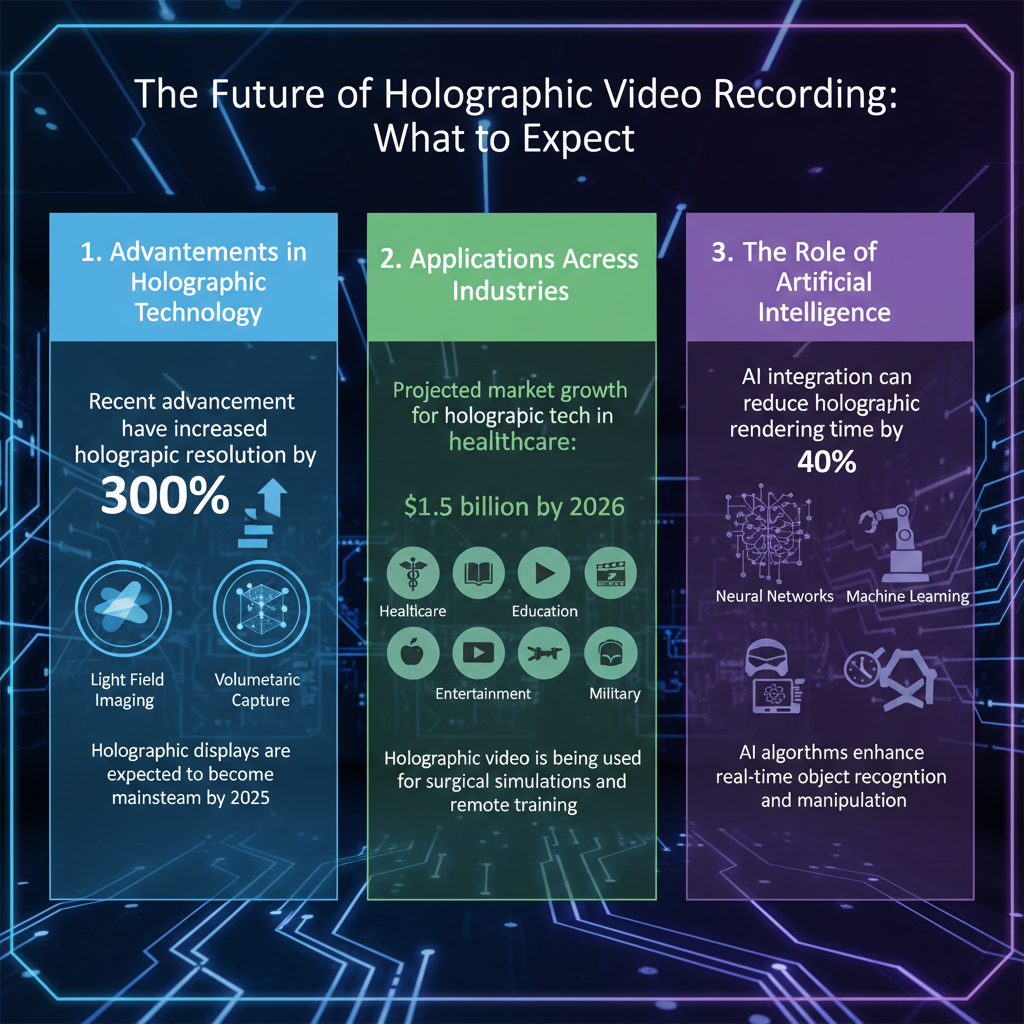
Moreover, advancements in resolution and image clarity are making holographic videos more lifelike. With developments in 8K resolution and beyond, holographic content is becoming indistinguishable from reality. This leap in quality not only enhances viewer experience but also opens the door for professional applications in fields such as virtual reality, architecture, and product design, where detailed visuals are paramount.

Applications Across Industries

Holographic video recording is already making waves in various sectors, particularly in entertainment and gaming. The gaming industry is leveraging holographic technology to create more immersive environments, allowing players to interact with digital characters and settings in profound new ways. For example, games like “The Walking Dead: Onslaught” utilize holographic elements to enhance storytelling and player engagement, ultimately reshaping how narratives unfold in interactive formats.
Education is another field poised for a holographic revolution. Imagine students learning about the human body through 3D holograms that they can interact with, or history students witnessing pivotal moments through lifelike recreations. Institutions are exploring these possibilities, making learning more engaging and effective. In healthcare, holographic video can assist in surgical training, allowing medical professionals to practice procedures in a controlled, immersive environment.
Remote collaboration is also set to benefit significantly from holographic video technology. As more teams operate globally, the ability to hold meetings in a virtual space where participants can engage with 3D models and data in real-time will enhance communication and productivity. This capability could redefine the way businesses operate, making remote work feel less isolating and more collaborative.
The Role of Artificial Intelligence
Artificial intelligence (AI) plays a crucial role in enhancing the processing and editing of holographic video. Advanced algorithms can analyze and optimize holographic content, enabling more efficient editing processes and better user experiences. For instance, AI can automatically track user interactions, allowing for dynamic adjustments in holographic displays based on viewer movements and preferences.
Machine learning algorithms are also being utilized to improve the quality of holographic content creation. These technologies can learn from vast amounts of data, enabling creators to produce high-quality holograms with less manual effort. Additionally, AI can assist in personalizing content, adapting experiences based on user behavior and feedback, which could significantly enhance engagement and satisfaction.
Challenges and Limitations
Despite its exciting potential, the holographic video recording industry faces several challenges. One of the primary constraints is the need for more efficient hardware. Current holographic display technologies often require bulky equipment and significant processing power, which can limit accessibility for both creators and consumers. As a result, developing smaller, more efficient devices will be crucial for mainstream adoption.
Data storage and bandwidth present additional hurdles. High-quality holographic videos require massive amounts of data, making storage solutions and high-speed internet connections essential. As the demand for holographic content grows, companies will need to innovate in data compression and streaming technologies to ensure that high-quality experiences are accessible to all users.
Future Trends to Watch
As we look ahead, several trends are likely to shape the future of holographic video recording. One promising area is the integration of augmented reality (AR) and virtual reality (VR) with holographic technology, creating mixed-reality environments that blend the physical and digital worlds seamlessly. We may also see advancements in mobile holographic displays, allowing users to experience holography on their smartphones and tablets, further democratizing access to this technology.
Consumer demand will play a significant role in the development and accessibility of holographic technology. As more users become aware of and seek out immersive experiences, companies will be motivated to invest in research and development. This drive for innovation could lead to faster advancements and cost reductions, making holographic technology more available to a wider audience.
The Ethical Considerations
With the rise of holographic video recording comes a set of ethical considerations that must be addressed. Privacy concerns are at the forefront, as the ability to create lifelike holographic representations raises questions about consent and the potential for misuse. Creators and companies must prioritize ethical guidelines to protect individuals’ rights and ensure that holographic content is used responsibly.
Moreover, there is a responsibility on the part of creators and companies to manage holographic content thoughtfully. This includes being transparent about how holograms are created and used, as well as considering the potential societal impacts of their innovations. As holographic technology becomes more prevalent, navigating these ethical dilemmas will be essential to foster trust and integrity in the industry.
As the holographic video recording industry evolves, it will unlock unprecedented opportunities for creativity and communication. By staying informed about technological advancements and emerging trends, you can be prepared to embrace this exciting future. Explore these insights further and consider how you can be part of the holographic revolution. The potential is vast, and the journey has only just begun.
Frequently Asked Questions
What is holographic video recording and how does it work?
Holographic video recording is a cutting-edge technology that captures three-dimensional images, allowing viewers to experience depth and life-like visuals without the need for special glasses. It works by using laser light to record the interference patterns created by light reflecting off an object, which is then reconstructed during playback, creating a hologram. This technology leverages advanced optics and data processing techniques, making it a revolutionary advancement in visual media.
How will holographic video recording impact the film and entertainment industry?
Holographic video recording is poised to transform the film and entertainment industry by providing creators with the ability to produce immersive content that engages audiences on a new level. Filmmakers can integrate holograms into their storytelling, allowing for interactive experiences that go beyond traditional cinema. As this technology matures and becomes more accessible, it could lead to entirely new genres and forms of entertainment, enhancing audience engagement and participation.
Why should businesses consider using holographic video content for marketing?
Businesses should consider using holographic video content because it offers a unique and captivating way to present products and services, thereby enhancing customer engagement. Holograms can create memorable experiences at trade shows or in advertisements, distinguishing a brand in a crowded market. Additionally, incorporating holographic content can generate buzz and drive social media sharing, effectively expanding reach and improving brand visibility.
What are the potential challenges of adopting holographic video recording technology?
The potential challenges of adopting holographic video recording technology include high production costs, the need for specialized equipment, and a steep learning curve for creators. Current limitations in resolution and playback compatibility may also pose hurdles for widespread adoption. As the technology evolves, addressing these challenges will be crucial for making holographic video more accessible and cost-effective for various industries.
Which industries are likely to benefit the most from holographic video recording advancements?
Industries such as entertainment, education, healthcare, and retail are likely to benefit significantly from advancements in holographic video recording. In entertainment, it can enhance immersive storytelling; in education, it can facilitate interactive learning experiences. Healthcare professionals can use holography for surgical training and simulations, while retailers can create engaging product displays that attract customers. As the technology progresses, these industries will find innovative applications that enhance their operations and customer engagement.
References
- Holography
- https://www.sciencedirect.com/science/article/pii/S1877050920304158
- https://www.bbc.com/news/technology-48774048
- https://www.nature.com/articles/s41598-019-49348-5
- https://www.reuters.com/technology/holograms-future-2021-11-01/
- https://www.technologyreview.com/2021/12/15/1041342/holographic-technology-future/
- https://www.forbes.com/sites/bernardmarr/2021/11/05/the-future-of-holographic-technology-and-what-it-means-for-business/
- https://www.itu.int/en/ITU-T/focusgroups/holography/Pages/default.aspx
