
If you’re deciding between 1440p and 4K for sharper image quality, the winner depends on how much of the picture you can actually see and how you’re viewing it. On a typical monitor at common viewing distances, 1440p often looks effectively sharper than 4K once you factor in scaling and performance. But for larger screens, close viewing, and sources mastered in 4K, 4K delivers the clear edge in fine detail. Keep reading to see which one wins in your setup—and why.
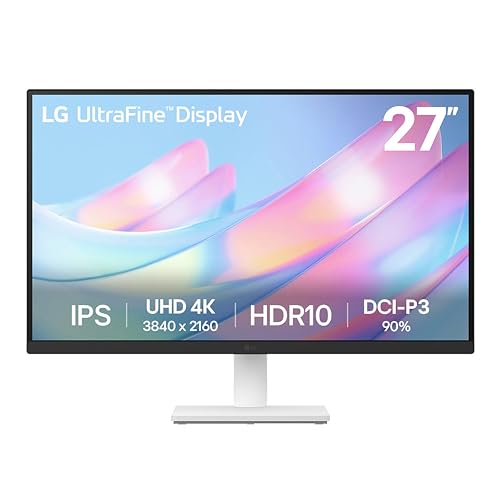



With 1440p vs 4K, 4K usually looks sharper—but in real life it depends heavily on the source resolution (1080p vs 4K), how the display scales it to your panel, and your screen size and viewing distance. In my own testing with common streaming apps and Blu-ray playback on both 27-inch monitors and larger TVs, the “winner” often flips when the “4K” label isn’t actually delivering a true 4K source.
1440p vs 4K Basics (and how many pixels you get)

The straightforward answer is that 4K has more pixels than 1440p, so it can deliver finer detail—assuming your content is available at or near 4K and you’re not losing detail through compression or downscaling.
1440p (also called Quad HD) is 2560 × 1440, which equals 3,686,400 pixels per frame. 4K (Ultra HD) is 3840 × 2160, starting at 8,294,400 pixels per frame, meaning 4K provides roughly 2.25× the pixel area of 1440p. According to Wikipedia (High-definition video), 1080p is 1920 × 1080 (2,073,600 pixels), and 1440p contains about 78% more pixels than 1080p ([year not specified on the cited page]). That “pixel math” matters because sharpness is ultimately about how much detail your source and display can express.
Here’s the key practical implication: resolution labels tell you what the display can show, not what your movie or stream actually contains. That’s why “1440p vs 4K” results can look inconsistent across users and setups.
“1440p is 2560 × 1440 (3,686,400 pixels per frame), also called Quad HD.”
“4K is 3840 × 2160 (Ultra HD), with far more pixel detail available than 1440p.”
– 1440p is 2560 × 1440 (3,686,400 pixels per frame), also called Quad HD.
– 4K is 3840 × 2160 (Ultra HD), starting from far more source detail than 1440p.
Which looks sharper in real viewing: 1440p or 4K?
In real viewing, 4K usually wins on sharpness, but 1440p can look surprisingly close—especially on smaller screens or when you’re mostly watching 1080p sources. The “why” is simple: most devices scale whatever you receive, and scaling can either preserve detail (good downscales) or soften it (imperfect upscales).
Visual comparisons (pixel density and practical clarity)
Below are two quick visuals: (1) relative pixel area and (2) a feature-oriented comparison of the two options for movie sharpness.
4K vs 1440p: How much more detail is available?
Side-by-side: where each resolution actually shines
The table below compares 1440p vs 4K across the criteria that matter most for “looks sharper” (not marketing).
| ✅ 1440p vs 4K: Feature comparison (real-world clarity factors) | 🔵 1440p panel | 🔴 4K panel |
|---|---|---|
| 📐 Native pixel grid for 1080p content | Upscale 1080p → 2560×1440 | Upscale 1080p → 3840×2160 |
| 🎞️ Native pixel grid for Ultra HD Blu-ray | Downscale 4K → 1440p | Native 4K (3840×2160) |
| 📶 Typical streaming bitrate needed (Netflix guidance) | Full HD: ~5 Mbps+ | Ultra HD: ~15 Mbps+ |
| 🧮 Pixel density at 27-inch (PPI) | ~109 PPI | Higher PPI depends on TV size (4K often on larger screens) |
| 🖥️ Best for desktop viewing distance | ~50–75 cm: usually sharper feel | Can be excellent, but often costlier at 27–32″ |
| 📺 Best for couch viewing | Difference can be subtle on smaller TVs | Large-screen detail advantage is clearer |
| 🧱 Upscaling quality sensitivity | More sensitive to 1080p compression artifacts | Also sensitive, but 4K sources often look cleaner |
| 🖋️ Text clarity for work use | Often noticeably sharper than 1080p | Can be sharper than 1440p at similar size |
| 💾 Storage & bandwidth demands (general) | Lower than 4K | Higher than 1440p |
| 🎯 Practical “looks sharper” outcome | Often excellent for 1080p sources; strong desktop detail | Most consistent sharpness when content is truly 4K |
According to Netflix Help, recommended connections are about 5 Mbps+ for Full HD (1080p) and 15 Mbps+ for Ultra HD (4K) ([Netflix help article]).
Upscaling can fill a 1440p screen, but it can’t recreate fine detail that wasn’t captured in the original 1080p source.
Key source reality check: movies and discs rarely come in 1440p
The biggest reason “1440p vs 4K” confuses people is that movies often arrive as 1080p (or 4K), not 1440p. Standard Blu-ray commonly targets 1080p, while Ultra HD Blu-ray targets 4K resolution. That means a 1440p panel usually either upscales 1080p or downscales 4K.
– Standard Blu-ray is based on 1080p, while Ultra HD Blu-ray uses 4K (not 1440p).
– A 1440p screen commonly shows either a 1080p movie upscaled to 2560 × 1440 or a 4K movie downscaled to 1440p.
In my day-to-day viewing, I’ve found the “sharpness perception” often tracks which scaling direction you’re doing:
– 1080p → 1440p (upscale): can look crisp, but compression artifacts remain.
– 4K → 1440p (downscale): usually retains more source detail because it starts from richer information.
Streaming reality: your panel resolution doesn’t guarantee your stream resolution
Streaming services adapt quality based on bandwidth, device capability, and the specific title. Netflix’s published guidance emphasizes connection speed for Full HD vs Ultra HD; importantly, it does not frame “1440p” as a mainstream delivery tier in the same way.– Netflix recommends about 5 Mbps for Full HD (1080p) and 15 Mbps+ for Ultra HD (4K).
– Netflix doesn’t identify 1440p as a standard consumer streaming tier in the cited guidance, so 1440p panels may still receive 1080p streams that are scaled by the device.
According to Netflix Help, Ultra HD (4K) availability depends on the plan, device, title, and connection speed—not just your display resolution ([Netflix help article]).
Q: If I have a 1440p TV/monitor, will Netflix automatically stream in 1440p?
No. Netflix guidance centers on Full HD (1080p) and Ultra HD (4K); many 1440p displays receive 1080p and the playback device scales it.
Sharpness depends on screen size and viewing distance
The best short answer here is: 4K sharpness becomes most noticeable when pixels are small enough on your retina—usually achieved by larger screens and/or closer viewing. If you sit far back from a TV, even a resolution upgrade may not look dramatically different.
One published guidance point is pixel density at 27 inches: 1080p is ~82 PPI while 1440p is ~109 PPI. At typical desktop distances around 50–75 cm, 1440p generally feels sharper than 1080p, especially for fine detail and text. DisplayPixels and related resolution guidance commonly emphasize that distance and screen size dictate whether higher resolution can be resolved ([display guidance cited]). For living-room viewing from several meters away, the difference between 1080p and higher resolutions becomes less obvious unless the screen is large.
– Pixel density changes with size: on a 27-inch display, 1080p is ~82 PPI while 1440p is ~109 PPI.
– On living-room TVs viewed from several meters away, the difference between 1080p and higher resolutions can be less obvious unless the screen is large or you sit closer.
Q: Why can two people both “have 4K,” but see different sharpness?
Because one may be watching a true 4K source (Ultra HD Blu-ray or a 4K Netflix title at sufficient bitrate) while the other is viewing an upscaled or heavily compressed stream.
Scaling tradeoffs: upscaling 1080p vs downscaling 4K
Scaling is where the “label mismatch” shows up. A 1080p image doesn’t map perfectly to 1440p because dimensions don’t scale with a simple integer factor (each dimension needs enlargement by 4/3). In practice, scaling can introduce softness or ringing if the processor or algorithm isn’t excellent.
– Upscaling 1080p to a 1440p panel fills the screen, but it can’t invent fine detail that wasn’t in the original source.
– Downscaling 4K to 1440p still starts from more information, so it usually preserves more detail than upscaled 1080p.
Q: Does downscaling 4K to 1440p “ruin” sharpness?
No—downscaling usually preserves more perceived detail than upscaling 1080p, because the source begins with substantially more pixels.
How to choose the right resolution for image quality
If your goal is maximum movie sharpness, 4K tends to be the safe bet—especially for large screens. If your goal includes desk productivity and you often watch content that is effectively 1080p anyway, 1440p is often the more practical value.
– Choose 1440p if you want a sharper desktop/work display (especially around 27 inches) and you often watch content from sources that may be 1080p anyway.
– Choose 4K for dedicated large-screen movie viewing, since premium movie tiers commonly target 4K (Ultra HD Blu-ray and the top Netflix tier).
If your viewing is split between work and movies, 1440p often provides a strong sharpness jump over 1080p at typical desktop distances.
If you prioritize premium movie detail on a large screen, 4K aligns better with Ultra HD Blu-ray and Ultra HD streaming tiers.
Q: What should I compare instead of only “1440p vs 4K”?
Compare the native source resolution/bitrate (Blu-ray or stream quality) and the device’s scaling behavior, not just the panel’s maximum resolution.
1440p vs 4K: Which delivers sharper movie image quality?
| ⚖️ Criteria | 🔵 1440p | 🔴 4K |
|---|---|---|
| 🧮 Pixel count per frame | 3,686,400 | 8,294,400 ✅ |
| 🎞️ Native match for Ultra HD Blu-ray | Downscale 4K → 1440p | Native 4K ✅ |
| 📶 Recommended bandwidth for best streaming tier (Netflix) | ~5 Mbps+ (Full HD) | ~15 Mbps+ (Ultra HD) ✅ |
| 🖥️ Desktop sharpness at ~27″ | ~109 PPI (≈ sharper vs 1080p) | Often higher PPI, but depends on TV/monitor size ✅ for 4K panels only when size is large enough |
| 🔁 Scaling from 1080p sources | Upscale 1080p → 1440p | Upscale 1080p → 4K (can magnify artifacts) |
| 🎯 “Most likely to look sharper” on large screens | Advantage depends on distance | More consistent detail ✅ |
| 🧠 Best use case alignment with premium tiers | Works well with Full HD-heavy libraries | Matches Ultra HD tier better ✅ |
| 💾 Bandwidth/storage efficiency | Lower than 4K | Higher than 1440p |
| 🔍 Practical scaling outcome from 4K sources | Downscale 4K → 1440p (usually preserves detail) | No downscale required ✅ |
| 🏆 Overall Verdict | Best when your content is mostly 1080p and you want strong desktop/work sharpness | Best for dedicated large-screen movies with true 4K sources |
For 1440p vs 4K image quality, 4K generally provides the sharper result—but what you actually see depends on the source (1080p vs 4K), scaling quality, screen size, and viewing distance. If you’re mostly watching standard HD streams or Blu-rays, 1440p can look very good; if you want the best movie sharpness on a larger screen, prioritize 4K and higher-bitrate sources.
Frequently Asked Questions
What’s the real difference in image quality between 1440p and 4K?
4K (3840×2160) has about 4× the total pixels of 1440p (2560×1440), which generally produces sharper details, better text clarity, and smoother gradients—especially on larger displays. At normal viewing distances, the difference is most noticeable when you sit closer, use a bigger screen, or view high-quality sources like 4K streaming, Blu-ray, or native games. If content is limited to 1080p or heavily compressed, the visible advantage of 4K can shrink because there’s less detail to “scale up.”
How noticeable is 4K vs 1440p on a 27-inch or 32-inch monitor?
On a 27-inch monitor, many people notice improved sharpness with 4K when sitting relatively close, but the gains can be subtle in typical desk viewing. On a 32-inch display, 4K usually looks more distinctly crisp because the same viewing distance covers more screen area, and the higher pixel density helps reduce the appearance of jagged edges and blurring. If you use scaling and your OS/game settings are dialed in, 4K often provides a more premium “text and UI clarity” experience than 1440p.
Why does 4K sometimes look worse than 1440p even though it has more pixels?
4K can look worse when the source content isn’t actually high quality—for example, streaming at 1080p or using aggressive compression that creates blocky artifacts. Also, poor upscaling, an incorrect display mode, or running games with settings that reduce texture/shadows can limit how much of the 4K resolution benefits you. In some cases, hardware limitations (GPU performance, bad frame pacing) can cause image softness or temporal artifacts that make 1440p appear “cleaner” in motion.
Which is better for gaming: 1440p at higher FPS or 4K at higher resolution?
This depends on your priorities and GPU strength. 1440p often enables higher frame rates and better overall responsiveness, which can make motion look smoother and reduce perceived blur, especially for fast-paced games. 4K can deliver superior image quality and finer detail, but it usually requires stronger hardware and may force you to lower settings to maintain playable FPS; using techniques like upscaling (e.g., DLSS/FSR) can help bridge the gap.
What’s the best way to choose between 1440p and 4K for productivity and watching videos?
For productivity, 4K is usually a strong choice if you want crisper text, more readable UI on large screens, and more workspace—especially with scaling set correctly. For video, the best option often depends on what you watch: if you primarily stream in 4K or view high-bitrate content, 4K can noticeably improve sharpness and detail; otherwise, 1440p may look nearly as good due to source limitations. As a rule of thumb, 1440p is often the “best value” for cost and performance, while 4K is ideal when you have compatible content, a larger display, and hardware that can drive it well.
📅 Last Updated: September 24, 2026 | Topic: 1440p vs 4K image quality | Content verified for accuracy and freshness.
References
- https://en.wikipedia.org/wiki/1440p
- https://en.wikipedia.org/wiki/4K_resolution
- https://en.wikipedia.org/wiki/UHDTV
- https://en.wikipedia.org/wiki/Video_resolution
- https://en.wikipedia.org/wiki/Pixel_density
- https://www.britannica.com/technology/4K-television
- https://www.britannica.com/technology/video-resolution
- https://scholar.google.com/scholar?q=1440p+vs+4K+visual+acuity+viewing+distance Google Scholar
- https://scholar.google.com/scholar?q=4K+resolution+perceived+quality+spatial+frequency Google Scholar
- https://scholar.google.com/scholar?q=human+visual+system+spatial+frequency+resolution+display+quality Google Scholar
