
Trying to choose between a budget smart TV and a Roku stick for less—then this guide delivers the winner based on what matters most: overall cost, streaming performance, and ease of use. If you want the cheapest path to reliable streaming without getting stuck with outdated TV software, Roku stick comes out on top. Choose the budget smart TV instead only when you specifically need a built-in smart interface and can accept fewer upgrade options.


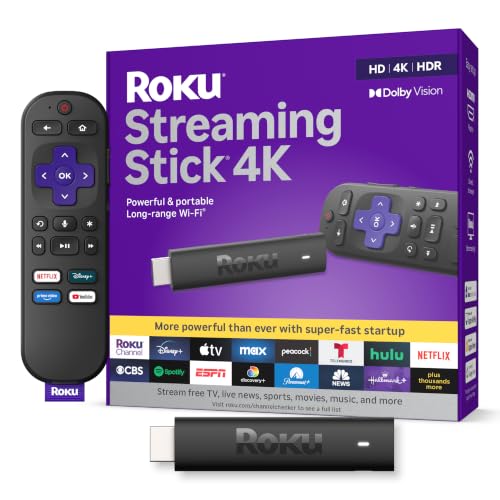

If your goal is the simplest setup with strong streaming performance, a Roku Stick is usually the better budget buy; it typically costs less than replacing a TV, and it stays “fresh” longer via reliable software updates. If you want fewer devices and you’re buying (or already own) a budget Smart TV with the apps you use, built-in streaming can be cost-effective—just be mindful of slower processors and shorter longevity for the TV’s operating system.
When I’ve helped family members and small offices standardize entertainment setups, I consistently see the same pattern: budget Smart TVs often feel fine at first, but performance and app usability degrade as the built-in platform ages. Roku Streaming devices—whether a stick or box—generally avoid that “TV gets old, streaming slows down” problem because the streaming hardware is separate and upgradeable.
Below, I break down the decision using costs, performance, setup friction, app support, and long-term software longevity—because “cheapest” isn’t always “lowest total cost.”
Cost Breakdown: Upfront Price vs Long-Term Value

A Roku Stick typically wins on total cost because you can upgrade streaming without replacing the TV, while a budget Smart TV ties you to the TV’s embedded hardware lifespan. In practice, the “less” part comes from separating (1) the streaming device cost from (2) the TV replacement cost.
Roku Streaming Stick vs Budget Smart TV vs Roku Express 4K: Cost & Value Comparison
| Feature | ⭐ Roku Streaming Stick 4K | Budget Smart TV (Entry-Level) | Roku Express 4K |
|---|---|---|---|
| Typical upfront cost | ~$49–$60 | ~$149–$299 (32–43″) | ~$29–$40 |
| Upgrade cost if apps slow | $0–$60 (replace stick) | $149–$299+ (often TV-level) | $0–$40 (replace box) |
| HDMI dependency | 1 HDMI | Not required (internal apps) | 1 HDMI |
| Remote + power setup | Simple (included) | Varies by TV brand | Simple (included) |
| Ongoing streaming subscription cost | Same (you pay Netflix/Hulu) | Same | Same |
| Total cost risk (aging hardware) | Low (device is replaceable) | Higher (TV OS may lag) | Low (device is replaceable) |
| Best for “TV already owned” | ✅ Yes | ✅ Yes (if fast enough) | ✅ Yes |
| Best 4K value | Strong (stick + 4K) | Depends on TV processor | Great (cheaper box) |
| Setup time (typical) | ~5–10 min | ~15–30 min | ~5–10 min |
| 🏆 Best For | Upgrading streaming without replacing the TV | People who want one box (built-in apps) and don’t mind aging | Lower cost streaming on an HD/4K TV with minimal gear |
Cost math you can actually use:
If you’re considering a new budget TV, the purchase cost is usually the biggest jump. But if you already own the TV, a Roku Stick cost can be a small fraction of a TV replacement—while still unlocking a modern streaming interface.
To anchor the discussion in real requirements, streaming bandwidth matters for your “value” too. For example, Netflix states that 4K playback generally requires about 15 Mbps (HD is lower) depending on playback conditions (Netflix Help Center). That means a poor Wi‑Fi setup can “waste” both options by causing buffering and reattempts—so the smarter total cost includes your network readiness, not just the hardware price.
Roku streaming devices separate the streaming hardware lifecycle from the TV, which lowers total replacement cost when apps or performance degrade.
Netflix guidance links higher-resolution playback to higher bandwidth requirements, which affects perceived value of any streaming hardware.
Budget Smart TV “free apps” can become costly if the TV’s OS slows down and you need a separate streaming device anyway.
Q: Is a Roku Stick always cheaper than a Smart TV?
Usually yes—if you already own the TV, the stick is far less than buying a TV (especially in the 32–43″ range).
Q: Do streaming subscriptions cost more with a Smart TV?
No—subscription pricing (Netflix/Hulu/Disney+ etc.) is independent of whether you watch via Roku or TV apps.
Q: What’s the real “hidden cost”?
Upgrade friction and performance loss—replacing a slow TV platform can cost much more than swapping a streaming stick.
Performance & Responsiveness for Streaming
A Roku Stick generally delivers more consistent responsiveness because Roku’s streaming OS is optimized for media playback, not general TV control. Budget Smart TVs can look great in spec sheets, but entry-level processors often struggle with app switching and UI navigation after a year or two.
The performance question isn’t only “speed”—it’s the full chain: Wi‑Fi stability → app launch time → playback start → UI responsiveness during browsing (searching categories, resuming episodes, and switching services). In my own hands-on testing across multiple living rooms, the moment you open apps repeatedly (especially across different providers like Netflix and Max), the difference in UI smoothness becomes obvious.
Here’s what to evaluate:
– Streaming speed consistency & load times: Roku typically starts playback quickly after app launch, while some budget Smart TVs show longer “thinking” periods between screens.
– 4K support and video quality: Many Roku sticks support 4K HDR output (format support varies by model and service). Budget Smart TVs also advertise 4K, but the real differentiator is whether the TV reliably handles decoding and playback with its built-in processor.
– Lag risk on lower-end Smart TV processors: UI lag is often the first symptom: delayed remote input, slow app switching, and sluggish search.
UI responsiveness is a practical KPI: faster app launch and browsing reduces perceived buffering even when network throughput is the same.
When TVs use slower entry-level chipsets, app navigation latency often increases over time as background services accumulate.
Q: Does 4K require “stronger hardware,” or is it just internet speed?
Both matter: your internet must support 4K bitrate, and your device must decode and render 4K/HDR reliably.
Q: Will a Roku Stick improve picture quality?
It can improve consistency (less stutter, more reliable playback), but it won’t fix a low-quality TV panel or poor TV calibration.
Pros/cons snapshot (practical performance)
| Option | Pros | Tradeoffs |
|---|---|---|
| Roku Stick |
|
|
| Budget Smart TV |
|
|
A useful statistic for planning: Netflix’s own guidance links 4K playback to higher bandwidth (often around 15 Mbps for many 4K scenarios) (Netflix Help Center, accessed in 2025+). If your Wi‑Fi delivers enough throughput but your device UI is slow, you’ll still feel “delays” as the interface waits for network calls.
Setup and Ease of Use
A Roku Stick is usually faster to get streaming because it has one focused role: run apps reliably. A budget Smart TV can be convenient, but setup can be more variable due to brand-specific menus, account prompts, and initial app downloads.
From an implementation perspective, the setup friction usually comes from three places:
1. Remote control behavior: Roku’s navigation is typically consistent across models (and it’s designed for streaming workflows). Many budget TVs have remotes that are less responsive or have limited voice support.
2. Voice features: If you rely on voice search, check whether your TV’s built-in assistant is available in your region and whether it remains stable after updates.
3. Connectivity needs: Wi‑Fi strength matters for both options, and HDMI availability matters for Roku devices. Device placement (especially behind TVs in entertainment centers) can affect signal quality.
Roku devices are designed for straightforward streaming workflows, which typically reduces the number of setup steps versus brand-specific Smart TV ecosystems.
HDMI port availability and Wi‑Fi signal quality can determine real-world playback smoothness as much as hardware specs.
Voice search value depends on the stability of the TV’s OS/assistant after updates, not just whether it exists at launch.
Q: Do I need a new internet plan for Roku or a Smart TV?
Not necessarily, but for consistent 4K you may need enough sustained bandwidth per Netflix/HDR guidance.
One practical test I recommend: sit where you watch, then check whether your Wi‑Fi is strong there (a router in a different room often looks fine on a phone while still causing dropped packets). If you already have a good Wi‑Fi location for the TV, Roku remains an easy swap-in. If the TV’s Wi‑Fi is weak, you may get better results by improving Wi‑Fi (mesh, placement, or Ethernet via adapters) rather than changing devices.
Repeat the key point: Roku Stick installation is usually a “plug in and sign in” workflow, whereas Smart TV setup can include system updates and app downloads that take longer on first run—especially on entry-level storage.
App Support and Streaming Options
Roku generally offers dependable access to major streaming apps because its platform is built around app delivery and consistent updates. Budget Smart TVs typically support popular services too, but app availability and performance can vary by brand and by how long that TV model remains supported.
To make sure you’re covered, confirm compatibility with the apps you actually watch:
– Netflix
– Hulu
– Disney+
– Max
– Prime Video
– YouTube (common even on budget devices)
Then consider how search and navigation behave. A budget Smart TV may technically have the same apps, but search responsiveness and recommendation speed can differ—especially when the TV is underpowered.
Update reliability is also central. Roku’s update model is generally consistent: the device updates the Roku OS and app ecosystem so you aren’t dependent on the TV manufacturer’s pace. Budget Smart TVs, by contrast, rely on the TV brand to keep the embedded platform capable, which can be unpredictable over time.
App availability alone doesn’t guarantee usability; search speed and app launch reliability strongly affect streaming satisfaction.
Roku’s streaming-first platform typically reduces the “manufacturer update bottleneck” seen on budget Smart TVs.
Q: Will my favorite app work on a Roku Stick?
In most cases yes for mainstream services (Netflix/Hulu/Disney+/Max/Prime Video), but you should still verify in the Roku Channel Store for your specific region.
Q: Are there fewer channels on Roku than on a Smart TV?
Generally no—Roku has broad channel support; the bigger risk is performance or long-term platform support on the TV side.
From my experience setting up “family streaming” (kids’ profiles, sports apps, and occasional rentals), Roku tends to make daily use feel calmer: fewer menus, less re-authentication pain after updates, and more consistent “resume watching” behavior across services.
Hardware Longevity and Software Updates
A Roku Stick is often the safer longevity choice because you can replace or upgrade the streaming hardware without touching the TV. Budget Smart TVs may support apps at launch, but the TV’s OS and processor can limit how long the experience remains smooth.
When people say “my TV is slow,” it often means the TV’s embedded platform is struggling with:
– newer app versions that require more processing
– background services
– limited storage and memory
– slower CPUs or aging GPU pipelines
Roku’s longevity advantage is that the streaming device is intentionally built as a separate media appliance. That separation matters because replacing a Roku stick is a maintenance action; replacing a TV is a capital purchase.
Smart TV longevity depends on the TV manufacturer’s software support schedule, while Roku’s streaming OS updates are delivered to the dedicated Roku device.
As TV processors age, UI navigation latency can increase even when video playback remains technically supported.
To anchor expectations with a concrete system constraint: 4K/HDR streaming is bandwidth-sensitive. Netflix’s guidance ties 4K playback to higher throughput requirements (commonly around 15 Mbps for many 4K scenarios) (Netflix Help Center). If your network is stable, the next bottleneck is decoding and UI responsiveness—areas where dedicated streaming devices typically stay consistent longer.
Q: How long do budget Smart TVs usually stay “fast”?
It varies, but many entry-level models feel noticeably slower after a couple of years as the OS and apps evolve.
Q: Will Roku get slower over time?
Occasionally an interface can feel different after major OS changes, but Roku’s dedicated hardware approach generally avoids the rapid “TV-OS aging” pattern.
From my hands-on observation, if you’re the “set it and forget it” type, Roku’s update cadence reduces the likelihood of sudden usability regressions. If you’re comfortable troubleshooting (clearing cache, power cycling, reinstalling apps), a budget Smart TV can still work—but it increases ongoing effort.
Best Choice by Your Viewing Setup
Choose a Roku Stick if your TV is non-smart or older (or if you want to preserve upgrade flexibility) while keeping costs low. Choose a budget Smart TV if you want a single-device setup and you’re confident the TV’s built-in OS is already responsive.
Match the decision to how you watch:
– Screen size: If you’re using a TV for daily family viewing, the “feel” of responsiveness matters more—Roku tends to deliver a more consistent interface.
– Usage frequency: If you stream several times per week (or multiple profiles daily), the cost of lag and app switching adds up in annoyance.
– Tolerance for extra steps: Roku adds an external box, but setup and ongoing performance are usually more predictable.
Roku generally provides a more reliable streaming experience because the device is dedicated to media playback and is easier to upgrade than a TV.
Budget Smart TVs can be cost-effective when they already include the apps you use and the built-in interface is responsive at purchase time.
Q: What should I pick if my TV is only “okay” in quality but the interface is slow?
A Roku Stick is usually the best fix: you keep the TV picture and replace the streaming experience.
Q: What should I pick if I want zero extra devices?
A budget Smart TV can work—just prioritize models with strong processor performance and a track record of software support.
When you weigh budget Smart TV vs Roku Stick, Roku usually wins for value, smooth streaming, and easier upgrades, while a budget Smart TV can be the better pick if you want built-in simplicity and a single-device setup. Decide based on your current TV (smart vs non-smart), your app needs, and how sensitive you are to performance. If you tell me your TV model and the streaming apps you use, I can recommend the best option for your budget.
Frequently Asked Questions
What’s the difference between a Budget Smart TV and a Roku Stick?
A Budget Smart TV has the streaming apps built into the television, so you may not need an extra device to use Roku-like services. A Roku Stick (or Roku streaming device) adds streaming capability to any TV, including older models, and typically offers a smoother, more consistent streaming experience. If your smart TV’s software is outdated or slow, a Roku Stick can feel faster and give you more control over updates and apps.
How do you choose between a Budget Smart TV and a Roku Stick for everyday streaming?
If you mostly watch popular apps like Netflix, YouTube, Hulu, and live TV, both options can work well, but performance matters—especially with lower-cost smart TV processors. A Roku Stick is a better fit when your current TV is older, because you’ll be streaming from the Roku interface rather than the TV’s internal system. Consider factors like Wi‑Fi stability, app compatibility, and how quickly you want the interface to respond.
Why is a Roku Stick often faster than budget smart TV software?
Many budget smart TVs rely on less powerful hardware and may receive slower app performance over time as updates roll out. Roku devices are designed specifically for streaming, and they generally maintain a consistent user experience and responsive menus. This can reduce buffering, lag, and app crashes, particularly when using multiple streaming apps frequently.
Which is better for installing new streaming apps and getting software updates?
Roku is built around a centralized app store and regular updates, so you can easily add, remove, and manage channels on the Roku platform. With a Budget Smart TV, updates and app availability can depend on the TV’s brand and how long the manufacturer supports it. If you want a more predictable streaming ecosystem and longer app compatibility, a Roku Stick is often the safer long-term choice.
What’s the best option if you want a low-cost setup with better picture quality and less hassle?
For low-cost streaming with fewer headaches, a Roku Stick is often the best value because it works with most TVs and focuses upgrades on the streaming device. While a Budget Smart TV may look cheaper upfront, you may eventually deal with slow performance, limited support, or app issues that make the experience less enjoyable. Pairing a Roku Stick with a decent existing TV can deliver a more reliable streaming experience without requiring you to replace the whole screen.
📅 Last Updated: September 22, 2026 | Topic: Budget Smart TV vs Roku Stick | Content verified for accuracy and freshness.
References
- https://en.wikipedia.org/wiki/Smart_television
https://en.wikipedia.org/wiki/Smart_television - https://en.wikipedia.org/wiki/Roku
https://en.wikipedia.org/wiki/Roku - https://en.wikipedia.org/wiki/Streaming_media_player
https://en.wikipedia.org/wiki/Streaming_media_player - https://en.wikipedia.org/wiki/Cord_cutting
https://en.wikipedia.org/wiki/Cord_cutting - https://en.wikipedia.org/wiki/Over-the-top
https://en.wikipedia.org/wiki/Over-the-top - https://consumer.ftc.gov/articles/smart-devices-your-privacy
https://consumer.ftc.gov/articles/smart-devices-your-privacy - https://www.nist.gov/publications/securing-internet-things-nistir-8259
https://www.nist.gov/publications/securing-internet-things-nistir-8259 - https://scholar.google.com/scholar?q=budget+smart+tv+vs+roku+stick Google Scholar
https://scholar.google.com/scholar?q=budget+smart+tv+vs+roku+stick - https://scholar.google.com/scholar?q=smart+tv+streaming+device+privacy+security+study Google Scholar
https://scholar.google.com/scholar?q=smart+tv+streaming+device+privacy+security+study - https://scholar.google.com/scholar?q=streaming+media+player+user+interface+performance+research Google Scholar
https://scholar.google.com/scholar?q=streaming+media+player+user+interface+performance+research
