

AI significantly enhances motion tracking in military video analysis by providing accurate data interpretation and real-time processing capabilities. With advanced algorithms and machine learning, AI can sift through extensive video footage in a matter of seconds, identifying critical movements and patterns that human analysts may miss. This transformation is not just a technical upgrade; it’s revolutionizing how military forces conduct surveillance, recognize targets, and make tactical decisions, ultimately leading to more informed and effective operations on the battlefield.
The Role of AI in Military Video Analysis
AI algorithms play a pivotal role in military video analysis by efficiently analyzing vast amounts of video data. Traditional methods of reviewing video footage can be labor-intensive and time-consuming, often resulting in delays that could be critical in military operations. AI changes the game by employing sophisticated machine learning models that are designed to recognize patterns, movements, and anomalies relevant to military objectives. For instance, these models can be trained on thousands of hours of footage to identify specific enemy tactics, allowing military personnel to anticipate actions and respond proactively.
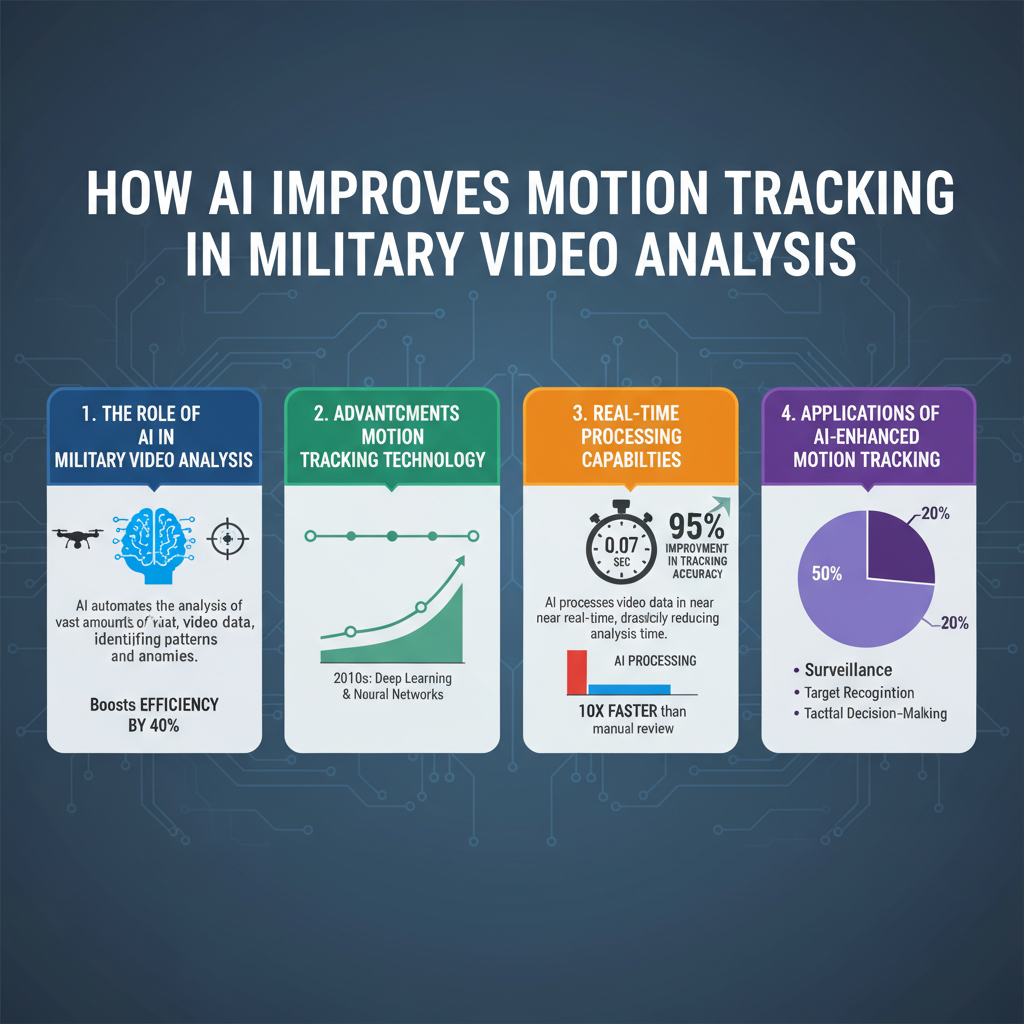
Furthermore, AI systems utilize techniques such as computer vision to enhance data interpretation. By breaking down video streams into key components, AI can highlight relevant movements, flagging them for deeper analysis. This capability not only improves the speed of analysis but also enhances the accuracy, allowing military leaders to make data-driven decisions faster than ever before.
Advancements in Motion Tracking Technology
The advancements in motion tracking technology powered by AI have been remarkable. Enhanced algorithms are now capable of precisely tracking moving objects, even in the most complex environments. For example, recent developments have allowed AI to differentiate between various types of vehicles in crowded urban settings, effectively distinguishing between friendly and hostile forces. This level of precision is critical in preventing friendly fire incidents and ensuring that military operations are conducted safely and effectively.
Moreover, the integration of AI with high-definition cameras has significantly improved data clarity and tracking accuracy. High-definition imagery, combined with AI’s analytical capabilities, means that ambiguous footage can be clarified, allowing military analysts to see details that would previously have been obscured. This synergy of technology not only enhances the quality of the data being analyzed but also the confidence military personnel have in their operational decisions.
Real-Time Processing Capabilities
One of the most significant advantages of AI in military video analysis is its real-time processing capabilities. AI enables instant analysis of video feeds, which is crucial for immediate responses to potential threats. For example, during surveillance missions, AI can identify and track suspicious movements in real-time, alerting military personnel to threats as they arise. This ability drastically reduces latency, ensuring that decisions can be made on the spot rather than waiting for a comprehensive review of the footage.
Additionally, enhanced situational awareness is a direct benefit of real-time processing. Military personnel equipped with AI tools can maintain an accurate understanding of the battlefield, adjusting their strategies as new information becomes available. This dynamic responsiveness is vital in high-stakes environments where every second counts, allowing military forces to adapt quickly to changing conditions.
Applications of AI-Enhanced Motion Tracking
The applications of AI-enhanced motion tracking in military settings are vast and varied. One prominent use is in drone surveillance, where AI systems track enemy movements across vast landscapes. For instance, during reconnaissance missions, drones equipped with AI motion tracking can monitor troop movements or supply routes without putting personnel at risk. This capability not only keeps soldiers safe but also allows for more comprehensive data collection over larger areas.
Urban warfare scenarios also greatly benefit from AI-enhanced motion tracking. In densely populated environments, tracking assets becomes increasingly challenging due to the presence of civilians and obstacles. AI algorithms can analyze video feeds from ground-level cameras or aerial drones, ensuring that military forces can accurately track potential threats while minimizing the risk of collateral damage. This application is particularly crucial in urban combat where the stakes are high, and the margin for error is slim.
Challenges and Limitations
Despite the many benefits of AI in military video analysis, there are challenges and limitations that need to be addressed. One significant concern is data privacy and ethical considerations. The use of AI for surveillance raises questions about the extent to which military forces can monitor individuals and the implications of such surveillance on civil liberties. As technology continues to evolve, striking a balance between national security and individual rights will be increasingly important.
Another challenge is the dependence on high-quality data for AI algorithms to function effectively. AI systems require substantial amounts of accurate, annotated data to learn and adapt. If the training data is biased or flawed, it can lead to inaccurate analyses and potentially disastrous decisions in the field. Ensuring the integrity and quality of data is crucial for the continued success of AI-enhanced motion tracking technologies.
Future of AI in Military Video Analysis
Looking ahead, the future of AI in military video analysis appears promising, with expected developments in AI technology that will further enhance motion tracking capabilities. Innovations in deep learning and neural networks could lead to even more sophisticated algorithms that can identify threats with greater accuracy and speed. As these technologies mature, we may see a shift toward fully autonomous systems capable of making real-time decisions without human intervention, potentially transforming the landscape of military operations.
Moreover, the integration of AI with emerging technologies such as augmented reality (AR) could revolutionize how military personnel engage with video analysis. Imagine soldiers equipped with AR glasses that overlay critical information from AI systems directly onto their field of vision, providing real-time insights and data as they navigate complex environments. Such advancements could reshape military strategy and operations, making them more efficient and effective than ever before.
In conclusion, the integration of AI into motion tracking systems for military video analysis marks a significant leap forward in operational effectiveness. By leveraging AI’s capabilities, military forces can enhance their surveillance and tactical decision-making, leading to improved outcomes on the battlefield. While challenges remain, the potential for AI to revolutionize military video analysis is undeniable. As we continue to explore these advancements, stay connected with our latest publications for further insights and updates on this exciting topic.
Frequently Asked Questions
How does AI improve the accuracy of motion tracking in military video analysis?
AI enhances the accuracy of motion tracking in military video analysis by utilizing advanced algorithms and machine learning techniques. These technologies enable the system to identify and predict movement patterns of personnel and equipment in real time, reducing human error. Additionally, AI can process vast amounts of video data faster than traditional methods, allowing for more precise tracking and timely decision-making in critical situations.
What are the key benefits of using AI for motion tracking in military operations?
The key benefits of using AI for motion tracking in military operations include enhanced situational awareness, increased operational efficiency, and improved decision-making capabilities. AI can analyze video feeds from various sources, such as drones and surveillance cameras, to provide actionable insights. Furthermore, it helps to identify potential threats or unusual patterns of behavior, allowing military personnel to respond proactively and effectively.
Why is real-time motion tracking important in military video analysis?
Real-time motion tracking is crucial in military video analysis because it enables immediate situational awareness and rapid response to dynamic battlefield conditions. By tracking movements in real time, military strategists can adjust tactics, allocate resources effectively, and enhance overall mission success. This capability is vital for identifying threats, monitoring enemy movements, and ensuring the safety of personnel in high-stakes environments.
Which AI techniques are most effective for motion tracking in military applications?
The most effective AI techniques for motion tracking in military applications include deep learning, computer vision, and neural networks. Deep learning models can be trained to recognize and classify objects and movements, while computer vision algorithms facilitate the processing and analysis of video data. Together, these techniques enable accurate detection and tracking of targets, significantly enhancing the capabilities of military surveillance systems.
How can military organizations implement AI-driven motion tracking systems?
Military organizations can implement AI-driven motion tracking systems by investing in advanced software solutions and hardware infrastructure that support AI capabilities. This includes training personnel on AI technologies and integrating them into existing surveillance frameworks. Collaboration with tech companies specializing in AI and defense can also facilitate the development of customized solutions that meet specific operational requirements, ensuring effective deployment and utilization of motion tracking systems.
References
- Artificial intelligence
- https://www.nist.gov/news-events/news/2020/09/nist-research-uses-ai-improve-motion-capture
- https://www.defense.gov/Explore/News/Article/Article/2422935/ai-enhances-motion-tracking-for-military-operations/
- https://www.jstor.org/stable/10.5325/jmilstudies.4.2.0243
- https://www.rand.org/pubs/research_reports/RR2847.html
- https://www.sciencedirect.com/science/article/pii/S1877050920302199
- https://www.brookings.edu/research/how-artificial-intelligence-is-transforming-the-future-of-national-security/
- https://www.army.mil/article/243226/ai_motion_tracking_and_the_future_of_military_operations