
Smart displays equipped with AI technology significantly reduce power consumption by optimizing performance based on user behavior and environmental conditions. By intelligently managing energy usage, these devices not only enhance efficiency but also contribute to a more sustainable future for smart technology. In this article, you’ll discover how intelligent algorithms work to lower power consumption, making your smart displays more energy-efficient and environmentally friendly.
Understanding Power Consumption in Smart Displays
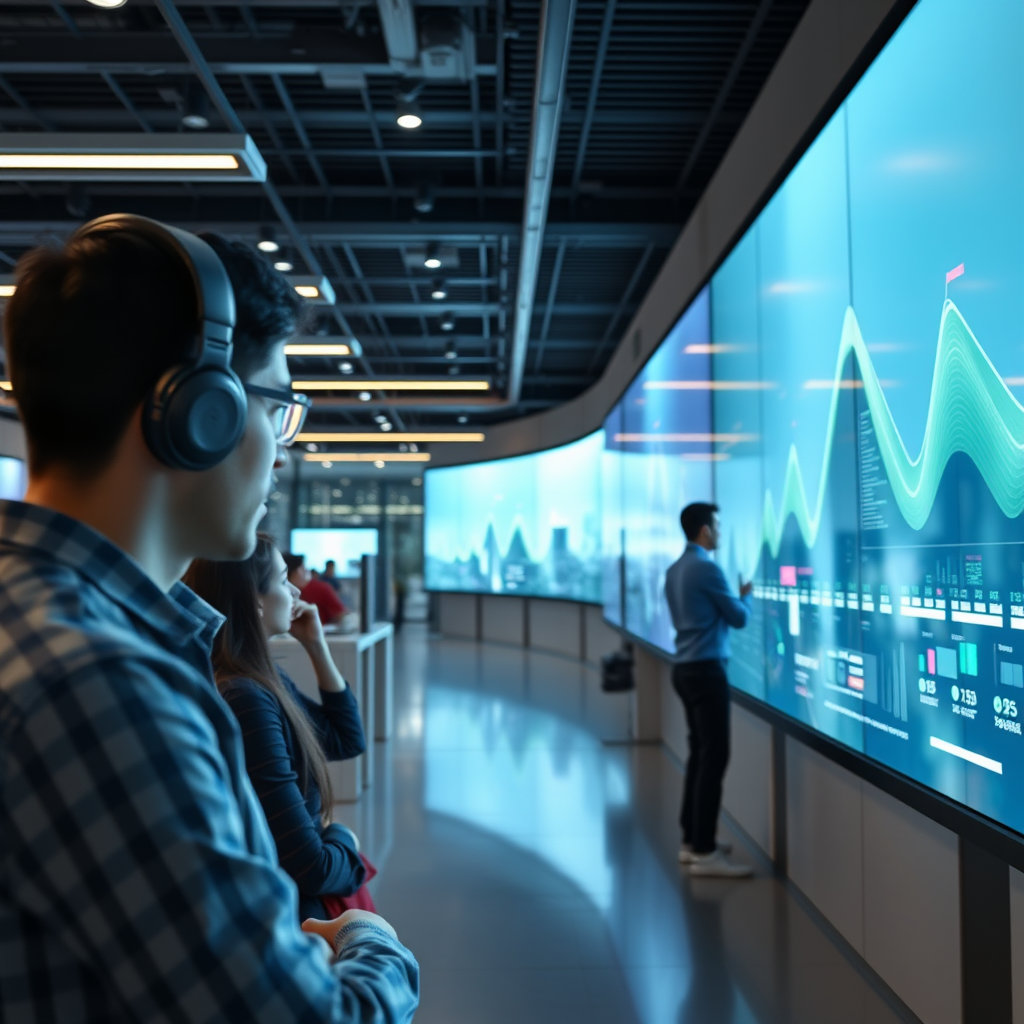
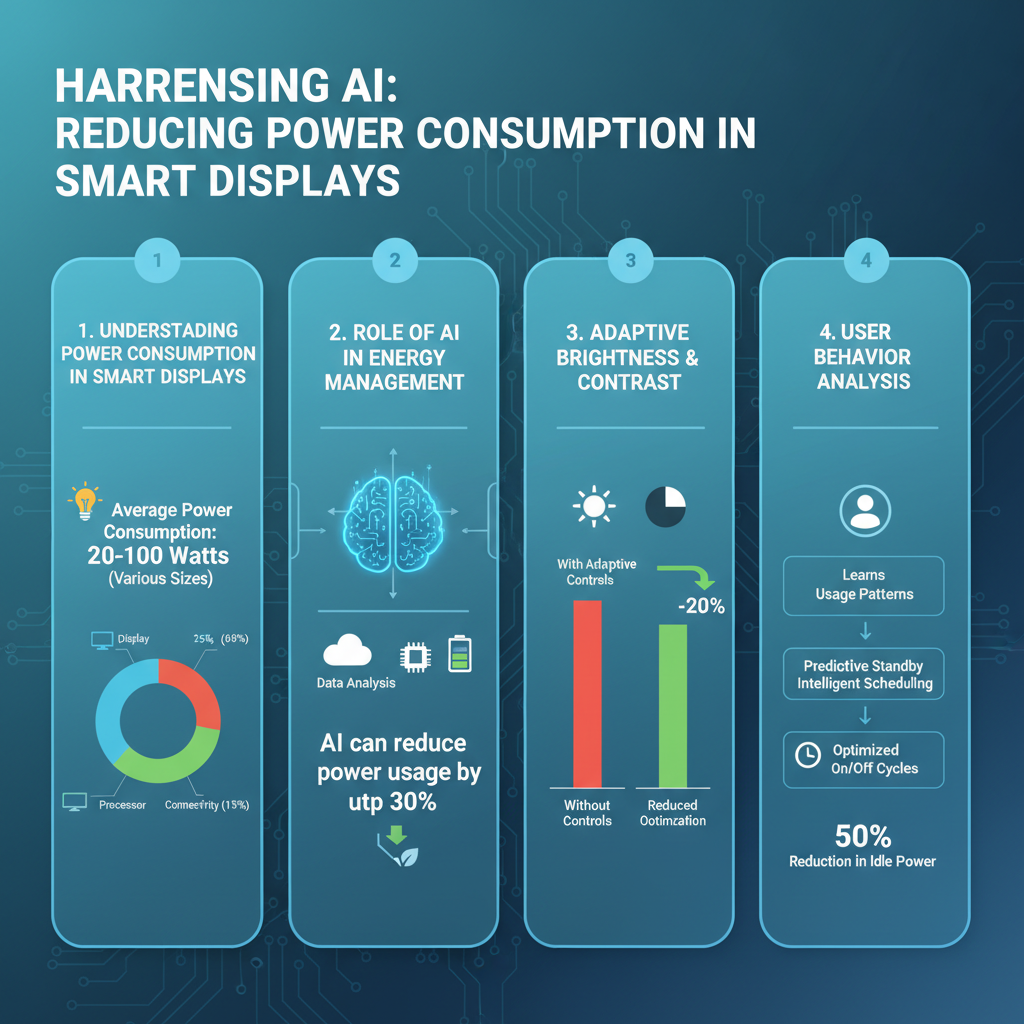
Smart displays, which combine visual interfaces with intelligent functionality, are becoming staples in homes and offices alike. However, like any electronic device, they come with their own power consumption challenges. Typically, a smart display can consume anywhere from 20 to 100 watts, depending on its size, brightness, and the tasks it performs. As we become more reliant on these devices for various functions—be it streaming services, video calls, or smart home management—understanding their power consumption is crucial.
Energy efficiency in digital devices is essential not only for reducing electricity bills but also for minimizing the overall environmental footprint. With rising energy costs and increased awareness of climate change, consumers are looking for ways to reduce their energy consumption without sacrificing functionality. This is where AI comes into play, offering smart solutions that make displays not just smarter, but also greener.
Role of AI in Energy Management
AI algorithms serve as the backbone of energy management in smart displays. These algorithms continuously monitor usage patterns, learning how and when users interact with their devices. For example, if a user typically watches TV in the evening, the AI can prepare the display for optimal performance during that time while conserving energy at other times.
By adjusting settings such as brightness, resolution, and connectivity based on real-time data, AI ensures that power is used efficiently. This dynamic adjustment means that instead of running on high power at all times, smart displays can scale down their energy needs when full capability isn’t required. This not only saves energy but also extends the lifespan of the display itself.
Adaptive Brightness and Contrast Control
One of the most noticeable ways AI lowers power consumption in smart displays is through adaptive brightness and contrast control. Smart displays are equipped with ambient light sensors that detect the lighting conditions in the environment. If the room is brightly lit, the display can automatically increase brightness for better visibility. Conversely, in dim lighting, the display can reduce brightness, which conserves energy significantly.
This automatic adjustment prevents unnecessary energy use, ensuring the display is only as bright as it needs to be at any given moment. By employing this technology, users can enjoy a better viewing experience while also knowing they are contributing to energy savings.
User Behavior Analysis
Another significant advantage of AI in smart displays is its ability to analyze user behavior. AI systems can track how individuals use their displays, identifying patterns in interaction. For instance, if a user frequently lowers the volume or adjusts the brightness during specific times of the day, the AI can learn these preferences and set up automatic adjustments accordingly.
Tailoring display settings based on individual usage habits not only provides a personalized experience but also saves energy. For example, if a user rarely uses the display in the morning, the AI can automatically enter a low-power mode during that time, ensuring that energy is not wasted when the device is not in active use.
Integration with Smart Home Systems
AI-enabled smart displays don’t just operate in isolation; they can integrate seamlessly with other smart devices in a connected home ecosystem. This interaction allows for coordinated energy-saving strategies across various devices. For instance, when a user leaves home, the smart display can communicate with smart lights and thermostats to optimize energy usage throughout the house.
Imagine walking out the door and having your smart display automatically dim its brightness while sending a command to other connected devices to enter energy-saving modes. Such synchronization enhances overall efficiency, and users can manage their home’s energy consumption with ease.
Future Innovations in AI and Energy Efficiency
The future looks promising for AI and energy efficiency in smart displays. Emerging technologies, such as machine learning and advanced analytics, are paving the way for even more sophisticated energy management systems. For instance, upcoming innovations may allow displays to predict user behavior more accurately based on patterns observed over time, enabling even more precise adjustments to power consumption.
Furthermore, as renewable energy sources become more integrated into our daily lives, AI could play a pivotal role in managing energy usage based on availability. Imagine a smart display that not only saves energy but also utilizes solar power when available, making it even more sustainable.
The possibilities are endless, and predictions suggest that AI advancements will continue to enhance smart display technology, leading to even greater energy efficiencies and smarter devices.
With the integration of AI, smart displays are not only becoming more user-friendly but also significantly more energy-efficient. By leveraging intelligent systems to manage power consumption, these devices help consumers save on energy bills and contribute to a greener planet. Explore the potential of AI in transforming your smart display experience today!
Frequently Asked Questions
How does AI optimize power consumption in smart displays?
AI optimizes power consumption in smart displays by using machine learning algorithms to analyze user behavior and environmental conditions. These algorithms can automatically adjust screen brightness, refresh rates, and content based on usage patterns, ensuring that energy is only consumed when necessary. For instance, if the display detects that no one is watching, it can dim or turn off the screen, significantly reducing power usage.
What are the benefits of using AI-driven smart displays for energy efficiency?
The primary benefits of AI-driven smart displays include significant energy savings, extended device lifespan, and enhanced user experiences. By minimizing power consumption through intelligent adjustments, these displays not only lower electricity bills but also contribute to a more sustainable environment. Additionally, the proactive management of display settings helps prevent overheating and prolongs the overall lifespan of the device.
Why should consumers care about AI’s role in reducing power consumption in smart displays?
Consumers should care about AI’s role in reducing power consumption in smart displays because it directly impacts their energy costs and environmental footprint. As energy prices rise and sustainability becomes increasingly important, leveraging AI technology enables users to make smarter choices that save money and reduce carbon emissions. Furthermore, energy-efficient devices often come with improved performance and features, enhancing the overall user experience.
Which smart display brands utilize AI to enhance energy efficiency?
Several leading smart display brands utilize AI to enhance energy efficiency, including Samsung, LG, and Google. These brands incorporate advanced machine learning technologies that allow their displays to learn from user interactions and adapt settings accordingly. By choosing AI-driven smart displays from these manufacturers, consumers can benefit from optimized power consumption without sacrificing performance or functionality.
How can I maximize the power-saving features of my AI-enabled smart display?
To maximize the power-saving features of your AI-enabled smart display, start by enabling automatic brightness adjustments and utilizing sleep mode settings. Additionally, regularly check for software updates that may enhance energy efficiency through improved AI algorithms. Engaging with user settings that allow for personalized preferences can also help the display optimize its power usage effectively based on your routines and habits.
References
- https://www.nature.com/articles/s41586-019-1703-1
- https://www.sciencedirect.com/science/article/abs/pii/S0360132319301309
- https://www.energy.gov/eere/amo/articles/impact-smart-manufacturing-energy-efficiency
- https://www.nist.gov/news-events/news/2020/09/smart-displays-and-energy-efficiency
- https://www.wired.com/story/how-ai-can-save-energy/
- https://www.researchgate.net/publication/343587529_Energy_Efficiency_of_Smart_Displays
- https://www.bbc.com/news/technology-62963273
- https://www.technologyreview.com/2022/10/06/1064309/ai-energy-consumption-smart-devices/
- https://www.energy.gov/articles/using-ai-reduce-energy-consumption-smart-buildings
- https://www.npr.org/2021/09/17/1037662999/how-ai-can-help-reduce-energy-use-in-smart-buildings