
Holographic ads are set to revolutionize marketing strategies by providing immersive experiences that engage consumers like never before. These captivating 3D visuals can draw in audiences, evoke emotional responses, and create lasting memories—something that traditional advertising formats often struggle to achieve. In this article, we will explore how holographic ads can enhance brand engagement, improve customer retention, and reshape the advertising landscape for businesses across various industries.
The Rise of Holographic Advertising

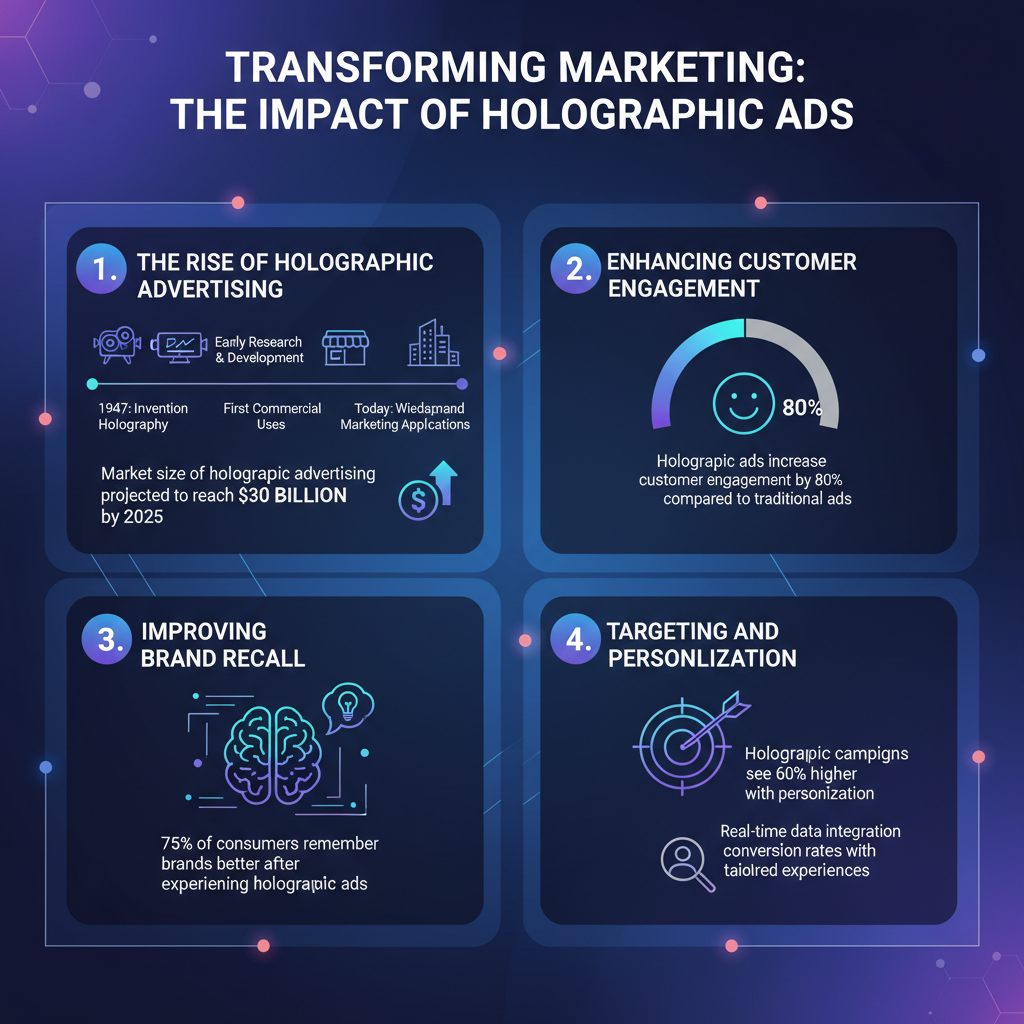
Holographic technology has come a long way since its inception. Initially a novelty reserved for science fiction, it has evolved into a sophisticated medium that can project realistic three-dimensional images into physical space. The rise of smartphones and advancements in display technology have fueled the accessibility and popularity of holographic advertising. This trend is underscored by growing consumer interest in immersive experiences, with studies indicating that nearly 70% of consumers prefer brands that offer unique and engaging interactions. As consumers increasingly seek out innovative ways to connect with brands, holographic ads present a powerful solution that stands out in a crowded marketplace.
Enhancing Customer Engagement

One of the most compelling aspects of holographic ads is their ability to create interactive and memorable experiences. Unlike traditional flat ads, holographic displays can invite consumers to engage with the content through gestures or voice commands. Imagine walking past a holographic display that responds to your movements, showcasing a product in real-time and allowing you to explore its features from every angle. This level of interactivity not only grabs attention but also fosters a deeper emotional connection with the brand.
The psychological impact of 3D visuals cannot be overstated. Research has shown that people are more likely to remember information presented in a three-dimensional format compared to two-dimensional images. This phenomenon, known as the “3D effect,” enhances brand recall by making advertisements feel more tangible and real. For instance, a holographic ad for a new sneaker could allow customers to virtually try on the shoes, significantly increasing the likelihood of a purchase. As brands leverage this technology to create more engaging experiences, they will likely see a boost in customer satisfaction and loyalty.
Improving Brand Recall
Holographic ads are proving to be incredibly effective in increasing brand visibility. The eye-catching nature of these ads means they are more likely to be noticed in busy environments, such as shopping malls or public transport stations. For instance, the famous 3D holographic ad campaign by the beverage company Pepsi featured a holographic projection of a virtual band performing in a city square, which drew crowds and generated significant buzz on social media platforms.
Case studies further illustrate the effectiveness of holographic advertising. A notable example is the campaign by the automotive brand Lexus, which utilized holographic technology to showcase their latest model at an auto show. By allowing potential buyers to interact with a 3D representation of the car, Lexus not only captured attention but also provided an unforgettable experience that encouraged attendees to share their experiences online, amplifying the campaign’s reach.
Targeting and Personalization
One of the most exciting aspects of holographic ads is their ability to deliver tailored messages based on consumer data. With advancements in data analytics, brands can now customize holographic experiences to suit individual preferences and behaviors. Imagine walking by a holographic display that recognizes you from previous interactions and showcases products you are likely to be interested in. This level of personalization not only enhances the user experience but also drives sales by presenting consumers with content that resonates with their specific needs.
For example, a fashion retailer could set up holographic displays in-store that present personalized outfit suggestions based on previous purchases. This interactive experience encourages consumers to explore new products and can lead to higher conversion rates. By harnessing the power of data, brands can create holographic experiences that feel uniquely curated, making customers feel valued and understood.
Overcoming Challenges in Implementation
While holographic advertising presents exciting opportunities, there are challenges businesses must navigate to implement this technology effectively. Technical and financial barriers can be significant, especially for small to mid-sized companies. High production costs, the need for specialized equipment, and technical know-how can deter many brands from adopting holographic ads.
However, businesses can overcome these challenges by starting with smaller, pilot campaigns to gauge effectiveness before scaling up. Collaborating with technology partners that specialize in holographic solutions can also streamline the process and reduce costs. Additionally, investing in employee training can ensure that staff members are well-equipped to operate and maintain the technology, leading to a smoother implementation.
Future Trends in Holographic Advertising
As technology continues to advance, the future of holographic advertising looks promising. Predictions suggest that we will see even more sophisticated holographic displays, potentially incorporating artificial intelligence to create dynamic, adaptive ads that change based on real-time audience feedback. Emerging platforms, such as augmented and virtual reality, may also blend with holographic advertising to create even richer experiences.
Innovations like smart holographic mirrors in retail stores could allow customers to interact with products virtually, trying on clothes or accessories without ever stepping into a fitting room. As these technologies evolve, they will further enhance the effectiveness and appeal of holographic ads, making them a staple in marketing strategies across industries.
Holographic advertising represents a significant shift in marketing strategies, offering unparalleled opportunities for engagement and brand recognition. As businesses look to differentiate themselves in a competitive landscape, incorporating holographic ads into their marketing efforts could provide a vital edge. By harnessing this exciting medium, brands can elevate their presence and connect with consumers in ways that leave a lasting impression. Now is the time to explore how holographic advertising can transform your marketing strategy and captivate your audience!
Frequently Asked Questions
What are holographic ads and how do they work in marketing?
Holographic ads are innovative marketing tools that utilize three-dimensional images to create engaging visual experiences. By projecting these images into physical space, holographic ads capture consumer attention more effectively than traditional media. They typically work through advanced display technology, like holographic projectors or augmented reality systems, allowing brands to showcase products in a captivating way that enhances customer interaction and retention.
How can holographic ads improve customer engagement?
Holographic ads can significantly improve customer engagement by providing an immersive experience that captivates audiences. Unlike static images or videos, holographic displays allow consumers to interact directly with the product, fostering a deeper connection. This interactive element not only grabs attention but also encourages sharing on social media, boosting brand visibility and awareness.
Why should businesses consider investing in holographic advertising?
Businesses should consider investing in holographic advertising because it stands out in a saturated market, offering a unique way to differentiate their brand. With consumers increasingly seeking memorable experiences, holographic ads can create lasting impressions, ultimately driving sales and customer loyalty. Moreover, as technology becomes more accessible, the cost-effectiveness of holographic displays is improving, making them a viable option for various business sizes.
What are the best industries for implementing holographic ads?
The best industries for implementing holographic ads include retail, automotive, entertainment, and real estate. In retail, they can showcase products dynamically, while the automotive industry can display 3D models of vehicles. The entertainment sector benefits from eye-catching promotional displays, and real estate can utilize holographic visualizations for virtual tours. Each of these industries can leverage the immersive experience of holographic ads to enhance customer engagement and drive conversions.
Which technologies are essential for creating effective holographic ads?
Essential technologies for creating effective holographic ads include holographic display systems, augmented reality (AR) applications, and 3D modeling software. Holographic displays, such as holographic projectors, create the visual effect of three-dimensional images, while AR applications enhance interactivity by allowing users to engage with the ads using their smartphones or AR glasses. Additionally, 3D modeling software is crucial for designing realistic and appealing visuals that resonate with the target audience.
References
- Holography
- https://www.bbc.com/news/technology-50857460
- https://www.sciencedirect.com/science/article/pii/S0167739X20317112
- https://www.forbes.com/sites/bernardmarr/2020/02/17/how-holograms-are-changing-marketing/?sh=4a8e8f5f1cc3
- https://www.theguardian.com/media/2021/aug/03/holograms-virtual-reality-advertising-marketing
- https://www.researchgate.net/publication/342276389_Holographic_Advertising_A_Review_of_the_Technology_and_Potential_Applications
- https://www.wired.com/story/holographic-ads-future-marketing/
- https://www.techrepublic.com/article/holographic-ads-what-they-are-and-how-they-work/