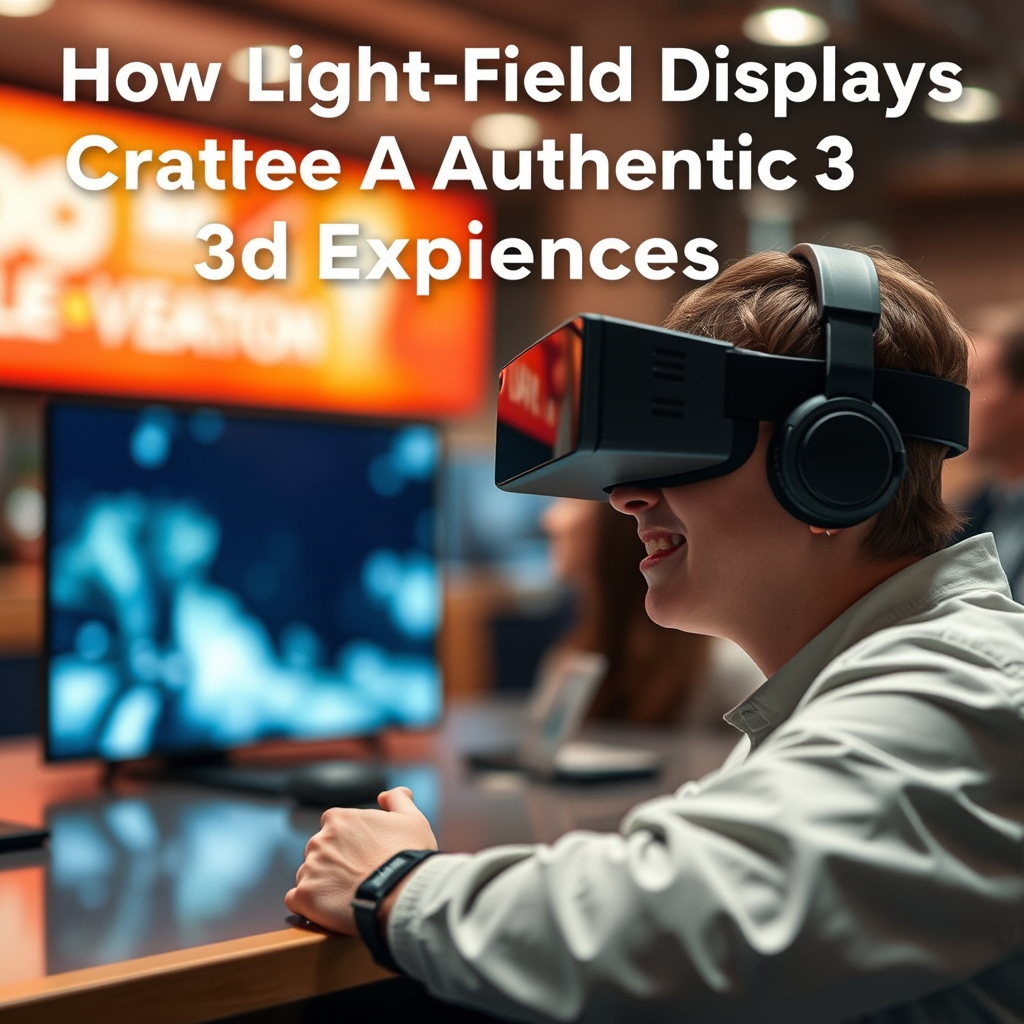

Light-field displays are transforming our interaction with three-dimensional visuals by providing an incredibly immersive experience that surpasses traditional displays. These innovative devices capture and render light from various directions, simulating depth and realism that allows viewers to engage with content like never before. In this article, we will delve into the mechanics of light-field technology, the science that underpins our perception of 3D, the advantages it offers, and its exciting applications across different fields.
Understanding Light-Field Technology
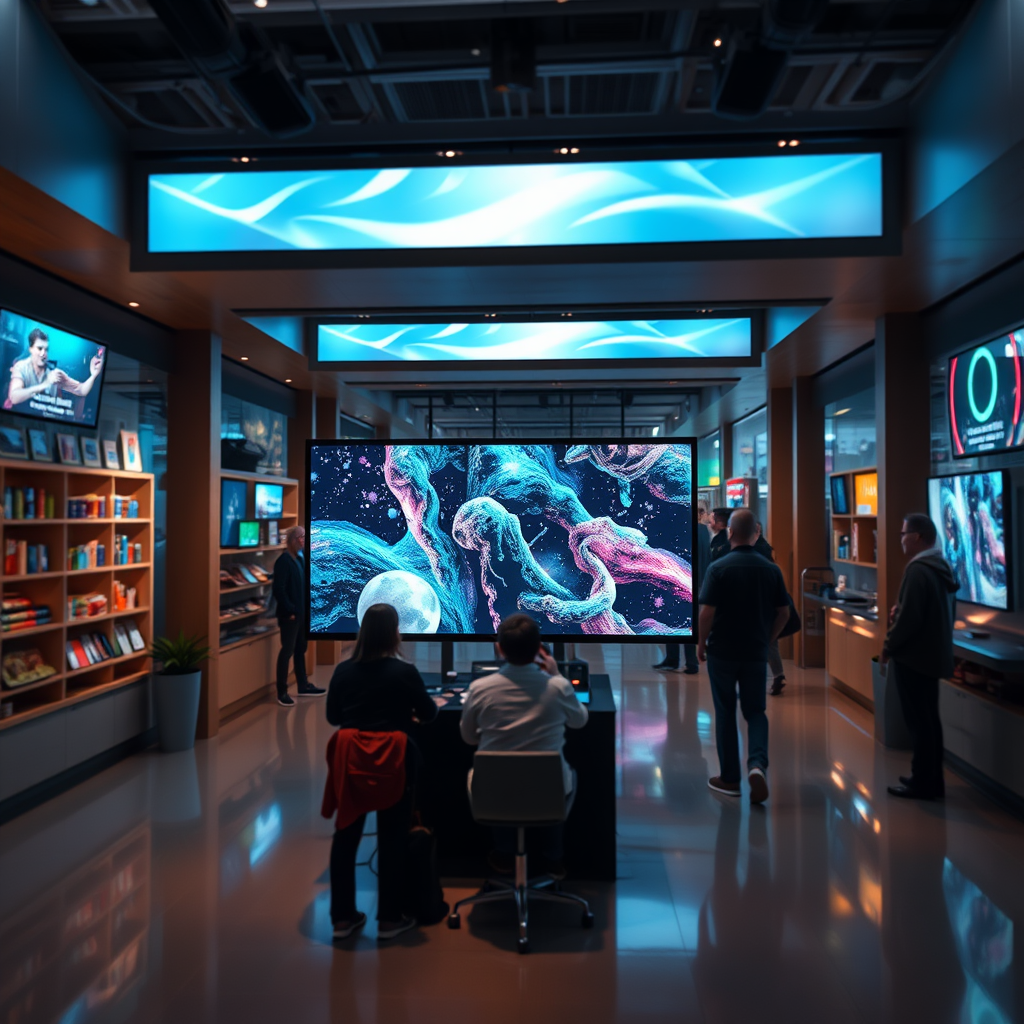
Light-field displays are at the forefront of visual technology, as they capture light rays emanating from different angles to create a multi-dimensional image. This is achieved through a clever combination of microlenses and advanced algorithms that replicate the way we naturally perceive objects in our environment. Traditional displays typically present a flat image, lacking depth and dimensionality, whereas light-field displays create a more lifelike experience by allowing each eye to see a slightly different perspective of the same scene. This technology effectively mimics the natural behavior of light, enabling viewers to experience depth and parallax as they move their heads or shift their viewpoints.
Imagine looking at a beautiful landscape on a traditional screen; it may look pleasant, but you cannot see how the mountains recede into the distance. Now imagine viewing that same landscape on a light-field display, where moving your head reveals new layers and details of the terrain. This ability to capture and reproduce light fields leads to a more authentic and immersive viewing experience, making it a game-changer in the world of visual media.
The Science Behind 3D Perception

Our ability to perceive depth relies on several visual cues, primarily binocular disparity and motion parallax. Binocular disparity is the slight difference in images that each eye sees due to their physical separation, while motion parallax refers to the way objects closer to us appear to move faster than those further away as we change our position. Light-field displays cleverly mimic these natural cues, allowing for a more genuine 3D experience without the need for cumbersome glasses.
For example, when you watch a movie in 3D with traditional glasses, your brain relies on the separated images to create depth. However, with light-field displays, the technology automatically adjusts the light being emitted based on your viewing angle, ensuring that each eye receives the correct perspective. This results in a seamless and more comfortable experience that feels completely natural, as if you are actually present in the scene rather than just observing it from a distance.
Advantages of Light-Field Displays
One of the standout advantages of light-field displays is their enhanced depth perception, which leads to more engaging and realistic visuals. Unlike traditional 3D displays, which can often feel artificial or strained, light-field technology offers a smooth and immersive experience that feels true to life. This is particularly beneficial in applications where realism is crucial, such as medical imaging or architectural visualization.
Additionally, light-field displays reduce eye strain significantly compared to traditional 3D displays. Many users experience discomfort or fatigue after prolonged viewing on standard 3D screens, often due to the forced convergence required by glasses. In contrast, light-field technology adapts to the natural way our eyes work, making it suitable for extended viewing sessions without discomfort. This not only enhances the overall user experience but also opens up new possibilities for applications in fields like education and training, where prolonged focus is often necessary.
Applications in Entertainment
Light-field technology is revolutionizing the entertainment industry, especially in gaming and cinema. In gaming, developers are harnessing this technology to create fully interactive environments that allow players to engage with their surroundings in unprecedented ways. Imagine playing a video game where you can physically move around to discover hidden treasures or interact with characters as if they were right in front of you. This level of immersion can significantly enhance the gaming experience, making it not only more enjoyable but also more memorable.
In the realm of cinema, light-field displays allow filmmakers to produce richer storytelling experiences. By creating immersive visuals that draw the audience into the narrative, filmmakers can engage viewers on a deeper emotional level. For instance, imagine watching a scene where a character is walking through a dense forest; with light-field technology, you can perceive the depth of the trees and the subtle movements of leaves, making the scene feel more alive and relatable. The potential for immersive storytelling is vast, enabling filmmakers to push creative boundaries in ways previously thought unattainable.
Impact on Education and Training
Light-field displays hold tremendous potential for educational purposes and professional training. These displays can simulate complex scenarios that professionals may encounter in fields like medicine and engineering. For example, medical students can interact with a 3D model of human anatomy, allowing them to visualize and understand the intricacies of the human body in a way that textbooks simply cannot provide. This hands-on experience enhances comprehension and retention, making learning more effective and engaging.
Similarly, in technical training, light-field displays can simulate real-world environments that trainees might face. Imagine a pilot-in-training using a light-field display to practice navigating through various weather conditions and landscapes. This technology allows for a safe and controlled environment where trainees can hone their skills without the risks associated with real-world practice. The interactive nature of light-field displays contributes to a more dynamic learning experience, fostering greater engagement and understanding.
Future of Light-Field Technology
As we look toward the future, the advancements in light-field technology continue to make these displays more accessible and affordable. Improvements in hardware and software are paving the way for broader adoption across various industries, from entertainment to education to healthcare. As costs decrease, we can expect to see light-field displays in more homes, schools, and workplaces, enriching our daily lives with immersive visual experiences.
Moreover, the potential for integration into virtual and augmented reality systems is immense. Light-field technology can enhance the realism of virtual environments, making them feel more like the real world. This could lead to new applications in training simulations, virtual tourism, and interactive experiences that blur the lines between the real and digital worlds. As developers continue to innovate, we can anticipate exciting new uses for light-field displays that will further enhance our interactions with technology.
The evolution of light-field displays is set to redefine how we interact with visual content. By understanding their mechanisms and applications, we can better appreciate the future of immersive technology. Explore the possibilities of light-field displays in your own projects or experiences and witness the transformation of visual engagement. The future is bright, and the potential for light-field displays is limitless!
Frequently Asked Questions
What are light-field displays and how do they create true 3D experiences?
Light-field displays are advanced visual technologies that capture and reproduce the light rays emanating from a scene, allowing viewers to perceive depth and dimensionality without the need for special glasses. By utilizing multiple viewpoints and rendering images from various angles, light-field displays create a more immersive experience compared to traditional 2D screens, enabling users to shift their viewing angle and see realistic 3D content as if it were physically present.
Why are light-field displays considered superior to conventional 3D displays?
Light-field displays are regarded as superior due to their ability to provide a more natural and comfortable viewing experience, eliminating the discomfort often associated with traditional glasses-based 3D systems. They allow for a seamless integration of depth perception and focus cues, making images appear more lifelike and dynamic. This results in a heightened sense of realism, especially for applications in gaming, education, and virtual reality.
How do light-field displays impact gaming and entertainment experiences?
Light-field displays dramatically enhance gaming and entertainment experiences by creating a more immersive environment where players can interact with 3D objects from multiple angles. This technology allows for dynamic content that responds to the viewer’s movements, contributing to a more engaging gameplay experience. Moreover, the realism achieved with light-field displays can deepen emotional connections to narratives and characters in films and video games.
Which industries are currently utilizing light-field display technology?
Light-field display technology is being adopted across various industries, including entertainment, education, healthcare, and automotive. In entertainment, it enhances movie and gaming experiences; in education, it supports interactive learning models; in healthcare, it assists in medical imaging and surgical planning; and in automotive design, it aids in visualizing complex 3D models of vehicles. This versatility demonstrates the technology’s potential to transform how we interact with digital content across multiple sectors.
What are the challenges and limitations of light-field display technology?
While light-field displays offer many advantages, they also face challenges such as high production costs and the need for significant computational power to render real-time 3D images. Additionally, the current limitations in resolution and viewing angle can affect the overall user experience. As technology continues to evolve, addressing these challenges will be crucial for broader adoption and improvement of light-field displays in consumer and professional markets.
References
- Light field
- https://www.nature.com/articles/s41598-021-86607-9
- https://www.sciencedirect.com/science/article/pii/S0360132321000649
- https://www.wired.com/story/light-field-display-technology/
- https://www.bbc.com/future/article/20200220-the-technology-that-could-change-the-way-we-see
- https://www.techrepublic.com/article/how-light-field-technology-could-change-the-future-of-science/
- https://www.researchgate.net/publication/348644142_Light_field_display_technology_for_virtual_reality_applications
- https://www.npr.org/2021/05/19/997249202/a-look-inside-the-future-of-3d-displays
- https://www.technologyreview.com/2020/08/25/1006887/3d-display-technology-light-field-virtual-reality/