Choosing the ideal sound system for your home involves understanding your audio needs, budget, and the space where you plan to install it. With so many options available, it’s essential to consider sound quality, speaker types, and connectivity features to enhance your listening experience. This guide will walk you through the vital factors to consider, ensuring you make an informed choice for your perfect sound setup.
Understanding Your Audio Needs
The first step in selecting a sound system is to assess what types of media you’ll primarily enjoy. Are you a music aficionado, a movie buff, or a passionate gamer? Each of these activities has unique audio requirements. For instance, if you love movies, a surround sound system could immerse you in the action, while dedicated stereo speakers may suffice for casual music listening.
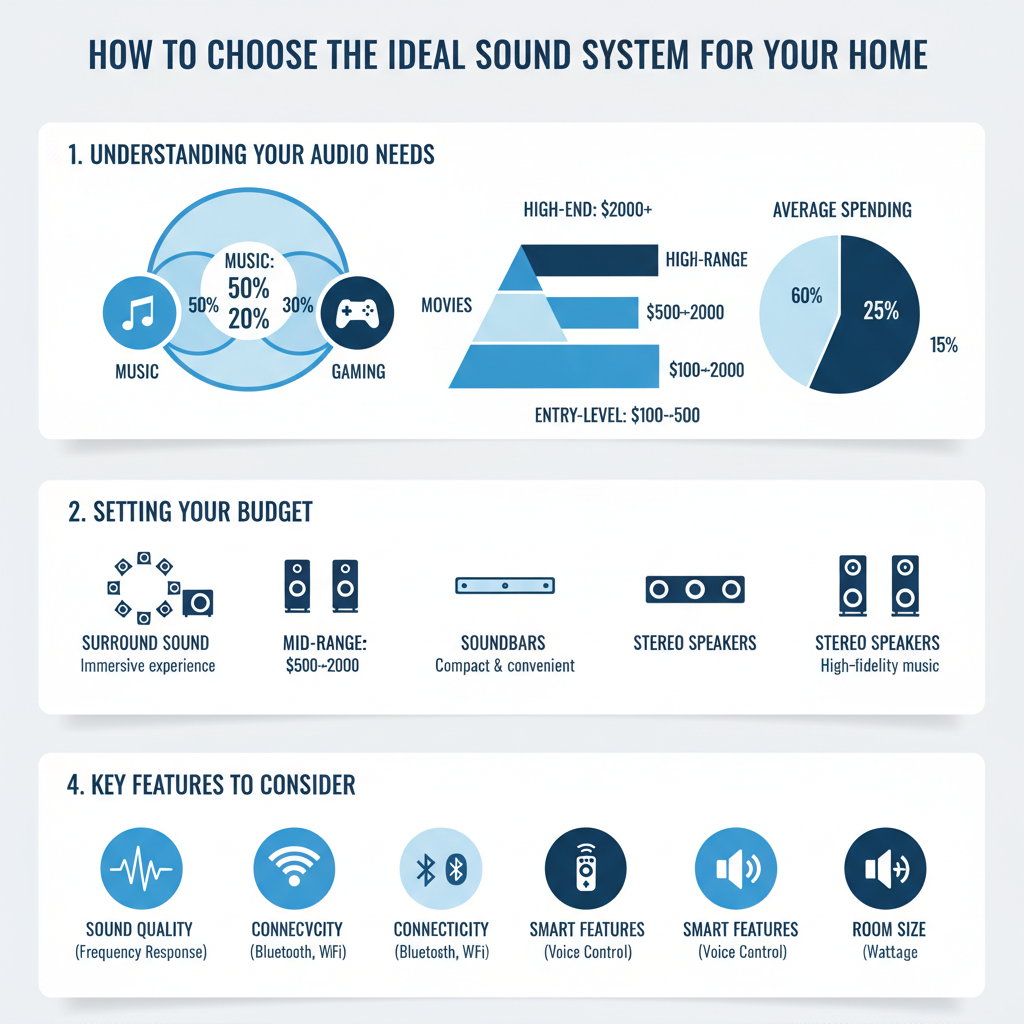
Next, consider the size of the room where the system will be installed. A spacious living room may require a more robust system to fill the area effectively, while a smaller bedroom could do well with compact speakers or a soundbar. Think about your listening habits too—do you often entertain guests or prefer a more intimate setting? Understanding your space and how you intend to use your sound system is crucial for making the right choice.
Setting Your Budget
Defining your budget is an essential step that will guide your sound system selection. Determine a range that feels comfortable for your finances; this will help narrow down your options significantly. Sound systems can range from budget-friendly models starting around $100 to high-end setups that can exceed several thousand dollars.
While exploring options, keep in mind that you don’t always have to purchase the most expensive system to get great sound quality. Many reputable brands offer entry-level systems that deliver impressive performance at a fraction of the cost. For example, brands like Sonos and JBL provide excellent sound quality without breaking the bank. Don’t forget to consider potential additional costs as well, like speaker stands, mounts, or cables, which can impact your total investment.
Types of Sound Systems
When it comes to sound systems, there are several types to consider, each with its own advantages and disadvantages.
1. Stereo Systems: Perfect for music lovers, stereo systems typically consist of two speakers and offer high-quality sound with a simple setup. They are best suited for smaller spaces and listening to music in a more traditional format.
2. Surround Sound Systems: If movies are your thing, a surround sound system with multiple speakers positioned around the room can create a cinematic experience. These systems often include a subwoofer for deep bass, enhancing the overall audio experience.
3. Soundbars: A more compact option, soundbars provide a straightforward solution for enhancing TV audio. They are easy to set up and often come with wireless capabilities, making them a popular choice for those looking for simplicity without sacrificing sound quality.
Additionally, consider the debate between wired and wireless systems. Wired systems often provide more stable connections and superior sound quality, while wireless systems offer flexibility and ease of installation. Many modern systems provide a hybrid option, allowing you to enjoy the benefits of both.
Key Features to Consider
When evaluating sound systems, you’ll want to look for features that enhance usability. Smart connectivity—such as Bluetooth and Wi-Fi—enables seamless integration with smartphones, tablets, and streaming services like Spotify or Apple Music, making it easier to access your favorite content.
Voice control compatibility is another feature that’s becoming increasingly popular. Systems that support smart assistants like Amazon Alexa or Google Assistant allow you to control playback with simple voice commands, adding to the convenience and modernity of your setup.
Be sure to check compatibility with your existing devices as well. If you have a high-definition TV, ensure your sound system can connect easily to enhance your viewing experience. Look for systems that support HDMI ARC, optical audio, or even HDMI eARC to future-proof your audio setup.
Placement and Setup
Proper placement of your speakers is essential for achieving optimal sound quality. Generally, speakers should be positioned at ear level and placed equidistant from your listening area for balanced sound. For surround sound systems, the front speakers should be placed slightly angled toward your listening position, while rear speakers should ideally be positioned behind you.
Consider the room’s acoustics as well—hard surfaces can create echoes while soft furnishings can absorb sound. If you’re unsure about the best placement, many manufacturers provide guidelines or even apps that can assist you in setting up your system.
As for installation, you can opt for DIY setups if you’re comfortable with technology, but don’t hesitate to hire a professional if you want to ensure everything is configured perfectly. Some audio stores even offer installation services as part of your purchase, making it easier for you.
Testing and Reviews
Before making a final decision, it’s wise to read reviews and watch video demonstrations to understand how each system performs in real-world conditions. Websites like CNET, TechRadar, and customer reviews on retail sites can provide valuable insights into the pros and cons of specific models.
Moreover, visiting audio stores can significantly enhance your decision-making process. Many stores allow you to listen to sound systems in person, which can be invaluable. Pay attention to how each system sounds at various volume levels and how it handles different types of media. This hands-on experience can be the deciding factor in your choice.
Maintenance and Upgrades
To ensure the longevity of your sound system, regular maintenance is essential. Dusting off components, checking cables, and ensuring proper ventilation can make a big difference in performance. If you notice any issues, such as distortion or connectivity problems, troubleshooting these issues early can prevent costly repairs or replacements down the line.
As technology advances, consider potential upgrades to keep your system current. Many sound systems allow for component upgrades, such as adding a new subwoofer or additional speakers, thereby enhancing your audio capabilities without the need to purchase an entirely new system.
Summarizing your journey to find the ideal sound system, remember to assess your unique needs and budget while considering the various types and features available. Don’t hesitate to test systems in person and consult reviews to ensure you make the best decision for your home audio experience. Take the next step towards enhancing your sound enjoyment by exploring options online or visiting a local audio specialist today!
Frequently Asked Questions
What factors should I consider when choosing a sound system for my home?
When selecting a sound system for your home, consider factors such as room size, purpose of use (music, movies, gaming), budget, and connectivity options. Larger rooms may benefit from more powerful speakers or a multi-room setup, while smaller spaces can often be served well by compact systems. Additionally, think about whether you want a wired or wireless system, as this can affect installation and overall flexibility.
How do I determine the best type of speakers for my home audio system?
The best type of speakers for your home audio system depends on your listening habits and room acoustics. For immersive sound, consider floor-standing speakers or a 5.1 surround sound system for home theater setups. If you prioritize space-saving solutions, bookshelf or satellite speakers may be ideal. Lastly, ensure the speakers match your amplifier’s power output to achieve optimal performance.
Why is it important to match my sound system components?
Matching your sound system components is crucial for achieving the best audio performance. Mismatched components, such as pairing a low-quality amplifier with high-end speakers, can lead to distortion, poor sound quality, and reduced lifespan of equipment. Ensuring compatibility between your speakers, amplifier, and source devices enhances overall sound clarity and can provide a more satisfying listening experience.
What is the best sound system setup for a home theater?
The best sound system setup for a home theater typically includes a 5.1 or 7.1 surround sound configuration. This setup consists of five or seven speakers placed around the room (front left, front center, front right, surround left, surround right, and possibly subwoofers), which creates an immersive audio experience. Additionally, consider using a receiver that supports the latest audio formats, ensuring future-proofing for new technologies and formats.
Which brands are known for high-quality home sound systems?
Several brands are renowned for producing high-quality home sound systems, including Bose, Sonos, Yamaha, and Klipsch. Bose is celebrated for its compact and stylish designs, while Sonos excels in wireless multi-room systems. Yamaha and Klipsch are both recognized for their robust audio performance and extensive range of products. Researching customer reviews and comparing specifications can help you find a brand that aligns with your audio preferences and needs.
References
- Sound system
- https://www.consumerreports.org/home-theater/how-to-choose-the-best-sound-system-for-your-home-a1431554524/
- https://www.techhive.com/article/3033933/how-to-build-the-perfect-home-theater-sound-system.html
- https://www.cnet.com/home/audiovisual/how-to-choose-the-right-home-theater-sound-system/
- https://www.audioholics.com/home-theater-101/how-to-choose-home-theater-sound-system
- https://www.npr.org/2021/06/04/1002759794/how-to-choose-the-best-sound-system-for-your-home
- https://www.wired.com/story/how-to-choose-the-best-speakers/
- https://www.soundguys.com/how-to-choose-the-right-speakers-14300/