

The future of cloud-based video editing is bright, characterized by remarkable advancements that enhance accessibility and efficiency for creators. As technology continues to evolve, we can expect improved collaboration, increased processing capabilities, and innovative tools that will revolutionize the editing experience. This article will delve into the key trends and innovations shaping the future of this dynamic field, providing insights into how video creators can stay ahead of the curve.
Rise of Collaborative Editing

One of the most exciting developments in cloud-based video editing is the rise of collaborative editing. Cloud platforms have broken down geographical barriers, enabling multiple users to work on the same project simultaneously, regardless of their location. This real-time collaboration fosters creativity and efficiency, allowing teams to brainstorm, edit, and finalize content seamlessly. Tools like Adobe Premiere Pro’s Team Projects and Frame.io are leading the charge in this space, allowing users to leave comments, make adjustments, and track changes in real-time.
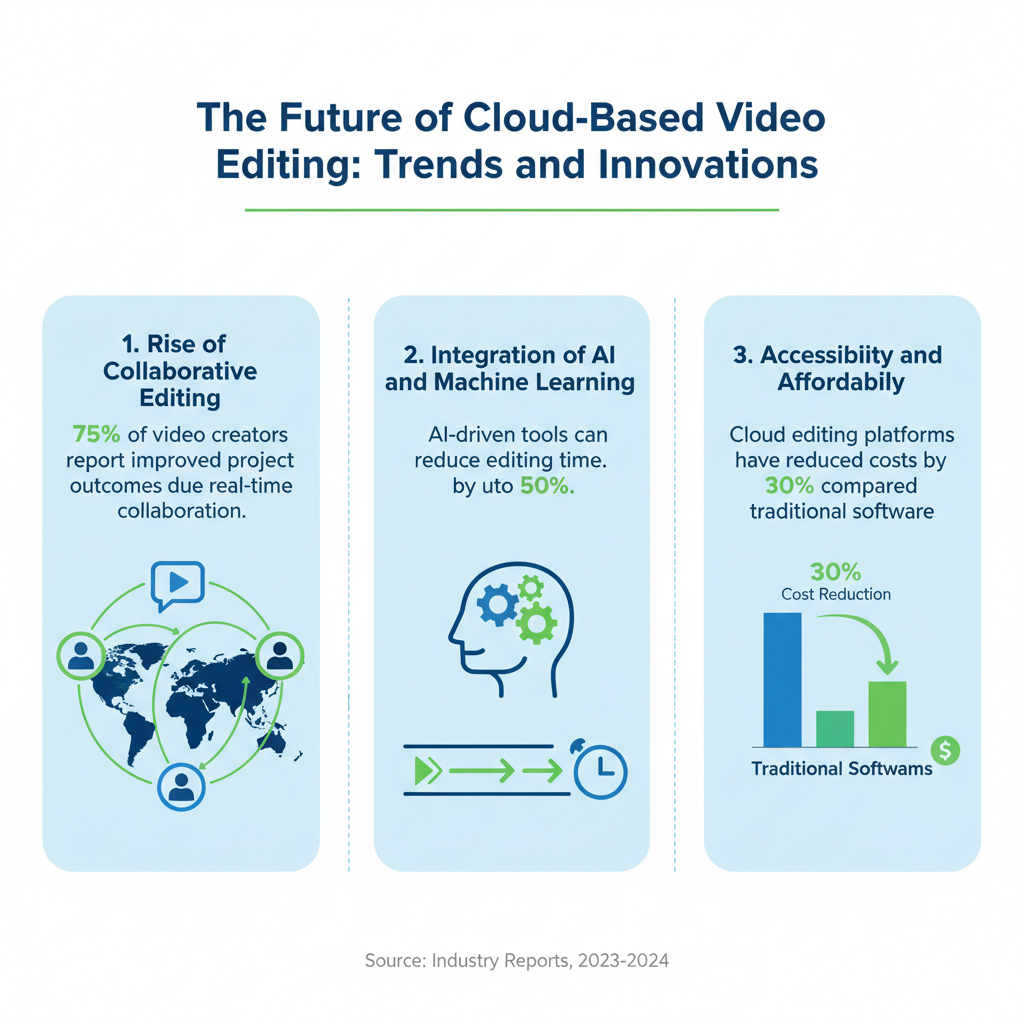
Additionally, enhanced version control features are critical for effective collaboration. With these tools, editors can easily manage different iterations of a project, ensuring that no edits are lost, and that everyone is on the same page. This capability is particularly beneficial for teams working on large-scale projects, where maintaining an organized workflow is crucial. As cloud-based editing continues to evolve, we can expect even more robust collaboration features that will streamline the creative process.
Integration of AI and Machine Learning

Artificial Intelligence (AI) and machine learning are making significant inroads into cloud-based video editing, transforming how creators work. AI tools are automating tedious tasks like color correction, audio balancing, and even scene detection, allowing editors to focus more on the creative aspects of their projects. For instance, tools like Adobe Sensei leverage AI to enhance productivity by automating repetitive tasks and suggesting edits based on the content.
Moreover, machine learning algorithms are becoming adept at analyzing footage to recommend edits that align with a creator’s unique style or the project’s requirements. This not only optimizes workflow efficiency but also empowers creators to experiment with new techniques and styles without the intimidation of technical hurdles. As these technologies continue to develop, the editing process will become even more intuitive, enabling creators to produce high-quality videos at a faster pace.
Accessibility and Affordability
One of the most significant advantages of cloud-based solutions is their accessibility. With these platforms, creators can edit from any device with internet access—whether it’s a powerful desktop, a laptop, or even a tablet. This flexibility allows for on-the-go editing, making it easier for creators to capture inspiration and work wherever they are. Services like WeVideo and Canva are particularly popular among budding video editors due to their user-friendly interfaces and accessibility.
Affordability is another key factor driving the adoption of cloud-based video editing. Traditional video editing software often requires hefty upfront costs for licenses and powerful hardware. In contrast, cloud-based platforms typically operate on subscription models that offer cost-effective solutions for individuals and small teams. This democratization of video editing means that more creators than ever can access professional-grade tools, fostering a diverse range of voices and stories in the video landscape.
Enhanced Security Measures
As creators move their projects to the cloud, security becomes a paramount concern. Fortunately, cloud providers are stepping up their game by implementing advanced security protocols to protect user data and intellectual property. Features such as two-factor authentication, secure data encryption, and automated backups are becoming standard practice, ensuring that projects remain safe and recoverable in the event of technical failures.
For instance, platforms like Vimeo and Google Drive not only provide robust data protection but also offer customizable privacy settings, allowing creators to control who has access to their work. These enhanced security measures not only safeguard creators’ projects but also foster trust in cloud-based solutions, enabling users to focus on creativity without worrying about potential data breaches.
Future of Virtual and Augmented Reality Editing
The rise of Virtual Reality (VR) and Augmented Reality (AR) technologies is opening new doors for immersive content creation, and cloud-based platforms are adapting to support these innovative formats. With VR and AR becoming increasingly popular in storytelling, editing tools are evolving to cater to the unique demands of these mediums.
For example, platforms like Unity and Unreal Engine are integrating cloud capabilities to enable collaborative VR editing, allowing multiple creators to manipulate 3D environments simultaneously. This shift not only enhances the editing experience but also empowers creators to push the boundaries of traditional storytelling. As VR and AR technologies continue to advance, we can expect cloud-based editing tools to evolve alongside them, providing creators with new ways to engage and captivate their audiences.
Evolving User Interfaces
The user interface (UI) of cloud-based editing software is another area undergoing significant transformation. Improved UIs are making editing software more intuitive and user-friendly, catering to both seasoned professionals and newcomers alike. Features like drag-and-drop functionality, customizable workspaces, and simplified navigation are enhancing the overall user experience.
For instance, platforms like DaVinci Resolve are known for their sleek interfaces that streamline the editing process, allowing users to focus on their creativity rather than getting bogged down in technical details. Customizable workspaces enable editors to tailor their environment to their specific needs, whether they prefer a minimalist approach or a more complex setup. As cloud-based editing software continues to evolve, we can expect even more advancements in UI design that prioritize usability and accessibility.
The Role of 5G Technology
The expansion of 5G networks is poised to revolutionize cloud-based video editing by dramatically enhancing streaming capabilities. With faster upload and download speeds, creators will enjoy smoother editing experiences, particularly when working with large files and high-resolution content. This is especially beneficial for teams collaborating on intricate projects, where real-time feedback and adjustments are essential.
Moreover, 5G technology will enable seamless integration of cloud-based editing with other online services, allowing for a more cohesive workflow. For example, creators can easily access stock footage libraries, collaborate with remote team members, and share their work on social media without experiencing lag or interruptions. As 5G becomes more widespread, the possibilities for cloud-based video editing will expand, leading to even more innovative approaches to content creation.
As we look to the future, cloud-based video editing is becoming increasingly integral to the creative process. The convergence of technology and innovation promises a more collaborative, efficient, and accessible editing landscape. To stay ahead, video creators should explore emerging tools and adapt to these trends, ensuring they are equipped for the next wave of video production. By embracing these advancements, creators can not only enhance their editing capabilities but also tell richer, more engaging stories that resonate with their audiences.
Frequently Asked Questions
What are the main benefits of using cloud-based video editing in 2024?
Cloud-based video editing offers numerous advantages in 2024, including enhanced collaboration, as multiple users can edit the same project in real-time from different locations. Additionally, cloud solutions typically provide scalable storage options, allowing users to easily manage large video files without the need for extensive local hardware. The accessibility of cloud editing also means that creators can work on projects from any device, making it a flexible choice for professionals on the go.
How does cloud-based video editing improve collaboration among teams?
Cloud-based video editing platforms facilitate seamless collaboration by allowing team members to access and edit projects simultaneously, regardless of their physical locations. Features like version control, comments, and integrated chat systems promote communication and streamline the feedback process. This collaborative environment not only enhances productivity but also ensures that all team members are on the same page, leading to more cohesive and polished final products.
Why should content creators consider transitioning from traditional editing software to cloud-based solutions?
Transitioning to cloud-based video editing solutions can significantly improve efficiency and reduce costs for content creators. Unlike traditional editing software, which often requires expensive licenses and powerful hardware, cloud platforms typically operate on a subscription-based model, providing access to advanced features without the hefty upfront investment. Furthermore, cloud services often include regular updates and support, ensuring that users have access to the latest editing tools and technologies.
What are the best cloud-based video editing platforms available in 2024?
Some of the best cloud-based video editing platforms in 2024 include Adobe Premiere Pro with Creative Cloud, WeVideo, and Blackmagic Design’s DaVinci Resolve (cloud version). These platforms offer a range of features tailored to different skill levels, from beginner-friendly interfaces to advanced editing tools suitable for professionals. Each platform also provides unique collaboration features and storage options, allowing users to choose one that best fits their specific needs and workflow.
Which industries are benefiting the most from cloud-based video editing technologies?
Various industries are reaping the benefits of cloud-based video editing technologies, particularly media and entertainment, marketing, and education. In the media sector, teams can streamline production workflows and enhance collaboration on large projects. Meanwhile, marketers utilize cloud editing to create engaging content rapidly, and educational institutions leverage these tools for remote learning and student projects. Overall, the flexibility and accessibility of cloud-based editing cater to diverse industry needs and enhance creative output.
References
- Cloud computing
- https://www.bbc.com/news/technology-58212070
- https://www.reuters.com/technology/cloud-computing-future-2021-06-22/
- https://www.sciencedirect.com/science/article/pii/S0360131521004834
- https://www.nytimes.com/2021/08/12/technology/cloud-video-editing.html
- https://www.wired.com/story/cloud-video-editing/
- https://www.techrepublic.com/article/the-future-of-video-editing-is-in-the-cloud/
- https://www.forbes.com/sites/bernardmarr/2021/03/01/the-future-of-video-editing-in-the-cloud/?sh=7b1f4a4d4e5b