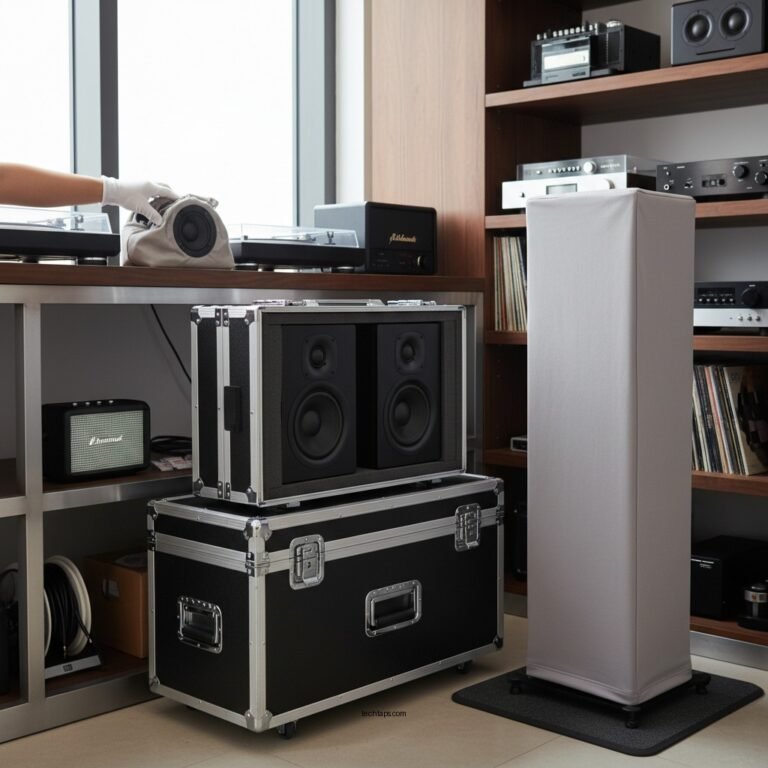
Room calibration is essential for achieving the best sound quality from your home audio system. Proper calibration considers the unique acoustics of your space, allowing for clearer, more balanced audio. By optimizing your setup, you can significantly enhance your listening experience, whether you are an audiophile or simply enjoy music and films. In this article, you’ll learn how room calibration enhances your listening experience and discover practical steps to optimize your setup.
Understanding Room Acoustics

Room acoustics play a pivotal role in how sound waves behave within a space. The dimensions and shape of a room can either amplify or diminish audio quality. For example, a larger room may lead to more echo, while a smaller room can create a more intimate sound but may also result in muddiness due to sound reflections.
Hard surfaces such as concrete walls and wooden floors reflect sound, potentially creating harsh or overly bright audio. In contrast, soft materials like carpets, curtains, and upholstered furniture can absorb sound, reducing echoes and enhancing clarity. Therefore, understanding the interplay between your room’s acoustics and your audio equipment is crucial for achieving optimal sound quality.
The Benefits of Room Calibration
Room calibration brings numerous benefits that can transform your audio experience.
1. Enhances Clarity and Detail: Proper calibration ensures that the nuances of music and soundtracks are accurately reproduced. This clarity allows listeners to appreciate the intricate details in recordings, from subtle vocal harmonies to the richness of instrumental solos.
2. Balances Sound Across Different Frequencies: Different rooms can cause certain frequencies to be exaggerated or diminished. Calibration helps balance these frequencies, resulting in a more immersive listening experience. This balance is crucial not only for music but also for movies and gaming, where sound design is integral to the overall experience.
By investing time in room calibration, you can significantly elevate your audio enjoyment, making every listening session more satisfying.
Calibration Methods
There are two primary methods for calibrating your audio system: manual calibration and automatic calibration systems.
– Manual Calibration: This method involves using sound measurement tools to assess the audio performance of your space. By measuring sound levels at various points in the room, users can identify peaks and dips in frequency response. Adjustments can then be made to the equalizer settings on the audio equipment to compensate for these anomalies. While this method requires more time and expertise, it allows for a customized approach tailored to your specific environment.
– Automatic Calibration Systems: Many modern audio receivers and sound systems come with built-in automatic calibration systems. These systems use microphones to analyze the acoustics of your space and adjust the audio settings accordingly. While convenient, it is essential to follow up with manual adjustments to ensure that the calibration meets your personal preferences.
Tools for Calibration
Achieving optimal room calibration requires specific tools and software to accurately measure and adjust sound settings.
1. Microphones and Sound Analyzers: These devices are crucial for capturing sound levels across different frequencies. Measurement microphones, often used in conjunction with sound analyzers, can provide detailed insights into your room’s acoustic profile.
2. Software Applications: Many software applications are available that assist in evaluating and adjusting sound settings. Tools like Room EQ Wizard (REW) allow users to visualize frequency responses and make informed decisions on how to adjust their audio systems for better clarity and balance.
Incorporating these tools into your calibration process can yield significant improvements in your audio quality.
Top Audio Calibration Tools (2023)
| # | Tool | Type | Price | User Rating |
|---|---|---|---|---|
| 1 | Room EQ Wizard | Software | Free | ★★★★☆ |
| 2 | MiniDSP UMIK-1 | Microphone | $99 | ★★★★★ |
| 3 | Dirac Live | Software | $349 | ★★★★☆ |
| 4 | AccuEQ | Software | $199 | ★★★★☆ |
| 5 | Sonarworks SoundID | Software | $99 | ★★★★☆ |
| 6 | iRoom Acoustic Analysis | Software | $249 | ★★★☆☆ |
| 7 | REW & UMIK-1 Combo | Package | $198 | ★★★★★ |
Common Calibration Mistakes
While room calibration can significantly improve audio quality, several common mistakes can undermine the process.
1. Neglecting Room Treatment: Many users overlook the importance of room treatment, such as adding acoustic panels or rugs. Without proper treatment, sound waves can continue to bounce off hard surfaces, leading to poor audio performance even after calibration.
2. Incorrect Speaker Placement: The placement of speakers is critical in achieving optimal sound. Speakers placed too close to walls or in corners can lead to bass buildup and uneven sound distribution. Taking the time to experiment with speaker positioning can lead to dramatic improvements in audio quality.
Avoiding these mistakes requires a thorough understanding of your space and a commitment to making the necessary adjustments.
Maintaining Your Calibration
Once you have calibrated your audio system, it is essential to maintain those settings over time.
1. Regularly Update Settings: As your room evolves—whether due to new furniture, decor changes, or even seasonal adjustments—it’s vital to reassess your audio settings. Regular evaluations ensure that your audio system continues to perform at its best amidst these changes.
2. Consider Seasonal Adjustments: Changes in room dynamics, such as the addition of heavy curtains in winter or the removal of cushions in summer, can impact acoustics. A quick recalibration can help maintain balance and clarity throughout the year.
By staying proactive about your calibration settings, you can ensure that your home audio system consistently delivers the best possible sound experience.
Incorporating room calibration into your home audio setup can dramatically improve your listening experience. By understanding and applying these techniques, you can ensure that your audio system performs at its best. Take the next step by evaluating your current setup and exploring calibration options tailored to your space. Investing time and resources into proper calibration will yield dividends in audio enjoyment for years to come.
Frequently Asked Questions
What is room calibration and why is it important for my home audio system?
Room calibration is the process of adjusting your audio system to account for the unique acoustic characteristics of your room. This is important because factors like room size, shape, and furnishings can significantly affect sound quality, leading to issues like poor bass response or uneven sound distribution. Proper calibration helps optimize your audio experience, ensuring clearer sound and balanced audio performance.
How can I perform room calibration for my home audio system?
You can perform room calibration using various methods, ranging from manual adjustments to automated systems. Many modern audio receivers come with built-in calibration tools that use a microphone to analyze sound and adjust settings accordingly. Alternatively, you can manually tweak settings like speaker placement, distance, and equalization to better suit your room’s acoustics.
Why does my audio system sound different in different rooms?
The sound quality of your audio system can vary greatly depending on the room’s acoustics, which are influenced by factors like wall materials, furniture placement, and ceiling height. In smaller or more cluttered spaces, sound waves may bounce and create echoes, while larger rooms might absorb sound, leading to a loss of clarity. Room calibration helps mitigate these issues by optimizing your system for the specific acoustic environment.
What are the best tools for room calibration in a home audio system?
The best tools for room calibration include specialized calibration microphones and software, as well as AV receivers with built-in room correction features. Brands like Audyssey, Dirac Live, and Anthem Room Correction are popular for their effective algorithms that analyze your room’s acoustics. Additionally, smartphone apps can provide a more budget-friendly option for basic calibration.
Which common mistakes should I avoid when calibrating my home audio system?
Common mistakes to avoid include neglecting speaker placement, not considering room acoustics, and skipping calibration altogether. Many users also overlook the importance of adjusting settings based on listening position and fail to use the room calibration tools provided by their audio equipment. Taking the time to carefully measure and adjust your setup can greatly enhance your listening experience.
References
- Room acoustics
https://en.wikipedia.org/wiki/Room_acoustics - https://www.sciencedirect.com/science/article/pii/S2210670713000570
https://www.sciencedirect.com/science/article/pii/S2210670713000570 - https://pubmed.ncbi.nlm.nih.gov/19351524/
https://pubmed.ncbi.nlm.nih.gov/19351524/ - Acoustics | Definition, Physics, & Facts | Britannica
https://www.britannica.com/technology/acoustics - https://www.nature.com/articles/s41598-018-33910-9
https://www.nature.com/articles/s41598-018-33910-9 - Google Scholar Google Scholar
https://scholar.google.com/scholar?q=Room+Calibration+in+Home+Audio+System - Google Scholar Google Scholar
https://scholar.google.com/scholar?q=Acoustic+Room+Calibration - Google Scholar Google Scholar
https://scholar.google.com/scholar?q=Optimizing+Home+Audio+System - https://www.wwu.edu/av/room-acoustics
https://www.wwu.edu/av/room-acoustics - https://www.oberlin.edu/arts-and-sciences/academic-departments/physics/research/room-acoustics
https://www.oberlin.edu/arts-and-sciences/academic-departments/physics/research/room-acoustics