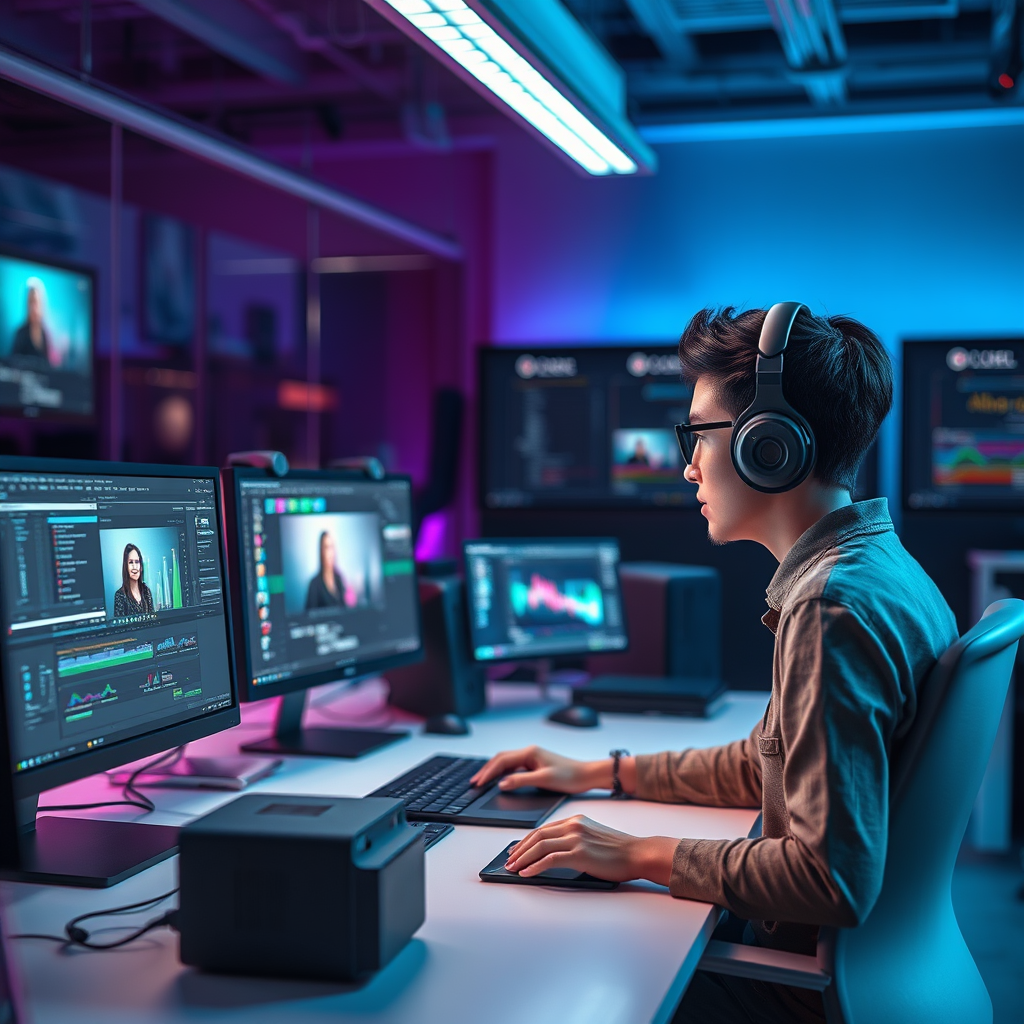

AI significantly enhances video editing by automating repetitive tasks, improving efficiency, and enabling creators to focus on creative aspects rather than technical details. As a result, video editors can spend more time crafting compelling narratives and less time on tedious adjustments. In this article, you will learn how AI streamlines video editing workflows, the specific tools available, and the implications for the future of content creation.
Understanding AI in Video Editing

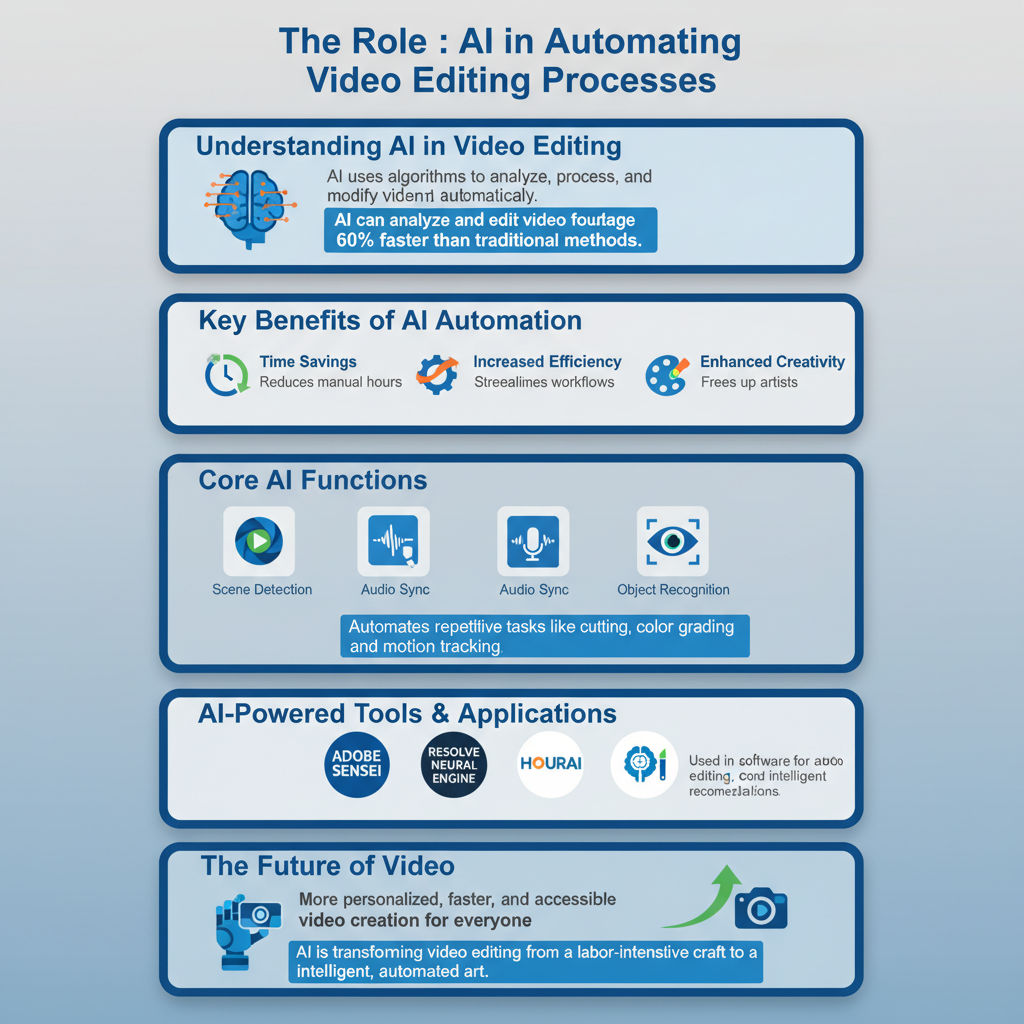
Artificial Intelligence (AI) refers to machines’ ability to perform tasks that typically require human intelligence, such as understanding language, recognizing patterns, and making decisions. In the realm of video editing, AI is revolutionizing how content is created and edited, allowing for faster and more intuitive processes. Two critical components of AI are machine learning and deep learning. Machine learning enables systems to learn from data and improve over time, while deep learning, a subset of machine learning, involves neural networks that mimic human brain functions to process vast amounts of information. These technologies are particularly relevant in automating tasks like footage organization, scene detection, and even generating edits based on predefined styles, thereby freeing video editors to focus on the more artistic aspects of their work.
Key Benefits of AI Automation
One of the most significant advantages of AI automation in video editing is time-saving. Traditional editing can be labor-intensive and time-consuming, but AI can streamline processes like scene detection and color correction. For instance, AI algorithms can quickly analyze footage to identify different scenes and automatically compile them, allowing editors to jump straight into the creative process rather than spending hours sifting through raw clips. Moreover, AI can enhance color correction by analyzing each frame and suggesting optimal settings based on the surrounding shots, which not only speeds up the workflow but also ensures a level of consistency and quality that might be challenging to achieve manually.
Another benefit is the improved consistency and quality in editing results. AI tools can analyze trends and patterns in previous edits to make recommendations that align with the creator’s style, ensuring that the final product is cohesive. For example, platforms like Adobe Premiere Pro utilize AI-driven features like Adobe Sensei, which can suggest edits that match the pacing and style of previously edited videos. This level of precision not only boosts productivity but also enhances the overall quality of the content produced.
Popular AI Tools in Video Editing
The landscape of AI-powered video editing software has expanded significantly, with several leading tools making waves in the industry. Adobe Premiere Pro, for instance, incorporates AI technology through its Adobe Sensei framework, which automates tasks such as auto-reframing and scene editing. This allows creators to adapt their content for different platforms effortlessly, ensuring that the video fits the required format without losing important visual elements.
Another notable tool is Magisto, which uses AI to analyze footage and automatically edit videos based on themes, styles, and even the emotions the footage conveys. This can be particularly useful for businesses looking to create promotional content quickly without sacrificing quality. Additionally, tools like Filmora and Descript are also gaining popularity, offering features like smart tagging and automatic transcription, which can significantly reduce the time spent on post-production tasks.
AI’s Impact on Creativity
While AI brings unparalleled efficiency to video editing, it also has the potential to inspire new creative directions. With AI tools handling repetitive tasks, editors can channel their energy into more innovative aspects of storytelling, such as crafting unique narratives or exploring unconventional editing techniques. For instance, AI-generated suggestions can lead to unexpected combinations of footage, encouraging editors to experiment with different styles and formats they might not have considered otherwise.
However, it is essential to strike a balance between automation and the personal touch that defines storytelling. While AI can assist with technical elements, the emotional resonance of a story often requires a human perspective. Editors will need to find ways to integrate AI tools without compromising their unique voice and vision, ensuring that the final product remains authentic and engaging.
Challenges and Limitations of AI in Video Editing
Despite its many advantages, the use of AI in video editing is not without challenges. One significant concern is the quality control of AI-generated edits. While AI can analyze footage and suggest edits, it may struggle with understanding the nuanced context of a scene. For example, an AI might cut a scene in a way that disrupts the emotional flow of a narrative or fails to capture subtle interactions between characters. Consequently, human editors must remain vigilant, reviewing AI suggestions and making necessary adjustments to ensure the final cut meets their standards.
Additionally, there is a risk of becoming overly reliant on automation. While AI can handle repetitive tasks efficiently, editors should not overlook the importance of honing their skills and understanding the intricacies of video editing. The best results often come from a combination of technical proficiency and creative intuition, and an overreliance on AI could stifle an editor’s growth in these areas.
Future Trends in AI Video Editing
Looking ahead, the future of AI in video editing appears promising, with continuous advancements anticipated in AI technology. As machine learning models become more sophisticated, we can expect even greater automation capabilities, leading to faster editing processes and higher-quality outputs. For instance, AI may soon be able to analyze audience feedback and engagement metrics to suggest edits that resonate better with viewers, creating a more tailored experience.
Moreover, AI is poised to play a significant role in emerging video formats, such as virtual reality (VR) and live editing. As these formats gain popularity, the need for real-time editing solutions will increase. AI can assist in adapting content dynamically, allowing for interactive experiences that engage viewers in ways traditional editing cannot achieve.
Incorporating AI into video editing not only streamlines the process but also opens new avenues for creativity and efficiency. As technology continues to evolve, embracing these tools can keep you ahead in the fast-paced world of content creation. Explore the AI tools mentioned and consider integrating them into your editing workflow for enhanced productivity. With a keen eye on the balance between automation and artistry, the future of video editing is bright and full of possibilities.
Frequently Asked Questions
What is the role of AI in video editing automation?
The role of AI in video editing automation is to streamline and enhance the editing process through advanced technologies. AI tools can analyze footage, suggest edits, and even automate tasks like color correction, audio syncing, and scene transitions. This not only saves time but also enables editors to focus on creative decision-making rather than repetitive tasks, making video production more efficient and accessible.
How does AI improve the efficiency of video editing workflows?
AI improves the efficiency of video editing workflows by automating labor-intensive tasks such as clip selection and tagging, which significantly reduces the hours spent on manual editing. Machine learning algorithms can quickly identify key moments in footage, allowing editors to access the most relevant clips without having to sift through hours of raw content. This leads to faster turnaround times and allows creators to produce high-quality videos with less effort.
Why should I consider using AI-powered tools for video editing?
You should consider using AI-powered tools for video editing because they can enhance creativity while minimizing tedious tasks. These tools not only help in organizing and editing large volumes of footage but also provide intelligent suggestions based on the content, enabling editors to create polished videos more efficiently. By leveraging AI, you can increase productivity, reduce costs, and maintain a competitive edge in video production.
What are the best AI video editing software options available?
Some of the best AI video editing software options available include Adobe Premiere Pro with Adobe Sensei, Magisto, and Filmora. These platforms integrate AI features like automatic scene detection, smart video creation, and even automated voiceovers, making them ideal for both professionals and beginners. When choosing the right software, consider your specific needs, such as ease of use, available features, and budget.
Which industries benefit the most from AI in video editing automation?
Several industries benefit significantly from AI in video editing automation, including marketing, entertainment, and education. In marketing, brands use AI to create engaging promotional videos quickly, while entertainment companies leverage AI for post-production efficiency and content personalization. Additionally, educational institutions utilize AI-driven editing tools to produce instructional videos that enhance learning experiences, demonstrating the versatile applications of AI in video editing across various sectors.
References
- Video editing
- https://www.sciencedirect.com/science/article/pii/S1877050919311063
- https://www.researchgate.net/publication/335501739_Automating_video_editing_process_for_educational_purposes
- https://www.theguardian.com/technology/2021/mar/02/how-ai-is-changing-video-editing
- https://www.techrepublic.com/article/how-ai-is-transforming-video-editing/
- https://www.bbc.com/future/article/20210302-how-ai-is-revolutionising-video-editing
- https://www.frontiersin.org/articles/10.3389/frai.2021.00004/full
- https://www.nature.com/articles/s41598-020-71015-6