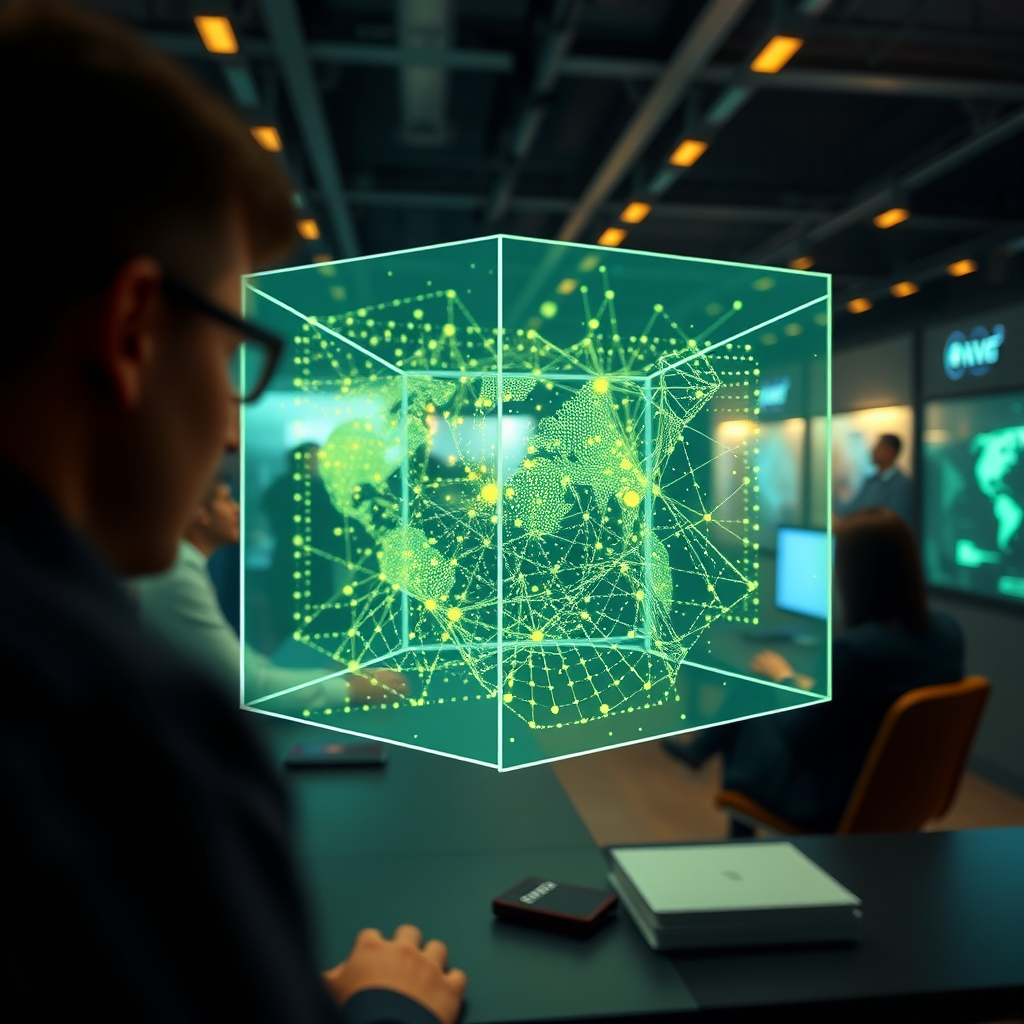

The integration of metamaterials is set to revolutionize holographic displays by enabling unprecedented control over light manipulation. This innovative technology allows for the creation of more realistic and immersive holograms, transforming our interaction with digital content. As we delve deeper into the fascinating world of metamaterials, we’ll explore how they function, their applications in holography, and their potential impact on future display technologies.
Understanding Metamaterials

Metamaterials are engineered materials designed to manipulate electromagnetic waves in ways that natural materials cannot. By structuring them at a scale smaller than the wavelength of light, they achieve extraordinary properties such as negative refractive index, which allows them to bend or absorb light in unusual ways. This unique ability to control light makes metamaterials essential for advanced optical applications, opening doors to innovations that were once confined to the realm of science fiction. For instance, they can be used to create invisibility cloaks that render objects undetectable to the human eye, showcasing their transformative potential.
The science behind metamaterials involves intricate designs, often using periodic structures to achieve desired effects. Researchers are constantly experimenting with different configurations and compositions, pushing the boundaries of what these materials can achieve. As a result, metamaterials can be tailored for specific applications, leading to advancements in fields like telecommunications, imaging, and even energy harvesting.
How Metamaterials Enhance Holographic Displays

The use of metamaterials in holographic displays is a game changer. They provide precise control over light waves, allowing for enhanced clarity and depth in holographic images. This means that holograms can appear more lifelike, with vibrant colors and intricate details that draw viewers in. Unlike traditional holographic displays, which often suffer from distortion when viewed from different angles, metamaterials enable the creation of dynamic, high-resolution images that retain their quality regardless of the viewer’s position.
For example, a holographic display using metamaterials can project a 3D image of a product that appears to float in mid-air. Viewers can walk around the display and see the object from various perspectives, making it an invaluable tool for industries such as retail and design. The ability to present products in such an immersive manner can significantly enhance customer engagement and decision-making processes.
Moreover, metamaterials can facilitate the development of holographic images that can change in real-time, responding to user interactions. Imagine a virtual assistant that projects a hologram in your living room, which adjusts its appearance based on your commands. This level of interactivity is made possible through the unique properties of metamaterials, paving the way for a new era of user experience in technology.
Current Applications of Metamaterials in Holography
The current landscape of holography is witnessing exciting developments thanks to metamaterials. Researchers are actively using these materials in prototypes for augmented reality (AR) and virtual reality (VR) devices, significantly enhancing user experiences. For instance, companies are creating AR glasses that utilize metamaterials to project high-quality holograms directly into the wearer’s field of vision, blending digital content seamlessly with the real world.
In the medical field, metamaterials are being explored for advanced imaging techniques, allowing for clearer and more detailed visualization of tissues and organs. This could lead to breakthroughs in diagnostics and treatment planning, as healthcare professionals gain better insights into patients’ conditions. Additionally, the versatility of metamaterials extends to data visualization, where complex datasets can be represented in 3D holograms, making them easier to understand and analyze.
In educational contexts, metamaterials can enhance learning by providing interactive 3D models of complex subjects, such as biology or chemistry. Students can visualize molecular structures or anatomical systems in a way that traditional textbooks cannot replicate, fostering deeper understanding and engagement.
Challenges in Implementing Metamaterials
Despite their immense potential, there are significant challenges in the large-scale manufacturing of metamaterials. The complexity involved in their design and fabrication can lead to high costs, making it difficult for widespread adoption. Researchers and manufacturers must find efficient ways to produce these materials without compromising quality, which is crucial for practical applications.
Moreover, integrating metamaterials into existing display technologies poses another layer of difficulty. Compatibility with current systems and ensuring optimal performance requires further research and development. This includes addressing issues such as power consumption and the ability to produce images at high speeds without latency, which is critical for real-time applications.
As the field progresses, collaboration between scientists, engineers, and technology companies will be essential to overcome these barriers. By pooling resources and expertise, the pathway to integrating metamaterials into mainstream holographic displays can be accelerated.
Future Prospects for Holographic Displays Using Metamaterials
Looking ahead, the future of holographic displays powered by metamaterials is incredibly promising. As research continues to advance, we can expect to see more practical applications in consumer electronics, education, and entertainment. Innovations may lead to the development of lighter, thinner, and more energy-efficient holographic displays, transforming the way we interact with digital content.
Imagine attending a lecture where the speaker uses a hologram to illustrate complex concepts, or watching a movie where characters leap off the screen and into your living room. The potential for immersive storytelling and interactive experiences is limitless. Furthermore, as technologies mature, the costs associated with metamaterials may decrease, making them accessible for broader applications.
In the realm of gaming, metamaterials could usher in a new era of immersive experiences, where players feel as if they are part of the game. This level of engagement could redefine entertainment, bringing audiences closer to the action than ever before.
Conclusion
In summary, metamaterials hold the key to the next generation of holographic displays by enhancing image quality and enabling new functionalities. Their ability to manipulate light in unprecedented ways opens up a world of possibilities for various industries. As research continues to overcome current challenges in manufacturing and integration, we are likely to witness a significant evolution in how holograms are created and experienced. Staying informed about the latest developments in this exciting field will keep us at the forefront of technological innovation, paving the way for a future where holographic displays become an integral part of our daily lives.
Frequently Asked Questions
What are metamaterials and how do they contribute to holographic displays?
Metamaterials are engineered materials that possess unique properties not found in nature, often manipulating electromagnetic waves in novel ways. In holographic displays, metamaterials can enhance light manipulation, allowing for more realistic 3D images with improved depth perception and resolution. By controlling light at sub-wavelength scales, they enable the creation of holograms that can be viewed from different angles without distortion, significantly enhancing the user experience.
How do metamaterials improve the efficiency of holographic displays?
Metamaterials improve the efficiency of holographic displays by enabling better light absorption and reduction of energy waste. They can be designed to focus or redirect light more effectively than traditional materials, which leads to brighter images while consuming less power. This efficiency is crucial for portable devices and large-scale installations where energy consumption and heat generation are concerns.
Why are metamaterials considered essential for the future of augmented reality (AR) and virtual reality (VR) applications?
Metamaterials are essential for the future of AR and VR because they enable high-fidelity, immersive experiences through advanced light manipulation. They can create more realistic holograms that interact seamlessly with the physical environment, enhancing user engagement. As AR and VR technologies strive for realism and user comfort, metamaterials will provide the necessary advancements to overcome current limitations in display technology.
Which industries are likely to benefit most from the integration of metamaterials in holographic displays?
Industries such as entertainment, healthcare, education, and design are poised to benefit significantly from metamaterials in holographic displays. In entertainment, they can create more immersive gaming and movie experiences, while in healthcare, they enable better visualization of complex data for training and diagnostics. The educational sector may utilize holograms for interactive learning environments, and design industries can leverage these displays for realistic product prototypes and presentations.
What are the current challenges in developing metamaterials for holographic display applications?
Current challenges in developing metamaterials for holographic displays include manufacturing complexities, cost, and scalability of production. Creating metamaterials often requires precise engineering at the nano-scale, which can be time-consuming and expensive. Additionally, integrating these materials into existing display technologies while maintaining performance and affordability remains a significant hurdle that researchers are actively addressing.
References
- Metamaterial
- https://www.sciencedirect.com/science/article/pii/S0030401819303001
- https://www.nature.com/articles/s41566-020-00712-0
- https://www.researchgate.net/publication/327990386_Metamaterials_and_holography
- https://www.nist.gov/news-events/news/2020/01/nist-researchers-create-holographic-displays-using-metamaterials
- https://www.bbc.com/future/article/20201209-the-holograms-you-can-touch
- https://www.osa-opn.org/home/articles/volume_29/december_2018/features/metamaterials_for_holography/
- https://www.technologyreview.com/2021/04/15/1023079/holographic-displays-metamaterials-3d/