

Web3 adoption is rapidly growing in emerging markets, primarily driven by technological advancements and the increasing demand for decentralized solutions. As people in these regions seek alternatives to traditional financial systems, Web3 technologies like blockchain are stepping in to offer innovative and empowering solutions. This article will explore the key factors contributing to this surge, the challenges faced, and the potential future of Web3 in these regions.
The Rise of Web3 Technologies

Web3 refers to the next generation of the internet, characterized by decentralized technologies that empower users rather than centralized entities. At its core, Web3 is built on principles such as decentralization, transparency, and user ownership. Unlike Web2, where data and content are largely controlled by a few tech giants, Web3 aims to create a more equitable online environment where individuals can own their data and engage in peer-to-peer transactions.
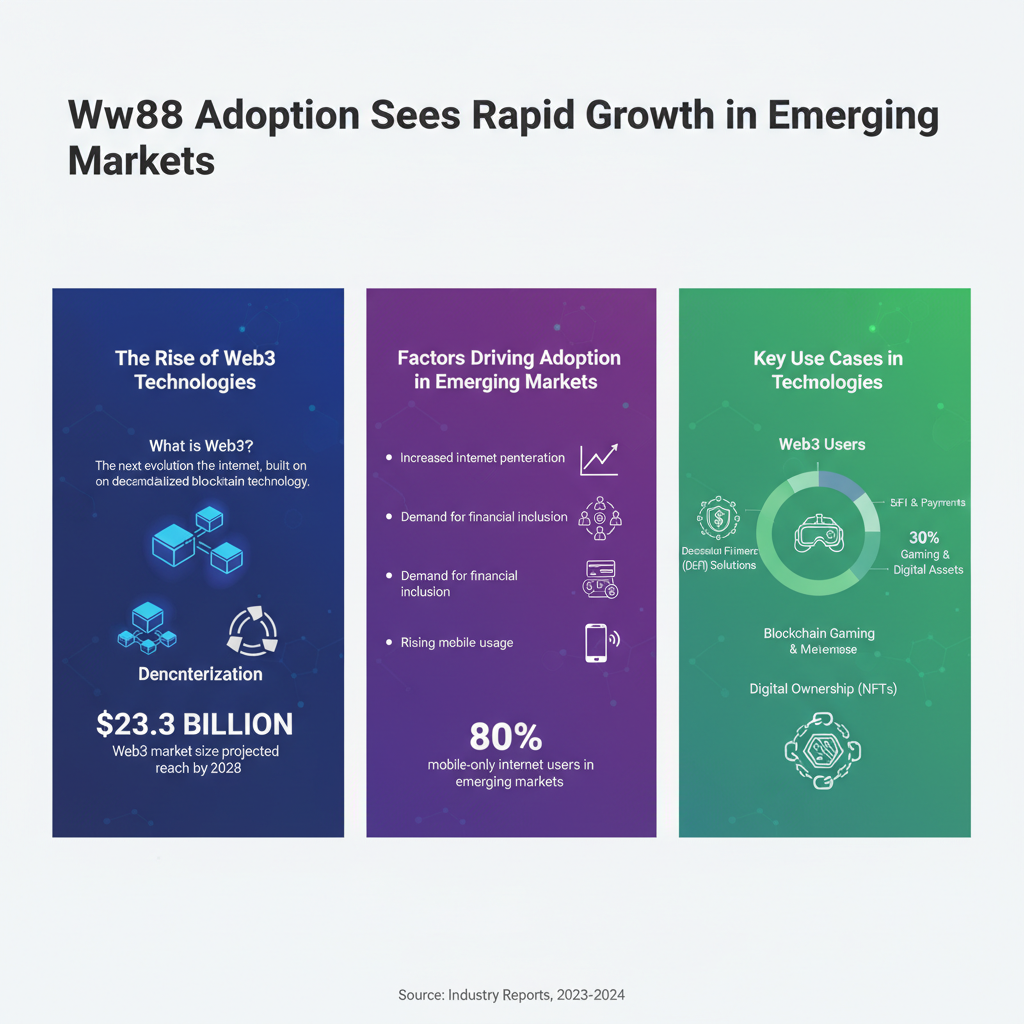
Blockchain technology plays a pivotal role in enabling these decentralized applications (dApps). By providing a secure, immutable ledger, blockchain allows for trustless interactions between users, which is essential for applications ranging from finance to content sharing. This technology serves as the backbone for cryptocurrencies, smart contracts, and decentralized finance (DeFi), making it possible for users to access services without the need for traditional intermediaries.
Factors Driving Adoption in Emerging Markets

One of the main factors fueling Web3 adoption in emerging markets is the increased penetration of smartphones and internet access. According to recent statistics, smartphone usage in many countries has reached unprecedented levels, making it easier for individuals to access digital services. This surge in connectivity has opened up opportunities for people to engage with Web3 technologies, which were previously out of reach.
Moreover, economic instability in various regions is prompting individuals and businesses to seek alternative financial solutions. Traditional banking systems often exclude significant portions of the population, leaving them without access to essential financial services such as savings accounts and loans. Web3 technologies, particularly DeFi platforms, are stepping in to fill this gap, offering services that allow users to lend, borrow, and invest without the need for a bank.
Use Cases in Emerging Markets
Several successful Web3 projects are tailored specifically to address the needs of emerging markets. For instance, platforms like Stellar and Celo are focusing on improving financial inclusion by enabling cross-border payments with minimal fees. These platforms facilitate remittances, which are crucial for many families in these regions who rely on funds sent from abroad.
Another noteworthy example is the rise of decentralized finance (DeFi) solutions aimed at unbanked populations. For example, platforms like Aave and Compound allow users to earn interest on their crypto holdings, providing a means to generate income without traditional banking. These solutions are particularly valuable in regions where inflation erodes currency value, offering a hedge against economic instability.
Additionally, non-fungible tokens (NFTs) are gaining traction in creative industries across emerging markets. Artists and musicians are using NFTs to monetize their work, allowing them to reach global audiences and retain a greater share of their earnings. This shift not only empowers creators but also fosters cultural exchange on a global scale.
Challenges to Web3 Adoption
Despite the positive momentum, several challenges hinder the widespread adoption of Web3 in emerging markets. Regulatory hurdles vary significantly by country and can create uncertainty for both users and developers. For instance, some governments have adopted strict regulations on cryptocurrencies, while others are more permissive. This inconsistency can stifle innovation and deter investment in local Web3 projects.
Technical barriers also pose a significant challenge. In many emerging markets, internet speeds are slower compared to developed nations, making it difficult for users to engage with complex dApps that require fast and reliable connectivity. Furthermore, digital literacy remains a barrier for many individuals, as not everyone is familiar with blockchain technology or how to safely engage with it. Educational initiatives are crucial in addressing these gaps and empowering users to navigate the Web3 landscape confidently.
The Role of Education and Community
Education is vital for fostering understanding and promoting the adoption of Web3 technologies. Initiatives aimed at increasing digital literacy can help demystify the technology and encourage more people to participate. Organizations and communities are stepping up to provide workshops, webinars, and resources that make learning about Web3 accessible to everyone.
Community-driven projects also play a significant role in encouraging participation and development. Local meetups and hackathons can foster collaboration among developers, entrepreneurs, and users. These gatherings not only facilitate knowledge sharing but also promote the creation of solutions that are tailored to local needs. By building strong communities around Web3, emerging markets can create a supportive ecosystem that nurtures innovation and drives adoption.
Future Trends in Web3 for Emerging Markets
Looking ahead, the future of Web3 in emerging markets appears promising. Predictions indicate that as more individuals gain access to the internet and digital technologies, we can expect a surge in user engagement with decentralized platforms. This growth will likely be accompanied by an increase in the development of localized solutions that address specific economic and social challenges.
Moreover, the potential for innovative solutions that leverage Web3 technologies is vast. For instance, we may see the emergence of decentralized identity systems, which can provide individuals with control over their personal data while simplifying access to services. Additionally, the integration of Web3 into everyday applications, such as social media and e-commerce, could transform how users interact with digital content and conduct transactions.
As Web3 continues to evolve, it will be essential for stakeholders—governments, businesses, developers, and communities—to work together to navigate the challenges and seize opportunities. By fostering a collaborative environment, emerging markets can position themselves at the forefront of the Web3 revolution.
In summary, the rapid adoption of Web3 in emerging markets is reshaping how individuals and businesses interact with digital technologies. By understanding the driving factors and overcoming challenges, stakeholders can better position themselves for future opportunities in this dynamic landscape. Join the conversation and stay informed about the evolving world of Web3!
Frequently Asked Questions
What are the main factors driving Web3 adoption in emerging markets?
The surge in Web3 adoption in emerging markets can be attributed to several key factors, including the increasing availability of smartphones and internet access, a young and tech-savvy population, and the need for financial inclusion. Additionally, the potential for decentralized finance (DeFi) and non-fungible tokens (NFTs) to empower local economies is encouraging users to explore blockchain technologies. These elements create a conducive environment for Web3 innovations to flourish.
How can individuals in emerging markets benefit from Web3 technologies?
Individuals in emerging markets can benefit from Web3 technologies in numerous ways, such as gaining access to decentralized financial services that eliminate the need for traditional banking systems. This can lead to lower transaction costs and improved access to credit and investment opportunities. Moreover, Web3’s emphasis on data ownership empowers users to control their personal information, potentially allowing for better privacy and security in their online interactions.
Why is Web3 important for the economic development of emerging markets?
Web3 is essential for the economic development of emerging markets as it promotes inclusivity and creates new opportunities for entrepreneurship. By leveraging blockchain technology, local businesses can access global markets, engage in cross-border transactions with ease, and attract international investments. Furthermore, Web3 can help build transparent and efficient supply chains, enhancing trust among consumers and businesses alike.
What are the challenges of Web3 adoption in emerging markets?
While the potential for Web3 in emerging markets is significant, several challenges hinder its widespread adoption. These include limited regulatory frameworks, a lack of digital literacy among the population, and concerns over security and fraud within the crypto space. Additionally, infrastructure issues, such as unreliable internet connectivity and electricity access, can impede the seamless use of Web3 applications, making it essential for stakeholders to address these barriers.
Which Web3 projects are leading the way in emerging markets?
Several Web3 projects are making significant strides in emerging markets, including platforms like Binance Smart Chain, which supports local developers, and Ethereum-based solutions that focus on decentralized finance. Additionally, projects like Celo are designed specifically for mobile-first users, allowing them to engage in crypto transactions with ease. These initiatives not only cater to the specific needs of emerging markets but also foster community engagement and economic empowerment through innovative use cases.
References
- https://www.forbes.com/sites/bernardmarr/2023/06/21/how-web3-is-revolutionizing-emerging-markets/?sh=6b1e1d6c2f1f
- https://www.weforum.org/agenda/2022/09/web3-emerging-markets/
- https://www.bbc.com/news/technology-62423530
- https://www.reuters.com/technology/crypto-adoption-surges-among-emerging-markets-2022-06-20/
- International Monetary Fund
- https://www.oxfordlearnersdictionaries.com/definition/english/web3
- https://www.techcrunch.com/2023/03/15/web3-adoption-in-emerging-markets/
- https://www.gartner.com/en/information-technology/glossary/web3
- https://www.un.org/development/desa/publications/web3-in-developing-countries.html