
Psychoacoustics is the study of how humans perceive sound, and it significantly impacts audio design by shaping how we experience music, speech, and environmental noises. By understanding the nuances of sound perception, audio designers can create more immersive and impactful soundscapes that resonate emotionally with listeners. This article delves into the principles of psychoacoustics and their application in audio design, revealing the interconnectedness of sound quality, listener perception, and emotional response.
Understanding Psychoacoustics

Psychoacoustics is a multidisciplinary field that combines elements of psychology, acoustics, and neuroscience. It focuses on how humans interpret various sound attributes, including pitch, volume, and timbre. The scope of psychoacoustics is vast, covering everything from basic auditory perception to complex emotional responses elicited by sound.
Historically, the field began gaining traction in the late 19th and early 20th centuries, with significant contributions from researchers such as Hermann von Helmholtz and Joseph Fourier. Helmholtz’s work laid the groundwork for understanding how sound waves interact with the human ear and brain, while Fourier introduced the concept of sound wave decomposition. These foundational studies have paved the way for contemporary research, including investigations into how different frequencies and amplitudes affect listener experiences.
The Science of Sound Perception
Humans perceive sound through a combination of physiological and psychological processes. Key attributes of sound perception include:
– Pitch: Determined primarily by the frequency of the sound wave. Higher frequencies correspond to higher pitches, while lower frequencies are perceived as lower pitches.
– Loudness: Relates to the amplitude of the sound wave. Higher amplitudes result in louder sounds, while lower amplitudes yield softer sounds.
– Timbre: Often referred to as the “color” of sound, timbre is influenced by the harmonic content and waveform of sound, allowing us to distinguish between different instruments or voices.
The interplay of frequency and amplitude is crucial in shaping auditory experiences. For instance, a sound’s frequency can influence its perceived loudness; higher frequencies may be perceived as louder than lower ones at the same amplitude due to the sensitivity of the human ear.
Psychoacoustics in Audio Design
The principles of psychoacoustics are applied extensively in audio design, particularly in music production and sound engineering. These principles guide how sounds are mixed and mastered to optimize listener experience. For example, the use of equalization (EQ) allows audio engineers to enhance or diminish specific frequencies, tailoring the sound to be more pleasing or impactful.
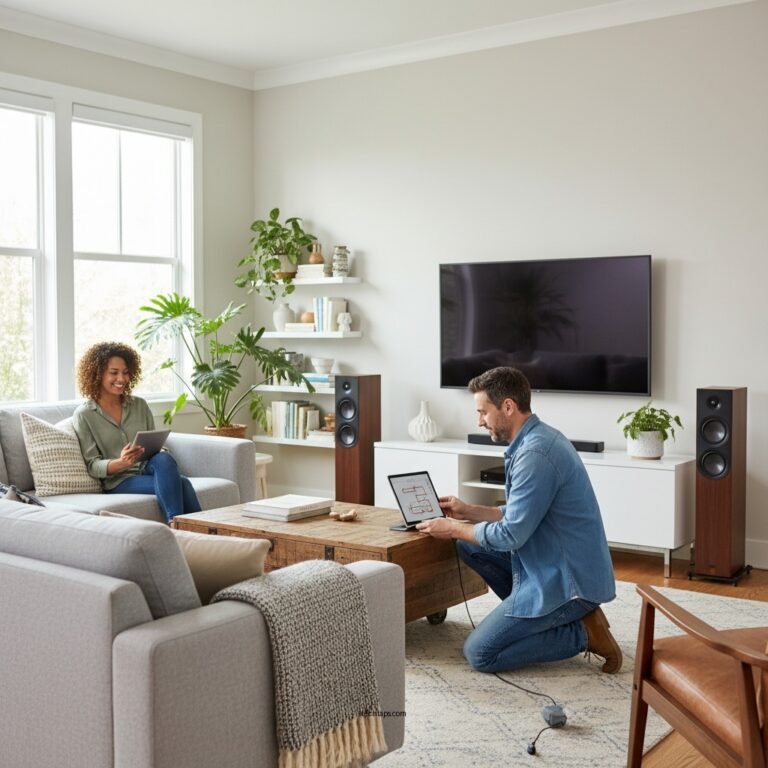
Moreover, audio systems are designed with psychoacoustic principles in mind to enhance listener experience. This includes considerations like speaker placement, which can significantly affect how sound is perceived in a given space. For instance, the positioning of speakers affects the way sound waves interact with the room’s acoustics, ultimately influencing the listener’s experience.
Top Psychoacoustic Influences in Audio Design (2023)
| # | Psychoacoustic Principle | Application | Importance |
|---|---|---|---|
| 1 | Equal Loudness Contours | Mixing | High |
| 2 | Masking Effects | Sound Design | Medium |
| 3 | Temporal Masking | Mixing Techniques | Low |
| 4 | Psychoacoustic Equalization | Sound Engineering | High |
| 5 | Spatial Hearing | 3D Audio | Medium |
| 6 | Critical Bands | Sound Compression | High |
| 7 | Pitch Perception | Tuning Instruments | Medium |
The Impact of Psychoacoustics on Sound Quality
Several factors influence perceived sound quality, and psychoacoustics plays a critical role in understanding these factors. Room acoustics, for instance, can significantly alter how sound is experienced. The shape, size, and materials of a space can cause sound waves to reflect, absorb, or diffuse, affecting clarity and overall quality. This is why audio engineers often conduct room analysis to optimize sound reproduction.
Speaker placement is another crucial aspect. The distance between speakers and the listener can create variations in perceived sound quality. Proper placement can enhance stereo imaging and create a more immersive experience, while poor placement can lead to sound distortions and a lack of clarity.
Fidelity, or the accuracy with which sound is reproduced, is essential to achieving high-quality audio. Psychoacoustics aids in fidelity by informing audio design techniques that minimize unwanted noise and distortion, ensuring that listeners receive a true representation of the intended sound.
Emotional Responses to Sound
Psychoacoustics not only elucidates how we perceive sound but also explains our emotional reactions to it. Different sounds can evoke a wide range of emotions, from joy and excitement to sadness and nostalgia. For example, major chords in music are often associated with happiness, while minor chords may evoke sadness.
Case studies in audio design illustrate how sound can influence mood and behavior in various environments. For instance, research has shown that background music in retail settings can affect purchasing decisions. Upbeat music may encourage shoppers to spend more time in a store, while slower tempos can create a more relaxed atmosphere, encouraging leisurely browsing.
In therapeutic settings, sound design is crucial for promoting relaxation and healing. Ambient sounds and soft music can lower stress levels and enhance emotional well-being, highlighting the profound effects that psychoacoustics has on our daily lives.
Future Trends in Psychoacoustics and Audio Design
As technology continues to evolve, so too does the application of psychoacoustic principles in audio design. Emerging technologies, such as virtual and augmented reality, are integrating psychoacoustic concepts to create more immersive and engaging experiences. For example, spatial audio technologies are being developed to enhance virtual environments, allowing sounds to be perceived from specific directions, thus simulating a realistic auditory experience.
Predictions for the future of audio design suggest an increasing focus on personalization. With advancements in machine learning and artificial intelligence, audio systems may soon tailor sound profiles to individual listener preferences, optimizing experiences based on personal psychoacoustic responses.
As the field of psychoacoustics continues to expand, its integration into audio design will likely lead to innovative solutions that enhance how we experience sound across various platforms and environments.
Psychoacoustics plays a crucial role in how we design audio experiences that resonate with listeners on both an emotional and perceptual level. By understanding its principles, audio designers can create more immersive and impactful soundscapes. Explore more on how to apply these insights in your projects or consider delving deeper into the fascinating world of sound perception.
Frequently Asked Questions
What is psychoacoustics and why is it important in audio design?
Psychoacoustics is the study of how humans perceive sound, including how we interpret pitch, loudness, and timbre. Understanding psychoacoustics is crucial in audio design because it helps engineers create sound experiences that align with human auditory perception, ultimately enhancing listener engagement and satisfaction.
How does psychoacoustics influence sound quality in music production?
Psychoacoustics influences sound quality by guiding the choice of frequencies, dynamics, and spatial placement in music production. By utilizing principles like masking, where louder sounds can obscure softer ones, producers can optimize mix clarity and ensure that essential elements of a track are heard as intended, improving overall sound quality.
Why should audio designers consider psychoacoustic principles when creating sound effects?
Audio designers should consider psychoacoustic principles because they help shape how sound effects will be perceived in various environments. By applying techniques such as frequency modulation and reverb, designers can create sound effects that are more immersive and realistic, enhancing the listener’s experience in films, games, and other media.
Which psychoacoustic concepts are most relevant for improving headphone audio?
Key psychoacoustic concepts relevant for improving headphone audio include binaural hearing, sound localization, and the critical bands of hearing. By leveraging these concepts, headphone designers can create products that provide a more natural and immersive listening experience, allowing users to accurately perceive spatial audio cues.
What are the best practices for integrating psychoacoustics into audio engineering?
The best practices for integrating psychoacoustics into audio engineering include conducting listening tests, using equalization to enhance perceived clarity, and applying dynamic range compression judiciously. By understanding how different elements interact with human perception, audio engineers can produce mixes that resonate well with listeners, ensuring a professional sound quality.
References
- Psychoacoustics
https://en.wikipedia.org/wiki/Psychoacoustics - https://www.ncbi.nlm.nih.gov/pmc/articles/PMC2778322/
https://www.ncbi.nlm.nih.gov/pmc/articles/PMC2778322/ - https://www.sciencedirect.com/topics/engineering/psychoacoustics
https://www.sciencedirect.com/topics/engineering/psychoacoustics - https://www.ncbi.nlm.nih.gov/pmc/articles/PMC3633275/
https://www.ncbi.nlm.nih.gov/pmc/articles/PMC3633275/ - Psychoacoustics | Britannica
https://www.britannica.com/science/psychoacoustics - https://www.springer.com/gp/book/9783540614872
https://www.springer.com/gp/book/9783540614872 - Google Scholar Google Scholar
https://scholar.google.com/scholar?q=Psychoacoustics+in+Audio+Design - Google Scholar Google Scholar
https://scholar.google.com/scholar?q=How+Psychoacoustics+Affects+Audio+Design - Google Scholar Google Scholar
https://scholar.google.com/scholar?q=Principles+of+Psychoacoustics - https://www.acoustics.org/press/180th/psychoacoustics.html
https://www.acoustics.org/press/180th/psychoacoustics.html