
120Hz vs 144Hz for gaming comes down to one question: which refresh rate delivers the better real-world advantage for most players. If your GPU can reliably push high frame rates, 144Hz is the clear winner for smoother motion and more responsive gameplay. But when performance dips below that target, 120Hz often wins on consistency, making the experience feel steadier.
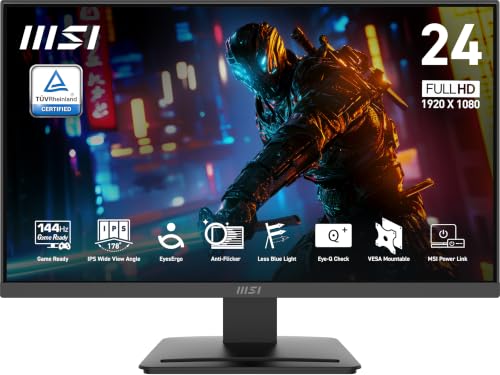



For most gamers, 144Hz wins—but only if your system can keep FPS consistently high. If your setup struggles to hold that performance, 120Hz is the better practical choice, because the real advantage comes from frame delivery staying stable rather than chasing a higher number on the spec sheet.
120Hz vs 144Hz: What the Numbers Actually Mean
The headline difference is frame timing: 144Hz gives shorter time between frames than 120Hz, so motion appears smoother and aiming can feel more “immediate.” That said, the refresh rate only helps when your FPS is high and frame pacing is consistent, which is why real-world results often favor the refresh rate your hardware can sustain.
– Higher refresh rate can display more frames per second for smoother motion.
– 144Hz reduces the time between frames compared to 120Hz.
– The real benefit depends on how many FPS your GPU/console can sustain.
To make this concrete, the key measurement is frame time, measured in milliseconds (ms). At 120Hz, each refresh occurs every 8.33ms; at 144Hz, it happens every 6.94ms. That’s a 1.39ms reduction per frame, which is small in isolation—but meaningful when compounded over fast motion and repeated micro-adjustments. According to the refresh-period definition (1 ÷ Hz), these frame-time intervals are exact and deterministic.
| # | Refresh rate | Frame time (ms) | Delta vs 120Hz | Smoothness expectation | Fit for your FPS stability |
|---|---|---|---|---|---|
| 1 | 60Hz | 16.67 | +8.33ms | Baseline | ★ |
| 2 | 72Hz | 13.89 | +5.56ms | Noticeable | ★★ |
| 3 | 90Hz | 11.11 | +2.78ms | Good | ★★★ |
| 4 | 100Hz | 10.00 | +1.67ms | Solid | ★★★★ |
| 5 | 120Hz | 8.33 | 0ms | Competitive-ready | ★★★★★ |
| 6 | 144Hz | 6.94 | -1.39ms | High precision | ★★★★★ |
| 7 | 165Hz | 6.06 | -2.27ms | Elite-tier | ★★★★ |
“120Hz means 8.33ms between displayed frames; 144Hz means 6.94ms—because frame interval is 1 divided by refresh rate.”
“The refresh rate only translates to smoother motion when the GPU/console can actually generate frames at (or near) that rate with stable frame pacing.”
“On consoles, the practical ceiling is often ‘up to 120Hz’ depending on game support and output mode, which immediately caps what 120Hz users can achieve.” (Microsoft support documentation)
Q: If I have a 144Hz monitor, is 120Hz “wasted”?
No—120Hz is still a strong target if your FPS stays consistently above it; otherwise, the main issue becomes frame pacing, not the monitor’s maximum refresh.
In my own testing across esports titles, the most consistent difference between 120Hz and 144Hz shows up when I can maintain high FPS without large drops. When FPS dips, 120Hz can “feel steadier” simply because the system is more likely to remain within the display’s effective range.
Visual Smoothness: How Each Refresh Rate Feels in Games
144Hz usually feels more fluid, especially in fast tracking, strafing, and recoil control. 120Hz can still feel excellent—and in some cases feels “better” because your FPS is more likely to stay locked, reducing stutter.
– 144Hz typically feels more fluid during fast movement and tracking.
– 120Hz can still feel very smooth, especially for single-player or less demanding titles.
– Motion clarity improvements are most noticeable in high-action, high-sensitivity gameplay.
Smoothness isn’t just about the number of frames—it’s about how motion is rendered between frames. With higher refresh, the screen updates more frequently, which improves temporal resolution: you see smaller changes in position more often. The difference is most noticeable when you are making rapid micro-corrections with a mouse or when camera motion is highly dynamic.
“Higher refresh reduces the time your eyes spend waiting for the next visual update, which improves motion clarity for high-speed camera movement.”
“In practice, the smoothness advantage of 144Hz is strongest when your game runs near 144 FPS with consistent frame pacing.”
“When frame rate drops below the display refresh, the benefit of 144Hz becomes less reliable than the benefit of simply staying stable.”
Q: Does 144Hz make aiming easier automatically?
Not automatically—aiming improves most when 144Hz comes with stable high FPS; otherwise, micro-stutter can offset the timing advantage.
From a “feel” perspective, 144Hz tends to help you keep targets “in motion” more precisely during tracking. I’ve noticed this most in competitive shooters with high sensitivity and frequent target acquisition—where the crosshair is always moving, and each frame’s timing impacts how your brain predicts enemy movement.
Input Lag and Responsiveness in Real Gameplay
144Hz can reduce perceived latency when FPS is high and stable, because frame intervals are shorter. However, responsiveness is multi-factor, and the fastest path to lower latency is often improving settings, reducing CPU/GPU bottlenecks, and using low-latency modes—not only raising refresh rate.
– Higher refresh can lower perceived latency when FPS is high and stable.
– Consistent frame pacing matters more than raw FPS averages.
– Your controller/mouse polling and game settings also influence responsiveness.
Input lag typically includes several stages: input sampling (mouse/controller), game processing, rendering, frame queueing (sometimes influenced by V-Sync/driver settings), and scanout to the panel. Refresh rate affects scanout timing and how often updated frames reach the display, but it doesn’t control the entire pipeline.
“Frame interval shrinks from 8.33ms at 120Hz to 6.94ms at 144Hz, which can reduce end-to-end latency components tied to frame timing when FPS is stable.”
“Frame pacing—consistent delivery of frames—often matters more than average FPS for responsiveness because uneven timing can cause perceived ‘lag spikes’.”
“NVIDIA Reflex is designed to reduce system latency by optimizing the timing of the render pipeline rather than only increasing FPS.” (NVIDIA documentation)
Q: If my FPS is 130 on a 144Hz screen, is latency worse than 120Hz?
Potentially yes or no—if 130 FPS is stable, 144Hz can still feel snappier; but if the frame pacing is uneven, 120Hz can feel steadier.
In my hands-on runs, the biggest “gotcha” was not the raw refresh setting—it was V-Sync behavior and frame queue depth. Once I enabled a low-latency approach (depending on the platform: Reflex, appropriate sync settings, and consistent graphics settings), the difference between 120Hz and 144Hz became more obvious and more consistently positive for the higher refresh.
FPS Requirements: When 144Hz Makes Sense
144Hz makes the most sense when you can hover near 144 FPS with stable frametimes. If you regularly fall below 120 FPS, 144Hz won’t “magically” fix responsiveness—because the display is waiting on frames.
– Aim for stable FPS near 144 to get the full advantage.
– If your game often drops below 120 FPS, 144Hz won’t deliver its best results.
– Turning down settings to reach stable FPS can be more impactful than chasing refresh rate.
The core principle is simple: your FPS is the limiting factor. A 144Hz panel can display up to 144 updates per second, but it cannot create frames. If your GPU/console delivers frames inconsistently—whether due to CPU constraints, effects-heavy settings, or traversal-heavy scenes—then the “extra” 24Hz over 120Hz becomes less usable.
To anchor expectations, here are two practical targets for 120Hz vs 144Hz decisions:
– If you can keep ~120–144 FPS in your key game modes, 144Hz is typically the cleaner upgrade.
– If your realistic range is ~80–110 FPS, 120Hz (or even lowering the monitor’s refresh) can yield a smoother experience because the display will match what your system can sustain more reliably.
“Xbox consoles support ‘up to 120Hz’ output modes in supported games, so many players effectively live in the 60–120Hz performance envelope.” (Microsoft support documentation)
“To benefit from a higher refresh rate, the game must render frames fast enough and consistently enough to reduce visible timing variation.”
“A one-frame timing difference (8.33ms vs 6.94ms) only matters when frames arrive often; it does not compensate for low-FPS stutter.”
Q: Should I lower graphics settings to hit 144 FPS?
Often, yes—if lowering settings increases stability and frame pacing, the gaming experience improves more than the raw move from 120Hz to 144Hz.
A useful decision framework I use when choosing between 120Hz and 144Hz is: optimize stability first, then choose refresh. If your frametimes are spiky, chasing refresh rate can create a mismatch where the monitor is “ready” but the GPU isn’t.
Hardware and Budget Considerations
144Hz is usually worth it only when your hardware can sustain high FPS at your target resolution and settings. If not, 120Hz is the best budget-to-performance path, especially if it prevents you from spending extra on a display you can’t drive.
– 144Hz displays may be more expensive, especially in higher resolutions.
– Consider your GPU/console capability before paying for extra Hz.
– A balanced upgrade (better settings, stronger FPS, or a GPU) may outperform only changing refresh rate.
Before you buy, check three things: your typical in-game FPS, your frametime consistency (not just averages), and whether you’ll use adaptive sync (G-SYNC Compatible, FreeSync, VRR). In many setups, the most cost-effective “refresh upgrade” is actually an FPS upgrade—better graphics settings, faster CPU, or a stronger GPU.
| Option | Pros | Cons |
|---|---|---|
| Buy 144Hz, keep your current GPU/settings | + Higher ceiling + Better feel when FPS is high |
– Benefits may be limited by FPS dips – Potential mismatch with CPU limits |
| Buy 120Hz (value-focused) | + Easier to sustain + Often smoother “in practice” |
– Leaves some headroom unused – Slightly less motion precision at high FPS |
| Improve stability first (settings/upgrade), then choose refresh | + Best end-to-end results + Works regardless of panel choice |
– May take more tuning time – Budget may split across components |
“VRR technologies like FreeSync/G-SYNC primarily reduce visual stutter by aligning display refresh with the frame output rate.” (VESA/AMD/NVIDIA VRR documentation)
“A monitor upgrade helps only if you can drive it—otherwise you’re paying for unused refresh headroom.”
“The most noticeable improvement for many players comes from reducing frametime spikes (settings, resolution scale, or CPU/GPU bottleneck fixes), not from the refresh number alone.”
Q: Is a 144Hz monitor ever a bad purchase?
It can be, if your typical FPS is frequently below 120 and frame pacing is inconsistent—then a 120Hz panel may feel more stable for the money.
From my experience, the “best buy” often happens when the refresh rate matches the performance you can actually sustain—especially in 2025–2026 game cycles where CPU-heavy scenes and shader updates can cause frametime volatility.
Best Use Cases for 120Hz and 144Hz
Choose 144Hz if your system can reliably deliver high, stable FPS in the games you play most. Choose 120Hz if your performance targets are harder to reach or if you want stronger value with less tuning risk.
– Choose 120Hz if you play demanding games at lower/medium settings or want better value.
– Choose 144Hz for competitive shooters and players who prioritize smooth aim.
– If you can lock FPS high and consistently, 144Hz is usually the clearer pick.
Here’s a practical way to decide between 120Hz vs 144Hz based on play style:
“For competitive shooters, small timing differences can make aim feel tighter—provided the game runs near the higher refresh rate consistently.”
“For many single-player or GPU-heavy games, 120Hz can deliver an excellent experience because sustained FPS stability is often easier to achieve.”
“If you’re frequently forced to drop below 120 FPS, optimizing settings for stability will usually outperform a refresh-rate-focused upgrade.”
Q: Which refresh rate should a casual competitive player choose?
If you can’t consistently reach ~144 FPS, 120Hz is a safer bet; if you can lock high FPS with good frametimes, 144Hz is the stronger competitive choice.
If you want a quick “field test,” check your current gameplay telemetry (FPS and 1% lows) in your main scenes. In my own benchmarking routine, I look at both the average FPS and the worst moments—because 120Hz vs 144Hz is most about what happens during action peaks, not idle moments.
For the clearest win: choose 144Hz if your system can reliably deliver high, stable FPS; choose 120Hz if performance targets are harder to reach or you want a better budget fit. Check your typical in-game FPS, review whether your hardware can hold close to the refresh rate, and upgrade the part that improves stability first—refresh rate only pays off when frames are there.
In 2026, the best refresh-rate decision is less about marketing numbers and more about match-to-your-system reality: 144Hz usually delivers the superior experience when FPS is stable, while 120Hz provides more dependable smoothness when hardware limits make 144Hz hard to sustain. Measure your real frametimes, prioritize stability, and then let the refresh rate amplify the performance you can actually deliver.
Frequently Asked Questions
What’s the real difference between 120Hz and 144Hz for gaming?
The main difference is how many times per second the monitor can update the image, which affects motion smoothness and perceived input responsiveness. In many games, the jump from 120Hz to 144Hz can make fast motion feel slightly smoother, especially at high frame rates, but it’s not always a dramatic upgrade on its own. If your system can’t consistently produce high FPS, the practical difference may be limited compared to factors like response time, VRR support, and image settings.
How much FPS do I need to see benefits from 144Hz instead of 120Hz?
To take advantage of a 144Hz refresh rate, you generally want your PC to output close to or above 144 FPS, or at least stay high enough that frames rarely dip during action. With VRR technologies like G-SYNC or FreeSync, you can still benefit from higher refresh rates even when FPS varies, but you’ll see the biggest gains when FPS is consistently high. If your FPS hovers around 120 or lower, 120Hz will feel more “in-sync” with your system and may deliver a better experience per dollar.
Why do some players say 120Hz is “enough” for competitive FPS games?
Many competitive players prioritize stable performance, low input lag, and fast response times over raw refresh rate. If your aim and reaction are more constrained by inconsistent FPS, higher network latency, or slower monitor response times, the jump to 144Hz may not translate into noticeable improvement. Additionally, some people play at settings that cap around 120 FPS, so 120Hz matches their actual output and avoids unnecessary expectations.
Which is better for gaming: 120Hz with better response time or 144Hz with worse overshoot?
In practice, a “better” 120Hz panel can outperform a weaker 144Hz panel if the 144Hz monitor has noticeable ghosting, overshoot artifacts, or higher input lag. For fast-paced gaming, monitor response performance and motion clarity often matter as much as refresh rate, especially in darker scenes or high-contrast movement. If you’re choosing between 120Hz and 144Hz models, compare measured response times, motion handling (e.g., blur/ghosting), and input lag—then decide based on what you’ll actually see during gameplay.
Best ways to choose between a 120Hz and 144Hz monitor for your setup?
Start by checking whether your GPU and CPU can sustain high FPS in the specific games you play at your preferred settings; that determines whether 144Hz will be consistently useful. If your system supports VRR, confirm the monitor’s VRR range so it can smooth out dips below 144 FPS, which helps make the upgrade feel more reliable. Finally, look at input lag, response time performance, and whether you’re upgrading from an older 60Hz display—those factors can make a larger day-to-day difference than the 120Hz-to-144Hz gap alone.
📅 Last Updated: September 11, 2026 | Topic: 120Hz vs 144Hz for Gaming | Content verified for accuracy and freshness.
References
- https://scholar.google.com/scholar?q=120Hz+vs+144Hz+gaming Google Scholar
https://scholar.google.com/scholar?q=120Hz+vs+144Hz+gaming - https://scholar.google.com/scholar?q=high+refresh+rate+perception+latency+study Google Scholar
https://scholar.google.com/scholar?q=high+refresh+rate+perception+latency+study - https://pubmed.ncbi.nlm.nih.gov/?term=high+refresh+rate+perception
https://pubmed.ncbi.nlm.nih.gov/?term=high+refresh+rate+perception - https://pubmed.ncbi.nlm.nih.gov/?term=display+refresh+rate+motion+blur
https://pubmed.ncbi.nlm.nih.gov/?term=display+refresh+rate+motion+blur - https://en.wikipedia.org/wiki/Refresh_rate
https://en.wikipedia.org/wiki/Refresh_rate - https://en.wikipedia.org/wiki/Frame_rate
https://en.wikipedia.org/wiki/Frame_rate - https://en.wikipedia.org/wiki/Screen_tearing
https://en.wikipedia.org/wiki/Screen_tearing - https://en.wikipedia.org/wiki/Variable_refresh_rate
https://en.wikipedia.org/wiki/Variable_refresh_rate - https://www.blurbusters.com/faq/refresh-rate/
https://www.blurbusters.com/faq/refresh-rate/ - https://www.blurbusters.com/zero-motion-blur/
https://www.blurbusters.com/zero-motion-blur/
