Finding the right microphone and audio accessories can significantly enhance your sound quality, whether you’re a podcaster, musician, or content creator. A well-chosen microphone paired with the right accessories can transform your recordings from mediocre to professional. In this article, we’ll review various microphones and audio accessories, highlighting their features, pros, and cons to help you make informed purchasing decisions.




Understanding Different Microphone Types
Dynamic vs. Condenser: Learn the key differences and suitable applications for each type.
Microphones come in various types, but two of the most common are dynamic and condenser microphones. Dynamic microphones are robust and handle high sound pressure levels well, making them perfect for live performances and loud sound sources, such as drums and guitar amplifiers. They are less sensitive than condensers, which means they don’t pick up as much background noise. On the other hand, condenser microphones are highly sensitive and capture a broader frequency range, making them ideal for studio recordings, vocals, and acoustic instruments. If you’re looking for warmth and detail in your recordings, a condenser mic is your best bet, while dynamic mics are your reliable workhorse for live settings.
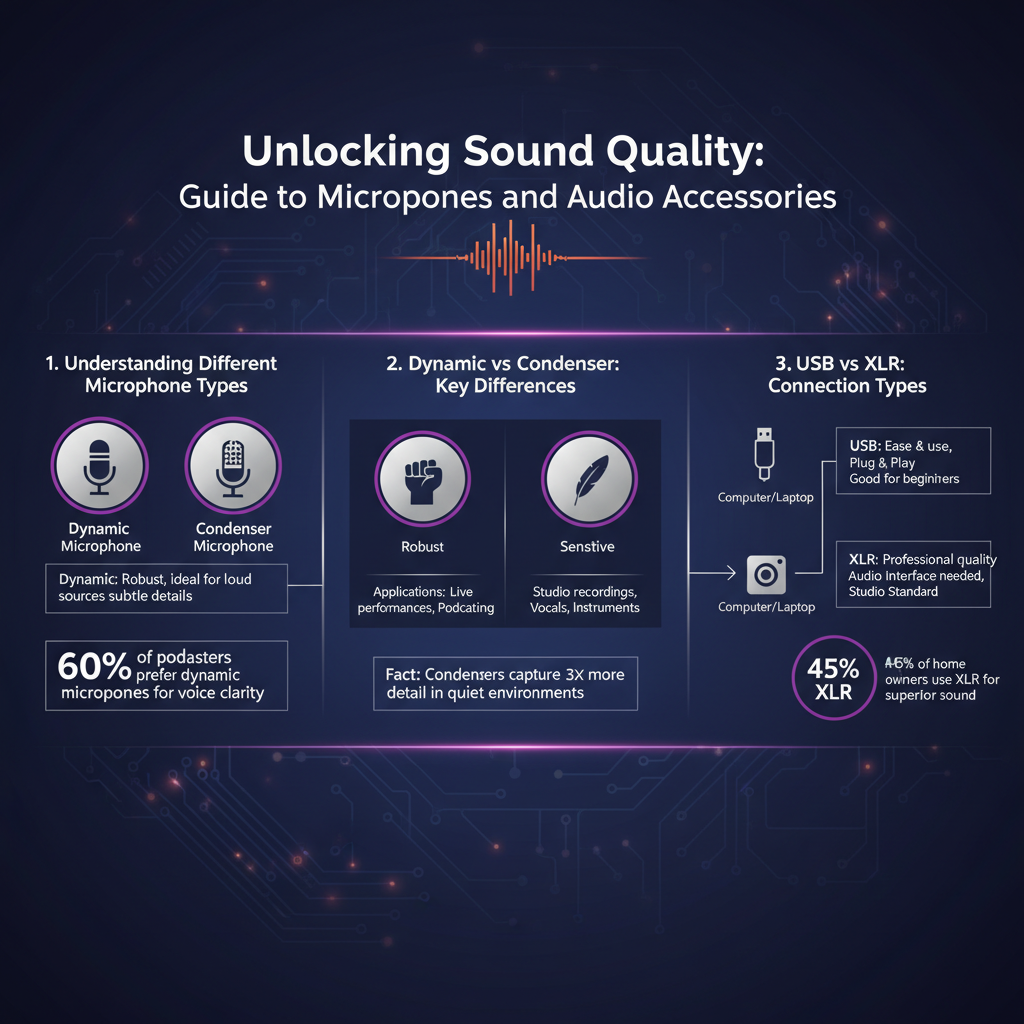
USB vs. XLR: Explore the advantages of each connection type for various setups.
When it comes to connections, USB and XLR microphones serve different needs. USB microphones are incredibly user-friendly, making them great for beginners or those who want to plug and play directly into a computer without additional gear. They often come with built-in audio interfaces, simplifying the recording process. However, XLR microphones offer superior sound quality and versatility, as they require an audio interface or mixer to connect to your computer. XLR setups allow for greater control over the audio quality and are essential for professional recordings. If you aim for a high-quality sound and plan to expand your setup, investing in an XLR microphone is advisable.
Top Microphone Recommendations
Best Budget Microphones: Highlight affordable options without compromising quality.
1. Audio-Technica AT2020: This condenser microphone is a favorite among beginners and budget-conscious creators. It offers excellent sound quality with a frequency response of 20 Hz to 20 kHz and is perfect for vocals and instruments alike. Its build quality is durable, and it’s priced under $100.
2. Shure SM57: A legendary dynamic microphone, the SM57 is versatile and exceptionally durable. Priced around $99, it excels in live settings and is also great for studio work, especially for instruments. Its cardioid pattern helps isolate the sound source, reducing background noise.
Premium Microphones: Review high-end choices for professional audio needs.
1. Neumann U87: Often considered the gold standard in studio microphones, the U87 is a large diaphragm condenser mic known for its warm sound and exceptional clarity. At a price point around $3,200, it’s a significant investment but is favored by professionals for vocals, strings, and pianos.
2. Shure KSM32: This condenser microphone is renowned for its flat frequency response and low self-noise. Priced around $600, it provides versatility across various instruments and vocals, making it an excellent choice for studio professionals looking for accuracy.
Essential Audio Accessories for Optimal Performance
Pop Filters: Understand their importance in reducing unwanted noise.
A pop filter is a simple yet essential accessory for anyone serious about recording. It helps reduce plosive sounds caused by letters like “P” and “B,” which can create unwanted bursts of air that distort audio. By placing a pop filter in front of your microphone, you can achieve cleaner vocals, making your recordings sound more professional. They are typically affordable and easy to set up, so adding one to your audio gear is a no-brainer.
Shock Mounts: Discover how they protect your microphone from vibrations.
Shock mounts are vital for preventing unwanted vibrations from reaching your microphone. They isolate the mic from noise caused by handling or movement, which is especially important in studio settings. Most condenser microphones come with a compatible shock mount, but if yours doesn’t, investing in one can significantly improve your recordings. This accessory ensures that your sound is clear and free from rumbling or low-frequency noise.
Comparing Audio Interfaces
Key Features to Consider: Discuss sample rates, connectivity, and preamps.
An audio interface is a crucial piece of gear for anyone using XLR microphones. When choosing an interface, consider sample rates, which determine the audio quality. A sample rate of 44.1 kHz is standard for CDs, but if you’re aiming for higher fidelity, look for interfaces that support 96 kHz or even 192 kHz. Connectivity is also essential; USB interfaces are convenient, while Thunderbolt connections offer lower latency. Additionally, the quality of preamps can vary significantly. High-quality preamps ensure your recordings are clean and retain detail, so look for interfaces with good reviews regarding preamp quality.
Top Picks: Review the best audio interfaces available for different budgets.
1. Focusrite Scarlett 2i2: This is one of the most popular audio interfaces for beginners and pros alike. Priced around $160, it offers two high-quality preamps and a USB connection, making it easy to set up. It supports sample rates up to 192 kHz and has a sturdy build.
2. Universal Audio Apollo Twin X: For those serious about sound quality, this premium interface is a favorite among professionals. Priced around $899, it features top-notch preamps and onboard DSP processing for real-time effects. It’s an investment that will elevate your recordings significantly.
Tips for Setting Up Your Audio Gear
Placement and Environment: Learn how to position your microphone for optimal sound.
Microphone placement is crucial for achieving the best sound quality. Position your mic at mouth level and about 6-12 inches away for vocals. If you’re recording instruments, experiment with distance and angles to find the sweet spot. Additionally, consider your recording environment. A room with hard surfaces can create echoes, so try to record in a quiet space with soft furnishings that absorb sound. Acoustic panels or foam can also help improve sound quality.
Software and Settings: Overview of essential software and settings for recording.
Choosing the right software is key to a successful recording session. Popular options like Audacity (free), Adobe Audition, and Logic Pro X offer various features for editing and mixing. Make sure to set your input levels correctly; aim for a recording level that peaks around -6 dB to -12 dB to avoid clipping. Familiarize yourself with the software’s settings for compression and EQ, as they can greatly enhance your final product.
Common Mistakes to Avoid in Audio Recording
Poor Acoustic Treatment: Explain the importance of soundproofing your recording space.
One of the biggest mistakes new recorders make is neglecting acoustic treatment. If your room has hard surfaces, it can lead to echoes and unwanted reflections in your recordings. To mitigate this, invest in acoustic panels or bass traps to create a more controlled environment. Even simple solutions like heavy curtains or carpets can make a significant difference in sound quality.
Ignoring Gain Levels: Discuss the impact of proper gain settings on audio clarity.
Setting the correct gain level is crucial for achieving professional-sounding recordings. If your gain is too low, your audio may sound weak, while too high can cause distortion. Always monitor your levels during recording, aiming for a healthy mix that captures the nuances of your sound source without peaking. A good practice is to conduct a test recording to ensure your levels are just right before starting your main session.
In summary, choosing the right microphone and audio accessories is crucial for achieving high-quality sound. By considering the types of microphones, essential accessories, and common recording pitfalls, you can elevate your audio production. Take the next step by exploring our detailed reviews and recommendations to find the best gear for your needs. Whether you’re just starting or looking to refine your equipment, making informed choices will undoubtedly enhance your sound experience. Happy recording!
Frequently Asked Questions
What should I look for in a microphone for podcasting?
When choosing a microphone for podcasting, consider factors such as sound quality, type (dynamic vs. condenser), and connectivity options (USB vs. XLR). A high-quality condenser microphone is often recommended for voice clarity, while a dynamic microphone can be beneficial in noisy environments. Additionally, look for features like built-in pop filters, shock mounts, and frequency response to ensure your recordings are professional and clear.
How do I choose the best audio accessories for home recording?
To select the best audio accessories for home recording, first assess your specific needs based on the type of recording you’ll be doing. Essential accessories include a pop filter to reduce plosive sounds, a shock mount to minimize vibrations, and an audio interface for better sound quality. Investing in quality headphones for monitoring and a sturdy microphone stand will also enhance your recording setup, ensuring you capture high-fidelity audio.
Why is audio quality important in video production?
Audio quality is crucial in video production because it directly affects viewer engagement and perception of professionalism. Poor audio can distract viewers and lead to a negative impression of your content, even if the visuals are high-quality. By investing in quality microphones and audio accessories, you can ensure that your audio is clear and balanced, enhancing the overall viewing experience and retention rates.
What are the best microphones for live streaming in 2023?
The best microphones for live streaming in 2023 include the Audio-Technica AT2020 for its affordability and sound quality, the Shure SM7B for its broadcast-quality performance, and the HyperX QuadCast for its built-in shock mount and pop filter. Each of these microphones caters to different budgets and preferences, ensuring that streamers can find the right option to enhance their audio during live broadcasts.
Which audio accessories are essential for a beginner home studio?
Essential audio accessories for a beginner home studio include a quality microphone, an audio interface, studio monitors, and acoustic treatment materials. A USB microphone is a great starting point for simplicity, while an audio interface will provide better sound quality and connectivity options. Additionally, incorporating studio monitors will help you accurately hear your recordings, and acoustic treatment will reduce echo and improve sound clarity in your space.
References
- Microphone
- https://www.npr.org/sections/alltechconsidered/2015/12/23/460150589/what-to-know-about-microphones
- https://www.sciencedirect.com/topics/engineering/microphone
- https://www.adafruit.com/category/26_25/microphone
- Audio – CNET
- https://www.pcmag.com/picks/the-best-microphones
- https://www.wired.com/category/tech/audio/