
When it comes to achieving crystal-clear audio in your recordings, the right studio microphone is essential. Choosing a microphone that suits your specific needs can significantly elevate the quality of your audio projects. In this guide, you’ll discover standout microphones in the market known for their clarity and sound quality, ensuring you make an informed decision that aligns with your recording goals.
Understanding Microphone Types
To effectively choose a microphone, it’s crucial to understand the different types available and their best uses.
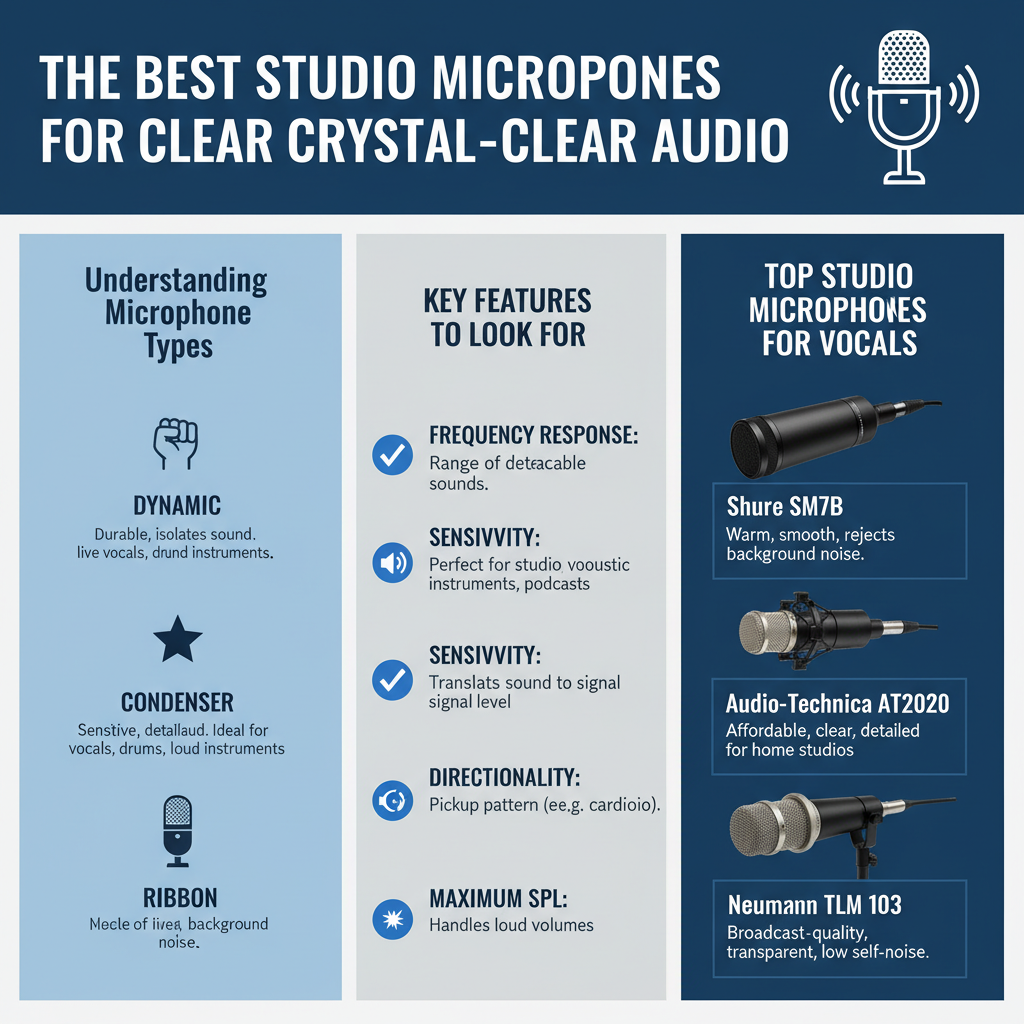
– Dynamic Microphones: These microphones are robust and well-suited for live performances, handling high sound pressure levels without distortion. Their durability makes them a favorite among touring musicians and live sound engineers. The Shure SM58 is a classic example of a dynamic microphone that’s legendary for its reliability and clarity in live settings.
– Condenser Microphones: On the other hand, condenser microphones shine in studio environments, capturing detailed sound and nuances that dynamic microphones might miss. They are sensitive to a broader frequency range, making them ideal for vocals and acoustic instruments. For instance, the Audio-Technica AT2020 is a popular choice among home studio enthusiasts for its detailed sound capture.
Understanding these two primary types helps you determine which microphone will fit your recording situation best.
Key Features to Look For

When shopping for studio microphones, certain features can make a significant difference in audio quality.
– Frequency Response: A microphone’s frequency response indicates the range of sound frequencies it can capture. Wider frequency response means more detailed audio. For example, a microphone that captures frequencies from 20 Hz to 20 kHz can reproduce a full-spectrum sound, providing richness and clarity that’s ideal for both vocals and instruments.
– Sensitivity: This is the microphone’s ability to pick up quiet sounds. Higher sensitivity microphones can capture subtle details, making them perfect for delicate acoustic performances or quiet vocals. For instance, the Neumann U87 is renowned for its high sensitivity, allowing it to capture the softest of sounds with exceptional clarity.
By focusing on these features, you can ensure that your microphone meets the demands of your recording environment.
Top Studio Microphones for Vocals
When it comes to vocal recordings, clarity and detail are paramount. Here are some top choices:
– Shure SM7B: This microphone has gained a reputation for its versatility across various vocal styles. Whether you’re recording spoken word, singing, or podcasts, the SM7B offers a warm and rich sound profile, complemented by its built-in air suspension shock isolation system that reduces noise from handling and plosives.
– Audio-Technica AT2020: For those on a budget, the AT2020 provides exceptional value. It’s praised for its clear audio reproduction and solid build quality. This microphone is particularly adept at capturing the nuances of the human voice, making it a favorite among beginners and professionals alike.
These options showcase the diversity available in vocal microphones, catering to different budgets and recording needs.
Best Microphones for Instruments
Instruments often require specific microphones to capture their unique sound characteristics. Here are two standout options:
– Neumann U87: Widely regarded as a studio standard, the U87 is a premium microphone known for its rich and warm sound profile. Its versatility makes it suitable for various instruments, from vocals to strings and brass. The U87’s switchable polar patterns allow you to tailor the microphone’s pickup to the recording situation, making it a go-to choice in professional studios.
– Rode NT1-A: If you’re looking for something more budget-friendly, the Rode NT1-A is an excellent choice. Known for its incredibly low self-noise, this microphone can faithfully capture acoustic instruments without coloring the sound. It’s particularly popular among singer-songwriters and home studio owners for its clarity and affordability.
Selecting the right microphone for your instruments can bring your recordings to life and highlight the nuances of each sound.
Budget-Friendly Options
Quality doesn’t have to break the bank. Here are two budget-friendly microphones that still deliver impressive sound:
– Samson C01: This condenser microphone is surprisingly affordable yet offers decent sound quality for home studio setups. With its cardioid polar pattern, the C01 effectively minimizes background noise, making it ideal for vocals and instruments alike. It’s a fantastic entry point for those just starting without sacrificing clarity.
– MXL 770: Another great entry-level option, the MXL 770 provides a warm tone and versatile performance. It’s capable of capturing everything from vocals to instruments, making it a favorite among budget-conscious musicians. The microphone also includes a low-frequency roll-off switch, allowing for greater flexibility in recording environments.
These budget-friendly options show that you can achieve great sound without spending a fortune.
Considerations for Your Setup
Beyond the microphone itself, the recording environment plays a vital role in audio quality.
– Room Acoustics: The acoustics of the room where you record can significantly impact sound clarity. Rooms with hard surfaces can create unwanted reflections and echoes, while treated rooms with sound-absorbing materials can enhance your recordings. Investing in acoustic panels or foam can greatly improve your audio quality.
– Microphone Placement: Proper microphone placement is crucial for capturing the best sound. Experimenting with distance and angle can lead to different tonal qualities. For example, placing a microphone closer to a source can emphasize certain frequencies, while moving it back can capture a more natural, ambient sound.
Taking these factors into account can lead to a more professional-sounding recording.
Maintenance and Care
To keep your microphone in top shape and prolong its lifespan, regular maintenance is essential.
– Regular Cleaning: Dust and debris can accumulate on your microphone, affecting sound quality. Use a soft brush or cloth to gently clean the microphone grill and body. Avoid using harsh chemicals that could damage the microphone’s components.
– Proper Storage: When not in use, store your microphone in a protective case to shield it from environmental factors that could cause damage. Keeping it at a stable temperature and humidity level can also prevent issues related to moisture and temperature fluctuations.
By maintaining your microphone properly, you ensure it continues to perform at its best for years to come.
The best studio microphones can elevate your audio recordings to professional levels. By understanding the types, features, and top options available, as well as maintaining your gear, you can ensure that you always achieve the clearest sound possible. Take the time to evaluate your needs and invest in a quality microphone that will enhance your recordings, whether for music, podcasts, or any other audio project. Happy recording!
Frequently Asked Questions
What are the key features to look for in the best studio microphones for crystal clear audio?
When selecting the best studio microphones for crystal clear audio, consider factors such as the microphone type (dynamic, condenser, or ribbon), frequency response, sensitivity, and polar pattern. A condenser microphone typically offers superior clarity and detail, making it ideal for vocals and instruments. Additionally, look for microphones with a wide frequency range and low self-noise to ensure you capture high-quality sound without interference.
How do I choose the right studio microphone for my recording needs?
Choosing the right studio microphone depends on your specific recording requirements and environment. For vocals, a large diaphragm condenser microphone is often preferred due to its sensitivity and warmth. If you’re recording instruments, consider the acoustic properties of the space and whether you need a directional microphone to minimize background noise. Testing different microphones in your studio can also help you find the one that best captures your desired sound.
Why are condenser microphones often recommended for studio recording?
Condenser microphones are frequently recommended for studio recording because they are highly sensitive and can capture a wide range of frequencies, making them ideal for detailed sound reproduction. Their ability to pick up subtle nuances in vocals and instruments enhances the overall audio quality. Additionally, many condenser microphones come with features like switchable polar patterns, allowing for versatility in different recording situations.
What is the best budget studio microphone for beginners?
One of the best budget studio microphones for beginners is the Audio-Technica AT2020. This condenser microphone offers excellent sound quality at an affordable price, making it a favorite among new recording artists. Its cardioid polar pattern helps isolate the sound source while minimizing background noise, providing a clear recording experience perfect for home studios.
Which studio microphones are best for podcasting and voiceovers?
For podcasting and voiceovers, the Shure SM7B and the Rode NT1-A are two top choices. The Shure SM7B is renowned for its rich, warm sound and excellent noise rejection, making it ideal for vocal applications. The Rode NT1-A, on the other hand, boasts an ultra-low self-noise level, providing crystal clear audio that enhances vocal clarity. Both microphones effectively capture voice details, making them popular among podcasters and voiceover artists.
References
- Microphone
- https://www.npr.org/2020/09/30/916353411/how-to-pick-the-best-microphone-for-your-home-studio
- https://www.soundonsound.com/techniques/microphone-basics
- https://www.thebalancecareers.com/how-to-choose-a-microphone-2460242
- https://www.izotope.com/en/learn/microphone-basics.html
- https://www.musictech.net/guides/buyers-guide/best-studio-microphones/
- Technology – Mixonline
- https://www.sweetwater.com/insync/studio-microphone-basics/