

Choosing between factory and aftermarket car audio systems ultimately depends on your sound quality expectations, budget, and customization preferences. Factory systems are designed to deliver decent sound quality and integrate seamlessly with your vehicle, while aftermarket systems offer superior audio performance and a range of customization options. In this article, we’ll explore the key differences to help you make an informed decision.
Sound Quality Comparison

When it comes to sound quality, factory audio systems typically provide adequate performance for everyday listening. They are engineered to meet the basic needs of most drivers, offering clear audio that covers the frequencies for spoken word and music alike. However, many users find that factory systems can lack depth and clarity, particularly when it comes to low-end bass or the finer details of a track. For instance, if you enjoy genres like jazz or classical music that thrive on intricate soundscapes, you may feel the limitations of a standard factory system.
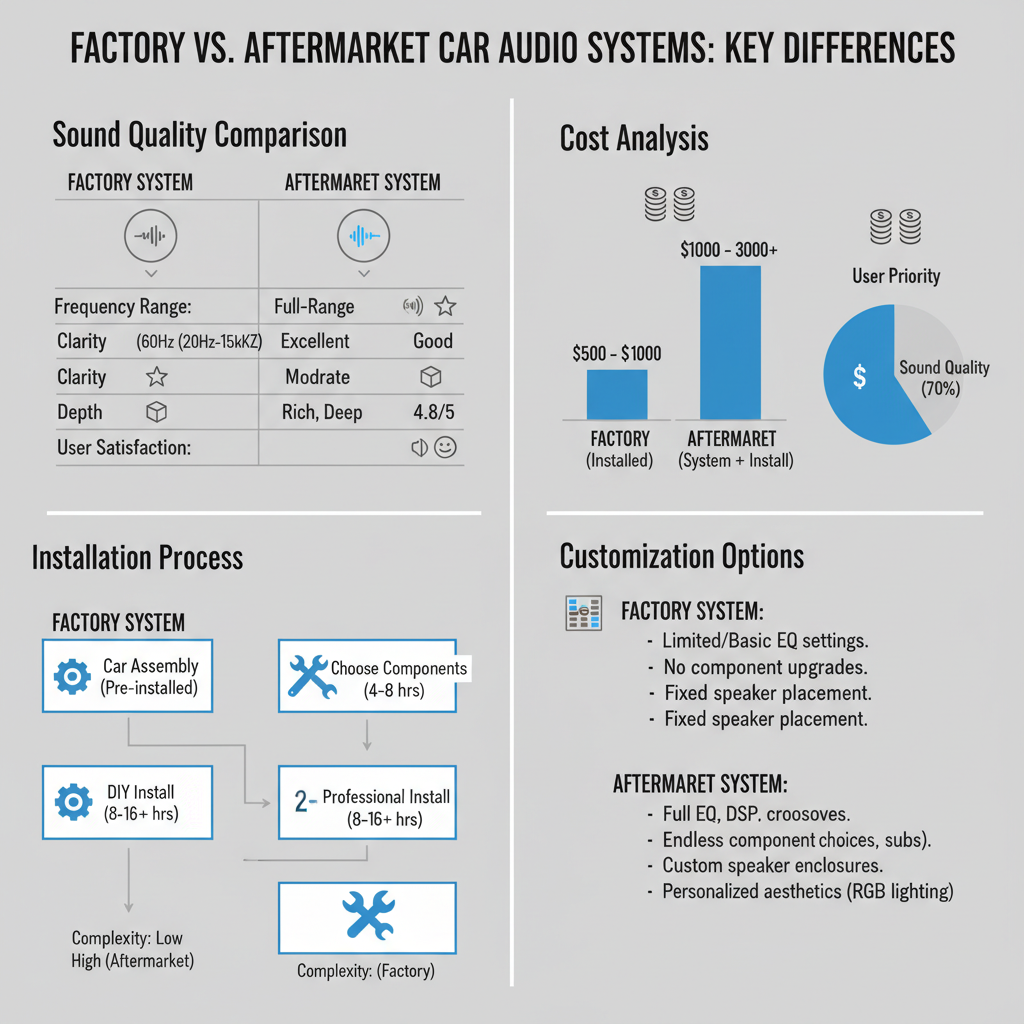
On the other hand, aftermarket car audio systems often feature higher quality components such as advanced speakers, subwoofers, and amplifiers. These components are designed to deliver a richer and more immersive sound experience. Brands like JL Audio, Alpine, and Pioneer are known for producing aftermarket systems that can significantly enhance sound clarity, bass response, and overall audio performance. For example, a well-installed aftermarket subwoofer can make a world of difference, allowing you to feel the beat of the music rather than just hear it.

Cost Analysis

Cost is a significant factor in any purchasing decision, and car audio systems are no exception. Factory systems are included in the purchase price of the vehicle, making them a cost-effective option for many buyers. Since you don’t have to spend extra for a standard audio setup, this can be appealing if you’re on a tight budget or if audio performance isn’t a top priority for you.
However, aftermarket systems can be more expensive due to the cost of components and professional installation. It’s not uncommon for enthusiasts to invest anywhere from a few hundred to several thousand dollars depending on their desired setup. While this may seem pricey upfront, many find that the enhanced audio experience and the ability to personalize their setup provide better long-term value. Imagine cruising down the road with your favorite playlist sounding better than ever—this kind of audio upgrade can elevate your driving experience immensely, making it worth the investment for many.
Installation Process
The installation process is another crucial difference between factory and aftermarket systems. Factory systems come pre-installed, meaning you can drive off the lot and enjoy your audio experience without any hassle. This convenience is a significant draw for many buyers who may not want to deal with the complexities of installation.
In contrast, aftermarket systems often require professional installation, which can add to the overall cost and complexity of the upgrade. While some tech-savvy individuals may opt to install the system themselves, professional installation ensures that everything is set up correctly and operates as intended. It’s essential to choose a reputable installer to avoid issues down the line, as a poorly installed system can lead to problems such as electrical shorts or subpar sound quality.
Customization Options
Customization is where aftermarket systems truly shine. Factory audio systems generally have limited options for personalization, often restricted to basic adjustments like treble and bass levels within the vehicle’s interface. If you’re someone who enjoys tinkering with settings or wants specific features tailored to your listening preferences, a factory system may leave you wanting more.
Aftermarket systems, however, provide extensive customization options that allow users to select specific components, tuning features, and aesthetic upgrades. You can choose everything from the type of speakers and subwoofers to the head unit that controls your audio experience. Some systems even allow for advanced tuning options, enabling you to create custom sound profiles that suit different genres of music or even your mood. For example, if you prefer a more bass-heavy sound for hip-hop but a balanced sound for classical, aftermarket systems can cater to those preferences with ease.
Durability and Reliability
Durability and reliability are crucial considerations when investing in any car component. Factory systems are typically designed to meet OEM (original equipment manufacturer) standards, which means they are generally reliable and benefit from warranty coverage. If something goes wrong, you can often get it repaired or replaced at no extra cost, which provides peace of mind for many drivers.
In contrast, the quality of aftermarket systems can vary widely based on the brand, model, and installation quality. Some aftermarket brands are known for their robust performance and longevity, while others may be more prone to issues over time. Conducting thorough research and reading reviews can help you find reliable options. Additionally, a well-installed system using quality components can last for many years and deliver exceptional audio performance throughout its lifespan.
Resale Value Considerations
When it comes to resale value, factory audio systems usually do not affect the vehicle’s resale value significantly. They are expected features that buyers anticipate when purchasing a vehicle. However, if you decide to sell your car, you can rest assured that the factory system will be seen as a standard offering.
Aftermarket upgrades, however, can enhance resale value if they are high-quality and appeal to potential buyers. A well-installed, high-end audio system can be a selling point for audiophiles and music lovers. Conversely, poorly executed installations or low-quality components can deter potential buyers and may even decrease your car’s value. Therefore, if you choose to invest in an aftermarket system, it’s essential to ensure quality work that adds to the vehicle’s appeal.
User Experience and Features
Lastly, let’s talk about user experience and features. Factory systems may include basic functionalities like Bluetooth connectivity and FM radio, but they often lack the advanced features found in many aftermarket options. If you enjoy seamless smartphone integration, customizable sound profiles, or advanced connectivity options, you may find factory systems lacking.
Aftermarket systems can include state-of-the-art functionalities such as Apple CarPlay, Android Auto, and even high-definition audio streaming. Many systems also allow for customizable interfaces, so you can choose how your audio settings are displayed and controlled. This level of personalization greatly enhances the overall user experience, making your time on the road more enjoyable.
In summary, comparing factory and aftermarket car audio systems reveals distinct pros and cons for each option. Factory systems offer convenience and reliability, while aftermarket systems provide enhanced sound quality and extensive customization opportunities. When making your decision, consider your priorities, whether they be sound quality, budget, or user experience. If you’re ready to elevate your car’s audio to the next level, explore your local aftermarket options or consult with an audio specialist today!
Frequently Asked Questions
What are the main differences between factory and aftermarket car audio systems?
The primary differences between factory and aftermarket car audio systems lie in sound quality, customization options, and features. Factory systems are usually designed to meet basic sound needs and are often limited in terms of power and sound range. In contrast, aftermarket systems offer a wide variety of components and upgrades, allowing users to tailor their audio experience with higher-quality speakers, amplifiers, and additional features like Bluetooth connectivity and advanced equalizers.
How do I know if I should upgrade to an aftermarket car audio system?
Consider upgrading to an aftermarket car audio system if you find that your factory system lacks sound depth, clarity, or overall power. Other indicators include frequent distortion at higher volumes, inadequate bass response, or missing features such as smartphone integration. If you enjoy music and spend considerable time in your vehicle, investing in an aftermarket system can greatly enhance your driving experience.
Why are aftermarket car audio systems often considered better than factory systems?
Aftermarket car audio systems are often regarded as superior due to their enhanced sound quality and the ability to customize setups according to individual preferences. Unlike factory systems, which typically use generic components, aftermarket options utilize high-performance parts that provide better acoustics, richer tones, and more power. Additionally, aftermarket systems often feature advanced technologies that improve connectivity and user experience, such as better user interfaces and support for streaming services.
What is the best aftermarket car audio system for someone on a budget?
For budget-conscious consumers, brands like Pioneer, Kenwood, and JVC offer excellent aftermarket car audio systems that deliver high-quality sound without breaking the bank. Look for models that provide a balance of features, such as built-in Bluetooth, USB ports, and a user-friendly interface, along with good reviews for sound quality. Starting with a high-quality head unit can also significantly enhance the overall audio experience without requiring a complete overhaul of the existing system.
Which is easier to install: factory or aftermarket car audio systems?
Generally, factory car audio systems are easier to install since they come pre-installed in the vehicle and are designed to fit perfectly without additional modifications. Aftermarket systems, while offering greater customization, often require more effort to install, which may involve wiring, mounting, and even cutting into the dashboard. For those unfamiliar with car audio installation, hiring a professional can ensure the aftermarket system is properly set up and optimized for the best sound experience.
References
- Vehicle audio
- https://www.sciencedirect.com/science/article/pii/S2351978917303032
- https://www.edmunds.com/car-tech/buying-car-audio-systems.html
- https://www.consumerreports.org/car-electronics/best-car-audio-systems-a1003646589/
- https://www.nhtsa.gov/equipment/car-audio-systems
- https://www.caranddriver.com/features/a15118554/what-to-know-about-car-audio-systems-article/
- https://www.researchgate.net/publication/323524188_Audio_Quality_in_Car_Audio_Devices
- Three Anecdotes from the DARPA Autonomous Land Vehicle Project | AI Magazine
