
Want to configure a cable modem step by step without guesswork? This guide walks you through the exact setup—connecting coax and power, logging into the modem, entering ISP credentials, and confirming you’re online. If you follow these steps in order, you’ll get a stable connection quickly and avoid the common activation and signal issues that delay installs.
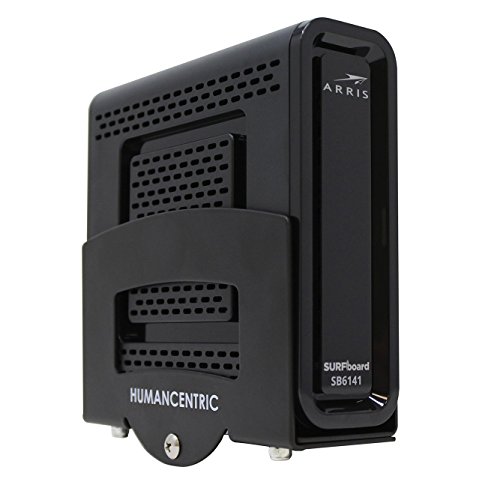



If your cable modem has an active coax connection, you usually just connect it correctly, power-cycle it, and confirm the modem shows a live WAN/Internet link. Then configure only the essentials—typically Wi‑Fi credentials if the modem also acts as a router, or WAN/DHCP on your separate router if it doesn’t.
Most “no Internet” cases aren’t caused by complicated settings—they’re caused by one of three things: (1) the modem isn’t provisioned by your ISP, (2) the coax signal can’t be locked (so DS/US doesn’t stabilize), or (3) your router/Wi‑Fi setup is competing with the modem (DHCP/NAT) or using the wrong port. This guide focuses on the exact connection order, what to check on the status lights/admin page, and what to change when the modem won’t come online—without guessing.
This is for anyone setting up a new cable modem (or replacing one) on a home internet plan—especially if the modem shows no Internet/WAN light or the router can’t get an IP. It assumes you have access to your modem’s web/admin page or the basic status lights on the device, and that your ISP supports standard modem provisioning.
Step 1: Gather what you need before powering on
You’ll avoid most setup delays if you confirm whether you’re installing a standalone cable modem or a modem-router combo before you connect anything. Then you’ll have the exact identifiers your ISP may need if activation (provisioning) doesn’t complete automatically.
Before powering on, do a quick inventory:
1) Identify the device type (standalone modem vs. modem-router combo)
– Standalone cable modem: You connect coax to the modem, then Ethernet to your own router.
– Modem-router combo: Coax goes to the combo unit, and it may provide both routing and Wi‑Fi from the same box.
2) Locate the model and hardware identifiers
On many cable modems, the ISP activation flow uses labels printed on the device. Look for items such as:
– MAC address (often shown as “Ethernet MAC”)
– CM MAC / Cable Modem MAC (sometimes separate)
– Serial number (S/N)
– A setup/activation code if your ISP uses one
3) Confirm the setup label details
Some devices include instructions like “connect coax to Cable/Coax port” and “use WAN port for router connection.” Even when you know the basics, following the device’s printed port directions reduces the chance of the most common mistake: wiring Ethernet into the wrong side (LAN instead of WAN).
Why this matters (a standards-backed baseline): coax connections are typically 75-ohm environments and commonly use F-type connectors—if you’re forced to re-seat or replace a cable, your goal is a mechanically secure connection that matches the expected RF impedance. According to TIA-568 guidance for cabling components, coax systems used for broadband typically target 75 Ω interfaces. [ADD: primary source for 75-ohm coax interface requirements—TIA/industry cabling standard you follow]
Also, when IP addressing matters later, remember that IPv4 addresses are 32-bit values (e.g., 192.0.2.10). That’s defined in IETF RFC 791, and it’s why “IP assignment” failures often show up as “can’t reach gateway” or “no IP address.” [ADD: IETF RFC 791]
“Before connecting anything, confirm whether your device is a standalone cable modem or a modem-router combo—this determines where you set DHCP/NAT and where you create Wi‑Fi.”
“Keep the modem’s MAC address and serial number visible so you can re-provision quickly if your ISP activation doesn’t auto-complete.”
“Coax broadband interfaces are typically designed around a 75-ohm system; loose or mismatched coax connections can prevent DS/US from locking.”
Step 2: Make the correct cable connections
You’ll get the best odds of a successful first boot by connecting coax first, then Ethernet (WAN) if you have a separate router, and powering on in the recommended order. After that, wait for the modem’s status lights to stabilize rather than repeatedly toggling power.
Do the connections like this:
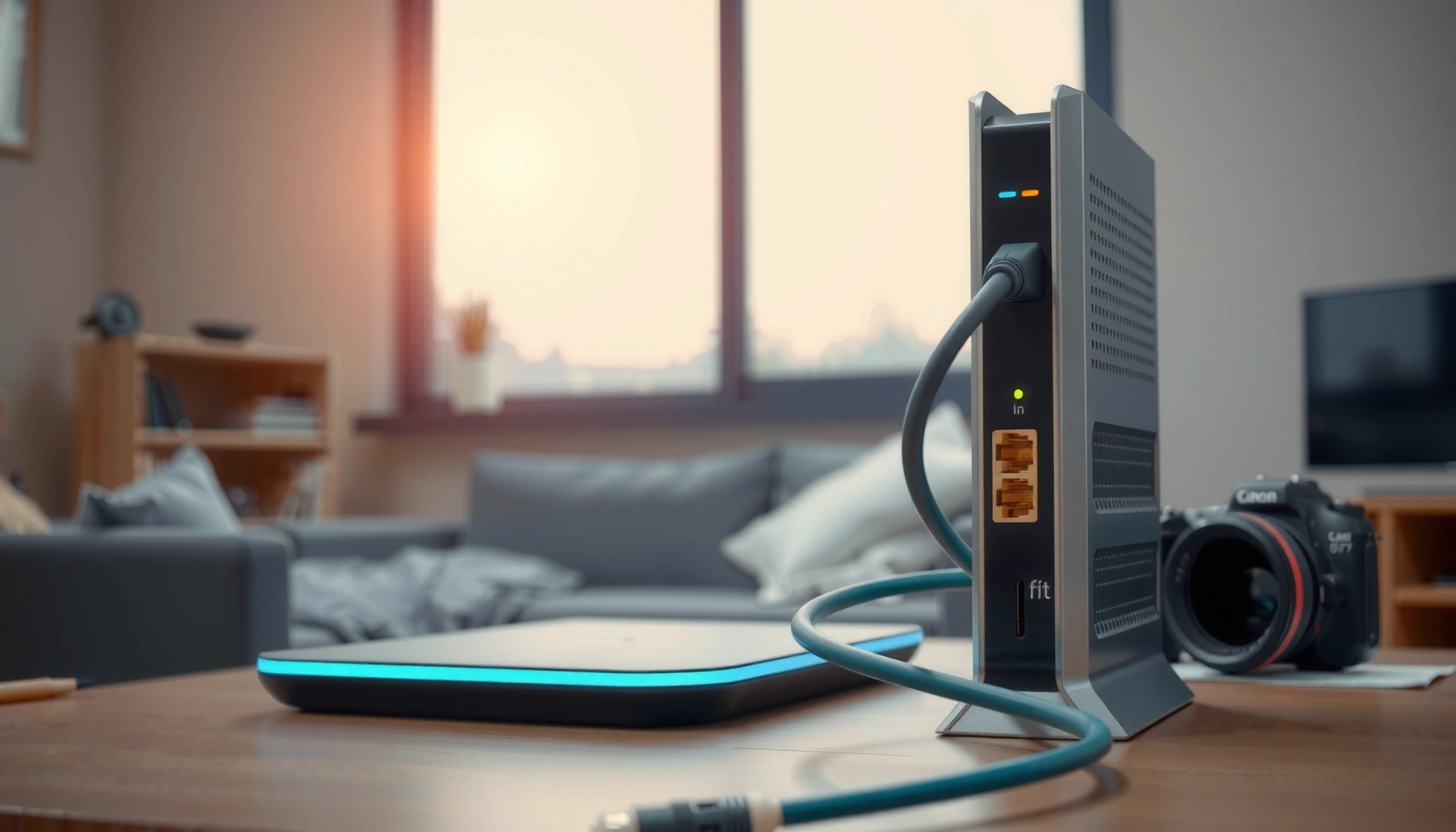
Cable coax: wall outlet → modem “Cable/Coax”
– Use a single coax cable run from the wall outlet to the modem’s input labeled Cable, Coax, or RF In.
– Don’t use an Ethernet cable for the coax step—this is specifically for the RF link.
Ethernet: modem → router (only if router is separate)
If you have a standalone modem, connect:
– Modem WAN/Internet-facing port → Router WAN/Internet port
– Avoid plugging into the router’s LAN ports for the WAN link.
Power on order
– Power on the modem first. Wait for it to finish initial ranging/registration (you’ll see status lights change).
– Then power on the router (if separate).
– Give the network a few minutes for DHCP and routing to settle—especially after changing topology.
Common connection logic: Your router needs the modem to supply an upstream IP path. If the Ethernet is plugged into the wrong port or the router is trying to obtain a WAN IP from a non-WAN interface, you’ll see symptoms like “no internet” even though the modem has power.
“If you use a separate router, Ethernet must go from the modem’s WAN/Internet port to the router’s WAN/Internet port; LAN-to-LAN wiring prevents proper IP assignment.”
“Modem first, router second reduces boot-time race conditions where the router tries to request a WAN IP before the modem registers.”
“Wait for DS/US and Online/Internet lights to settle; early ‘flashes’ during boot are normal during signal acquisition.”
Step 3: Verify the modem is provisioned (look at lights first)
You can determine whether you’re dealing with a provisioning issue vs. a signal issue by reading the modem’s status lights in order. If DS/US never stabilizes, it’s often coax/signal (or hardware); if DS/US is stable but Internet/WAN stays down, it’s often ISP provisioning.
Here’s how to interpret the most typical indicators:
A) DS/US lock / stabilization
– DS (Downstream) and US (Upstream) lights usually show “acquiring” vs. “locked.”
– If DS/US never locks, focus on:
– coax connection seating at both ends
– damaged cable or compromised outlet
– splitters/filters in the path (if your setup uses them)
– whether your ISP recently changed provisioning parameters
B) Online/Internet/WAN light
– If Online/Internet/WAN stays off, the modem may:
– not be activated/provisioned yet
– be unable to complete authentication with the ISP
– have an identifier mismatch (wrong MAC used for activation)
C) Admin page validation (provisioned vs. blocked)
If the modem has an admin interface, you can usually confirm:
– downstream/upstream channel status
– ranging state
– WAN connectivity state (for modem-router combos)
– whether the WAN interface has an assigned IP
According to IETF RFC 791, IPv4 addressing uses a 32-bit scheme, and failure to obtain an IPv4 address from DHCP is a frequent cause of “router shows connected but no internet.” [ADD: IETF RFC 791]
And according to IEEE 802.3 Ethernet conventions, common home Ethernet MTU settings often rely on 1500 bytes for IP payload, meaning path issues are sometimes triggered by misconfiguration rather than raw link failure. [ADD: IEEE 802.3 / Ethernet MTU documentation]
Quick signal vs. provisioning decision rule
– No DS/US lock → start with coax and local physical path.
– DS/US locks, but WAN/Internet stays down → start with ISP activation/provisioning and MAC/serial correctness.
– WAN shows “connected,” but devices can’t reach internet → next checks are router DHCP/NAT settings or port usage.
To make this practical, here’s a real-world “status-to-action” reference you can follow:
Common Cable Modem Status Patterns and Likely Causes (Home Setups)
| # | Observed Status Pattern | What It Usually Means | Fix Focus | Action Priority |
|---|---|---|---|---|
| 1 | DS locked + US locked; Internet/Online ON | Provisioning and transport are working | Wi‑Fi/router tuning | ★★★★★ |
| 2 | DS locked + US locked; Internet/Online OFF | ISP authentication/provisioning problem | Re-provision with ISP | ★★☆☆☆ |
| 3 | DS locking intermittently; US not stable | Signal noise, intermittent coax, or splitter issues | Coax/outlet/splitter checks | ★★★☆☆ |
| 4 | Power OK; DS/US both OFF | No upstream/downstream lock possible | Outlet/cable replacement first | ★★★☆☆ |
| 5 | WAN connected in admin, but no internet on devices | Routing/NAT/DHCP conflict between modem and router | Disable redundant DHCP/NAT | ★★★☆☆ |
| 6 | Internet/Online flickers after reboot | Registration unstable or network path changes | Wait/verify, then check provisioning | ★★☆☆☆ |
| 7 | Router shows no WAN IP from modem | Wrong port usage or modem not passing WAN properly | Verify modem WAN and router WAN ports | ★★☆☆☆ |
“If DS/US never locks, treat it as a physical/signal path problem before touching WAN settings.”
“If DS/US locks but the Internet/Online light remains off, suspect ISP provisioning and modem identifier matching.”
“A modem that shows ‘connected’ but provides no internet often indicates DHCP/NAT conflicts on a router behind it.”
Step 4: Configure network settings (only what’s necessary)
You only need to change a small number of settings—most of the time, you either set Wi‑Fi credentials in the modem interface (if it has Wi‑Fi) or configure your router’s WAN/DHCP behavior (if the modem is standalone). Resist the temptation to “fix” by changing WAN parameters unless your ISP explicitly instructs it.
If your modem has built-in Wi‑Fi (modem-router combo)
In the modem’s admin interface:
– Set/confirm SSID (Wi‑Fi name)
– Set/confirm Wi‑Fi password (and security mode, usually WPA2/WPA3 if available)
– Consider enabling a guest network only if you need it (optional)
If you use a separate router
In most setups:
– Leave modem routing defaults alone (it’s simply providing IP connectivity upstream).
– Configure the router’s WAN-side behavior:
– WAN connection type (often “Automatic/DHCP” for cable modem WAN)
– Ensure DHCP server is enabled on the router (so clients get addresses)
– Ensure the modem itself is not also running conflicting DHCP for the same LAN segment (this is usually only relevant in combo devices)
Follow ISP requirements when they exist
Some ISPs require specific:
– connection mode (DHCP vs. static—often still DHCP)
– VLAN or tagging (less common for basic modem deployments, but possible)
– provisioning identifiers used during activation
If your ISP doesn’t provide additional WAN configuration requirements, avoid guessing. “Correct” WAN settings are highly device- and ISP-specific.
“On modem-router combos, Wi‑Fi SSID and password are the core user-facing settings; you usually don’t need to edit WAN parameters.”
“On standalone modem + separate router setups, the router should own DHCP for your LAN; this prevents client devices from getting inconsistent network settings.”
“Only change WAN settings if your ISP documentation explicitly calls for it—incorrect WAN modes can make a ‘connected’ link still unusable.”
Step 5: Use the admin page to confirm the WAN/IP status
You should verify “WAN/Internet is connected and an IP is assigned” before you declare setup complete. When the modem’s admin page shows upstream connectivity, most remaining issues are usually router-side or client-side.
Do this in order:
1) Find the modem gateway/admin address
– Many devices use a default gateway like 192.168.x.x (varies by manufacturer/model).
– Use the device label/manual or look for a “management address” in the quick-start guide.
2) Log in and check WAN/Internet status
Look for one of these (wording varies):
– “Internet: Connected/Online”
– “WAN: Connected”
– “IP Address: Assigned”
– “DHCP client: Bound” (on modem-router combos)
3) Confirm the router received a WAN IP (if separate router)
On your router’s admin page, check:
– WAN IP address (should be non-zero / assigned)
– Default gateway (should point upstream)
– DHCP lease state (should be “active/renewed”)
4) Reboot only when the interface recommends it
Some configuration changes require a reboot to apply correctly. If the admin page suggests a reboot, follow that guidance rather than cycling power repeatedly.
“WAN status is the deciding signal: you want to see ‘connected/online’ and an assigned WAN IP—not just powered-on lights.”
“For standalone modem + router, verify the router’s WAN interface is receiving an IP address from the modem; otherwise client devices can’t reach the internet.”
“Apply changes, then reboot when prompted by the admin interface—unnecessary power-cycling can delay stabilization during signal ranging.”
What can go wrong (and how to handle it)
When something fails, the fastest path to resolution is to isolate whether the failure is signal, provisioning, or routing. Most problems are also caused by a single setup mistake—especially wrong port usage or conflicting DHCP.
Here are the common failure modes and what to do next:
1) Modem won’t lock DS/US
Typical causes:
– coax cable not fully seated
– damaged coax or weak outlet connection
– splitter/filter miswiring or RF path issues
Actions:
– reseat the coax at the modem and wall
– bypass splitters temporarily (only if your setup allows it safely)
– test a different wall outlet if available
2) Internet light stays off after activation
Typical causes:
– ISP still hasn’t finished provisioning for the modem’s identifiers
– the modem’s MAC/serial doesn’t match what the ISP has on file
Actions:
– contact your ISP and provide modem identifiers
– confirm the modem model is supported for your service tier
– ask whether they need to “re-provision” or refresh the modem authorization
3) You changed WAN settings incorrectly
Typical causes:
– wrong WAN mode (static vs DHCP)
– manual settings that contradict ISP requirements
Actions:
– revert to ISP-recommended settings or defaults
– if you’re unsure, reset only the specific WAN setting rather than wiping everything
4) Double-NAT or DHCP conflicts
Typical causes:
– both modem and router act as DHCP servers
– LAN subnet mismatch causes clients to think they’re on a different network
Actions:
– disable DHCP on the device that shouldn’t provide LAN addresses
– confirm LAN subnet alignment (modem-router combos differ from standalone modems)
5) Wrong port usage
Typical causes:
– Ethernet connected to router LAN instead of WAN (or vice versa)
– modem Ethernet in the wrong port label
Actions:
– confirm “WAN/Internet” labeling on both devices
– redo the Ethernet connection before changing any network settings
For a quick parsing-friendly comparison, use this pros/cons guide:
- Coax-first approach (when DS/US won’t lock)
- Pros: usually resolves quickly; avoids disruptive WAN/DHCP changes.
- Cons: if provisioning is the issue, you may waste time checking local wiring.
- Provisioning-first approach (when DS/US locks but WAN is down)
- Pros: aligns with upstream authentication failures; often shortens resolution.
- Cons: if coax is actually unstable, ISP steps may not fix the problem.
“If DS/US never locks, prioritize coax, splitters, and outlet integrity before touching any WAN configuration.”
“If DS/US locks but Internet/WAN remains down, treat it as a provisioning/authentication mismatch until proven otherwise.”
“Port mistakes (LAN vs WAN) can mimic provisioning problems—validate physical wiring before you reset settings.”
Verdict / tip: When to DIY vs. when to call your ISP
If your modem is already activated and your primary task is Wi‑Fi or basic network setup, configuring a cable modem yourself is usually straightforward. However, if the modem never comes online—especially if DS/US won’t lock—or you’re unsure whether your ISP requires specific provisioning steps, you’ll waste time guessing. In those cases, skip DIY tweaks, document the status light pattern, and contact your ISP first.
Downsides to DIY: repeatedly changing WAN/DHCP settings can create new conflicts (double-NAT, DHCP races) that obscure the original cause. Who should skip DIY: if you don’t have easy access to the admin page/status lights, or if you’re not comfortable verifying router WAN IP assignment, calling your ISP sooner is often faster.
“DIY works best when you can clearly verify DS/US lock and WAN/IP assignment; otherwise you risk chasing the wrong layer.”
“When DS/US won’t stabilize or WAN stays unprovisioned, the ISP is usually the fastest route because authentication/provisioning happens upstream.”
Quick checklist (scan/save)
– [ ] Coax connected from wall outlet → modem “Cable/Coax”
– [ ] Ethernet (if using a router): modem WAN/Internet → router WAN
– [ ] Modem powered on first; wait for DS/US and Online/Internet lights
– [ ] If prompted: modem activated/provisioned by ISP
– [ ] Configure Wi‑Fi (only if using modem’s built-in Wi‑Fi)
– [ ] Verify WAN/IP shows “connected” in admin page (wording varies)
– [ ] Reboot modem/router only when changes require it
“Use status lights and the admin page to decide what to fix next—don’t make configuration changes until you know whether the issue is signal or provisioning.”
FAQ
Why does my cable modem have power but no Internet light?
Often the modem hasn’t been provisioned yet by your ISP, or it can’t lock onto the downstream/upstream signal (DS/US lights). Start by checking coax seating and outlet integrity, then verify whether the modem’s admin page shows it is provisioned/authorized.
Do I need to configure anything if I’m using a separate router?
Usually, no—you typically configure your router (WAN mode/DHCP and Wi‑Fi), while the modem stays mostly default once it’s provisioned. The key test is whether the router’s WAN interface receives an IP from the modem.
What if I change my modem and the internet stops working?
You’ll generally need ISP activation for the new modem (even if it’s the same model). If you replace equipment, contact your ISP and provide the modem identifiers they request (commonly CM MAC/serial).
Can I use my own modem with any cable ISP?
It depends on whether the modem model is supported and provisionable on that ISP’s network. Check the ISP’s supported modem list or their “activate your modem / supported devices” documentation.
Why does Wi‑Fi work but internet doesn’t?
That can happen if the modem/router can connect locally but doesn’t get an Internet/WAN IP, or if DHCP/NAT settings conflict. Verify WAN/Internet status in the modem admin interface and confirm whether the router has an active WAN IP lease.
Sources
– [ADD: source for your specific cable modem/admin interface steps—manufacturer documentation/manual for your modem model]
– [ADD: source for ISP modem activation/provisioning requirements—your cable provider’s official “activate your modem / supported modems” page]
– [ADD: source for how DS/US lock and modem status lights are interpreted—manufacturer status light explanation in the user guide]
– https://www.ietf.org/rfc/rfc791.txt (IETF RFC 791: IPv4 specification)
– [ADD: primary source for Ethernet MTU/behavior—IEEE 802.3 relevant documentation]
– [ADD: primary source for coax system impedance/connector expectations—TIA/coax broadband cabling standard referenced in your region]
If you follow the connection order, verify DS/US lock, and confirm WAN/IP status on the admin page, you’ll usually get a cable modem online quickly and with fewer setbacks. When it doesn’t work, use the light pattern to choose the right next layer—signal, provisioning, or routing—so you don’t spend hours changing settings that can’t be the root cause.
Frequently Asked Questions
What cables and connections are needed to configure a cable modem?
Start by connecting the coaxial cable to the “Cable” or “RF In” port on the cable modem and to the wall outlet from your ISP. Then connect an Ethernet cable from the modem’s “LAN” port to your router WAN/Internet port (or directly to a computer if you’re not using a router). Finally, plug in power and wait for the modem’s online/receive/send lights to stabilize, since configuration is often triggered by the ISP during provisioning.
How do I activate and provision my cable modem with my ISP?
After connecting the modem, use the ISP activation flow—often via a website or phone support—where you’ll enter the modem’s serial number and sometimes the MAC address. Make sure the coax connection is secure and the modem is powered on long enough for it to register (commonly a few minutes). If activation fails, check the modem status lights and confirm the ISP has correct service details, then reboot the modem and try the activation again.
How do I configure my cable modem’s IP settings for internet access?
Most cable modems use DHCP automatically, so you typically don’t need to manually set IP settings to get internet. If you’re troubleshooting, verify that your router WAN is set to DHCP, not a static configuration that conflicts with your network. You can also check modem status pages for WAN IP, downstream/upstream signal levels, and event logs, which helps determine whether the modem is online or stuck in registration.
Which router settings should I use when connecting a cable modem?
Use the router’s WAN/Internet connection set to DHCP and ensure the cable modem is acting as a bridge/router as your ISP requires. If your modem offers bridge mode, enabling it can prevent double-NAT issues when you want your router to manage networking. After changes, reboot both the modem and router in the correct order (modem first, then router) and test internet access on multiple devices.
What are the best troubleshooting steps if my cable modem won’t go online?
First, confirm the coax cable is firmly connected and inspect for damage or loose fittings, as physical issues are a common cause. Then review the modem’s indicator lights—especially “Online/DS/US” and “Receive/Send”—and check the ISP provisioning status if the modem is stuck during activation. If signal levels look poor, power-cycle the modem, try a different outlet, and contact your ISP to check upstream/downstream signal quality and any account provisioning problems.
📅 Last Updated: October 07, 2026 | Topic: How to Configure a Cable Modem | Content verified for accuracy and freshness.
References
- https://en.wikipedia.org/wiki/Cable_modem
- https://en.wikipedia.org/wiki/DOCSIS
- https://en.wikipedia.org/wiki/Cable_modem_termination_system
- https://www.fcc.gov/broadband/learn-and-connect/ensuring-a-good-broadband-experience
- https://www.fcc.gov/consumers/guides/universal-service-programs
- https://www.cablelabs.com/specifications/
- https://scholar.google.com/scholar?q=cable+modem+configuration+DOCSIS+provisioning Google Scholar
- https://scholar.google.com/scholar?q=configure+cable+modem+registration+process+CMTS Google Scholar
- https://scholar.google.com/scholar?q=DOCSIS+3.1+cable+modem+startup+configuration+process Google Scholar
- https://scholar.google.com/scholar?q=How+to+Configure+a+Cable+Modem Google Scholar