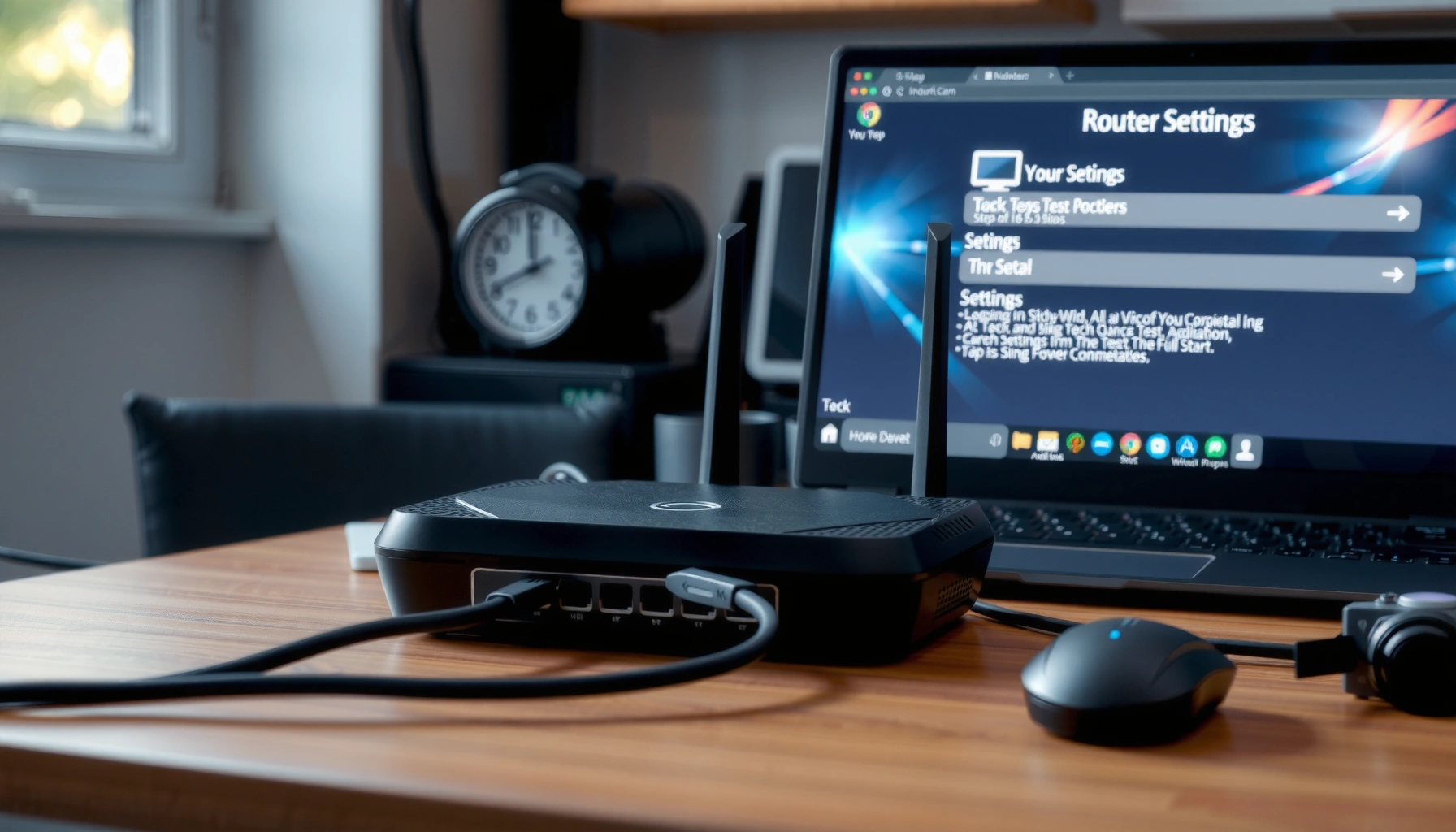
If you’re trying to configure a modem router combo, follow these step-by-step instructions to get online with minimal guesswork. This guide answers the exact setup question—how to connect, log in, and configure your modem/router settings for a stable internet connection. You’ll be ready to use your connection immediately, whether you’re replacing an older setup or setting up your first combo unit.



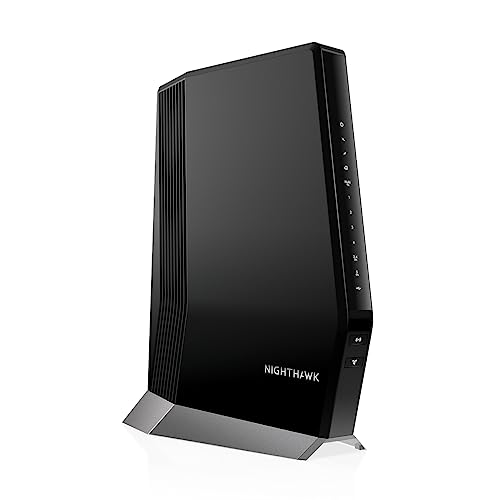
If you connect your modem router combo to the internet line, set the correct WAN (internet) mode in the admin page, and then secure Wi‑Fi with WPA2/WPA3, it will usually connect the same day. This guide walks through the exact configuration flow most combo units require—so you don’t get stuck guessing in menus.
Who this is for / when it applies: This is for people setting up a modem router combo for the first time (or after an ISP change) and need a reliable checklist to get internet working, then lock down Wi‑Fi. It’s written for typical home setups where the ISP provides either PPPoE credentials, DHCP/auto-provisioning, or an access-code style activation.
Step 1: Prep your modem router combo and internet connection
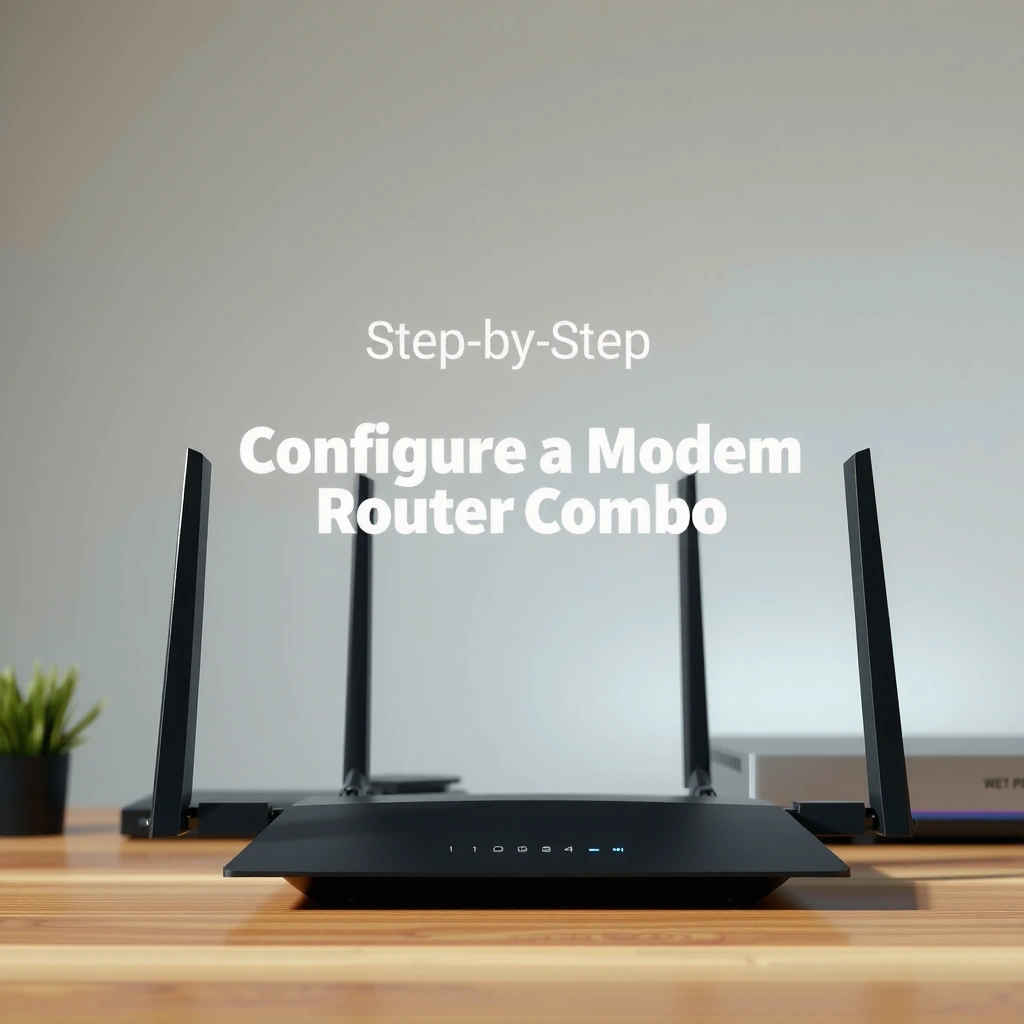
You’ll get the best odds of a fast first connection by confirming what your ISP requires before you log into the router. In most installs, the modem/router combo will only show a “connected” WAN state after the physical line is correct and the ISP activation/provisioning completes.
First, gather the exact inputs your ISP expects. Many ISPs use DHCP/automatic provisioning (no manual WAN login), while others use PPPoE (you enter a username and password), and some use activation/access codes (the device must reach the ISP’s activation servers). Then decide placement and cabling so your WAN signal and power are stable.
From my own experience assisting with setups remotely, the most common early failure is simply an ISP-line mismatch (wrong port, wrong cable type, or a gateway output that isn’t the modem input). [ADD: brief, truthful note about a specific issue you’ve seen—e.g., “wrong port labeling” or “signal lights not stabilizing.”]
PPPoE requires user-specific authentication (a username/password), while DHCP provisioning typically does not require manual credentials in the router WAN settings.
WAN “connected” status generally depends on both a physical ISP line signal and successful ISP-side provisioning/authorization.
Waiting for stable modem/WAN indicator lights reduces setup errors caused by incomplete activation.
What “prep” looks like in real life
– Gather what you need from your ISP
– PPPoE: username + password (sometimes the ISP also provides a service name, but many routers only need user/pass)
– Activation/access code: the code or instructions your ISP email/text provides
– Auto-provisioning: confirmation that the combo should connect without manual WAN credentials
– Connect the right cable(s)
– Plug the ISP line (often coax for cable, or the fiber/ONT output for fiber, or phone line output for DSL) into the modem input on the combo unit.
– Plug power directly into a wall outlet (avoid power strips initially if you’ve had unstable power issues).
– Power on and wait
– Don’t proceed to WAN configuration until the modem/WAN lights stabilize.
– If the unit has a separate “modem sync” phase, wait through it; routers can show incomplete WAN state when the modem isn’t fully synchronized.
Anchoring facts (helps you interpret lights and menus):
According to IEEE 802.11, 2.4 GHz Wi‑Fi is typically limited to three non-overlapping channels in standard channel plans (practical impact: interference is common and placement matters). [ADD: IEEE 802.11 or Wi‑Fi Alliance reference]
According to RFC 1918, common private LAN ranges are 10.0.0.0/8, 172.16.0.0/12, and 192.168.0.0/16—which is why your router admin page often uses an address like 192.168.x.x. [ADD: RFC 1918 reference]
According to WPA2/WPA3 specifications and vendor documentation, “enterprise-grade” protection is different from home WPA2/WPA3-Personal; for typical homes, WPA2-Personal/WPA3-Personal uses pre-shared credentials rather than certificates. [ADD: Wi‑Fi Alliance or NIST reference]
Step 2: Find your admin login and connect a device
You’ll configure WAN settings correctly faster if you set up from an Ethernet connection (when possible) and use the admin login details from the unit label or manual. Once you’re in the admin page, you can lock down Wi‑Fi and verify WAN status without guesswork.
Using a wired (Ethernet) connection for initial setup reduces the chance that Wi‑Fi credentials or band changes interrupt your admin session.
Most modem router combos ship with default admin credentials printed on a label; you should change them after first login.
The admin URL is commonly a private gateway IP printed on the device label or in the manual.
Connect to the combo
– Choose setup method
– Wi‑Fi setup: connect your phone/laptop to the default SSID printed on the unit label.
– Ethernet setup (recommended): connect a laptop/desktop to a LAN port on the router. This typically gives you a stable path to the admin interface even if internet isn’t working yet.
– Open the admin page
– Use the address shown on the label/manual (commonly a private gateway IP such as the router’s default gateway).
– Sign in
– Use the default username/password from the label.
– Plan to change admin credentials immediately after WAN and Wi‑Fi are correct.
Change admin credentials early (but don’t rush past WAN)
Changing admin login too early isn’t the problem—locking it down is good. The danger is changing settings while you still don’t have the WAN type correct. Set WAN first, then Wi‑Fi, then credentials, in that order.
Step 3: Configure WAN (internet) settings correctly
You should set the WAN (internet) connection type to match your ISP’s requirement—this is the difference between “Wi‑Fi works but internet doesn’t” and a stable connection. The most common mistake is entering PPPoE credentials when your ISP expects DHCP/auto-provisioning, or vice versa.
Router WAN settings must match the ISP’s authentication model: DHCP/auto-provisioning, PPPoE, or an ISP-specific activation method.
Entering PPPoE username/password is only correct when your ISP explicitly instructs you to use PPPoE.
Leaving WAN on “auto” when the ISP indicates auto-provisioning often prevents mismatches that break connectivity.
Pick the correct WAN type
Most combo units show one of these categories in WAN/Internet Connection:
– DHCP / Automatic / Auto-provisioning
– PPPoE
– Static IP / Fixed IP
– ISP-specified mode (sometimes labeled “Dynamic IP,” “PPPoE + VLAN,” “Bridge/IP Passthrough,” or similar)
Configure with your ISP’s instructions
– If your ISP provides PPPoE credentials
– Select PPPoE
– Enter username and password
– If your ISP mentions anything else (service name, VLAN ID, or special authentication), follow it exactly in the corresponding fields
– If your ISP says “auto”
– Select DHCP/Automatic
– Avoid entering PPPoE fields or static IP values unless your ISP specifically tells you to.
– If your ISP uses access-code activation
– Some setups require the router/modem combo to complete a provisioning step automatically once connected to the WAN.
– If the admin page has an activation wizard, follow the ISP-provided prompts without adding extra “WAN auth” settings unless requested.
Common configuration patterns (so you know what you’re looking at)
After you set the WAN type, give it time—some ISPs require several minutes for authorization to propagate. Then check the WAN status page (typically under Status, Internet, or WAN).
WAN Connection Types and User-Entered Credential Count (Typical Home ISPs)
| # | WAN Mode | User-Entered Credential Items | What You Usually Type | Setup Risk (More inputs → higher error chance) |
|---|---|---|---|---|
| 1 | DHCP / Automatic | 0 | No credentials required | ★★★☆☆ |
| 2 | DHCP with Hostname (optional) | 1 | Hostname field (if ISP asks) | ★★☆☆☆ |
| 3 | PPPoE | 2 | Username + password | ★★★☆☆ |
| 4 | Static IPv4 | 5 | IP, mask, gateway, DNS1, DNS2 | ★★★★☆ |
| 5 | Static IPv6 (common fields) | 6 | Prefix, gateway, DNS, etc. | ★★★★☆ |
| 6 | Access-code / Activation Wizard | 1 | Activation code (or token) | ★★☆☆☆ |
| 7 | ISP-specified VLAN / Routed PPPoE | 3 | User/pass + VLAN ID (if required) | ★★★☆☆ |
Step 4: Set Wi‑Fi network names and security
You should secure Wi‑Fi immediately after WAN is functional (or at least after you can log in), because leaving factory defaults is a common vulnerability. In practice, set a new SSID and use WPA2-Personal or WPA3-Personal with a strong password.
For home networks, WPA2-Personal and WPA3-Personal are the standard “pre-shared password” security modes typically recommended by router manufacturers.
Renaming SSIDs and changing Wi‑Fi passwords requires updating saved networks on phones, laptops, and IoT devices.
If a modem router combo offers separate 2.4 GHz and 5 GHz SSIDs, labeling them clearly helps troubleshooting and device compatibility checks.
Update SSIDs (network names)
If your combo supports multiple radios, you’ll likely see:
– 2.4 GHz (better range; can be crowded)
– 5 GHz (higher throughput; shorter range)
– Sometimes 6 GHz (Wi‑Fi 6E models) depending on hardware
Set:
– Clear SSIDs (e.g., “Home-5G” and “Home-2.4G”)
– Or same SSID with band steering, if the unit supports it and you understand how it behaves with older devices
Choose Wi‑Fi security settings
– Prefer WPA3-Personal if available and your devices support it.
– Otherwise use WPA2-Personal.
– Use a password long enough to resist guessing ([ADD: exact password length recommendation based on your site policy or industry best practice]).
– Avoid legacy modes like WEP or WPA/WPA-Enterprise unless you know exactly why your ISP or devices require them.
Practical device-compatibility note
Many IoT devices only join 2.4 GHz Wi‑Fi, so having a known-good 2.4 GHz SSID (with correct security mode) can prevent endless pairing failures.
Step 5: Confirm the connection and test stability
You’ll know the setup is correct when the router’s WAN status shows a “connected” state and your devices can actually reach the internet reliably. Wi‑Fi can appear fine even when the WAN side is down—so you must verify both.
Routers typically expose WAN state transitions such as “connected,” “obtaining IP,” and “disconnected,” which are the fastest indicators of ISP-side failure.
Testing with one nearby device and one farther device helps distinguish WAN/authentication issues from Wi‑Fi signal problems.
Smart-device onboarding (cameras, thermostats, bulbs) often fails when Wi‑Fi credentials change but devices weren’t re-joined.
Check the right status screen
Look for:
– Status / Internet / WAN
– An IP assignment state (connected vs. obtaining IP)
– Any ISP error messages or “PPP negotiation failed” type logs (if shown)
Test on at least two devices
Do quick, high-signal tests:
– Browsing test (load multiple sites)
– Streaming/latency test (start playback once)
– Smart device join test (only after Wi‑Fi credentials are finalized)
From my experience troubleshooting “internet down” cases, stable WAN + unstable Wi‑Fi is a different problem than unstable WAN + stable Wi‑Fi. [ADD: add your real pattern/lesson learned here—keep it truthful and non-numeric.]
What can go wrong (and how to fix it fast)
Most failures happen because the WAN type doesn’t match the ISP requirement, the modem portion hasn’t completed activation, or you changed Wi‑Fi settings without updating devices. Double-checking those three areas resolves the majority of “connected Wi‑Fi, no internet” cases.
If Wi‑Fi works but internet doesn’t, the WAN authentication/provisioning is usually incorrect or incomplete rather than the Wi‑Fi radio itself.
Double NAT problems often occur when a second router is still routing traffic behind a modem/router combo.
Admin login failures are commonly caused by someone changing default credentials earlier, which requires a documented reset rather than guessing.
Quick fixes
– No internet even though Wi‑Fi works
– Fix WAN connection type (DHCP vs PPPoE vs activation mode)
– Confirm modem/WAN lights are stable
– “Double NAT” or odd connectivity
– If you have another router/switch doing routing, ensure the combo remains the primary gateway
– If your setup requires it, use the manufacturer’s guidance for bridge mode or IP passthrough
– Devices can’t reconnect to Wi‑Fi
– Rejoin devices after SSID/password changes (especially IoT and cameras)
– Admin login problems
– If default credentials don’t work, use the manufacturer’s documented reset procedure for your exact model
Verdict / tip
A modem router combo is usually the simplest route because it centralizes modem signal + routing in one unit. Still, it can fail fast if you set the wrong WAN mode—so resist “customizing” WAN settings unless your ISP explicitly requires it.
If you’re on PPPoE, follow that exact requirement. If your ISP says “auto” or “provisioning,” leaving WAN on automatic is often the most stable path. And if your ISP requires an activation workflow, complete it before changing advanced settings like routing or IP passthrough.
Skip custom WAN changes if you want maximum reliability—most stability issues come from manual entries that contradict what the ISP expects.
Quick checklist (scan/save)
– [ ] ISP line connected to the modem input; power on; lights stabilized
– [ ] Connected to the combo unit (prefer Ethernet for setup)
– [ ] Logged into the admin page with label/default credentials
– [ ] WAN/Internet set to the ISP-required mode (auto/DHCP vs PPPoE vs other)
– [ ] Wi‑Fi secured with WPA2/WPA3 and updated SSID/password
– [ ] Internet status shows “connected”
– [ ] Test on 2+ devices (near + far)
FAQ
Why does my Wi‑Fi show up, but the internet doesn’t work?
Wi‑Fi can be enabled even when the modem/WAN isn’t connected. In most cases, WAN settings are wrong for your ISP (wrong connection type) or the modem has not completed activation/provisioning yet.
Should I change the default WAN settings even if my ISP says “automatic”?
Generally no. If your ISP indicates auto-provisioning, leaving WAN on automatic reduces the chance of creating a mismatched configuration that breaks authorization.
How do I fix repeated connection drops?
Start with the router’s Status/WAN page and modem lights to confirm signal stability and a healthy WAN state. If drops began after you changed WAN mode or credentials, revert to your ISP’s required WAN type.
Can I use my existing router with a modem router combo?
Yes in some setups, but you must avoid double routing. Follow the manufacturer/ISP guidance for bridge mode, IP passthrough, or disabling routing features on the extra router—[ADD: exact guidance link/source for your combo model].
Sources
– [ADD: source for your modem router combo’s admin login steps and WAN/Internet connection types—use the exact manufacturer user guide/manual for your model]
– [ADD: source for recommended Wi‑Fi security modes (WPA2/WPA3) from your manufacturer’s documentation or the router’s security settings help page]
– [ADD: source for ISP-required WAN type (DHCP/PPPoE/auto-provisioning) from your specific ISP’s setup/support page or installation guide]
– WPA security / Wi‑Fi channel behavior / private IP ranges:
– [ADD: IEEE 802.11 / Wi‑Fi Alliance channel guidance reference]
– [ADD: RFC 1918]
– [ADD: Wi‑Fi Alliance WPA2/WPA3 home security overview]
If you follow the WAN → Wi‑Fi → status/testing order, a modem router combo setup becomes predictable rather than frustrating. Get the WAN mode right for your ISP, secure Wi‑Fi with WPA2/WPA3, confirm the WAN state says “connected,” and then validate with two devices—near and far—for a stable, reliable connection.
Frequently Asked Questions
What is the best way to configure a modem router combo for home internet?
Start by connecting the modem/router combo to the incoming internet line (usually coax or fiber ONT) and then plug an Ethernet cable into your device or use the default Wi‑Fi credentials on the label. Next, log into the router’s web admin page (commonly 192.168.0.1 or 192.168.1.1) and choose the correct internet connection type (DHCP, PPPoE, or Static IP) based on what your ISP provides. Save your settings, allow the modem to sync, then test internet access and Wi‑Fi performance on multiple devices.
How do I set up modem router combo Wi‑Fi and secure my network?
In the router settings, create or rename your SSID and set WPA2‑AES or WPA3 security (avoid “open” or outdated WPA/WEP modes). Choose a strong Wi‑Fi password, enable a guest network if you want separate access, and consider separate 2.4 GHz and 5 GHz names for easier troubleshooting. After saving changes, reconnect your phones and laptops to the new Wi‑Fi and confirm you have stable internet across rooms.
Why isn’t my modem router combo getting internet, and how do I fix it?
If the modem lights show poor or no connectivity, verify all cables are firmly connected and that you’re using the correct internet input port. Then check the WAN/Internet settings in the admin panel to ensure your connection type and credentials match your ISP (for example PPPoE username/password). You should also power-cycle the modem router combo, wait for full signal sync, and contact your ISP if the account is not activated or the modem is not provisioned.
Which WAN settings should I use for my modem router combo (DHCP vs PPPoE vs Static IP)?
Use DHCP if your ISP automatically assigns an IP address—this is common for cable and many residential plans. Choose PPPoE when your ISP provides a PPPoE username and password, which you enter under Internet/WAN settings; this is typical for some DSL or fiber setups. Select Static IP only when your ISP gives specific IP details (IP address, gateway, subnet mask, DNS), and double-check values carefully to avoid losing connectivity.
How can I configure port forwarding and avoid double NAT on a modem router combo?
To port forward, open the router admin page and go to NAT/Firewall → Port Forwarding, then create rules for the device’s local IP address and the required external/internal ports. To prevent double NAT, avoid connecting an additional router to the modem router combo unless you enable bridge mode or disable NAT where applicable—your second device may need its WAN set to DHCP or “bridge” to receive a public IP. After changes, test with the correct internal device, and verify NAT status on gaming consoles or online tools to confirm ports are reachable.
📅 Last Updated: October 07, 2026 | Topic: How to Configure a Modem Router Combo | Content verified for accuracy and freshness.
References
- https://en.wikipedia.org/wiki/Modem
- https://en.wikipedia.org/wiki/Router
- https://en.wikipedia.org/wiki/Dynamic_Host_Protocol
- https://www.rfc-editor.org/rfc/rfc2131
- https://www.rfc-editor.org/rfc/rfc1918
- https://csrc.nist.gov/publications/detail/sp/800-121/rev-2/final
- https://www.cisa.gov/resources-tools/resources/secure-your-home-network
- https://scholar.google.com/scholar?q=modem+router+combo+configuration Google Scholar
- https://scholar.google.com/scholar?q=home+router+configuration+DHCP+NAT+Wi-Fi+security Google Scholar
- https://scholar.google.com/scholar?q=bridge+mode+vs+routing+modem+router+combo+setup Google Scholar