
Surround sound is a multi-channel audio technology that crafts an immersive auditory experience, allowing you to hear sounds as if they are coming from all around you. This creates a richer, more engaging atmosphere whether you’re watching a movie, listening to music, or gaming. Understanding the fundamentals of surround sound and how it operates can significantly enhance your audio experience, transforming ordinary moments into unforgettable ones. In this article, we’ll delve into the intricacies of surround sound, its functioning, and its various real-world applications.
Understanding Surround Sound
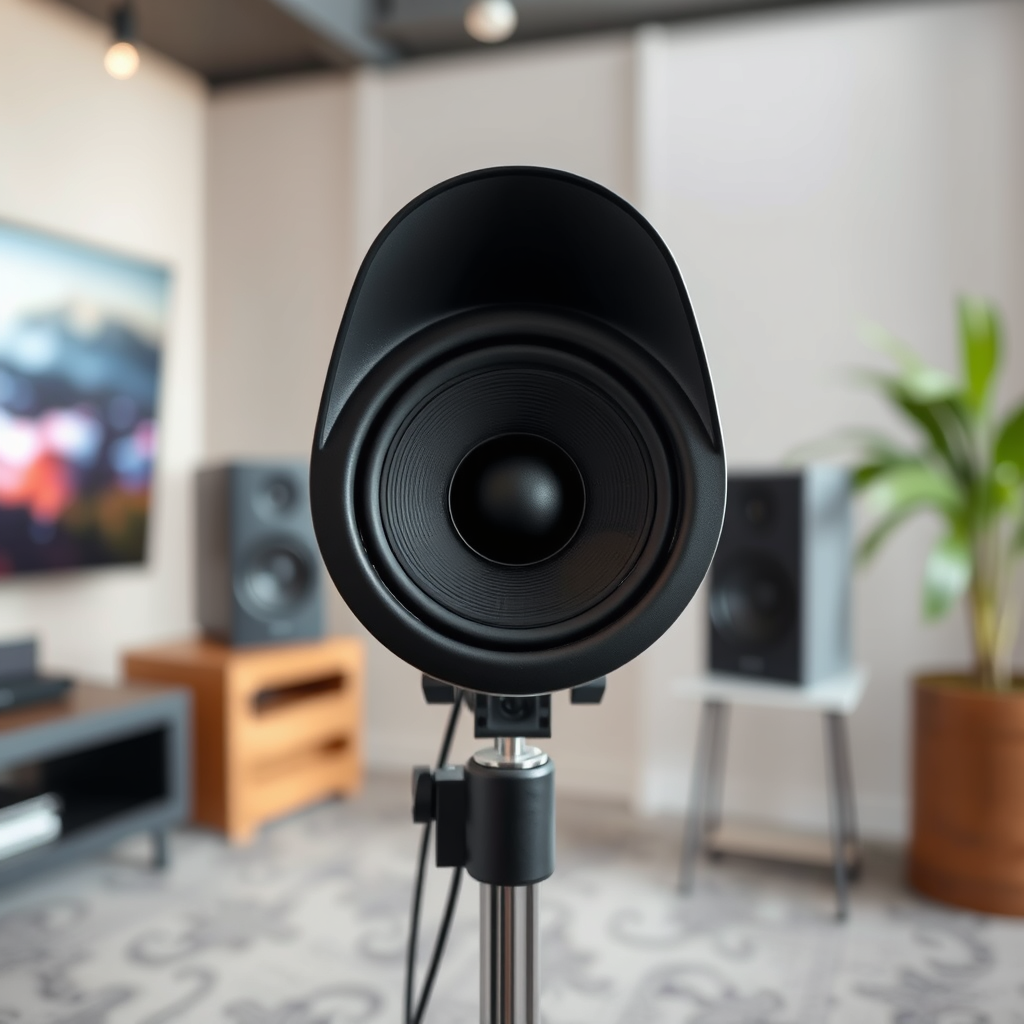
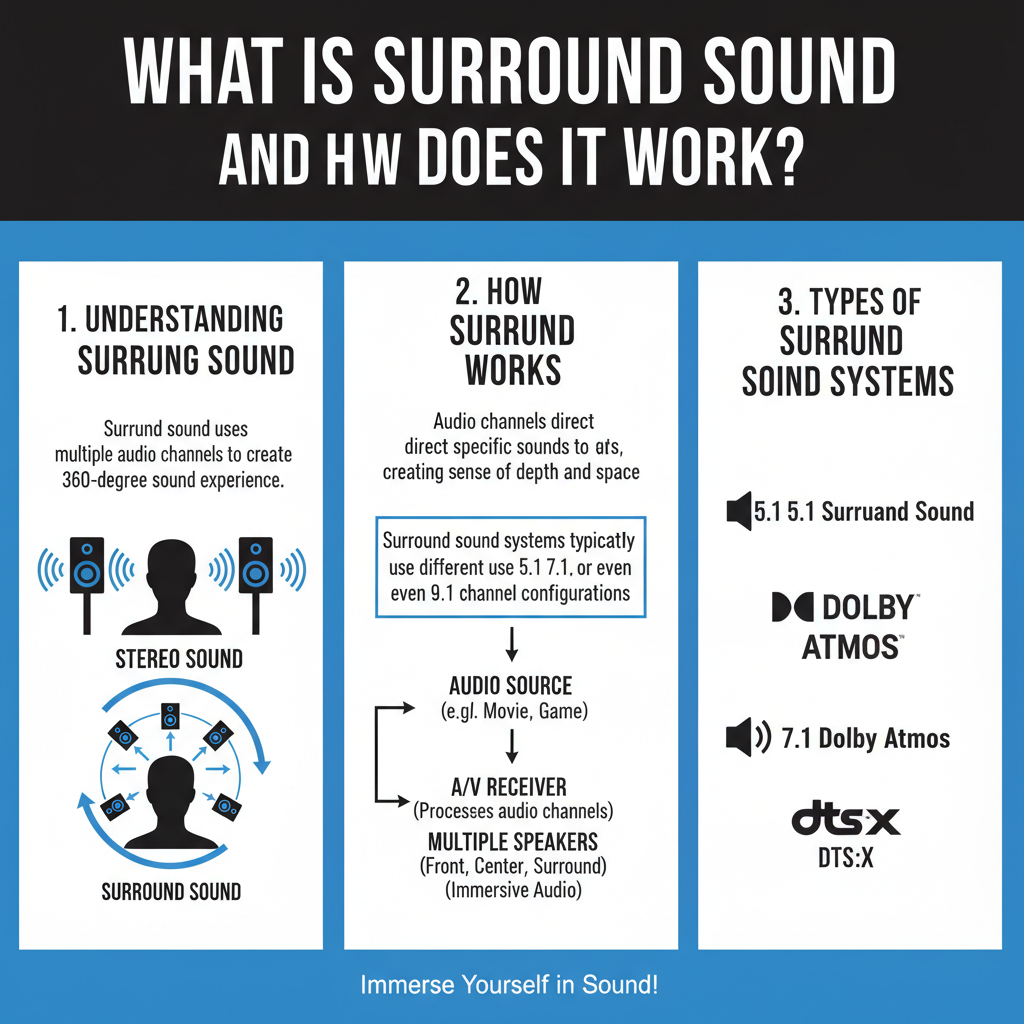
Surround sound is designed to replicate the way we naturally hear sounds in the real world, creating a sense of space and directionality. Unlike traditional stereo sound, which uses only two channels (left and right), surround sound systems utilize multiple channels to produce audio from various directions, including front, back, and sides. This spatial awareness helps to immerse listeners in the audio experience, making it feel as if they are part of the action. Imagine watching an intense action scene where explosions and dialogue come from different angles; that’s the magic of surround sound!
To illustrate, think of watching a movie with just stereo sound. You might hear the dialogue and the background music, but the sound design won’t fully envelop you. Now, consider the same movie with surround sound—suddenly, you can hear the rustling leaves behind you, the faint sound of footsteps to your left, and the booming voice of the hero in front. This enhanced audio depth not only makes the experience more enjoyable but also allows for a greater emotional connection to the content.
How Surround Sound Works
At the heart of surround sound is a multi-channel audio format that divides audio signals into several channels, allowing for a richer sound experience. Common configurations include 5.1 and 7.1 systems, where the numbers represent the number of speakers and subwoofers used. In a 5.1 system, there are five speakers (front left, front center, front right, surround left, and surround right) and one subwoofer for deep bass sounds. In a 7.1 setup, two additional surround speakers are added to further enhance the immersive experience.
Speaker placement is crucial in creating a three-dimensional sound environment. For example, in a typical 5.1 setup, the front speakers should be positioned at ear level, spaced out to create a wide soundstage, while the rear speakers should be positioned behind the listener to simulate sounds coming from behind. The subwoofer, which handles low-frequency sounds, can be placed near the front speakers or in a corner to maximize bass response. Proper arrangement not only helps in delivering clear and balanced sound but also enhances the overall enjoyment of the audio experience.
Types of Surround Sound Systems
There are several popular surround sound formats available today, each designed to cater to different needs and preferences. The most common formats include:
– 5.1 Surround Sound: This traditional setup is ideal for most home theater systems, providing a balanced audio experience with five speakers and one subwoofer.
– 7.1 Surround Sound: An upgrade from 5.1, this system includes two additional speakers for a more immersive experience, particularly beneficial for larger rooms or dedicated home theaters.
– Dolby Atmos: A newer technology that adds height channels to traditional surround sound formats, Dolby Atmos allows sound to be perceived as coming from above, further enhancing realism, especially in cinema and gaming.
When it comes to installation, users have the option of either wired or wireless surround sound setups. Wired systems often provide better audio quality and reliability, while wireless systems offer convenience and flexibility in speaker placement without the hassle of cables. Choosing the right format and setup depends on your specific needs, room size, and budget.
Components of a Surround Sound System
A fully functional surround sound system comprises several essential components, each playing a vital role in delivering high-quality audio. Here are the key components:
– Receiver: The heart of any surround sound system, the receiver processes audio signals from various sources (like Blu-ray players, gaming consoles, or streaming devices) and amplifies them for the speakers. Features to look for in a receiver include support for the latest audio formats, sufficient power output, and multiple HDMI inputs.
– Speakers: The number and type of speakers you choose will significantly impact your audio experience. Floor-standing speakers, bookshelf speakers, and satellite speakers are common options. A good surround sound system typically includes a mix of these types to balance sound across the spectrum.
– Subwoofer: This specialized speaker handles low-frequency sounds and adds depth to the audio experience. A quality subwoofer can transform action-packed scenes in movies or the thumping beats in music, making them much more enjoyable.
Selecting the right equipment is crucial for optimal audio performance. It’s advisable to choose components that are compatible with each other and suited to your space and listening preferences.
Setting Up a Surround Sound System
Setting up a surround sound system can seem daunting at first, but with the right approach, it can be a rewarding experience. Here’s a step-by-step guide for configuring a basic surround sound setup:
1. Choose Your Receiver: Start by selecting a receiver that meets your audio needs and has enough inputs for your devices.
2. Position Your Speakers: Place the front speakers at ear level and angled towards the listening position. The center speaker should be directly above or below your TV. Position surround speakers slightly above ear level and to the sides or behind the listening area.
3. Connect the Subwoofer: Position the subwoofer in a corner or against a wall for optimal bass response, and connect it to the receiver.
4. Connect Devices: Use HDMI or optical cables to connect your devices to the receiver. Make sure to label your inputs for easy access.
5. Calibrate the System: Most receivers come with an automatic calibration feature. Use this function to optimize speaker levels and distances based on your room’s acoustics.
6. Test Your Setup: Play a movie or audio track with a surround sound test feature to ensure everything is working correctly and adjust settings as needed.
For the best auditory experience, consider experimenting with speaker placement. Sometimes, slight adjustments can make a significant difference in sound quality.
Applications of Surround Sound
Surround sound is utilized in various applications, enhancing the audio experience across multiple platforms:
– Home Theaters: One of the most popular uses of surround sound is in home theater systems, where the immersive audio complements high-definition visuals for a cinematic experience at home.
– Gaming: Modern gaming systems incorporate surround sound to create dynamic audio environments, allowing players to hear directional cues and sounds that add to the realism and excitement of gameplay.
– Music Production: In music production, surround sound creates a more engaging listening experience, allowing producers to mix tracks in a way that envelops the listener.
The benefits of surround sound extend beyond entertainment; it enhances the overall experience, making it more immersive and enjoyable. Whether you’re diving into a gripping movie, conquering a challenging game, or creating music, surround sound technology plays a pivotal role in enriching audio experiences.
In conclusion, surround sound technology enriches audio experiences by providing a multi-dimensional listening environment. Whether you’re setting up a home theater or enhancing your gaming setup, understanding how surround sound works and its components will help you make informed choices for an immersive experience. For more insights on audio technology, explore our other articles or consider upgrading your sound system today!
Frequently Asked Questions
What is surround sound and how does it differ from stereo sound?
Surround sound is an audio technology that creates an immersive listening experience by using multiple audio channels to simulate a 360-degree sound field. Unlike stereo sound, which typically uses two channels (left and right), surround sound employs additional speakers placed around the listener, enhancing depth and realism in audio. This makes it particularly popular for movies, video games, and home theater systems, where the goal is to replicate the sound environment of real life.
How does surround sound work in a home theater system?
In a home theater system, surround sound works by using a combination of speakers strategically placed around the room, typically including a center channel, two front speakers, two rear or surround speakers, and sometimes a subwoofer for bass. These speakers receive audio signals that are encoded in surround sound formats like Dolby Digital or DTS, which distribute sound across different channels to create a multi-dimensional audio experience. This setup allows sound to come from various directions, making the viewer feel as if they are inside the action on screen.
Why is surround sound important for gaming and movies?
Surround sound is crucial for gaming and movies because it enhances the viewer’s or player’s immersive experience by providing directional audio cues that match the visuals. For instance, in a video game, sounds like footsteps or gunfire can be pinpointed to specific locations, helping players react more quickly and accurately. In movies, surround sound adds emotional depth and realism, making action sequences more thrilling and dialogue clearer, thereby drawing the audience deeper into the story.
What are the best surround sound formats available today?
Some of the best surround sound formats available today include Dolby Atmos, DTS:X, and Auro-3D. Dolby Atmos is highly regarded for its object-based audio technology, allowing sounds to move freely in a three-dimensional space, which enhances the realism of the sound experience. DTS:X offers similar capabilities but is often praised for its flexibility in speaker configuration. Choosing the best format depends on your specific audio needs, speaker setup, and what devices you plan to use for playback.
Which speakers are best for achieving optimal surround sound?
To achieve optimal surround sound, it is essential to choose speakers that complement each other and fit your room’s acoustics. Popular options include bookshelf speakers for front channels, dedicated surround speakers for the rear, and a high-quality subwoofer for low-frequency sounds. Brands like Klipsch, Bose, and Sonos offer excellent surround sound speaker systems, but the best choice will depend on your budget, space, and personal sound preference. Additionally, consider investing in a receiver that supports the latest surround sound formats to maximize your setup.
References
- Surround sound
- https://www.techopedia.com/definition/32183/surround-sound
- https://www.howtogeek.com/685667/what-is-surround-sound-and-how-does-it-work/
- https://www.soundonsound.com/techniques/understanding-surround-sound
- https://www.audioholics.com/tutorials/what-is-surround-sound
- https://www.cnet.com/topics/home-theater/best-home-theater-surround-sound-systems/
- https://www.techradar.com/news/what-is-surround-sound
- https://www.itu.int/en/ITU-T/studygroups/2020-2023/15/Pages/faq-surround-sound.aspx