When it comes to choosing the right studio subwoofer, the JBL LSR310S and KRK 10S2 are two standout options, each boasting unique features that cater to different audio needs. The best choice depends on your specific requirements, whether you prioritize sound accuracy or booming bass presence. In this article, we’ll dive into a detailed comparison of both subwoofers, examining their features, sound quality, connectivity options, design, price, and ideal use cases to help you make an informed decision.
Overview of JBL LSR310S
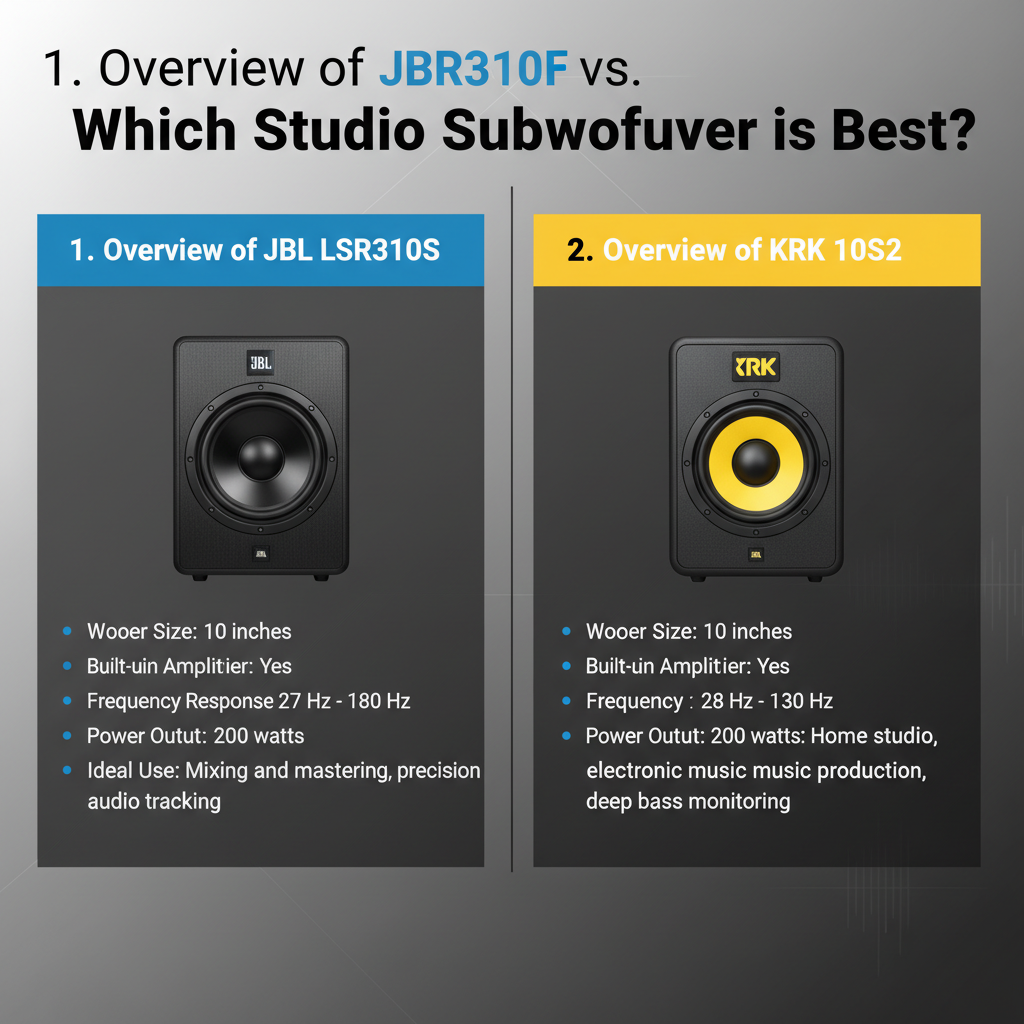
The JBL LSR310S is designed to bring an exceptional low-frequency response to your studio, featuring a robust 10-inch woofer. This woofer is engineered for precision, ensuring that you hear every detail in your mix without any muddiness. The subwoofer is equipped with a built-in amplifier that delivers a powerful 200 watts of output, allowing for dynamic sound reproduction. This means you can expect not only strong bass but also clarity across the frequency spectrum, making it an excellent choice for mixing and mastering professionals who rely on accurate sound.
Additionally, the LSR310S includes JBL’s patented Slip Stream port design, which minimizes port noise and distortion, providing a clean and powerful bass response even at higher volumes. This feature is particularly beneficial when you’re pushing the limits of your audio projects, as it helps maintain sound integrity. The subwoofer also features a low-cut filter and adjustable level control, allowing you to tailor the sound to your specific monitoring needs.
Overview of KRK 10S2
On the other hand, the KRK 10S2 is a formidable contender in the studio subwoofer market, equipped with a 10-inch Kevlar woofer. This material not only enhances durability but also ensures a consistent sound quality across a wide frequency range. One of the standout features of the KRK 10S2 is its built-in Digital Signal Processing (DSP) with customizable EQ settings. This allows users to fine-tune the subwoofer’s performance to match their studio environment or personal preferences, making it a versatile choice for various genres, especially those that rely heavily on bass.
The KRK 10S2 also boasts a solid power output, with a built-in amplifier delivering 200 watts, similar to the JBL LSR310S. This power allows for deep bass that can really fill a room, making it particularly appealing to electronic music producers and hip-hop artists who crave that punchy low end. The sturdy cabinet design also contributes to the overall sound quality by reducing resonance, ensuring a more accurate bass response.
Sound Quality Comparison
When it comes to sound quality, the JBL LSR310S is renowned for its tight and articulate bass response. This makes it an ideal choice for mixing and mastering, where clarity and precision are paramount. The smooth transition between low and higher frequencies means that you can rely on the LSR310S to reveal subtleties in your mix, helping you make informed decisions about your sound.
Conversely, the KRK 10S2 leans towards a more pronounced low-end presence. This characteristic can be especially attractive for genres that thrive on heavy bass, such as hip-hop, electronic, and dance music. If you’re looking to feel the beat in your chest while still maintaining clarity, the KRK 10S2 might be your best bet. Its ability to deliver a more robust low end can help you craft tracks that resonate well in club settings or on large sound systems.
Connectivity Options
Connectivity is crucial when setting up your studio, and both the JBL LSR310S and KRK 10S2 offer a range of options. The JBL LSR310S features balanced XLR and TRS inputs, making it suitable for professional audio setups. These connections help minimize noise and ensure a clean signal path from your audio interface or mixer to the subwoofer.
The KRK 10S2, on the other hand, provides a variety of input options, including RCA, XLR, and TRS. This versatility allows it to easily integrate into different studio configurations, whether you’re using it in a home studio or a professional recording environment. Additionally, the inclusion of a ground lift switch can help eliminate unwanted hums and noise, ensuring that your audio remains pristine.
Size and Design
Size and design can also play a significant role in your choice of subwoofer. The JBL LSR310S boasts a compact design that fits seamlessly into various studio spaces, making it an excellent option for those with limited room. Its sleek and unobtrusive look allows it to blend well with other studio equipment, ensuring that it doesn’t dominate the aesthetic of your workspace.
In contrast, the KRK 10S2 has a more robust build and a distinctive appearance, characterized by its bright yellow Kevlar woofer. This striking design is not just for show; it also helps to convey a professional vibe in any studio environment. For those who appreciate a more eye-catching piece of equipment, the KRK 10S2 can serve as a focal point in your setup, while still delivering exceptional sound quality.
Price and Value
When considering price and value, the JBL LSR310S typically comes in at a slightly lower price point compared to the KRK 10S2. This makes it an appealing option for budget-conscious studios that still want high-quality sound reproduction. For the features it offers, including its precision and power, the LSR310S presents excellent value for those who prioritize accuracy in their audio work.
On the other hand, while the KRK 10S2 may be priced higher, its build quality and customizable sound features can justify the investment. For users who require a subwoofer that can adapt to different audio environments and genres, the additional cost may be worth it. Ultimately, the decision will depend on your specific needs and how much you value the unique features each subwoofer brings to the table.
Ideal Use Cases
The JBL LSR310S is particularly well-suited for professional studios that demand accuracy in sound reproduction. Its tight bass response and precise low-frequency handling make it ideal for mixing and mastering tasks, where every detail matters. If you’re working on genres that require a balanced and neutral sound, such as rock, classical, or acoustic music, the LSR310S will serve you well.
In contrast, the KRK 10S2 excels in environments where bass presence is crucial. If you’re producing electronic music, hip-hop, or any genre that thrives on low-end energy, the KRK 10S2 will deliver the punch and depth you need to create tracks that resonate with listeners. Its customizable EQ settings allow you to tailor the sound to your specific genre, making it a versatile option for music production.
Both the JBL LSR310S and KRK 10S2 have unique strengths that cater to different studio needs. By considering the sound quality, connectivity, design, and your specific requirements, you can make an informed choice on which subwoofer will enhance your audio experience. Whether you prioritize accuracy or bass response, both options provide excellent performance for any studio setup.
Frequently Asked Questions
What are the key differences between the JBL LSR310S and KRK 10S2 studio subwoofers?
The primary differences between the JBL LSR310S and KRK 10S2 studio subwoofers lie in their design, performance specifications, and features. The JBL LSR310S offers a 10-inch driver with a frequency response of 27Hz to 150Hz, ideal for deep bass reproduction, while the KRK 10S2 features a similar 10-inch driver but with a frequency response of 30Hz to 100Hz, potentially making it better suited for tighter low-end sounds. Additionally, the JBL model includes a built-in room tuning feature for improved acoustic optimization, while the KRK subwoofer boasts a front-firing port that enhances bass response and placement flexibility.
How do I choose between the JBL LSR310S and KRK 10S2 for my studio?
Choosing between the JBL LSR310S and KRK 10S2 largely depends on your specific studio needs and acoustic environment. If you require deep bass response for genres like electronic music or hip-hop, the JBL LSR310S may be your best bet due to its extended low-frequency range. However, if your focus is on a more controlled sound for mixing and mastering across various genres, the KRK 10S2 could serve you better with its tighter bass response and front-firing port design, which can aid in placement flexibility.
Why is the room acoustics important when using the JBL LSR310S or KRK 10S2?
Room acoustics play a crucial role in how studio subwoofers like the JBL LSR310S and KRK 10S2 perform, as sound waves can interact with walls and furniture, causing reflections or cancellations. Poor acoustics can lead to an inaccurate representation of bass frequencies, making it difficult to mix music effectively. Both subwoofers offer features to help with room tuning—like the JBL’s built-in tuning controls—which can help mitigate some of these issues, ensuring a more accurate listening environment.
Which studio subwoofer is better for home studios: JBL LSR310S or KRK 10S2?
For home studios, the choice between the JBL LSR310S and KRK 10S2 often depends on your specific use case. The JBL LSR310S is well-regarded for its robust low-end capabilities and room tuning features, making it a great choice for music producers focused on genres requiring deep bass. Conversely, the KRK 10S2, with its front-firing design and well-balanced sound, is excellent for general-purpose mixing and mastering, making it a versatile option for various musical styles often encountered in home studio environments.
How does the pricing of the JBL LSR310S compare to the KRK 10S2?
When comparing the pricing of the JBL LSR310S and KRK 10S2, the cost can vary based on sales and retailer. Generally, the JBL LSR310S is competitively priced and often found at a lower price point than the KRK 10S2, making it more accessible for budget-conscious home studios. However, it’s essential to consider not just the upfront cost but also the long-term value based on features, sound quality, and how well each model meets your specific audio needs.
References
- Subwoofer
- https://www.soundonsound.com/reviews/jbl-lsr310s
- https://www.soundonsound.com/reviews/krk-10s2
- Mix and Pro Sound News to Merge – Mixonline
- https://www.musictech.net/guides/buyers-guide/best-studio-subwoofers/
- https://www.izotope.com/en/learn/what-is-a-subwoofer.html
- https://www.rolandus.com/go/what-is-a-subwoofer/
- https://www.audioholics.com/loudspeaker-design/subwoofer-guide