
WebRTC has transformed the landscape of real-time video streaming by allowing direct, peer-to-peer communication in web browsers without the need for any additional plugins. This groundbreaking technology not only enhances video quality and reduces latency but also makes video communication more accessible to users worldwide. In this article, we will delve into how WebRTC is reshaping video streaming, explore its benefits and challenges, and look at the future trends that may influence its development.




Understanding WebRTC

WebRTC, or Web Real-Time Communication, is a technology that facilitates direct communication between web browsers. By enabling audio, video, and data sharing without any intermediary, WebRTC creates a robust and versatile platform for a variety of applications. It leverages a combination of APIs (Application Programming Interfaces) and protocols, allowing developers to build interactive web applications that can facilitate real-time communication seamlessly. This means that users can engage in video calls, share files, or collaborate on projects directly from their browsers, making it incredibly convenient and user-friendly.
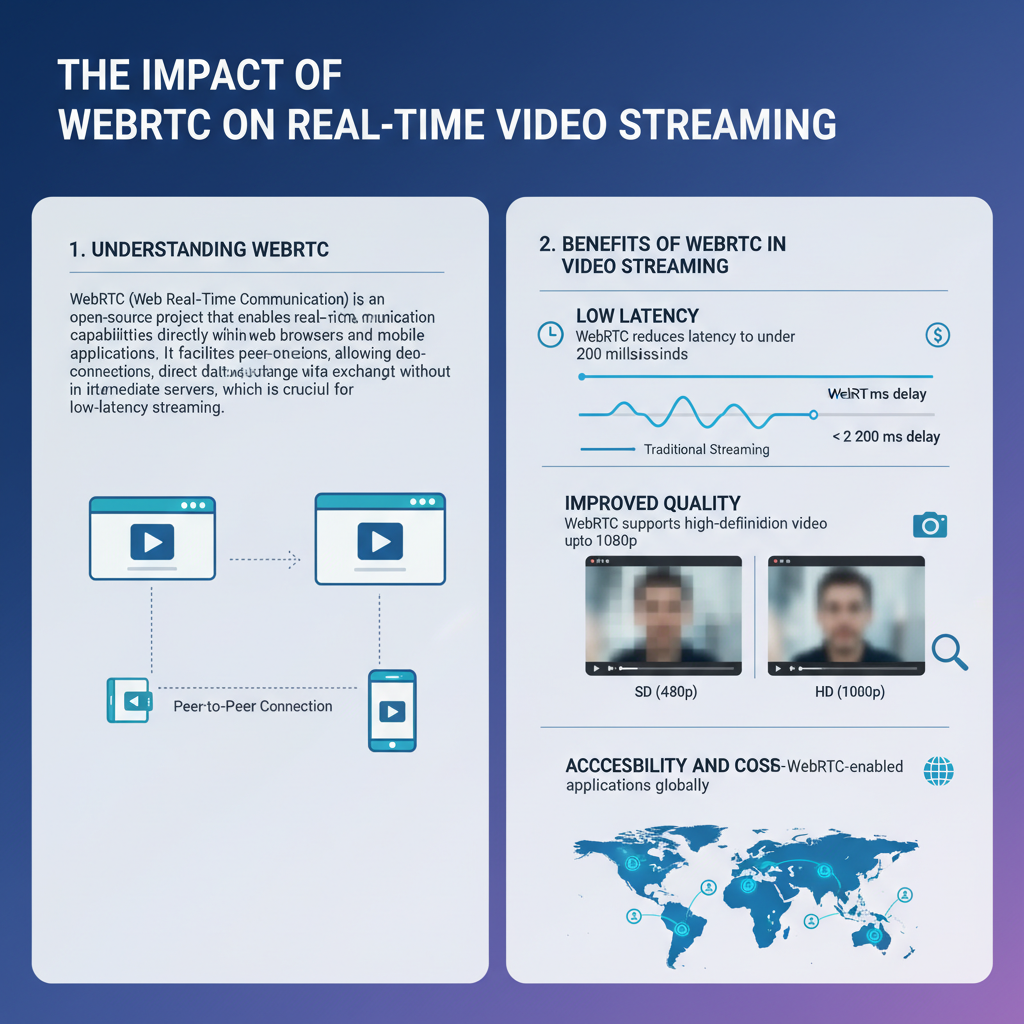
One of the standout features of WebRTC is its ability to operate efficiently across different devices and networks. Whether you’re on a desktop, tablet, or smartphone, WebRTC ensures a consistent experience, promoting inclusivity in communication. It employs sophisticated techniques such as peer-to-peer connections and adaptive bitrate streaming, which adjust the quality of the video based on the user’s internet connection, thereby enhancing overall performance.

Benefits of WebRTC in Video Streaming

Low Latency
One of the most significant advantages of WebRTC is its ability to provide low-latency communication. In real-time video streaming, even a slight delay can disrupt the user experience, especially during live interactions such as video conferencing or online gaming. WebRTC minimizes this delay, allowing for smooth, real-time conversations. This is particularly critical for applications like telemedicine, where immediate feedback can be essential for diagnosis and treatment.
Improved Quality
Another key benefit of WebRTC is its enhanced video quality. The technology employs adaptive bitrate streaming, which means that it can adjust the video quality in real-time based on the user’s network conditions. If a user’s connection weakens, WebRTC can lower the video resolution to ensure smooth playback without interruptions. This adaptability not only improves the user experience but also makes WebRTC a practical choice for live streaming events, where maintaining quality is paramount.
Accessibility and Cost-Effectiveness
WebRTC also enhances accessibility. Since it operates directly within the web browser, users do not need to download any additional software or plugins. This ease of use significantly lowers the entry barrier for many users, making video communication more inclusive. Plus, businesses can save on infrastructure costs since WebRTC reduces the need for complex server setups and expensive hardware.
Use Cases of WebRTC in Real-Time Video
Video Conferencing
The rise of remote work has propelled video conferencing into the spotlight, and platforms like Zoom and Google Meet have capitalized on WebRTC’s capabilities. These applications utilize WebRTC to facilitate efficient and high-quality video calls, allowing users to connect from anywhere in the world. The ability to host webinars, virtual meetings, and collaborative sessions has transformed how teams interact, making remote work more productive and accessible.
Live Streaming
Content creators are also harnessing the power of WebRTC to broadcast live events. Whether it’s a concert, a gaming stream, or a corporate announcement, WebRTC provides the low latency and high reliability needed for real-time engagement with audiences. Unlike traditional streaming methods that can introduce significant delays, WebRTC allows for real-time interactions, such as live chats and Q&A sessions, making the viewing experience more interactive and engaging.
Online Education
In the realm of online education, WebRTC is becoming increasingly important. Educational platforms can integrate WebRTC to offer live classes and interactive sessions, allowing teachers and students to communicate effectively. This fosters a more engaging learning environment where students can ask questions and receive immediate feedback, enhancing their educational experience.
Technical Challenges of WebRTC
Network Constraints
Despite its many advantages, WebRTC does face some technical challenges. One notable issue is network constraints, particularly when dealing with firewalls and NAT (Network Address Translation) settings. These can hinder peer-to-peer connections, making it difficult for users to communicate directly. To overcome these hurdles, WebRTC employs STUN (Session Traversal Utilities for NAT) and TURN (Traversal Using Relays around NAT) servers. STUN servers help identify the public IP address of a device, while TURN servers relay data when a direct connection cannot be established, ensuring that users can still connect regardless of their network environment.
Compatibility Issues
Another challenge lies in browser compatibility. While WebRTC is supported by most modern browsers, inconsistencies still exist, which can pose problems for developers striving to create a seamless user experience. Variations in implementation between browsers can lead to differences in performance and features. Developers must conduct thorough testing across different platforms to ensure that their applications function optimally for all users.
Future Trends in WebRTC and Video Streaming
Enhanced Security
As real-time communication continues to grow, security will be a paramount concern. Future developments in WebRTC are likely to focus on enhancing encryption and data security within applications. With increasing threats to online privacy, robust security measures will be essential to maintain user trust and compliance with regulations.
Integration with AI
Another exciting trend on the horizon is the integration of artificial intelligence (AI) into WebRTC applications. Future implementations may utilize AI to improve video quality, optimize bandwidth usage, and even enhance user interactions through features like automatic captioning or real-time language translation. These advancements could further elevate the user experience, making real-time video streaming even more accessible and enjoyable.
Expansion into New Markets
WebRTC’s versatility means that its applications may expand into new markets and industries. From telehealth solutions to customer service platforms, the potential for WebRTC to enhance communication and collaboration is vast. As more industries recognize the benefits of real-time communication, we can expect to see innovative use cases emerging in various sectors.
Conclusion
WebRTC is making a significant impact on real-time video streaming by providing low-latency, high-quality communication directly within web browsers. Its ability to facilitate seamless interactions has transformed how we connect, collaborate, and communicate in various fields, from education to entertainment. As the technology continues to evolve, it presents new opportunities alongside challenges that developers and businesses must navigate. Staying informed about WebRTC advancements will be crucial for anyone looking to leverage its full potential in their streaming projects. Whether you’re a content creator, a developer, or a business leader, embracing WebRTC could be your key to unlocking the future of real-time communication.
Frequently Asked Questions
What is WebRTC and how does it enhance real-time video streaming?
WebRTC, or Web Real-Time Communication, is an open-source project that enables peer-to-peer audio and video communication directly from web browsers without the need for external plugins. It enhances real-time video streaming by providing low-latency communication, high-quality video, and audio streams, and seamless integration with web applications. This technology allows for smooth interactions in various scenarios, such as video conferencing, online gaming, and live broadcasting, making it a game-changer in the realm of real-time communication.
How does WebRTC improve latency in video streaming applications?
WebRTC significantly reduces latency in video streaming applications by utilizing peer-to-peer connections, which minimize the distance data must travel. Unlike traditional streaming methods that rely on servers, WebRTC establishes direct connections between users, allowing for faster data transmission and reducing buffering. Additionally, it employs advanced codecs and adaptive bitrate streaming, ensuring that users experience minimal delays, even in fluctuating network conditions.
Why should businesses consider implementing WebRTC for their video streaming services?
Businesses should consider implementing WebRTC for their video streaming services because it offers enhanced user engagement, lower operational costs, and superior quality. With its ability to integrate easily into existing web applications, WebRTC provides a cost-effective solution that eliminates the need for expensive infrastructure and maintenance. Furthermore, its real-time capabilities can lead to increased customer satisfaction and retention, making it an attractive option for businesses aiming to improve their digital communication strategies.
Which industries benefit the most from WebRTC-enabled video streaming?
Industries that benefit the most from WebRTC-enabled video streaming include telemedicine, education, online gaming, and customer support. In telemedicine, WebRTC allows for secure, real-time consultations between healthcare providers and patients, enhancing the quality of care. In education, it facilitates interactive online classes, while in gaming, it enables real-time communication between players. Customer support teams also leverage WebRTC to provide instant video assistance, improving the overall service experience.
What challenges might organizations face when adopting WebRTC for video streaming?
Organizations may face challenges such as network compatibility issues, security concerns, and the need for user education when adopting WebRTC for video streaming. Ensuring that all users have compatible browsers and stable internet connections is crucial for optimal performance. Additionally, while WebRTC includes built-in security features, organizations must still implement robust security measures to protect user data. Training staff and users on how to effectively utilize the technology is also essential to maximize its benefits and minimize potential difficulties.
References
- WebRTC
- https://www.ietf.org/rfc/rfc8826.txt
- WebRTC: Real-Time Communication in Browsers
- https://www.sciencedirect.com/science/article/pii/S1877050919316651
- https://www.techrepublic.com/article/how-webrtc-is-changing-the-future-of-video-conferencing/
- https://www.researchgate.net/publication/337406568_WebRTC_Real-Time_Communication_Benefits_and_Challenges
- https://www.bbc.com/news/technology-50907313
- https://www.itu.int/en/ITU-T/focusgroups/web5g/Pages/default.aspx
