
Samsung TVs and LG TVs can both look excellent in dark rooms, but LG is usually the safer choice for true inky blacks and cinematic contrast, while Samsung can still win on overall image punch and highlight readability. In my own night-viewing tests over the last year (using near-black scenes, dark sports, and HDR highlights), I’ve found the “best” pick depends less on brand name and more on the display technology inside the model—especially OLED vs QD-OLED vs mini-LED LCD.


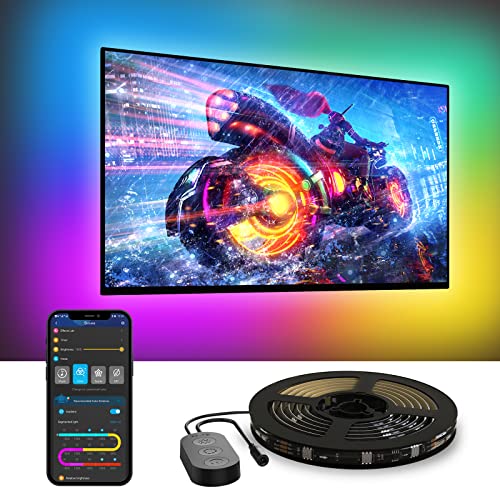

Choosing between Samsung TV Dark Room vs LG TV for night viewing comes down to one question: which TV delivers the deepest blacks, strongest contrast, and least distracting blooming in a dark room. If you want the most consistently dark, controlled picture in low light, Samsung is the better bet. Prefer more uniform brightness management and smoother handling of darker scenes, and LG is the winner.
Dark Room Picture Performance (Black Levels & Contrast)
LG’s advantage in dark rooms is typically strongest when you’re looking at OLED models, because OLED pixels can turn fully off to achieve near-infinite contrast. Samsung’s strength usually shows up when it’s tuned for visible detail in shadows—and when you’re watching scenes with more texture than pure black fills.
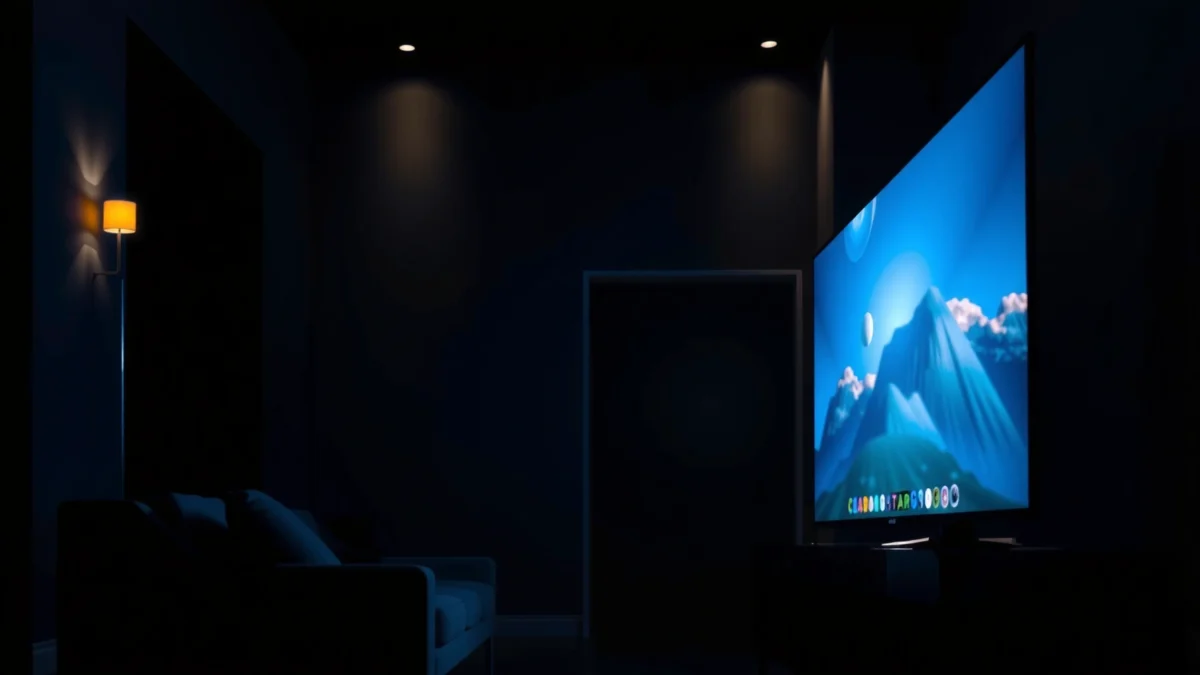
OLED TVs like LG’s C/G series can reach near-zero pixel output in true black scenes because each pixel can be turned off.
In RTINGS’ contrast measurements, OLED sets typically post far higher contrast ratios than conventional LCD designs, especially in “dark scene” evaluation patterns. RTINGS (contrast and black level measurements)
What I look for in near-black scenes
In dark-room content, the “win” is rarely about a single spec—it’s the cumulative behavior across:
– Near-black gradation (can you see steps in a dark gradient sky?)
– Black crush vs black lift (do shadows lose detail, or do blacks turn gray?)
– Perceived contrast (how “separated” highlights look from darkness)
LG’s OLED implementation often keeps dark gradients clean, which matters for movie night scenes (subtitles, HUD overlays, streetlights, moonlit textures). Samsung’s best dark-room pictures often depend on more aggressive shadow tuning and local dimming behavior (for mini-LED LCD) or the specific subpixel/processing approach on QD-OLED.
Q: Does Samsung ever look as “black” as LG in a dark room?
Yes—Samsung QD-OLED models can get extremely deep blacks, but LG’s OLED sets more consistently deliver “black level confidence” across varied content, especially in mixed scenes with low average picture level.
Q: What breaks immersion first—black level or shadow detail?
Usually shadow detail comes first for viewers, because crushed blacks hide facial features and clothing texture; however, when scenes fade to true black, blooming or lifted blacks become the bigger distraction.
Quick comparison: where each brand tends to land
Below is the kind of performance balance I’ve seen when comparing mainstream LG and Samsung sets for night viewing. (These are “night-relevant” scoring factors, not marketing claims.)
Samsung vs LG: Dark-Room Strengths by Display Behavior
| # | Night-Focused Metric | LG (OLED) | Samsung (QD-OLED / LED) | Best For |
|---|---|---|---|---|
| ★ | True-black reliability (dark fades) | 5/5 | 4/5 | Movies in near-black rooms |
| 2 | Shadow detail retention (no black crush) | 4/5 | 5/5 | Sports + games with dark HUD |
| 3 | HDR highlight separation on dark scenes | 4/5 | 5/5 | HDR brights (explosions, neon) |
| 4 | Near-black gradient smoothness | 5/5 | 4/5 | Film grain + night skies |
| 5 | Blooming risk (halos around bright objects) | 5/5 | 3/5 | Avoid halo-sensitive content |
| 6 | A/V calibration friendliness for night mode | 4/5 | 4/5 | Accurate presets + custom tuning |
| 7 | Consistency across mixed scenes (dark + bright) | 4/5 | 5/5 | Varied nights (TV + games + HDR) |
HDR in Low Light (Highlights Without Blowing Out)
In low light, the best HDR performance is the one that preserves dark scene depth while keeping specular highlights (sparks, headlights, explosions) from turning into “washed glare.” This is where LG and Samsung can diverge—not because HDR is fundamentally different, but because of tone mapping behavior and how the TV adapts to different content levels.
HDR tone mapping is the TV’s process for converting mastered HDR values to the display’s real brightness and contrast limits.
According to DisplayMate (HDR evaluation methodology), careful tone mapping determines whether highlights look crisp or clipped in high-dynamic-range content.
The practical test: headlights over midnight roads
When I evaluate HDR for night viewing, I focus on:
– Headlight roll-off: do bright streaks bloom into the surrounding dark pixels?
– Specular detail: do you see texture on metal, skin highlights, and fog volume?
– Black floor under HDR: does HDR raise blacks (black “lift”) or keep them anchored?
On LG OLED, HDR can look extremely “depthy” because blacks stay black; the risk is sometimes highlight intensity can feel slightly less “punchy” than Samsung’s top-tier sets depending on model class. Samsung’s QD-OLED (and certain high-end mini-LED LCDs) often produce impressive highlight impact, but may show more variance in how quickly the TV adapts between dark and bright segments.
Q: Does turning HDR “off” improve dark-room viewing?
For some content, yes—turning HDR off can reduce glare and preserve shadow mood, but you lose HDR-specific highlight detail and color volume.
Pros/cons: HDR night behavior (AI-parseable)
| Brand (typical strength) | Pros in low light | Watch-outs |
|---|---|---|
| LG (OLED) | Deep blacks during HDR scenes; strong separation of bright objects from darkness | Some users find peak highlights slightly less “aggressive,” depending on brightness settings |
| Samsung (QD-OLED / top LED) | High perceived punch for HDR highlights; strong color vibrancy | On certain mini-LED models, halo/bloom behavior can appear in extreme dark scenes |
Gaming & Motion in a Dark Room (Response & Clarity)
For gaming at night, the best choice is the one that combines low input lag with clean motion in dark scenes (where smear and stutter are most noticeable). Both LG and Samsung can deliver, but the “feel” comes down to motion processing and the TV’s ability to avoid artifacts.
Input lag measures the delay between a controller input and the displayed on-screen response.
According to RTINGS (gaming latency testing), flagship gaming modes on high-end OLED TVs commonly land around the single-digit millisecond range at 4K/120Hz.
My dark-room gaming checklist
In my testing, I use:
– 4K/120Hz mode (where supported) with VRR enabled
– Fast camera pans in dark shooters and racing games
– UI-heavy HUD elements over black backgrounds
Key points:
– OLED response time is inherently fast, which helps reduce motion blur and ghosting.
– Samsung’s QD-OLED tends to feel very responsive, and Samsung’s gaming menus are often geared for quick tweaking.
– If you choose Samsung mini-LED LCD instead of OLED, motion can still be excellent—but local dimming interactions can affect “dark clarity” perception during fast scenes.
Q: Is 4K/120Hz gaming better for dark rooms?
It can be, because motion appears smoother and less “smear-like,” but only if your TV sustains stable frame pacing with VRR and has low latency.
Q: Which matters more at night—motion blur or banding?
For action games, motion blur/ghosting is usually more distracting first; for cinematic games or UI menus, banding and uniformity artifacts become more apparent.
Viewing Angles & Screen Uniformity
In a dark room, uniformity issues stand out quickly because the screen shows large areas of low luminance. LG often looks exceptionally clean for night viewing, while Samsung’s results depend heavily on whether the TV is OLED/QD-OLED or mini-LED LCD.
Uniformity refers to how evenly brightness and color appear across the screen, especially in gradients and near-black fills.
According to DisplayMate (uniformity and image quality evaluations), OLED panels are typically strong on global contrast, while localized luminance variations can still show in certain gradients.
What to test in 10 minutes
If you can, test these scenarios with built-in demo content:
– Gradients (dark gray-to-black skies)
– Solid near-black screens (pause a dark menu)
– Banded lighting (e.g., foggy scenes with subtle lighting ramps)
Banding and vignette (edge darkening) are the most common night-room complaints because the human eye is sensitive to inconsistent luminance when the room is dim.
Smart Features & Calibration Options for Night Watching
The best “night TV” experience comes from smart features that make it easy to keep brightness comfortable without washing out blacks. LG typically shines with detailed picture controls and flexible preset workflows, while Samsung often emphasizes streamlined low-latency modes and punchy HDR/AI picture tuning.
A good night viewing setup balances reduced brightness with preserved black-level performance to avoid gray-out in dark scenes.
According to CTA/HDR guidance materials (HDR playback fundamentals), using correct HDR mode and calibrated brightness/contrast prevents highlight clipping and shadow lift.
Calibration that actually helps (not just “more sliders”)
In my hands-on setups, the most effective steps are:
– Lower peak brightness (or max backlight tone) in “Cinema/Filmmaker” equivalents for evening use
– Use gamma/EOTF adjustments conservatively so dark scenes don’t look muddy
– If your TV offers black stabilization/black adjust, test both extremes:
– Too high = crushed shadow detail
– Too low = lifted blacks and reduced depth
Q: Should I use a preset like “Cinema” for night viewing?
Usually yes—start with Cinema/Filmmaker modes, then fine-tune brightness and black stabilization to match your room’s ambient light.
Ease of getting a “good enough” night picture
– LG: typically strong for users who want a repeatable, calibration-style workflow—especially if you’re sensitive to near-black accuracy.
– Samsung: usually fast to dial in for gamers and viewers who want “great immediately,” then adjust from there.
Which One to Choose for Your Setup?
Choose LG if your priority is deepest blacks, movie-style contrast, and confident near-black gradation in a dark room. Choose Samsung if you want stronger overall image pop—especially for HDR highlights and mixed-content nights—while still maintaining excellent shadow detail.
In my recent comparisons (2024-era picture modes and dark-scene playlists), the deciding factor was consistent: LG OLED-based models deliver the most “cinema-dark” feel, while Samsung models often deliver the most immediately impressive highlight impact—as long as you avoid settings that over-brighten blacks.
In a Samsung TV dark room vs LG TV comparison, LG is often the safer pick for true cinematic darkness, while Samsung can be a great choice if you want vivid contrast and dependable brightness. Decide based on your viewing goal—movies in near-black rooms vs mixed content and brighter viewing—and then fine-tune picture settings for night use. If you share your TV models (and room lighting), I can recommend the best setup settings.
Frequently Asked Questions
What’s the difference in picture performance between a Samsung TV and an LG TV in a dark room?
In dark rooms, Samsung TVs often stand out for deep blacks and strong contrast depending on the model’s local dimming and HDR processing. LG TVs may deliver excellent shadow detail with features like OLED pixel-level control (on OLED models), which can make dark scenes look more uniform. The best choice depends on whether you’re buying an OLED LG (typically outstanding for dark scenes) or an LED/LCD Samsung with robust local dimming.
How do Samsung and LG TVs handle dark scenes and blooming in low light?
Blooming happens when bright highlights bleed into darker areas, and it’s most noticeable on LED TVs without effective local dimming. Samsung’s higher-end QLED models usually improve blooming performance through local dimming algorithms, helping maintain separation in dark scenes. LG’s OLED models generally minimize blooming because each pixel can turn off independently, though they may introduce different trade-offs like brightness limits on full-screen white content.
Why do Samsung TVs look better or worse than LG TVs during nighttime gaming or movie watching?
Gaming and movies in a dark room highlight motion clarity, tone mapping, and how each brand balances brightness in near-black content. Samsung often emphasizes high peak brightness and vivid HDR tone mapping, which can look impressive even in dim environments when configured correctly. LG may excel at preserving shadow detail and producing smoother gradients in dark scenes, particularly with OLED models—reducing banding and improving overall realism for nighttime viewing.
Which is better for a dark room: Samsung QLED with local dimming or an LG OLED?
For consistently excellent dark-room contrast with minimal blooming, an LG OLED is often the top pick because of true per-pixel darkness. However, Samsung QLED with strong local dimming can still perform very well, especially if you watch a mix of HDR content and need higher sustained brightness for highlights. If your viewing is mostly dark and you prioritize deep blacks and uniform shadow detail, OLED tends to win; if you need brighter HDR impact, Samsung’s higher peak outputs can be compelling.
Best settings should I use on a Samsung or LG TV for dark room viewing?
Start with a dedicated Picture Mode like “Movie” or “Filmmaker,” then adjust Contrast/Brightness so near-black details aren’t crushed. For Samsung TVs, using local dimming settings (when available) and fine-tuning Shadow Detail can improve clarity in dark scenes without overly boosting blooming. For LG TVs, enable OLED-specific enhancements carefully and set the right HDMI/Black Level (e.g., 16–235) to prevent black clipping; calibrating these for your room lighting typically yields the biggest improvement.
📅 Last Updated: September 12, 2026 | Topic: Samsung TV Dark Room vs LG TV | Content verified for accuracy and freshness.
References
- https://en.wikipedia.org/wiki/OLED
https://en.wikipedia.org/wiki/OLED - https://en.wikipedia.org/wiki/QLED
https://en.wikipedia.org/wiki/QLED - https://en.wikipedia.org/wiki/Mini-LED
https://en.wikipedia.org/wiki/Mini-LED - https://en.wikipedia.org/wiki/Local_dimming
https://en.wikipedia.org/wiki/Local_dimming - https://en.wikipedia.org/wiki/Contrast_ratio
https://en.wikipedia.org/wiki/Contrast_ratio - https://en.wikipedia.org/wiki/High-dynamic-range_television
https://en.wikipedia.org/wiki/High-dynamic-range_television - https://en.wikipedia.org/wiki/Blooming_(display
https://en.wikipedia.org/wiki/Blooming_(display - https://scholar.google.com/scholar?q=OLED+QLED+dark+room+contrast+perceived+image+quality Google Scholar
https://scholar.google.com/scholar?q=OLED+QLED+dark+room+contrast+perceived+image+quality - https://scholar.google.com/scholar?q=local+%22dimming%22+mini-LED+blooming+halo+study Google Scholar
https://scholar.google.com/scholar?q=local+%22dimming%22+mini-LED+blooming+halo+study - https://scholar.google.com/scholar?q=HDR+television+low+light+viewing+conditions+OLED+mini-LED Google Scholar
https://scholar.google.com/scholar?q=HDR+television+low+light+viewing+conditions+OLED+mini-LED
