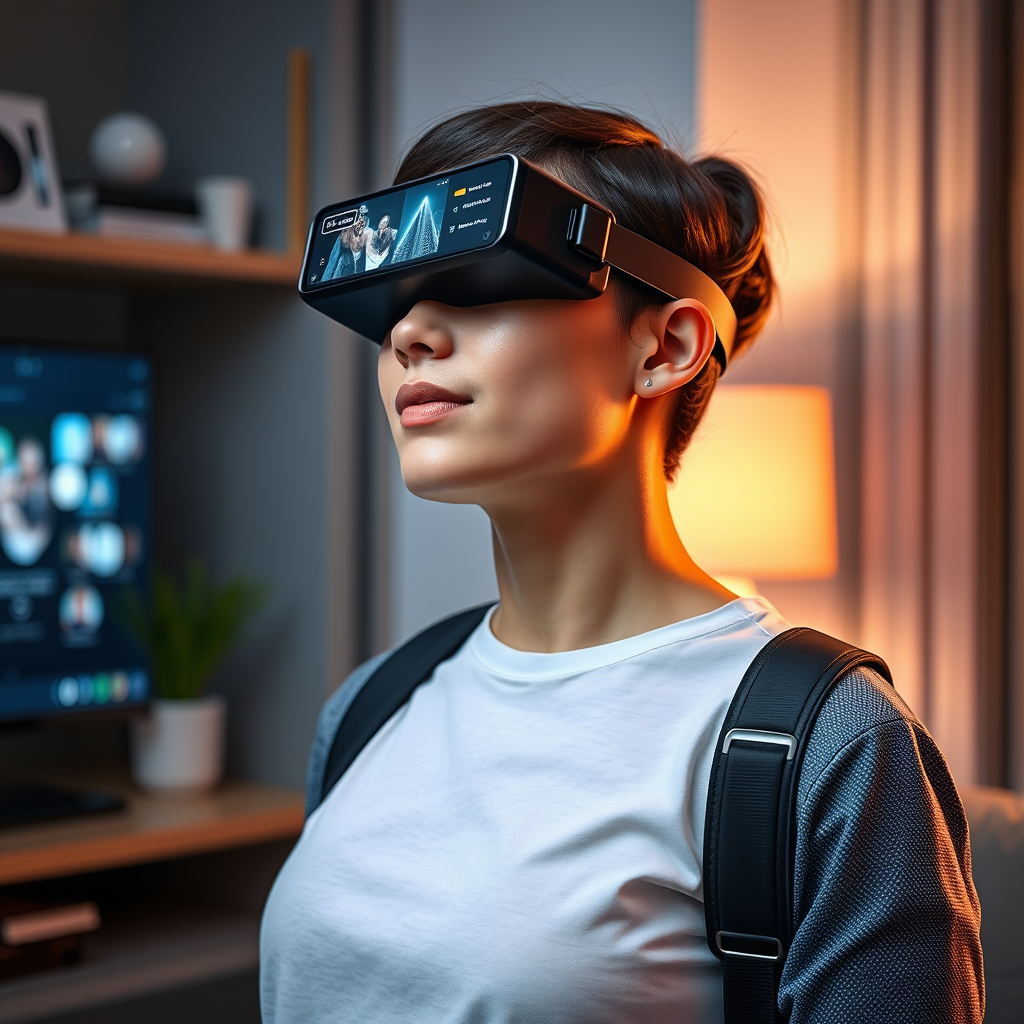

The future of paper-thin wearable displays is not just a distant dream; it’s a rapidly approaching reality that will redefine how we interact with technology. With innovations in materials and design, these lightweight and flexible displays are set to seamlessly integrate into our daily lives, enhancing connectivity and convenience. In this article, we’ll delve into the latest advancements, explore potential applications in various sectors, and uncover the challenges that lie ahead in this exciting field.
Emerging Technologies in Display Manufacturing

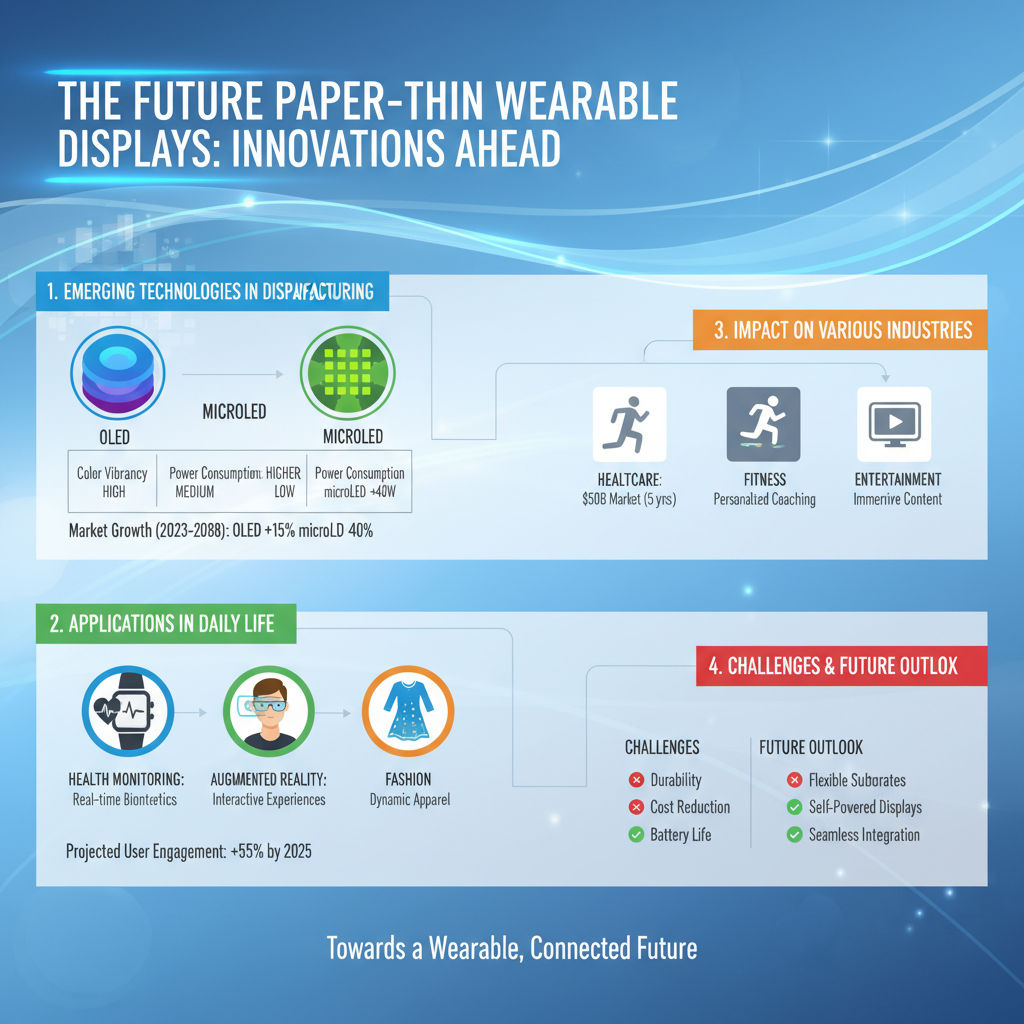
Innovations in materials like OLED (Organic Light Emitting Diodes) and microLED are at the forefront of creating thinner and more efficient displays. OLED technology allows for vibrant colors and deep blacks while consuming less power, which is essential for portable devices. MicroLED, on the other hand, offers even more significant advantages, including higher brightness and longer lifespans, making it a compelling choice for wearable technology.
Additionally, advancements in printing technology, such as inkjet and screen printing techniques, enable the mass production of flexible displays at significantly lower costs. For example, companies like PragmatIC Semiconductor are developing flexible integrated circuits that can be printed on plastic substrates, paving the way for affordable and scalable production of smart wearable devices. This combination of innovative materials and advanced production methods is crucial for bringing paper-thin displays from concept to market.
Applications in Daily Life

Wearable displays are set to transform personal health monitoring significantly. Imagine a wristband that not only tracks your steps but also provides real-time data on your heart rate, blood pressure, and even hydration levels. Companies like Fitbit and Apple are already integrating these features into their devices, but the future promises even more sophisticated monitoring capabilities with paper-thin technology.
Moreover, the integration of displays into clothing and accessories will bring a new level of functionality to everyday items. For instance, smart textiles could allow clothing to display notifications from your smartphone or even change colors based on your mood or surroundings. Such innovations not only enhance personal convenience but also encourage a more connected lifestyle, where technology seamlessly blends into the fabric of our daily activities.
Impact on Various Industries
The fashion industry has begun to embrace wearable technology, merging aesthetics with functionality in exciting ways. Designers are collaborating with tech companies to create garments that are not only stylish but also equipped with smart displays. For example, the collaboration between Adidas and Google led to smart sneakers that can track performance metrics, showcasing how wearable tech can enhance athletic performance while maintaining a fashionable appeal.
In the healthcare sector, the potential of paper-thin displays is equally promising. Hospitals can leverage these technologies for improved patient care, using wearable devices to monitor patients’ vital signs remotely. This capability allows for real-time data transmission to healthcare providers, enabling proactive interventions and reducing the need for in-person visits. Furthermore, the fitness industry is capitalizing on these advancements by offering consumers wearables that not only track fitness metrics but also provide personalized insights for an active lifestyle.
Challenges Facing Development
Despite the promising future of paper-thin displays, several challenges must be addressed before widespread adoption can occur. Durability is a significant concern; wearable devices must withstand daily wear and tear without compromising functionality. Manufacturers are exploring solutions such as reinforced materials and protective coatings to enhance durability while retaining the thin profile that makes these displays appealing.
Battery life is another critical issue. For wearable devices to be practical, they must maintain long-lasting power without becoming bulky. Innovations in battery technology, such as flexible batteries and energy-harvesting systems that convert movement into power, are being researched to address these challenges. These advancements could lead to devices that require less frequent charging, making them more user-friendly.
Privacy and security are paramount as devices become increasingly interconnected. With the rise of smart wearables that collect and transmit personal data, ensuring user privacy is essential. Companies must implement robust encryption and security measures to protect sensitive information from potential breaches. Educating consumers about best practices for data security will also be crucial in fostering trust in these technologies.
The Role of Consumer Demand
As consumer interest in smart devices continues to grow, it plays an essential role in driving research and development in the wearable display sector. The demand for innovative features, such as health tracking and seamless integration with other devices, encourages companies to invest in creating cutting-edge technologies.
User feedback is invaluable in shaping the features and designs of future wearable displays. Companies are increasingly engaging with consumers through surveys, focus groups, and beta testing programs to understand their needs and preferences. This collaborative approach not only helps in developing products that resonate with users but also builds a loyal customer base that feels invested in the brand.
Future Trends to Watch
Looking ahead, several exciting trends are anticipated in the realm of paper-thin wearable displays. One of the most promising developments is the emergence of self-healing materials, which have the potential to repair minor damage automatically. This innovation could significantly enhance the longevity of wearable devices, reducing the need for replacements and repairs.
Energy-harvesting technologies are also on the horizon, allowing devices to generate power from their environment, such as through body heat or movement. This advancement could lead to wearables that are virtually maintenance-free, providing users with a hassle-free experience.
Moreover, the potential for augmented reality (AR) integration presents exciting possibilities for enhancing user experiences. Imagine a paper-thin display that overlays digital information onto the real world, providing users with contextually relevant data in real-time. This capability could revolutionize how we interact with our surroundings, creating immersive experiences that blend the physical and digital worlds seamlessly.
The future of paper-thin and wearable displays is bright, with numerous innovations on the horizon that will change how we engage with technology. From enhancing personal health monitoring to transforming industries like fashion and healthcare, the potential applications are vast and varied. However, addressing challenges such as durability, battery life, and privacy will be crucial for widespread adoption. As these technologies advance, staying informed and embracing the changes will be key for consumers and industries alike. The journey ahead promises to be exciting, and we can’t wait to see how these innovations will shape our lives.
Frequently Asked Questions
What are the advantages of paper-thin and wearable displays over traditional screens?
Paper-thin and wearable displays offer several advantages over traditional screens, including enhanced portability, flexibility, and comfort. These displays can be integrated seamlessly into clothing or accessories, making them ideal for on-the-go use. Additionally, they consume less power and can be designed to be lightweight, which reduces strain on the user, making them suitable for prolonged wear.
How will paper-thin displays impact the future of consumer electronics?
The integration of paper-thin displays in consumer electronics is expected to revolutionize product design and functionality. These displays can lead to more innovative gadgets that are both aesthetically pleasing and highly functional, such as foldable phones, smart textiles, and flexible wearables. This shift will likely enhance user experience by providing more interactive and immersive ways of engaging with technology.
Why are paper-thin and wearable displays gaining popularity in industries like fashion and healthcare?
Paper-thin and wearable displays are gaining traction in industries such as fashion and healthcare due to their ability to combine technology with functionality and style. In fashion, they allow designers to create dynamic clothing that can change appearance or provide information in real-time. In healthcare, these displays can monitor vital signs and deliver data directly to the wearer, making them invaluable for personal health management and telemedicine.
What are some challenges facing the development of paper-thin and wearable display technology?
Some challenges in the development of paper-thin and wearable displays include durability, battery life, and resolution. Ensuring that these displays can withstand everyday wear and tear while maintaining high image quality is crucial. Additionally, improving battery technology to support prolonged use without adding bulk is a significant hurdle that developers must overcome to make these displays widely accessible and practical.
Which companies are leading the way in paper-thin and wearable display innovation?
Several companies are at the forefront of innovation in paper-thin and wearable display technology, including LG Display, Samsung, and E Ink. LG and Samsung are known for their contributions to flexible OLED technology, while E Ink specializes in electronic paper displays, often used in e-readers. These industry leaders are continuously pushing the boundaries of display technology, paving the way for future applications in various sectors.
References
- Wearable technology
- https://www.sciencedirect.com/science/article/pii/S1369702117301822
- https://www.nature.com/articles/s41598-021-88288-1
- https://www.reuters.com/article/us-technology-display-idUSKBN2A60CR
- https://www.technologyreview.com/2021/04/16/1022800/future-wearable-displays/
- https://www.nasa.gov/feature/nasa-develops-thin-display-technology-for-wearable-devices
- https://www.bbc.com/future/article/20211007-the-future-of-wearable-technology
- https://www.wired.com/story/future-of-wearable-displays/
- https://www.sciencedaily.com/releases/2023/06/230615113219.htm
- https://www.ift.org/news-and-publications/food-technology-magazine/issues/2023/jan/features/future-of-wearable-tech