
AI-powered motion capture technology dramatically enhances virtual reality (VR) gaming by enabling more realistic character movements and interactions. This innovative technology allows game developers to create lifelike animations that respond dynamically to player inputs, leading to immersive experiences that feel truly engaging. With the evolution of AI, the possibilities for VR gaming are expanding rapidly, transforming how we play and interact with virtual worlds.
Understanding AI Motion Capture
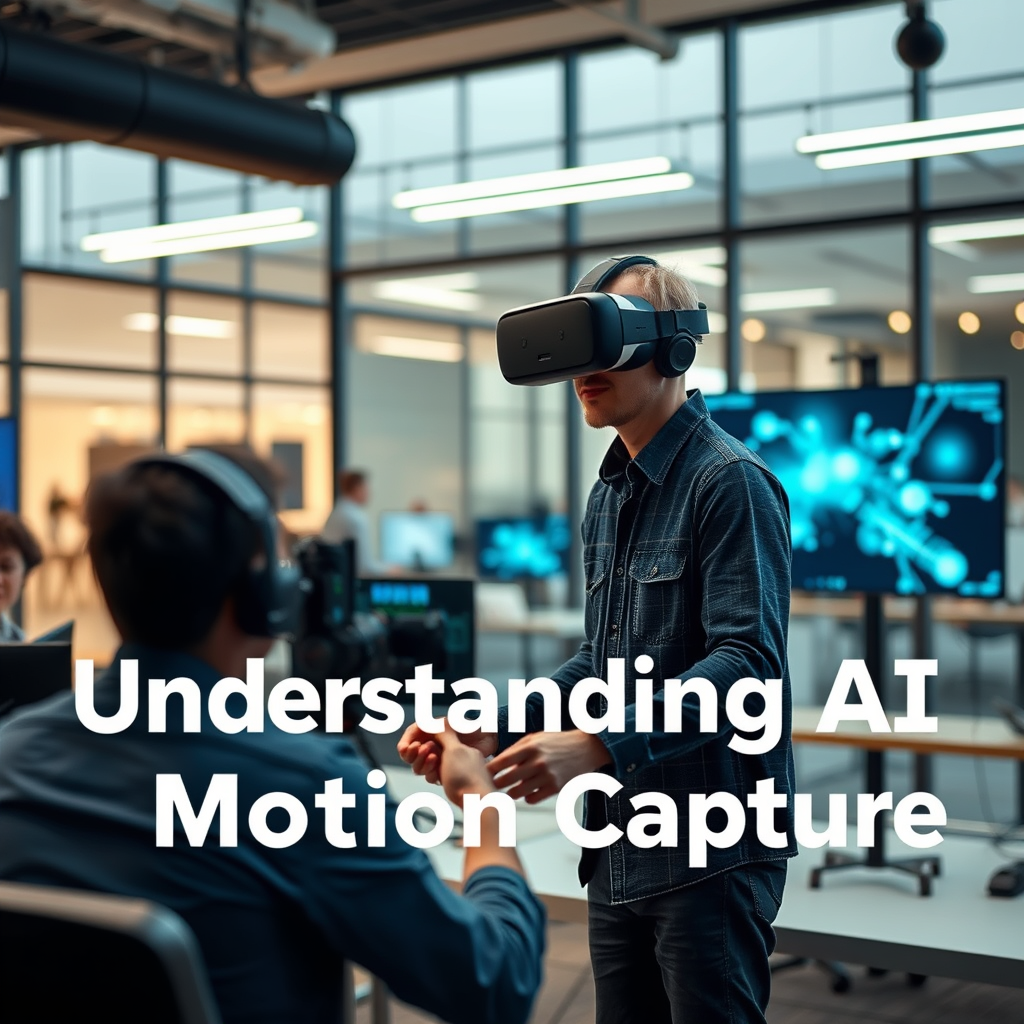
AI motion capture employs advanced algorithms to monitor and interpret human movements with exceptional precision. Unlike traditional motion capture methods that rely heavily on markers and specialized equipment, AI motion capture systems can analyze real-time data from various sensors, including cameras and wearable devices, to track movements accurately. This technology not only captures the subtleties of body language but also allows for rapid adjustments to character animations, making them appear more lifelike and responsive.
For instance, AI algorithms can analyze the speed and fluidity of a player’s movements and translate that data into smooth, realistic animations. This means that when a player ducks, jumps, or gestures, the character in the game mimics those actions with remarkable accuracy, enhancing the overall realism of the experience. By reducing the reliance on predefined animations, AI motion capture provides a more personalized and unique gaming experience for each player.
Benefits for Game Developers
One of the standout advantages of AI motion capture is its ability to streamline the animation process, which can significantly reduce both time and costs associated with traditional animation methods. In the past, animators would spend countless hours creating complex movements frame by frame. With AI, developers can automate much of this process, allowing them to focus on more creative aspects of game design.
Moreover, the flexibility offered by AI motion capture enables developers to introduce more complex character behaviors and interactions within games. This can enhance storytelling by allowing characters to react in a more nuanced way to player actions, creating a richer narrative experience. For example, a character might show fear when facing a dangerous enemy or express joy during a victory celebration, adding depth to the gameplay.
Additionally, the ability to create realistic animations in less time means that developers can release updates and new content more frequently, keeping players engaged and eager for more. This can lead to a more sustainable gaming ecosystem where developers can continuously refine and expand their worlds.
Enhancing Player Experience
AI-powered motion capture significantly enhances the player experience by creating immersive environments where player movements directly influence in-game actions. Imagine stepping into a virtual world where every movement you make is mirrored by your character in real-time. This seamless interaction fosters a stronger connection between the player and the game, making the experience feel more engaging and personal.
Furthermore, AI technology facilitates more natural and intuitive controls. Players can use their bodies to execute actions, leading to gameplay that feels organic rather than mechanical. For instance, in VR games like “Beat Saber,” players can swing their arms to hit blocks in rhythm, creating a sense of physicality that traditional gaming setups cannot replicate. This intuitive control scheme can lead to higher player satisfaction, as individuals feel more in control of their actions and outcomes within the game.
The incorporation of AI motion capture also allows for unique gameplay experiences tailored to individual players. As the AI learns a player’s movements and habits, it can adjust the difficulty level and responsiveness to match their skill, ensuring that everyone from beginners to seasoned gamers finds enjoyment and challenge in the game.
Case Studies in VR Gaming
Several successful VR games exemplify the power of AI motion capture in enhancing player engagement. One notable example is “Half-Life: Alyx,” which has been praised for its immersive gameplay and intuitive controls. The game makes use of AI motion capture to create realistic character interactions, allowing players to engage with NPCs in a way that feels natural and responsive. This level of interactivity not only enhances the storytelling but also contributes to the overall immersion of the game.
Similarly, “Beat Saber” stands out as a prime example of how AI motion capture can revolutionize gameplay. The game’s design relies heavily on players’ physical movements to score points, and the AI ensures that every swing, duck, and twist is captured accurately, providing a thrilling and energetic experience. Players often find themselves immersed in the rhythm and flow of the game, showcasing the potential of AI to enhance player engagement.
These case studies highlight how AI motion capture can push the boundaries of what is possible in VR gaming, creating experiences that resonate deeply with players and keep them coming back for more.
Challenges and Limitations
While the benefits of AI motion capture are substantial, there are challenges and limitations that need to be acknowledged. One significant concern is the potential technical limitations, such as sensor accuracy and the requirement for robust hardware. For example, if the motion capture system fails to accurately track a player’s movements, it can lead to frustrating gameplay experiences and diminish immersion.
Additionally, there are ethical implications and privacy concerns surrounding the use of motion capture data. Players may be wary of how their movements are being recorded and utilized, raising questions about data security and consent. As the technology continues to evolve, it will be crucial for developers to address these concerns transparently and ethically to build trust with their player base.
The Future of AI in VR Gaming
The future of AI in VR gaming looks incredibly promising, with several exciting trends on the horizon. One emerging trend is the integration of machine learning, which allows AI systems to become more adaptive and intelligent over time. As AI learns from player interactions, it can create increasingly personalized gameplay experiences that cater to individual preferences and playing styles.
Additionally, advancements in AI could lead to more sophisticated NPCs that can adapt to player behavior, making virtual worlds feel more alive and responsive. Imagine interacting with characters that learn from your actions and can offer unique challenges or quests based on your gameplay history. This level of adaptability could transform how players engage with games, resulting in deeper, more meaningful interactions.
Moreover, as hardware continues to improve, we can expect AI motion capture to become more accessible to both developers and players. This democratization of technology could lead to a surge in innovative games and experiences that take full advantage of AI’s capabilities, ultimately enriching the VR gaming landscape.
In summary, the integration of AI-powered motion capture technology is revolutionizing VR gaming by providing more realistic animations, enhancing player engagement, and streamlining development processes. As we look to the future, staying informed about advancements in this field will be essential for maximizing our gaming experiences and enjoying the immersive worlds created by this exciting technology.
Frequently Asked Questions
How does AI-powered motion capture improve the realism of VR gaming?
AI-powered motion capture enhances the realism of VR gaming by accurately tracking user movements and translating them into the virtual environment. This technology uses advanced algorithms to reduce latency and improve the fidelity of character animations, resulting in a more immersive experience. As players move, the AI captures nuanced motions, making characters respond in a lifelike manner, thereby heightening the sense of presence in the game world.
What are the benefits of using AI in motion capture for VR games?
The benefits of using AI in motion capture for VR games include enhanced accuracy, reduced costs, and quicker production times. AI can analyze and predict movements, allowing for real-time corrections and smoother animations. This significantly lowers the need for extensive manual adjustments, which not only streamlines the development process but also allows smaller studios to produce high-quality VR content efficiently.
Why should game developers consider AI motion capture technology?
Game developers should consider AI motion capture technology because it provides a competitive edge in creating engaging and immersive experiences. By utilizing AI, developers can produce more realistic character animations and interactions, which are crucial for player engagement. Additionally, AI can optimize performance, ensuring that games run smoothly across various devices, ultimately leading to higher customer satisfaction and retention.
Which AI motion capture systems are best for VR game development?
Some of the best AI motion capture systems for VR game development include systems like Xsens, Vicon, and Rokoko. These platforms offer advanced features such as real-time motion tracking, integration with popular game engines, and user-friendly interfaces. Selecting the right system depends on factors such as budget, required precision, and the complexity of animations needed for the game, allowing developers to tailor their choice to their specific project requirements.
How can players benefit from AI-powered motion capture in VR gaming?
Players can benefit significantly from AI-powered motion capture in VR gaming as it leads to more immersive and interactive gameplay experiences. The accurate tracking of their movements allows for seamless interaction with the virtual environment, making gameplay feel intuitive and engaging. Furthermore, enhanced character responsiveness and lifelike animations create a deeper emotional connection to the game, enriching the overall enjoyment and satisfaction for players.
References
- Motion capture
- https://www.sciencedirect.com/science/article/pii/S1877050919316641
- https://www.nature.com/articles/s41598-019-41737-9
- https://www.techrepublic.com/article/how-ai-is-changing-the-future-of-motion-capture-in-gaming/
- https://www.bbc.com/news/technology-54828775
- https://www.theguardian.com/technology/2020/jun/29/ai-virtual-reality-gaming-future
- Upcoming USENIX Conferences | USENIX
- https://www.technologyreview.com/2020/10/27/1011146/ai-motion-capture-vr-gaming/