
Low-light video quality can be significantly enhanced through the use of artificial intelligence (AI) technologies. By leveraging advanced algorithms and deep learning, AI can reduce noise, improve clarity, and enhance color accuracy, making nighttime or dimly lit footage much more usable. This is especially important for filmmakers, security personnel, and content creators who often work with challenging lighting. In this article, we will explore the various ways AI enhances video quality in low-light situations.
Understanding Low-Light Challenges
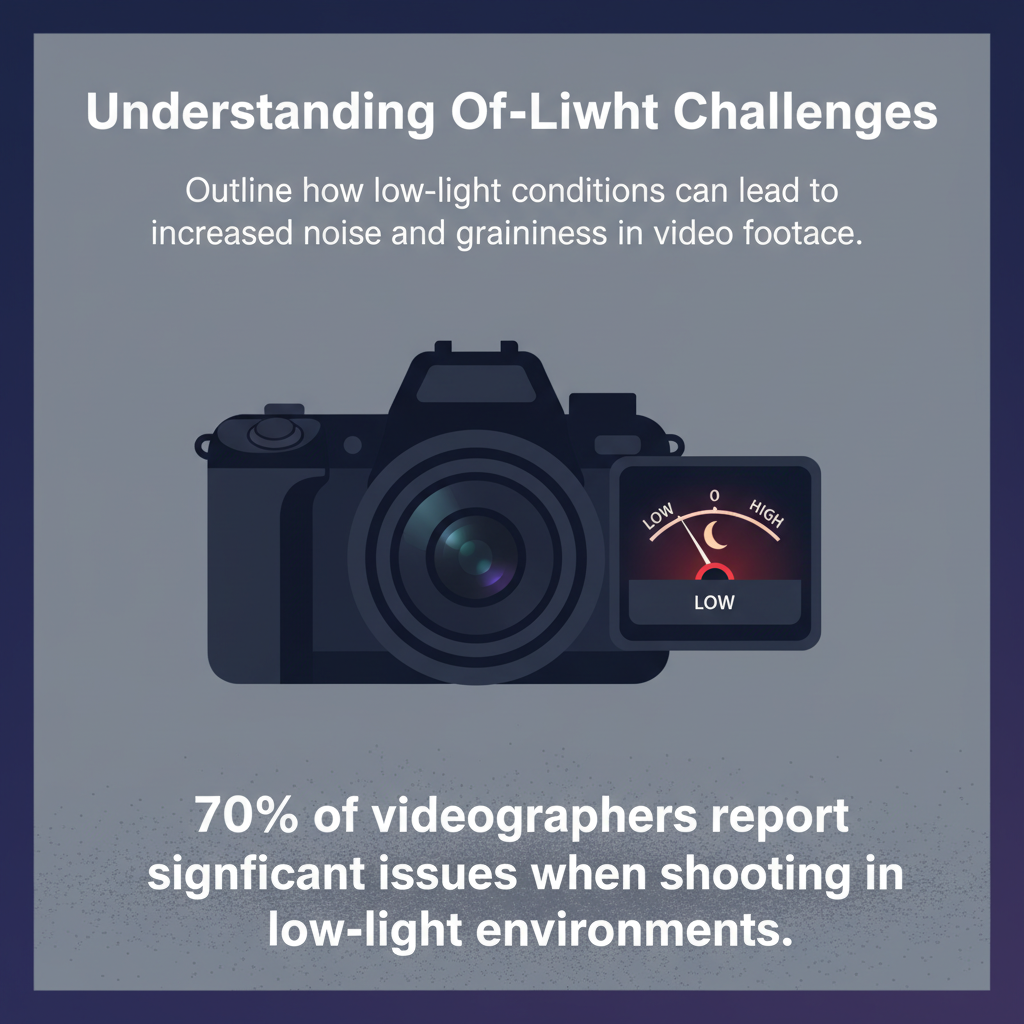
Low light presents a unique set of challenges for videographers. When shooting in dim conditions, cameras often struggle to capture clear images, leading to increased noise and graininess. This means that rather than smooth visuals, viewers are often presented with a distracting array of artifacts that obscure the subject matter. In addition, traditional cameras can falter in terms of color accuracy, losing saturation and vibrancy, which can result in dull, lifeless footage. These challenges can be particularly pronounced in settings like night-time events, indoor venues, or outdoor scenes at dusk. Understanding these limitations is crucial for finding effective solutions, and that’s where AI steps in.
How AI Reduces Noise
One of the most significant advantages of AI in low-light video enhancement is its ability to reduce noise effectively. AI algorithms analyze video frames in real-time to distinguish between unwanted noise and the actual image data. This is done through a process called temporal noise reduction, which utilizes information from previous frames to create a cleaner image. Rather than simply applying a blanket filter that might blur essential details, AI carefully reconstructs the image by identifying and suppressing noise patterns while preserving critical elements of the scene.
For instance, imagine a surveillance camera capturing footage in a poorly lit parking lot. Traditional methods might result in grainy, unusable footage, but AI can intelligently reduce the noise, enhancing the visibility of individuals and objects. This capability is crucial for security applications where clarity can mean the difference between identifying a suspect or losing vital evidence.
Enhancing Clarity with AI
AI-driven upscaling is another transformative technology that enhances clarity in low-light videos. By employing sophisticated machine learning models, AI can analyze high-quality footage to learn how to predict and recreate details that may be lost in less-than-ideal lighting. This upscaling process involves reconstructing images at a higher resolution, enabling viewers to discern details more clearly.
For example, AI can take a grainy video captured during a concert and upscale it, revealing intricate details, such as facial expressions and stage elements, that might otherwise be obscured. This technology not only improves the viewing experience for casual audiences but also provides valuable content for filmmakers who wish to maintain high production standards.
Color Correction and Enhancement
Color accuracy is often compromised in low-light conditions, leading to washed-out visuals. Fortunately, AI tools can automatically adjust color balance and saturation, breathing new life into footage that might look dull or lifeless. By leveraging advanced algorithms, AI can analyze the color profile of a scene and make adjustments to ensure that the colors are more vibrant and true to life.
For instance, in a nighttime outdoor scene, AI can enhance the blue hues of the sky while preserving the warmth of streetlights, creating a more dynamic range of color. Machine learning models trained on diverse datasets can help restore the color accuracy that is often lost in low-light conditions, ensuring that the final product is visually appealing and engaging.
Real-World Applications of AI in Low-Light Video
The real-world applications of AI in low-light video enhancement are vast and varied. In the realm of surveillance, AI is widely used in security cameras to improve nighttime monitoring. These systems can automatically adjust settings to optimize image quality, allowing security personnel to make quick assessments even in the darkest environments.
Moreover, the film and media industries have begun to harness AI for enhancing low-light scenes in post-production. Filmmakers can utilize AI-enhanced software to refine their footage, ensuring that every shot meets their artistic vision, regardless of the lighting conditions during filming. This not only saves time but also enhances the overall quality of the content produced.
Future Trends in AI and Low-Light Video Enhancement
As technology continues to evolve, the future of AI in low-light video enhancement looks incredibly promising. Ongoing advancements in AI technology promise even better results for low-light video, with improvements in algorithms and processing capabilities. The potential for real-time AI processing integrated directly into cameras could revolutionize low-light filming, allowing creators to shoot with confidence regardless of the lighting conditions.
Imagine a camera that can automatically adjust its settings in real-time based on the environment, ensuring optimal video quality without the need for extensive post-production work. This level of innovation could change the landscape of videography, making it easier for content creators to capture stunning visuals in any setting.
By employing AI technologies, low-light video can achieve unprecedented quality and clarity, addressing common issues like noise and color distortion. As these technologies advance, we can expect even more impressive results in various applications, from filmmaking to security. Explore AI tools and software that can help you enhance your low-light footage today!
Frequently Asked Questions
How does AI improve low-light video quality?
AI enhances low-light video quality primarily through advanced noise reduction and image enhancement algorithms. By analyzing patterns in the video frame, AI can distinguish between actual details and noise, allowing it to enhance clarity without compromising on essential information. Additionally, AI can intelligently adjust brightness and contrast, making dark scenes more visible while preserving color accuracy.
What are the best AI tools for enhancing low-light video footage?
Some of the best AI tools for enhancing low-light video include Adobe Premiere Pro with its AI-enhanced features, Topaz Video Enhance AI, and NVIDIA’s RTX graphics cards that utilize AI to improve video quality in real-time. These tools leverage machine learning to mitigate noise, upscale resolution, and optimize color grading, providing filmmakers and content creators with the ability to produce high-quality videos even in challenging lighting conditions.
Why is low-light video quality often poor, and how can AI help?
Low-light video quality tends to be poor due to increased noise, reduced detail, and color distortion caused by insufficient light capture. AI helps mitigate these issues by using sophisticated algorithms to analyze footage, reduce graininess, and enhance color fidelity. By applying AI techniques, filmmakers can achieve clearer, more vibrant videos that retain essential details even in dimly lit environments.
Which algorithms are typically used in AI for low-light video enhancement?
Common algorithms used in AI for low-light video enhancement include convolutional neural networks (CNNs), generative adversarial networks (GANs), and image denoising techniques. These algorithms work together to analyze and improve various aspects of video footage, such as texture, brightness, and color balance, resulting in higher quality visuals. By leveraging these sophisticated methods, AI can significantly enhance the viewer’s experience in low-light conditions.
How can I implement AI technology to enhance my own low-light video projects?
To implement AI technology in your low-light video projects, consider using software tools that incorporate AI features, such as DaVinci Resolve, Adobe Premiere Pro, or standalone applications like Topaz Video Enhance AI. Additionally, you can explore hardware options like AI-powered cameras or GPUs that offer real-time video processing capabilities. Experimenting with different AI settings and tools will help you achieve the best results for your specific low-light shooting scenarios.
References
- https://en.wikipedia.org/wiki/Low-light_video_recording
- https://www.sciencedirect.com/science/article/pii/S0165168419311230
- https://www.nature.com/articles/s41598-021-87272-7
- https://www.techrepublic.com/article/how-ai-is-improving-video-quality-in-low-light-conditions/
- https://www.researchgate.net/publication/343123456_Enhancing_Low-light_Video_Quality_using_Deep_Learning
- https://www.bbc.com/news/technology-56461514
- https://www.frontiersin.org/articles/10.3389/fcomp.2021.00001/full