
Real-time AI-powered video translation enables instant language conversion, allowing viewers to access content in their preferred language seamlessly. This groundbreaking technology utilizes sophisticated algorithms to translate spoken language in real time, making communication across cultures easier than ever. In this article, you’ll learn how this technology functions, its key components, and its real-world applications, paving the way for a more connected global community.


Understanding AI-Powered Video Translation

AI-powered video translation is the process of automatically converting spoken language in video content into another language in real time. This technology is significant because it breaks down language barriers, enabling audiences around the world to access and understand diverse content, be it a webinar, a live event, or a movie. The technology hinges on two major components: speech recognition and natural language processing (NLP).
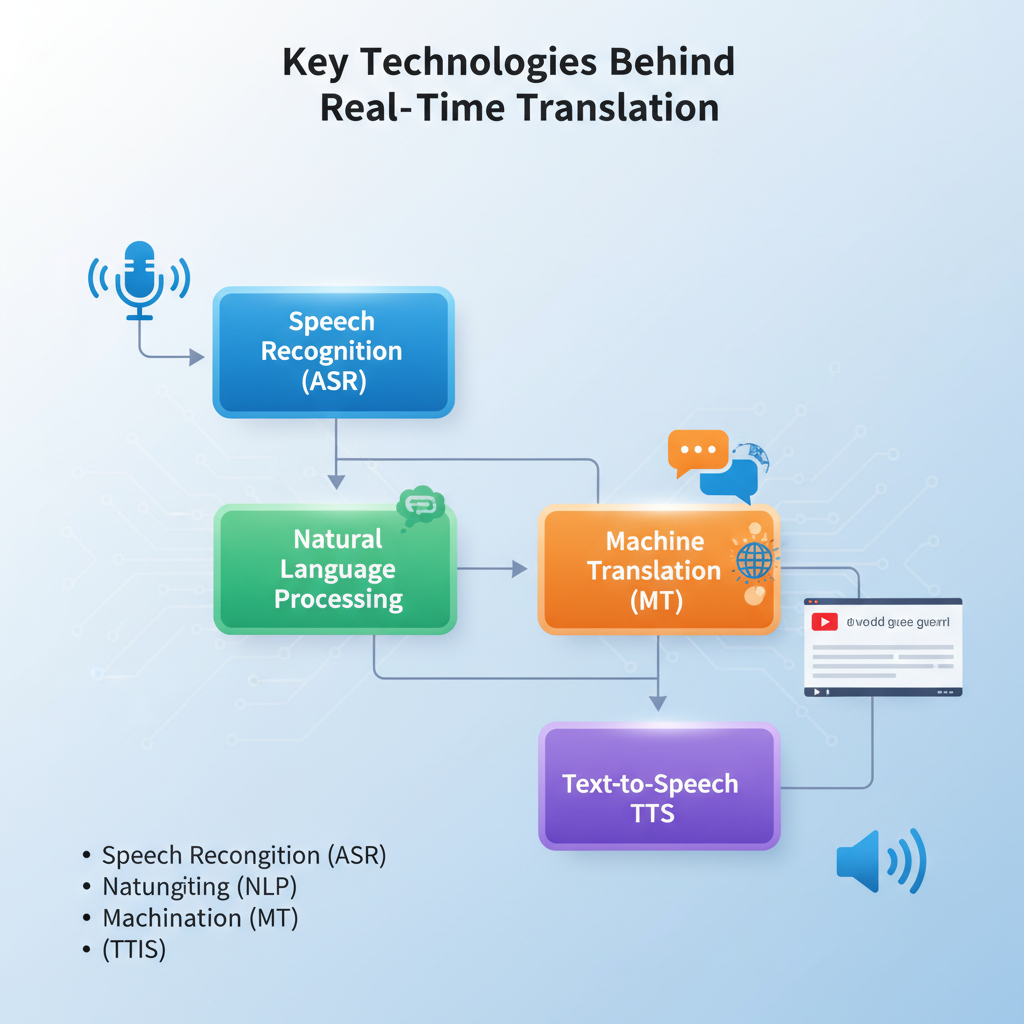
Speech recognition involves converting spoken words into written text, while NLP allows computers to understand, interpret, and generate human language in a way that is meaningful. Together, these technologies enable a seamless translation experience, making it possible for viewers to enjoy content without missing a beat, regardless of the original language.
Key Technologies Behind Real-Time Translation

At the heart of real-time AI-powered video translation are advanced speech recognition systems. These systems employ machine learning algorithms to accurately transcribe spoken words into text. For example, popular platforms like Google Speech-to-Text utilize deep learning models to achieve high levels of accuracy, even in noisy environments. This transcription is the crucial first step in the translation process.
Once the speech is transcribed, machine translation algorithms come into play. These algorithms analyze the text and translate it from one language to another. Techniques such as neural machine translation (NMT) have significantly improved the quality of translations by using deep learning to create context-aware translations. For instance, services like DeepL and Google Translate have made great strides in this area, offering translations that consider the nuances of language, making them sound more natural.
Real-Time Processing and Speed
One of the defining features of real-time video translation is its ability to minimize latency, ensuring that translations occur almost instantaneously. This is particularly crucial in live events, where delays can lead to confusion or disengagement among viewers. To achieve this, sophisticated algorithms are employed to process audio and video streams concurrently, allowing for swift transcription and translation.
For example, in live webinars or international conferences, speakers can engage with audiences from different linguistic backgrounds without any significant downtime. This real-time processing capability not only enhances the viewer experience but also encourages more inclusive participation, enabling a diverse range of voices to be heard.
Applications of AI Video Translation
AI-powered video translation has a wide array of applications across various industries. In education, platforms like Coursera and edX utilize real-time translation to make online courses accessible to students worldwide, breaking down geographic and linguistic barriers. In the entertainment industry, streaming services like Netflix and YouTube are increasingly leveraging this technology to provide multilingual subtitles and audio tracks, allowing users to enjoy content in their native languages.
International businesses also benefit from real-time video translation during meetings and presentations. Tools like Zoom and Microsoft Teams have integrated translation features, facilitating smoother communication between global teams. These applications highlight how AI video translation is not just a technological advancement but a tool for fostering collaboration and understanding in our increasingly interconnected world.
Challenges and Limitations
Despite its many advantages, AI-powered video translation faces several challenges. One of the primary hurdles is context understanding. While machine translation has improved, it often struggles with idiomatic expressions, cultural nuances, and context-dependent phrases. For instance, the phrase “kick the bucket” translates literally in many languages, losing its intended meaning of “to die.”
Additionally, there are limitations in multilingual support and accuracy in diverse dialects. Not all languages are equally represented in translation databases, leading to discrepancies in quality. Regional dialects and variations can further complicate translations, making it essential for developers to continuously refine their algorithms to cater to a wider audience.
Future of AI-Powered Video Translation
Looking ahead, the future of AI-powered video translation is promising. As advancements in artificial intelligence continue, we can expect significant improvements in translation speeds and accuracy. Emerging technologies, such as context-aware translation systems and enhanced neural networks, are likely to provide even more reliable results.
The potential impact on global communication and collaboration is immense. With the ability to understand and engage with content across language barriers, businesses, educators, and individuals can foster deeper connections. The growth of remote work and virtual events further underscores the need for effective translation solutions, making AI-powered video translation an essential tool for the future.
Real-time AI-powered video translation is revolutionizing how we consume content and communicate across language barriers. By understanding its mechanics and applications, you can appreciate its role in fostering a more interconnected world. As technology continues to evolve, staying informed about these advancements will help you leverage these tools effectively, whether for personal use or professional endeavors. If you’re intrigued by this technology, consider subscribing to industry news or exploring specific tools that utilize real-time video translation to enhance your communication experiences.
Frequently Asked Questions
What is AI-powered video translation and how does it work in real-time?
AI-powered video translation refers to the use of artificial intelligence technologies to translate spoken language in videos instantly while maintaining synchronization with the visual content. This process often involves automatic speech recognition (ASR) to transcribe the audio, natural language processing (NLP) to understand the context, and machine translation (MT) to convert the text into the desired language. The real-time aspect is achieved through advanced algorithms that analyze and translate the content on-the-fly, allowing viewers to watch videos in their preferred language almost instantly.
How accurate is real-time AI translation for videos compared to human translators?
While AI-powered real-time video translation has made significant advancements, its accuracy generally varies based on factors such as the complexity of the language, context, and audio quality. AI systems can provide quick translations that are often sufficient for casual understanding, but they may struggle with idiomatic expressions, cultural nuances, or technical jargon. For critical content that requires precision, such as legal or medical videos, human translators are still preferred for their ability to comprehend subtle meanings and ensure contextual accuracy.
Why should businesses use AI-powered video translation for their content?
Businesses should consider using AI-powered video translation to expand their reach to global audiences, enhance user engagement, and improve accessibility for non-native speakers. With the increasing consumption of video content across diverse demographics, AI translation can help companies deliver their messages in multiple languages without the time and cost associated with traditional translation methods. This technology not only boosts viewer satisfaction but also improves search engine visibility, as multilingual content can attract more organic traffic.
What are the best AI tools available for real-time video translation?
Some of the best AI tools for real-time video translation include Google Translate, IBM Watson Language Translator, and Microsoft Azure Cognitive Services. These platforms offer advanced features such as speech recognition and machine learning capabilities to enhance translation quality. Additionally, tools like Kapwing and Vidnoz provide user-friendly interfaces for seamless integration with video content, allowing users to generate translated subtitles and voiceovers efficiently.
Which industries can benefit the most from AI-powered video translation?
Several industries can significantly benefit from AI-powered video translation, particularly those with a global customer base, such as e-learning, entertainment, marketing, and customer support. E-learning platforms can reach diverse student populations, while entertainment companies can localize films and shows to attract international viewers. Additionally, marketing teams can create targeted campaigns that resonate with different cultures, and customer support can provide multilingual assistance through video tutorials, enhancing overall customer experience.
References
- Translation
- https://www.sciencedirect.com/science/article/pii/S1877050919312076
- https://www.bbc.com/news/technology-52575952
- https://www.nytimes.com/2020/02/06/technology/artificial-intelligence-translation.html
- https://www.npr.org/2021/01/27/961050940/how-ai-is-transforming-the-language-translation-industry
- https://www.itu.int/en/ITU-T/focusgroups/ai/Pages/default.aspx
- https://www.frontiersin.org/articles/10.3389/frai.2021.00001/full
- https://www.wired.com/story/ai-translation-tools/